How to Reduce AI API Usage Costs Before an Employee's Agent Blows the Budget
Employees are wiring up AI agents with no-code tools and raw API keys, and the trigger layer they never think about is quietly deciding the bill. Here's how to build event-triggered automations that can't run away.

- 01Agentic workflows can consume up to 30 times more tokens per task than standard chatbot queries.
- 02Re-transmitted context and system prompts account for 62% of total agent inference bills.
- 03Simple no-code polling loops can exhaust hourly quotas and budgets before any user action occurs.
- 04Prompt caching can reduce inference costs by 80% if prompts avoid dynamic inputs like timestamps.
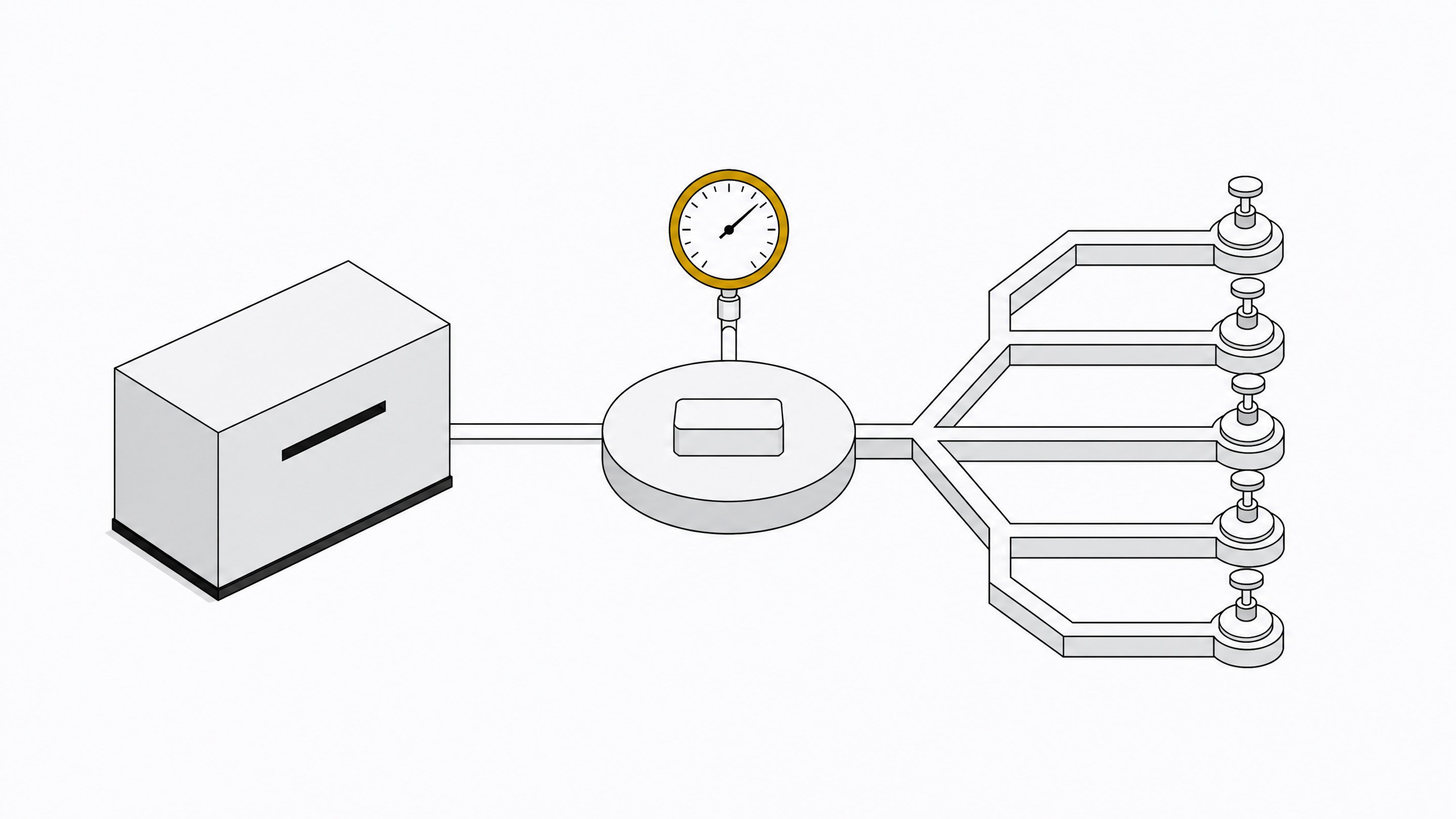
You reduce AI API usage costs by controlling three things: how often an automation calls a model, how much context it resends on every call, and whether a failure mode can spend money faster than a human notices. Employees building their own AI agents with no-code tools and personal API keys usually leave all three wide open, which is how a helpful Zapier chain turns into a five-figure surprise on next month's invoice.
The New Line Item Nobody Budgeted For
Uber's Claude Code adoption jumped from 32% to 84% of its 5,000-engineer organization between December 2025 and March 2026. By April, the company's entire annual AI budget was gone, with monthly per-engineer API costs running $500 to $2,000.1 That is a company with a finance team watching the meter. Most employee-built automations have no one watching at all.
In November 2025, four agents in a LangChain pipeline entered an unintended retry loop between an Analyzer and a Verifier agent. It ran for 264 hours, roughly 11 days, before anyone caught it. The bill was $47,000, and the only safeguard in place was a billing alert that fired after the money was already spent.23 A few months later, OpenClaw creator Peter Steinberger's three-person team burned through $1.3 million in OpenAI tokens in a single month, running about 100 autonomous coding agents that generated 603 billion tokens across 7.6 million requests. Turning off one pricing setting, Fast Mode, would have cut that bill to roughly $300,000.4
These are not security incidents. They are architecture problems that happen to show up on an invoice.
Why Are Employees Building Their Own AI Agents Now?
The barrier to building an agent used to be an engineering team. Now it's a Zapier account and an API key. Any employee can chain a trigger, a model call, and an action into something that looks a lot like automation, and increasingly they do it without asking.
78% of employees use AI tools their employer has not approved, and 46% say they'd keep using them even if explicitly told not to.5 A separate survey found 59% of US employees use unapproved AI tools at work, and three-quarters of those admit sharing sensitive work information through them.6 This is the same shadow IT pattern companies fought for a decade with cloud storage and messaging apps, except this time the shadow tool can also spend money on its own, repeatedly, without a purchase order.
How a Well-Intentioned Automation Turns Into a Bill Shock
Agentic workflows are structurally more expensive than the chatbot queries most people budget for. Gartner's March 2026 analysis found agentic workflows consume 5 to 30 times more tokens per completed task than a standard chatbot query, because agents plan, retrieve context, call tools, verify their own output, and retry failed steps instead of making one clean inference call.1 A large share of that spend is pure waste: Stanford Digital Economy Lab research found that re-sent context, the system prompts, tool definitions, and state history retransmitted on every call in a multi-step workflow, accounts for 62% of total agent inference bills.1
A few dynamics make this worse inside real companies:
- Retry loops with no exit condition. Two agents disagreeing and re-triggering each other isn't a bug report. It's a billing event, as the 11-day, $47,000 loop above shows.23
- Context rot. Long-running agent sessions accumulate history that gets resent on every turn, inflating cost long after the useful information has become noise.
- Perverse internal incentives. Meta built an internal leaderboard ranking 85,000-plus employees by token usage. Employees burned through 60.2 trillion tokens in 30 days, which at Anthropic's list API prices works out to roughly $900 million. Meta pulled the leaderboard once the coverage hit.7
That markup compounds further: the underlying model calls carry frontier-API pricing well above the cost of the raw compute behind them, a gap our breakdown of proprietary API markups covers in more detail.
Polling vs. Webhooks vs. Event Buses: The Trigger Layer Is a Cost Lever
This is the part of employee-built automation almost nobody scrutinizes, and it's often where the money actually leaks. The trigger mechanism you choose decides how many API calls happen before a human does anything at all.
Polling is the default in most no-code tools because it's the easiest to set up: check an endpoint every N seconds, forever. It scales terribly. Polling 100 endpoints every 30 seconds against GitHub's 5,000-requests-per-hour limit generates 12,000 requests an hour, 2.4 times over budget before a single user action happens. Even 42 endpoints at that cadence eats an entire hourly quota.8 Every one of those checks is a metered call, and most of them return "nothing changed."
Webhooks fix the volume problem but introduce a reliability problem. Stripe, Shopify, and HubSpot all document at-least-once, sometimes out-of-order, delivery with retry windows measured in hours to days.8 An automation that reacts to every delivery without deduplication processes the same event twice, and if that event triggers a model call, you pay for it twice.
In practice, most employee-built automations that survive contact with real usage end up as a hybrid:
- Webhooks for the common case. Real-time triggers for the 95% of events that arrive once, in order, on time.
- Idempotency keys at the write boundary. A unique key per event lets your system silently ignore a duplicate delivery instead of reprocessing it.
- Reconciliation polling on a slow cadence. A periodic sweep, minutes or hours apart, catches anything a webhook missed, instead of a 30-second loop that never stops.
| Call Volume | Duplicate-Event Risk | Delivery Reliability | Setup Complexity | Safe at Production Scale | |
|---|---|---|---|---|---|
| Pure pollingquick prototypes | High | Low | High | Low | No |
| Webhooks onlylow-latency reactions | Low | High | Medium | Medium | No |
| RecommendedHybrid: webhooks + idempotency keys + reconciliation pollingproduction automations | Low | Low | High | High | Yes |
This is also where the build-versus-buy line starts to matter. Our guide to trimming LLM API costs in development covers the routing-layer side of this; the trigger layer is the half of the equation development teams tend to skip.
Designing Event-Triggered Automations That Can't Run Away
The trigger layer controls call volume. The execution layer controls what happens when something goes wrong. Both need limits that don't depend on a human noticing.
- Server-side budgets, not prompt-level ones. Telling an agent "don't spend more than $50" in its system prompt is a suggestion it can abandon under retry pressure or an orchestration bug. Real limits are a running total tracked outside the agent's own accounting, enforced by the system issuing the API calls, not the model reasoning about them.9
- An out-of-band kill switch. The stop mechanism has to live somewhere the runaway process cannot touch or reason around.9
- Circuit breakers. If spend or call volume spikes past a threshold within a fixed window, cut access automatically instead of waiting for a billing alert to catch up days later.
- Durable execution. Failures should resume from a checkpoint, not restart the whole workflow from zero and rebuy every token already spent getting there.
Anthropic's own Claude API backs this up structurally: it enforces a real monthly spend cap by usage tier, and once a workspace hits it, usage pauses until the next billing cycle instead of just sending a warning.10 That's a backstop, not a strategy, but it's evidence that providers themselves concluded alerts alone don't work.
How Do Caching, Routing, and Batching Cut API Costs?
Once the trigger and execution layers are contained, the remaining spend comes down to how the model calls themselves are priced. Three levers, stacked in order, do most of the work.
- Prompt caching. Anthropic's cache reads cost roughly 90% less than standard input tokens, for example $0.30 versus $3.00 per million tokens on Claude Sonnet, with break-even at about 2.3 reuses of the same cached prefix within the cache's TTL window. One enterprise processing 50,000 documents a month cut costs from $45,000 to $8,000, an 82% reduction, using caching alone.110 The most common way teams accidentally kill this savings is putting a timestamp or session ID at the top of the cached prompt: one documented case saw a 60,000-token cached system prompt deliver a 1% discount instead of 90% because the prompt opened with the current date, invalidating the cache on every request.1 Our deep dive on cache pricing mechanics walks through why that gap between sticker price and real price decides most bills.
- Model routing. Sending routine steps to a cheaper model tier and reserving frontier models for the steps that actually need them typically saves 40-70% without a quality hit most users notice.
- Batch APIs. Anthropic's asynchronous Message Batches API applies a flat 50% discount on input and output tokens for latency-tolerant work.10
Stacked together, a worked example against Anthropic's published pricing showed routing plus batching cutting a nightly job's bill by roughly 75%, before caching was even fully applied on top.10 Capping output tokens is the last, cheapest lever: most agent responses don't need the length the default settings allow.
Governance Without Killing Self-Serve Speed
The goal isn't to take API keys away from employees. It's to make their spend visible and bounded without adding a ticket queue in front of every idea.
An LLM gateway, tools like Portkey or LiteLLM, sits between employee-built automations and the model providers and enforces per-key and per-team token quotas, hard spend budgets, and automatic routing or fallback from a single control point.10 That turns scattered personal API keys into one governed chokepoint, which is the difference between finding out about a problem in a dashboard and finding out about it in a Slack message from finance.
What you name that dashboard matters more than it should. Meta's leaderboard, which ranked employees by raw token usage, helped drive the $900 million-equivalent 30-day spend before it got scrapped.7 Shopify took the opposite approach: it renamed its version a "usage dashboard" and paired it with automatic circuit breakers that cut off access when an individual's spend spikes within a day, catching both runaway agents and infrastructure bugs without turning waste into a competition.7 The 98% of FinOps practices now managing some form of AI spend, up from 31% two years earlier, tells you this stopped being optional almost overnight.2
A Build vs. Buy Checklist for Employee-Built Automations
Enterprise generative AI spend hit $37 billion in 2025, up 3.2x from $11.5 billion the year before, and 76% of that flows through purchased or vendor tools rather than fully in-house builds.11 Most of that is self-serve, metered spend nobody centrally negotiated. Some of it deserves to graduate from a quick automation into infrastructure the company actually owns.
Ask these questions before a Zapier hack becomes a permanent dependency:
- Is this running on a schedule or a real event? If it's polling on a timer, that's your first cost fix, not your architecture.
- Does a person depend on its output daily? If yes, it needs a server-side budget and a kill switch, not a system-prompt instruction.
- Is spend trending up month over month with no corresponding increase in value delivered? That's the tokenmaxxing pattern, and it needs a circuit breaker before it needs a bigger budget.
- Would losing this automation for a day break something real? If so, it has outgrown "shadow tool" status. It belongs in owned infrastructure with a maintainer, a cost model, and monitoring, the same way you'd treat any other production system, not a chain of API calls someone built in an afternoon and forgot to revisit.
Companies increasingly reach for platforms like Remy specifically at that inflection point, when a self-serve automation has become load-bearing and needs to be owned rather than indefinitely rented as a patchwork of personal API keys and no-code triggers.
The API tax on employee-built AI isn't inevitable. It's the predictable result of trigger layers that never stop calling, budgets that live in a prompt instead of a server, and incentives that reward token volume over judgment. Fix those three things and most of the runaway bills in this piece never happen in the first place.
Start with prompt caching, which cuts repeated input tokens by about 90%, then route routine steps to a cheaper model tier and batch anything latency-tolerant for a flat 50% discount. Stacked together these levers can cut a bill by 70 to 90 percent before you touch the underlying workflow architecture.
Agents plan, retrieve context, call tools, verify their own output, and retry failed steps instead of making one inference call, which pushes token consumption 5 to 30 times higher than a standard chatbot query. Re-sent context alone, the system prompts and history retransmitted on every call, accounts for 62% of total agent inference bills.
No. A spend limit written into the system prompt is a suggestion the agent can abandon under retry pressure or an orchestration bug. Real limits need to be enforced server-side as a running total the agent cannot see or influence, with an out-of-band kill switch it cannot override.
Webhooks cut call volume compared to polling, but providers like Stripe, Shopify, and HubSpot only guarantee at-least-once delivery, sometimes out of order. Without deduplication and idempotency keys, a duplicate webhook delivery can trigger the same costly model call twice.
Most don't try to stop it outright; they route it through an LLM gateway like Portkey or LiteLLM that enforces per-team token quotas and spend caps, then replace competitive usage leaderboards with plain usage dashboards paired with automatic circuit breakers, the approach Shopify took after Meta's leaderboard drove wasteful token spend.
- 1The Bill Arrives: How to Manage Agentic AI Costs at ScaleCockroach Labs
- 2AI Agent Token Budget Enforcement: Why Alerts Fail and What Actually WorksWaxell
- 3How an AI Agent Ran Up a $47,000 Bill in 11 Days (And How to Stop It)DEV Community
- 4OpenClaw creator burned through $1.3 million in OpenAI API tokens in a single month — bill covered 603 billion tokens across 7.6 million requests and 100 coding agentsTom's Hardware
- 5Shadow AI Is the New Shadow IT: 78% Use AI Without IT ApprovalDigital Chiefs
- 6Shadow AI soaring: 59% of employees hide AI use from their bossesCybernews
- 7The Pulse: 'Tokenmaxxing' as a weird new trendThe Pragmatic Engineer (Gergely Orosz)
- 8Event-Driven vs. Polling Architectures for Agent TriggersAgent Blueprint (Substack)
- 9Prompt-level spend limits for AI agents don't work. Here's the pattern that doesOpenAI Developer Community
- 10How to Reduce Anthropic API Costs (Without Losing Quality)Amnic
- 112025: The State of Generative AI in the EnterpriseMenlo Ventures