How to Govern AI-Generated Internal Tools Without Slowing Teams
Learn how to govern AI-built internal tools with a 30-day inventory, risk tiers, and a paved path, backed by data on shadow AI breach costs and exposed apps.

How do you govern AI-generated internal tools without slowing teams?
Managing AI-generated internal tools means running a lightweight registration and risk-tiering process, not a security review gate every builder has to clear before shipping. You don't ban the practice. You catalog what exists, tier it by risk, and give builders a paved path so the fast option is also the safe one.
That's the short version. Here's why it matters now, and how to run it.
TL;DR
- Sixty percent of builders say they have bypassed IT oversight to build their own internal apps in the past year.
- Scans of vibe-coding platforms found thousands of corporate apps holding sensitive data with no access controls.
- Breaches tied to shadow AI averaged $4.63 million, about $670,000 more than the baseline breach cost.
- Banning AI coding tools pushes the behavior underground, where you lose visibility entirely.
- The workable approach is a 30-day amnesty inventory, risk tiering by data sensitivity and agentic capability, and a paved path with built-in controls.
- Every registered tool needs a named owner and a maintenance plan before it goes into production.
Why aren't employees hiding their own tool-building anymore?
A year ago, an employee quietly building their own internal app was an edge case. Now it's a stat line in a survey deck. Sixty percent of builders across every level of seniority, including 64% at senior manager and above, say they've built something outside IT oversight in the past year, and a quarter do it regularly. They're not shy about why:
- 31% say it was faster than waiting on IT.
- 25% say the SaaS tool they had didn't do what they needed.
- 18% just gave up on the ticket queue.
This isn't rebellion. It's people optimizing around friction, in public, with their manager's blessing more often than not. Thirty-five percent of teams have already replaced at least one SaaS tool with something they built themselves, and 78% expect to build more in 2026. The categories most exposed are workflow automations and internal admin tools, the unglamorous plumbing nobody wants to pay a vendor $30,000 a year for once an AI coding tool can spit out a working version in an afternoon.
And this isn't a startup quirk. It's happening at the top of the org chart:
- Cisco replaced a presentation tool with an internal AI agent, is saving close to $5 million a year in license costs, and is now evaluating whether to walk away from vendor contracts worth $50 million to $200 million.
- EY is vibe-coding SAP customizations instead of paying for expensive upgrades.
- ClickUp built six internal AI tools and cut $200,000 a year in automation spend.
Why isn't this the shadow IT you already have a playbook for?
Classic shadow IT was an unauthorized SaaS signup. Someone expensed a $12-a-month tool and IT found out during a license audit. Annoying, but bounded. The tool lived on someone else's servers, behind someone else's security team.
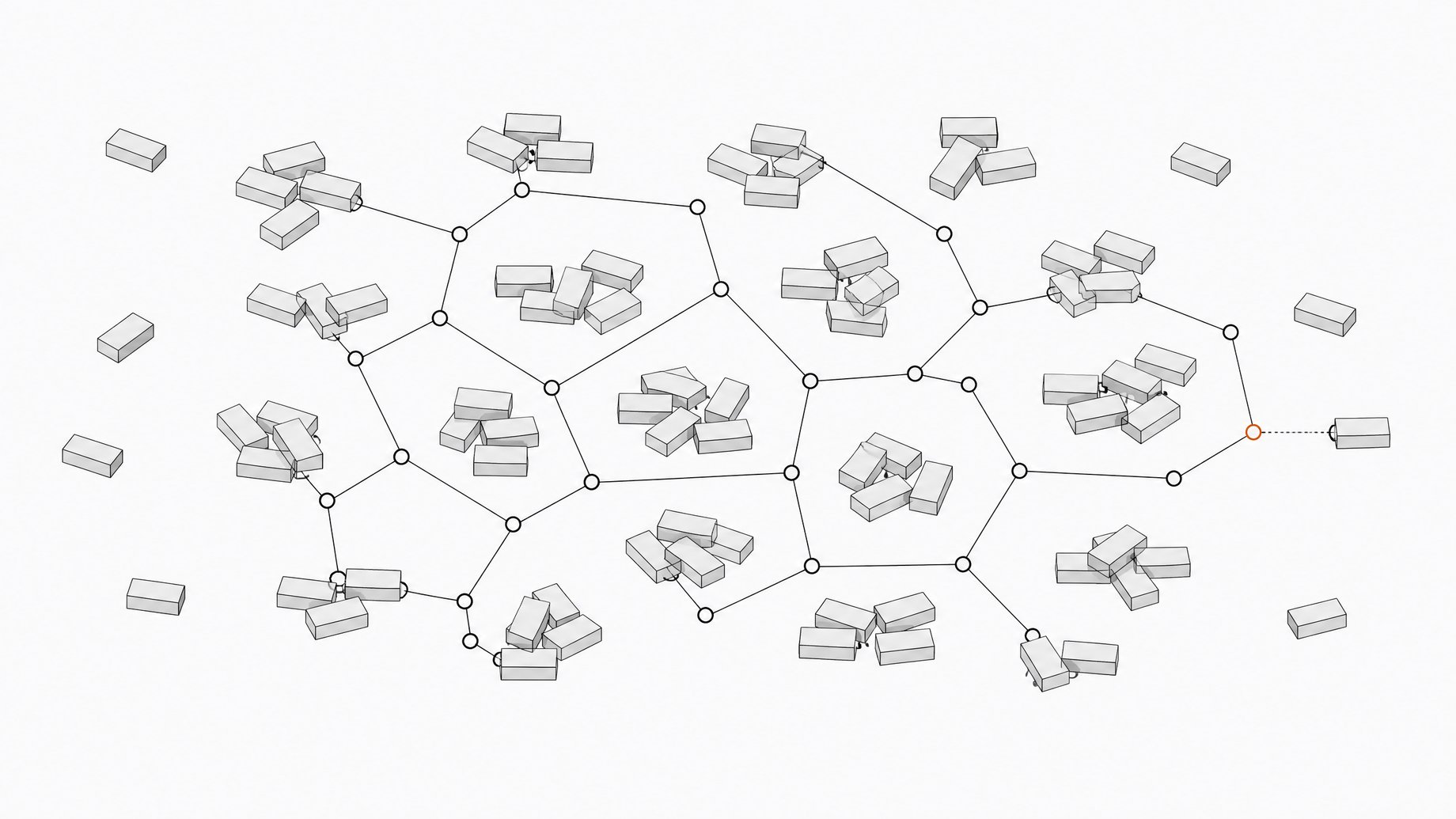
What's happening now is structurally different. Employees are shipping full applications, often wired directly into production data, that no one on a security team has ever looked at. There's no code review, often because there's no professional developer in the loop. There's no dependency inventory. In a lot of cases there isn't even a record of which AI model or which prompt produced the thing now running your team's workflow. A traditional CASB tool, built to spot unsanctioned SaaS logins, has nothing to catch here. The risk isn't a login. It's a self-hosted app with a database attached that IT doesn't know exists.
What blind spots can IT genuinely not see?
The gap isn't a maturity problem where security teams just haven't caught up. It's structural. A Cloud Security Alliance research note found that none of the major AI security frameworks in active use today, not NIST's AI RMF, not the OWASP LLM Top 10, not CSA's MAESTRO or AI Controls Matrix, offer dedicated guidance for citizen developers building AI-powered apps without a security team looking over their shoulder. These frameworks were written for professional engineering orgs. Citizen builders don't read them, and they weren't written for this problem anyway.
The scans back this up in uncomfortable detail. A review of more than 380,000 web assets across vibe-coding platforms like Lovable, Replit, and Base44 turned up 5,000 apps built for corporate purposes. Forty percent of those, 2,000 apps, contained sensitive data deployed with no authentication, no access controls, and no audit trail, including a live financial dashboard at one of Latin America's largest banks and strategic documents belonging to a $200 billion company. A separate scan of 5,600 production vibe-coded apps found zero, not some, zero, had CSRF protection, standard security headers, or properly scoped access policies.
These aren't edge cases. They're the default output of a builder who has never had to think about a security header because the tool never asked them to. For the deeper mechanics of what's wrong with AI-written code by default, see Securing the Code Your AI Wrote: 5 Rules for the Copilot Era.
What does it cost when these tools go wrong?
The premium isn't hypothetical. IBM's 2025 Cost of a Data Breach Report found breaches tied to shadow AI averaged $4.63 million, about $670,000 more than the baseline breach cost. Sixty-three percent of organizations that had an AI-related breach had no AI governance policy in place at all. That's not a coincidence. That's the cost of not having a process.
Real incidents make the abstraction concrete:
- The vibe-coded social app "Moltbook" exposed a Supabase key and had Row Level Security disabled within three days of launch, exposing 1.5 million API tokens and 35,000 emails.
- The "Cal AI" app exposed 3.2 million user records through an unauthenticated Firebase backend.
- A documented CVE found insufficient Row-Level Security across more than 170 Lovable-generated Supabase apps.
None of these were built by malicious actors. They were built by people trying to ship something useful, fast.
The perception gap makes this worse. Ninety percent of employees don't think of tool-building as risky, while 85% of IT decision-makers say employees are adopting AI tools faster than IT can even assess them. Ninety-three percent of employees admit to putting information into AI tools without approval, and 32% have entered confidential client data specifically. KPMG's global survey found 44% of employees have used AI in ways that contravene their own company's policies. This isn't a rogue minority. It's most of the building population.
Why will banning it backfire?
The instinct to lock this down is understandable and wrong. CIO.com's reporting on shadow AI puts it plainly: heavy restrictions rarely solve the underlying risk, they just push the behavior underground, where you lose visibility entirely. Employees aren't building tools because they want to break rules. Retool's data shows the top reasons are speed, unmet needs, and slow IT process, not a desire to route around security. Ban the AI coding tool and you don't get compliance. You get the same builder, on their personal laptop, with even less oversight than before.
The better move, and the one every credible source in this space converges on, is to treat disclosure as a learning opportunity instead of a punishable offense. That means a governance model builders actually want to opt into, because it makes their life easier, not harder.
How do you actually govern AI-generated internal tools?
Here's the sequence that shows up across the research, adapted into something you can run in a quarter, not a year.
- Run a 30-day inventory, not an audit. Ask teams what they've built in the last year. Frame it as amnesty, not investigation. Punitive audits guarantee people hide things; a low-stakes ask surfaces them.
- Tier by risk, not by team. Sort what comes in by two axes: how sensitive the data is, and whether the tool has agentic capability (does it call an AI API, take autonomous actions, or just display a spreadsheet). A tool that reformats internal meeting notes is a different animal than one that reads customer PII and writes back to a CRM.
- Add DLP at the API gateway layer. This catches outbound data flows to external AI services regardless of which tool an employee used to build the thing, which matters because you will never fully catalog every builder's stack.
- Give builders a paved path. Offer one approved platform with role-based access control, audit logging, and secrets scanning built in, so the safe choice is also the fast choice. The same logic behind a sanctioned sandbox for AI agents applies here: builders who have a good option rarely go looking for a worse one.
- Assign ownership at registration, not after an incident. Every tool that gets registered needs a named owner and a maintenance plan before it goes into production, not after someone asks who's responsible for it.
- Review on a cadence. Quarterly is enough. The point isn't constant surveillance. It's catching drift before a tool with admin-by-default access has been quietly load-bearing for a department for two years.
For the deeper mechanics of scoping tiers by data sensitivity and agentic risk, The 'Claudish' Code Base: Governing the Apps Your Employees Build walks through it in more detail.
Why should you assign an owner before you inherit the tool?
The most commonly skipped step is also the cheapest to fix. As one LinkedIn post on the hidden costs of internally built software put it, you don't pay for software once, you inherit it. A team looks at a $30,000-a-year SaaS tool and reasonably asks why they don't just build it. Fair question. But before anyone replaces it, ask who owns this two years from now. When the builder leaves, when the underlying API changes, when another department wants access, an unowned tool becomes an undocumented liability nobody budgeted time to maintain.
That's the whole case for treating internally built software as an asset you own rather than a project that happened to someone. It's the same discipline you'd apply to any piece of infrastructure you're responsible for: govern what you build the way you'd govern anything you actually own.
What does good governance look like in practice?
This isn't theoretical. Virgin Voyages built more than 15 production apps across seven departments with zero dedicated frontend engineers, while keeping IT governance fully intact. At Matthews, a marketing manager with no coding background cut a multi-day workflow down to about 12 hours using a governed low-code platform instead of an open vibe-coding tool. The pattern in both cases is the same: centralized governance paired with AI-assisted building, not an open free-for-all and not a lockdown.
What is the bottom line?
Gartner projects that by 2028, 40% of new enterprise production software will be built using vibe coding techniques. This isn't a phase you wait out. It's how software gets made now. The organizations that handle it well won't be the ones that ban it or the ones that ignore it. They'll be the ones that treat every internally built tool as a software asset with an owner, a risk tier, and a maintenance plan, the same way they'd treat anything else they run and depend on.
| Visibility into what's built | Friction added to builders | Ongoing risk exposure | Builders opt in willingly | |
|---|---|---|---|---|
| Ban itOrganizations that value control over adaptability | Low | High | High | No |
| Ignore itNo one — the current default in most orgs | Low | Low | High | Yes |
| RecommendedPaved-path governanceOrgs that want speed and an audit trail | High | Medium | Low | Yes |
Frequently Asked Questions
What is an AI-generated internal tool?
It's a working application, dashboard, or automation that an employee built using an AI coding assistant or vibe-coding platform like Lovable, Replit, or Base44, usually to replace a SaaS tool or fill a gap IT hadn't gotten to. It's often connected to real company data and used in production, not a prototype.
Should companies ban employees from building their own tools with AI?
No. Restrictions tend to push the behavior underground rather than stop it, since employees are usually building for speed, not to break rules. A lightweight registration and tiered review process gets you more visibility than a ban ever will.
How do you find out what internal tools employees have already built?
Run a 30-day, non-punitive inventory instead of a formal audit. Ask teams to disclose what they've built in the last year and frame it as amnesty. A punitive process guarantees people hide tools; a low-stakes ask surfaces them.
Who should own an AI-built internal tool after it's launched?
Someone specific, named at the time the tool is registered, not after an incident. Before any team replaces a paid SaaS tool with something they built, they should answer who owns it two years from now, since the builder may leave and the tool still needs maintaining.
Are AI-generated internal tools actually less secure than normal software?
Often, yes, by default. Scans of thousands of production vibe-coded apps found none had CSRF protection or standard security headers, and a large share of corporate-purpose apps exposed sensitive data with no authentication at all. The risk is structural, not a matter of a few careless builders.
How we source, write, and correct our articles. Editorial standards