System 1 AI Models vs. JEV: What's the Difference?
Jev, from TypeSafe AI, put a name on the System 1 category: fast, calibrated classifiers built to return typed decisions instead of writing text. For GUI and form-filling agents, that split changes the economics entirely.

- 01System 1 AI models return typed decisions in milliseconds rather than generating text token by token.
- 02Vision-based GUI agents use up to 45 times more tokens than structured API-calling equivalents.
- 03Frontier models still only complete about 20.6% of tasks on the long-horizon OSWorld 2.0 benchmark.
- 04Small classifiers handle repetitive routing and scoring decisions faster and cheaper than massive LLMs.
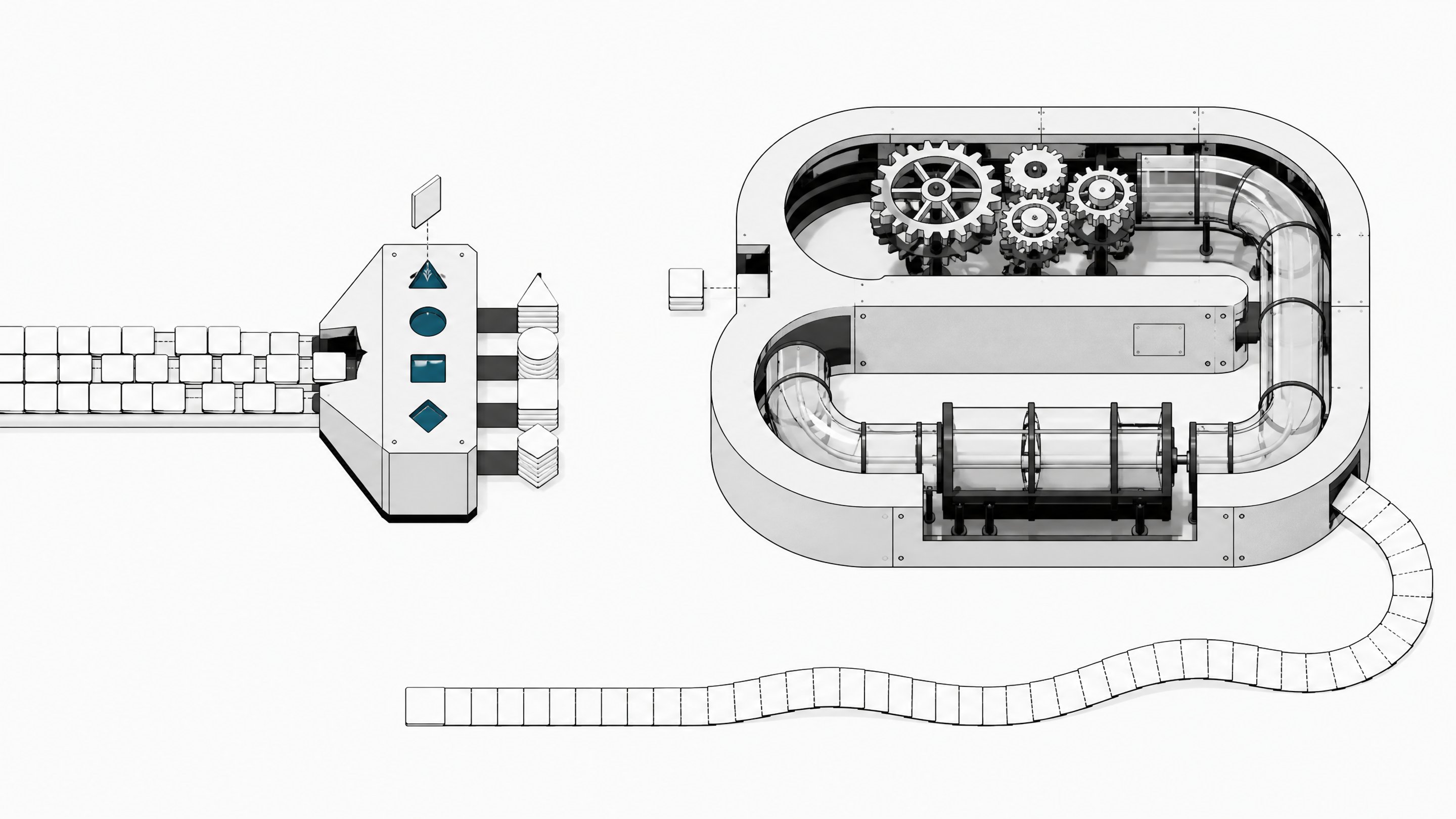
A System 1 AI model is a fast, narrow model that returns a typed decision (a choice, a score, a yes/no probability) in well under a second. It skips the slow, autoregressive reasoning a chat LLM runs through to answer the same question. Jev, built by TypeSafe AI, is the model that put a name on this category: it launched in September 2026 as the first "System One Model," a class distinct from the frontier chat LLMs most teams reach for by default.12
If you're building an internal agent that fills out forms, triages tickets, or clicks through an admin panel, this distinction isn't academic. It's the difference between a tool that runs in milliseconds for pennies and one that burns real money waiting on a model that was never built for the job.
The cognitive science behind the split
The System 1 / System 2 framing comes from psychology, not AI research. Daniel Kahneman popularized it in Thinking, Fast and Slow, building on terms coined by psychologists Keith Stanovich and Richard West in 2000. System 1 is fast, automatic, and intuitive. System 2 is slow, deliberate, and effortful.3
TypeSafe AI borrowed that exact framing for its product category, and the analogy stuck across the industry conversation that followed the launch, showing up repeatedly in the Hacker News and Reddit threads.245 Most existing LLMs, however capable, are System 2 machines. They reason step by step, token by token, even when the decision underneath is trivial. TypeSafe's founder, ex-OpenAI researcher Diogo Almeida, built the company's whole pitch around a blunt question: why haven't superhuman chat models led to AGI, and what happens if you stop routing every software decision through one?4
What does Jev actually do?
Jev isn't a chatbot and it doesn't write prose. You give it a pre-declared schema and a question, and it returns a typed value with a calibrated confidence attached, computed in a single parallel forward pass rather than sequential decoding.16
There are three primitives:
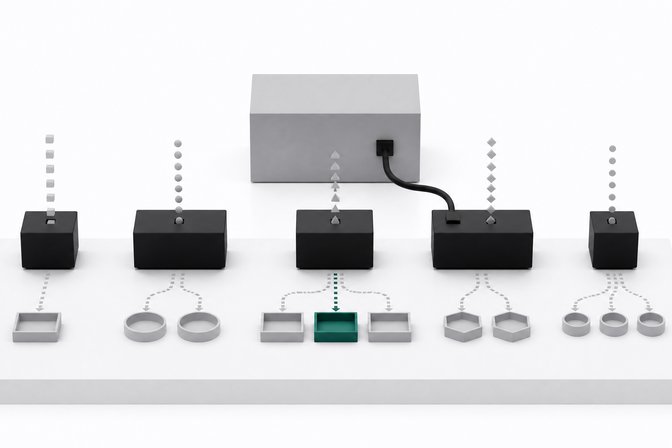
- Choice. Pick one of up to 255 predefined options. Past that cardinality, Jev falls back to a slower two-stage score-then-choose process.17
- Score. A bounded numeric or rubric-style judgment.
- Noul. A yes/no field returned as a probability rather than a hard boolean.7
For list-style decisions, Jev fans a single "pick one" question out into one yes/no judgment per option, all resolved inside the same request. That's a structurally different integration pattern than prompting a chat model and parsing its free-text answer.6
The model is trained with what TypeSafe calls Reinforcement Learning for Calibrated Decisions (RLCD), an objective distinct from RLHF (which optimizes for human-preferred text) and RLVR (which optimizes for verifiable rewards). RLCD optimizes specifically for calibrated probabilities: a 70% confidence score should actually be right about 70% of the time.17
On speed and cost, TypeSafe reports end-to-end response times of 70 to 500 milliseconds against 3 to 329 seconds for comparable frontier LLM calls, a gap independently corroborated by TrueFoundry's write-up of the launch.12 Pricing runs $0.042 per million input tokens with output free, against roughly $0.20 to $10 per million input tokens for existing frontier models.1 TypeSafe's own self-designed "workflow evals," graded against the average of two of its own reference models (GPT-6 Astra and Fable 5.1), claim up to 193.6x faster and 444.6x cheaper on decision-shaped tasks. Elsewhere in the same launch materials, TypeSafe cites a wider 20 to 200x speed range and 40 to 400x cost range. Worth flagging: even the vendor's own numbers move around depending on where you look.174
Where GUI agents burn the difference
This matters most for agents that operate software through a screen: clicking buttons, reading form state, filling fields. That's exactly the shape of task where the mismatch between System 1 and System 2 gets expensive.
An independent benchmark from Reflex compared a screenshot-driven, vision-based computer-use agent against a structured API-calling agent completing the same multi-step admin-panel task. The computer-use agent needed 53 steps and 550,976 input tokens. The API-calling agent finished in 8 tool calls and 12,151 input tokens, roughly a 45x gap in token cost that held with near-zero variance across repeated runs. The vision agent's token counts, meanwhile, swung by hundreds of thousands and needed a hand-written 14-step walkthrough just to succeed at all.8
The headline numbers on GUI agents look better than that at a glance. Computer-use agents rose from about 12% task success on the OSWorld benchmark in April 2024 to roughly 85% by mid-2026.9 But on the harder, long-horizon OSWorld 2.0 benchmark, where the median human task takes 1.6 hours, the best frontier system still completes only about 20.6% of tasks.9 Screenshot-parsing, autoregressive agents are getting better at short demos and still struggling with long, multi-step work, which is precisely the kind of work most internal GUI automation actually needs to do.
Massive LLM vs. System 1 classifier: what actually changes
Lay the two approaches side by side on the dimensions that matter for a builder deciding what to wire into a GUI agent:
- Latency. A frontier LLM call runs 3 to 329 seconds end to end in third-party benchmarks TypeSafe cites; Jev runs 70 to 500 milliseconds.12
- Cost shape. LLMs charge per input and output token, output usually priced around 5x input; Jev charges $0.042 per million input tokens with output free.1
- Sampling. LLMs decode token by token, autoregressively. Jev resolves the whole typed response in one parallel forward pass.16
- Output type. LLMs return free text you then have to parse and validate. Jev returns a value already constrained to a declared schema, with a confidence score attached.6
- Failure mode. An LLM can wander outside the intended answer shape entirely. A System 1 model like Jev is schema-conformant by construction, though it can still confidently pick the wrong option inside that fixed set.7
- Ideal use case. LLMs fit open-ended judgment and generation. System 1 models fit the repetitive routing, scoring, and verification decisions embedded in deterministic code, the kind that structure most GUI and form-filling work.
If you've already been thinking about how to combine several purpose-built models instead of betting on one general one, this is that same architecture applied specifically to the decision layer inside an agent, not just the model layer.
Can Jev actually not hallucinate?
TypeSafe's marketing leans hard on the idea that Jev can't hallucinate. That's narrowly true, and worth being precise about. Schema conformance is guaranteed by construction, because the output space is fixed before the model ever runs. What isn't guaranteed is correctness inside that fixed space. TypeSafe's own CEO acknowledged this directly in the Hacker News launch discussion, conceding that a model can still be confidently wrong, and that "all future models will be smarter still and still have that possibility."7 Multiple independent write-ups of the launch draw the same distinction.27 Treat "can't hallucinate" as "can't format-hallucinate," not as a claim of infallibility.
This isn't just one startup's pitch
TypeSafe is a young company with a $40 million seed round led by DCVC, and it's easy to read all of this as one vendor's launch narrative.245 The stronger evidence that this is a real structural shift comes from elsewhere. NVIDIA Research published a peer-reviewed position paper arguing, independently of TypeSafe, that small, specialized language models are sufficiently powerful, more suitable, and more economical than large general-purpose LLMs for the narrow, repetitive tasks that dominate agentic systems. It recommends heterogeneous stacks that reserve large models for the cases where genuinely general conversational ability is required.10 That's the same argument, arrived at from a completely different direction.
When should you route to System 1 vs. System 2?
For teams building internal tools, this comes down to a fairly simple decision rule, and it fits naturally into a build-vs-buy conversation you're probably already having about your agent stack:
- Repetitive, bounded decisions (approve or reject, route to queue A or B, score a lead 1 to 10) belong on a System 1 classifier, wired directly into deterministic code.
- Verification and guardrailing steps inside a larger workflow, where the answer space is known in advance, are a good fit too. You get a confidence score you can threshold on instead of parsing free text.
- Genuinely open-ended judgment calls, where the space of reasonable answers isn't fixed and context matters more than pattern-matching, still belong with a System 2 reasoning model.
This is the same question teams face when routing between models in a larger orchestration layer: the right call depends on task shape, not on which model has the best benchmark score.
| Latency | Cost shape | Sampling | Output type | Failure mode | Ideal use case | |
|---|---|---|---|---|---|---|
| Frontier chat LLMOpen-ended judgment and generation | 3–329s per call | Per input+output token, output ~5x input price | Autoregressive, token by token | Free text, must be parsed and validated | Can wander outside the intended answer shape entirely | Open-ended judgment and generation |
| RecommendedJev (System 1 model)Repetitive routing, scoring, and verification decisions | 70–500ms per call | $0.042/M input tokens, output free | Single parallel forward pass | Typed value with a calibrated confidence score | Schema-conformant by construction; can still confidently pick the wrong option | Repetitive routing, scoring, and verification decisions |
The economic case for owning this stack rather than renting it token by token is the same case this publication makes about internal software generally. If you're building the admin panels and internal dashboards these classifiers plug into, tools like Remy exist specifically so that layer is something you own outright rather than a SaaS seat you keep paying for. And if you're already thinking about which parts of your AI workflow you can run locally instead of shipping every request to a rented API, a fast, cheap classifier is often the easiest first piece to bring in-house.
What's still unproven
None of this is settled science yet, and it's worth saying plainly what's still open:
- Jev is early access and waitlisted, not a generally available product.2
- The headline speed and cost multiples come from TypeSafe's own self-designed workflow evals, graded against TypeSafe's own reference models, with no independent public leaderboard yet.1
- Jev's context window is capped at 32K tokens and it doesn't accept vision input, which limits it to text-and-schema decisions for now, not the screenshot-driven work computer-use agents handle.
- The marketing claims themselves aren't fully consistent, with speed multiples cited anywhere from 20x to nearly 194x depending on which TypeSafe document you read.174
None of that undercuts the core argument. It just means you should pilot this pattern on a real workflow before betting a production agent on any single vendor's numbers, TypeSafe's included.
A System 1 AI model is a fast, narrow model that returns a typed decision, such as a choice, score, or yes/no probability, in well under a second rather than generating free text through slow, token-by-token reasoning. The term borrows Daniel Kahneman's fast/intuitive System 1 versus slow/deliberate System 2 framing from cognitive psychology.31
Only partly. Jev's output is always schema-conformant because its answer space is fixed in advance, so it can't return malformed output. It can still confidently select the wrong value from that fixed set, a limitation TypeSafe's own CEO acknowledged during the Hacker News launch discussion.7
Because most GUI and form-filling decisions are structurally simple, screenshot-driven LLM agents burn enormous amounts of tokens and time solving them. One benchmark found a vision-based computer-use agent used 45x more tokens and 53 steps to complete a task that a structured, decision-based approach finished in 8 calls.8
No. NVIDIA Research independently published a peer-reviewed position paper arguing that small, specialized language models are more suitable and more economical than large general-purpose LLMs for most agentic tasks, reaching a similar conclusion from a completely separate direction.10
- 1Introducing System One Models & JevTypeSafe AI
- 2TypeSafe AI's Jev and "System One Models": What Actually ShippedTrueFoundry
- 3System 1 and System 2 ThinkingThe Decision Lab
- 4[AINews] Jev: a "System One Model" that only decides/classifies/routes/scores — >100x faster, >200x cheaper than small frontier LLMsLatent.Space (AI Engineer)
- 5TypeSafe AI bets against LLMs — Startup Roundup Sep 16Reddit (r/Superframeworks)
- 6TypeSafe (Jev) — Pydantic AI DocsPydantic
- 7TypeSafe AI Launches Jev: A "System One Model" That Never Hallucinatesexplainx.ai
- 8Computer use is 45x More Expensive Than Structured APIsReflex
- 9The Hardest Easy Problem in AI: The State of Computer Use AgentsMedium (Adnan Masood)
- 10Small Language Models are the Future of Agentic AIarXiv / NVIDIA Research