
AI Agents & Automation ·
What Are ChatGPT Dots? OpenAI's Always-On Agent Explained
ChatGPT Dots are agents with their own cloud computer that run in the background, use memory, connected apps and Codex, and take texts from your phone.
How engineers use AI, how to do it well, and what it means for your job. Written for people who ship and run the software, not people who build models.
ChatGPT Dots are agents with their own cloud computer that run in the background, use memory, connected apps and Codex, and take texts from your phone.

How Traction won industrial buyers: 88 site visits in year one, an SDR as first hire, up-front risk assessments and 2,500 on-sites a year.
Karpathy reportedly runs Claude Code on Opus 5.5 at medium effort, writes tiny prompts, and delegates to Sonnet sub-agents. Here is the workflow.

One model, nine harnesses, 30 tasks. Codex hit 66.7%, Claude Code and DeepSeek Harness 63.3%, but cost per success was $3.28 vs $18.34.

Croton Alpha is a free-to-try stealth model with 1M-token context for subagents. See what is known and how it did on coding, vision and translation tests.

MIT's Sparks of Weight Space Programming paper has GPT-6 Astra read and edit another model's weights, lifting a small Qwen's math from 7.9% to 48.1%.

Small reasoning models often loop until the token limit cuts them off. Count truncated answers first, then adjust mode, temperature and output limit.
Run Qwen 3.8 27B locally with Ollama and Simon Willison's LLM tool. Observed VRAM use is about 26 GB, plus how it handled the weights-reading puzzle.

An MIT-linked paper says GPT-6 Astra edited 0.016% of Qwen3.5-0.8B's weights for a sixfold math gain. Here is what changed and what to doubt.

Meta's Muse hit 10 million setups in six weeks. Here is who built it, how a team under 200 did it, the polish details, and the cost-to-serve questions.

Weave Router claims half the cost and twice the speed by routing coding-agent tasks to cheaper models. Here is what it does, its plans, and the caveats.

Use a frontier model to plan and review and an open-weight model like Kimi to implement. Why the split works and where open models break down.

Quoted prices for AI websites, receptionists, workflows and workshops, plus what is known about audits and retainers, with the market data behind each.

Tencent Hy4 adds vision and computer use over the text-only preview, reports a 75.2 Apex Agents score, and is API only for now. Weights are promised.
Compare T3 Code, Bamboo, Delta and Zed's external Claude agent on price, Claude subscription support, work trees, multi-agent features and data privacy.

Musk said Grokbot costs too much to serve relative to revenue. Here is what that means for agent usage limits and how to judge whether an agent pays off.

Coding agents like Claude Code and Codex write the code, but IDEs still matter for diffs, navigation, verification and docs. Review is the new bottleneck.

A method to judge AI agent ROI: value your time, target bottleneck work, use agents to clarify, and compare subscription, API and cheaper-model costs.

Lines of code and PR counts miss what AI coding agents change. Here is how Weave models engineering work, tracks quality, and ties it to cost.
What it takes to self-host Ripple-65B: about 75 GB VRAM quantized on a 96 GB RTX Pro 6000 Blackwell, inference code changes, a Hermes agent, and DGX Spark fit.

Weave Router picks a model per coding task; OpenRouter is a model gateway. Compare routing, supported agents, open-source status, and fit for Claude Code.
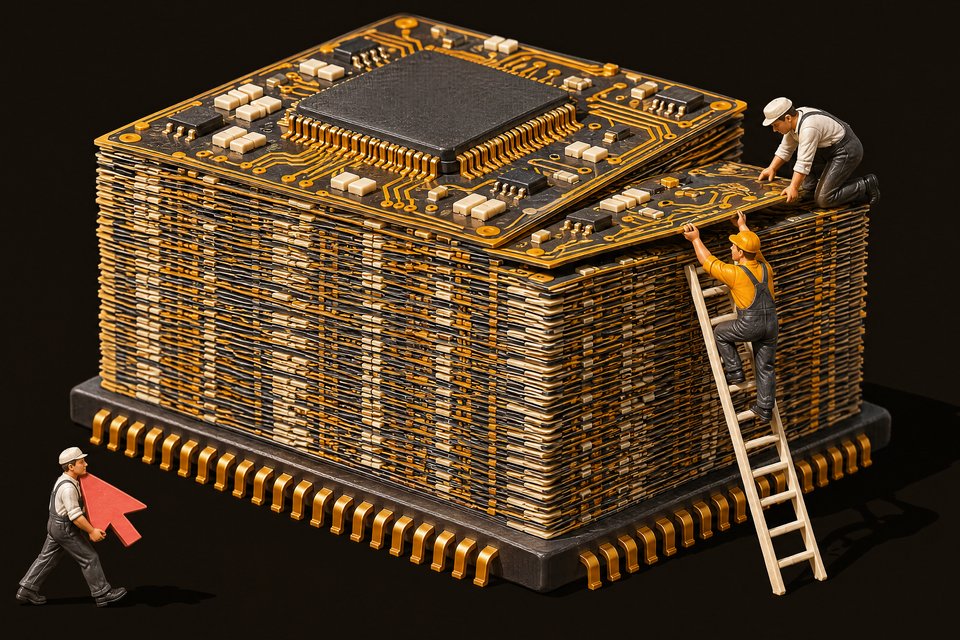
Ripple-65B is a dense 80-layer transformer where all 65B parameters run per token. How it differs from MoE, plus its attention tweaks and training.

Ripple-65B is a 65B dense Apache 2.0 model aimed at agentic coding. See its benchmark wins and gaps, plus a bug-fix, simulation and SQL test.

A ranking of 13 AI businesses, from AI SaaS and faceless channels to consulting, scored on technical skill, market demand and durability.