What Is Weight Space Programming? MIT's GPT-6 Astra Paper
MIT's Sparks of Weight Space Programming paper has GPT-6 Astra read and edit another model's weights, lifting a small Qwen's math from 7.9% to 48.1%.

For Engineering and Executives
What is weight space programming?
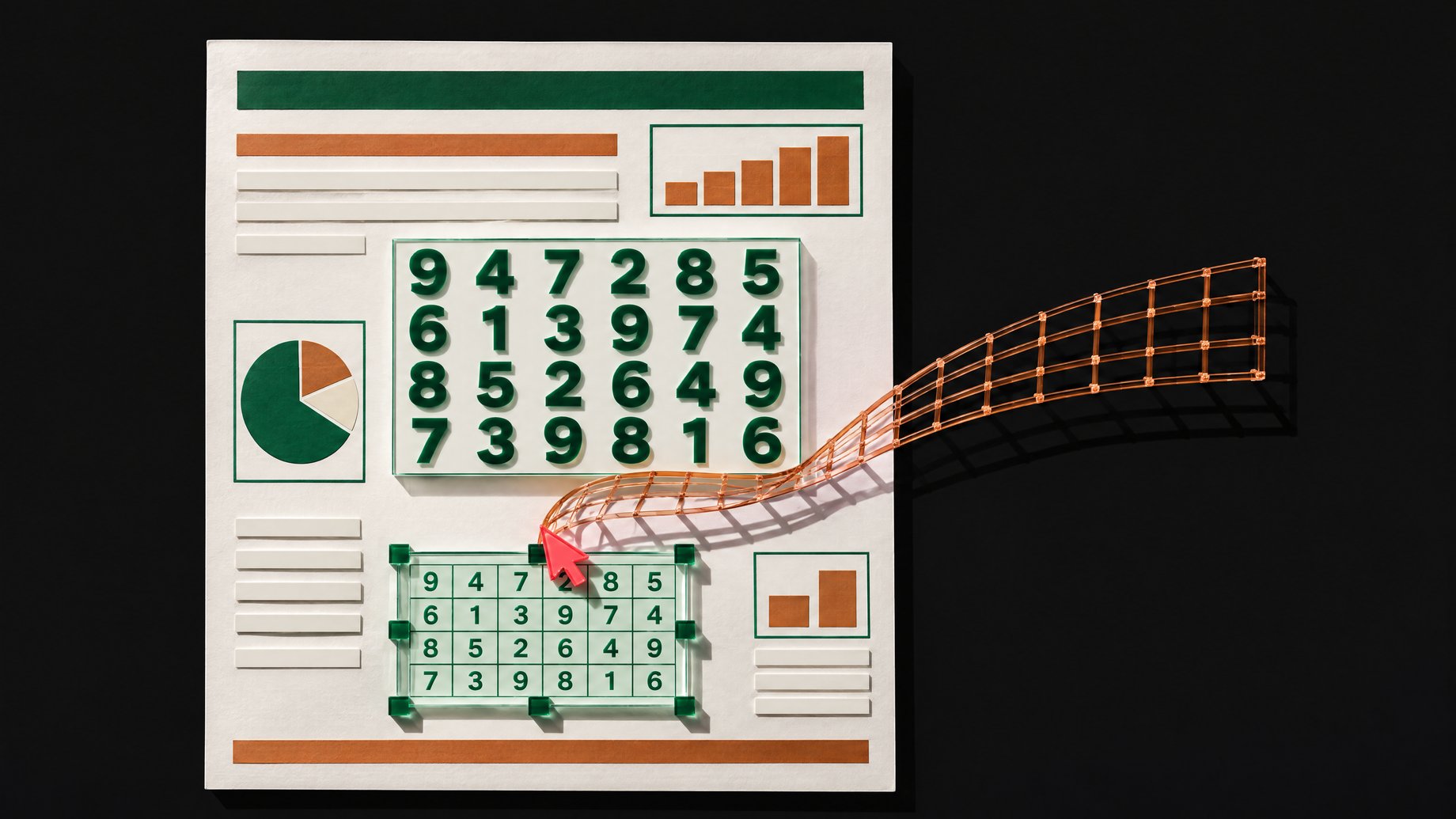
Weight space programming is the idea that one AI model can read the raw weights of another model, work out what those numbers do, and rewrite a small slice of them on purpose, with no training run. An MIT paper, "Sparks of Weight Space Programming," reports this using GPT-6 Astra as the reader and editor. In one reported case, it lifted a small Qwen model's math accuracy from 7.9% to 48.1%.
TL;DR
- The paper claims a model can read weights like text, meaning the long lists of numbers that hold everything a network has learned.
- GPT-6 Astra reportedly identified what a game-playing network was built for from raw numbers alone, with no code and no tools in that reading test.
- In an editing test, Astra changed about 3.5% of the weights in one shot and a car-over-a-ramp network went from failing to succeeding every time.
- A small Qwen model's math score reportedly rose from 7.9% to 48.1% with no training.
- The limits are real: Astra could not tell which of two models was sycophantic, and it could not make a small Gemma model better at math.
- A local run of a 27B Qwen model named three of four games from the weights, but slowly and imperfectly, so treat this as an early research direction, not a replacement for training.
How does weight space programming work?
Every neural network is a pile of weights. To a person they look like noise. The normal way to change a model's behavior is training: fine-tuning, post-training, or similar. You show it many examples and nudge its numbers in many small steps. That costs time and compute.
Weight space programming skips that loop. According to the paper's framing, the editing model reads the numbers, finds the few that matter for a behavior, and changes only those. In the editing experiments, the model also used Python tools to read the weights and write the update. That detail matters, and it comes up again below.
What did the paper actually report?
Three results stand out.
| Test | What happened |
|---|---|
| Reading weights | Astra looked at raw weights from a game-playing network and named the game it was trained on |
| Fixing a network | A network kept failing to get a car over a ramp. Astra edited about 3.5% of its weights in one shot, and the car then succeeded every time |
| Improving a language model | A small Qwen model's math accuracy went from 7.9% to 48.1% after an edit |
The first result is a pure reading task. The other two are edits. None of them involved gradient descent or a dataset of examples.
Can a local model read weights too?
Partly. A creator running Ollama on an Ubuntu box with a 48 GB GPU (the model used about 26 GB of VRAM) handed a 27 billion parameter Qwen model the paper's puzzle: a wall of raw numbers from a game-playing network, with the question "which game was this trained on?" The model had no tools and no code. It worked out how the numbers were laid out and went through them row by row. Along the way it miscounted, caught itself, and restarted.
Developer Simon Willison ran a similar test with his LLM command line tool and the paper's prompt. The local model correctly named Pac-Man, Pong, and Breakout. Each run took between 46 minutes and over an hour. It missed Freeway, the most obscure of the four games.
So a small open model can do some of the reading without special tooling. It is slow, and it is not reliable on harder cases.
Why would anyone want this?
Nothing here is settled, but the possible uses are easy to see.
- Auditing. You could check a model for hidden problems, such as a planted backdoor, by inspecting its weights instead of running a battery of tests.
- Speed and cost. Instead of collecting data and training for days, you might one day tell a model to fix a behavior and have it edit a few numbers directly. Overthinking in reasoning models is one behavior people might want to patch this way.
- Inspection of open models. If a local model can do a rough read of another network's weights, anyone with a decent GPU could run a basic "autopsy" on open-weight models.
These are possibilities, not demonstrated products.
What are the limits of weight space programming?
The paper itself reports failures, and they are informative.
- Sycophancy detection failed. Astra could not tell which of two models was the sycophantic one by looking at weights alone. That cuts against the auditing story, since sycophancy is exactly the kind of behavioral trait you would want to catch.
- The Gemma edit failed. Astra could not make a small Gemma model better at math. The Qwen gain did not transfer to every model family.
- Reading and tool use are mixed together. Willison pointed out that the paper blends two separate questions: what a model can do by reading numbers alone, and what it can do once it has code tools. A fair comparison would separate them. A human with a notepad and patience could probably do some of this too, just slowly.
- Small test sets. The reading demos used a handful of games, and even the local replication stumbled on one of four.
Does this replace training?
No. The honest reading of the results is that the direction is interesting and the evidence is early. A 7.9% to 48.1% jump on a small Qwen model is large, and a one-shot edit of roughly 3.5% of weights is a striking claim. But a result that works on Qwen and fails on Gemma, and a reader that cannot separate two models on a trait like sycophancy, is not a general-purpose replacement for fine-tuning. Training stays the default tool.
What to watch for: independent replication on other model families, clear separation of "reading only" from "reading plus code tools," and tests on behaviors that matter for safety.
Frequently Asked Questions
What is the "Sparks of Weight Space Programming" paper?
It is an MIT paper claiming that GPT-6 Astra can read another model's raw weights, understand what they encode, and edit a small portion to change behavior. It reports reading, fixing, and improving results without a training run.
How much of the model's weights did Astra change?
In the car-over-a-ramp example, Astra edited about 3.5% of the network's weights in one shot. The reported edit to a small Qwen model for math is described as changing only a tiny slice of its numbers.
Can I reproduce the weight-reading test at home?
Partly. Simon Willison ran a 27B Qwen model locally with his LLM tool and the paper's prompt, and it named three of four games correctly. Runs took 46 minutes to over an hour each, and the model missed Freeway.
Could this be used to find backdoors in models?
That is one proposed use, but it is unproven. The paper reports that Astra could not distinguish a sycophantic model from another by weights alone, which suggests auditing by weight reading is not ready yet.
Does it work on every model?
No. Astra reportedly failed to improve a small Gemma model's math, even though the Qwen edit worked.
Useful for
How we source, write, and correct our articles. Editorial standards
Related articles

What Did GPT-6 Astra Do With Raw Model Weights? Results

What Is GPT-6 Astra UI Generation? How It Works

GPT-6 Astra vs. Local Models: The Code Privacy Math