Weave Router vs OpenRouter: Which Is Better for Coding Agents?
Weave Router picks a model per coding task; OpenRouter is a model gateway. Compare routing, supported agents, open-source status, and fit for Claude Code.

How is Weave Router different from OpenRouter?
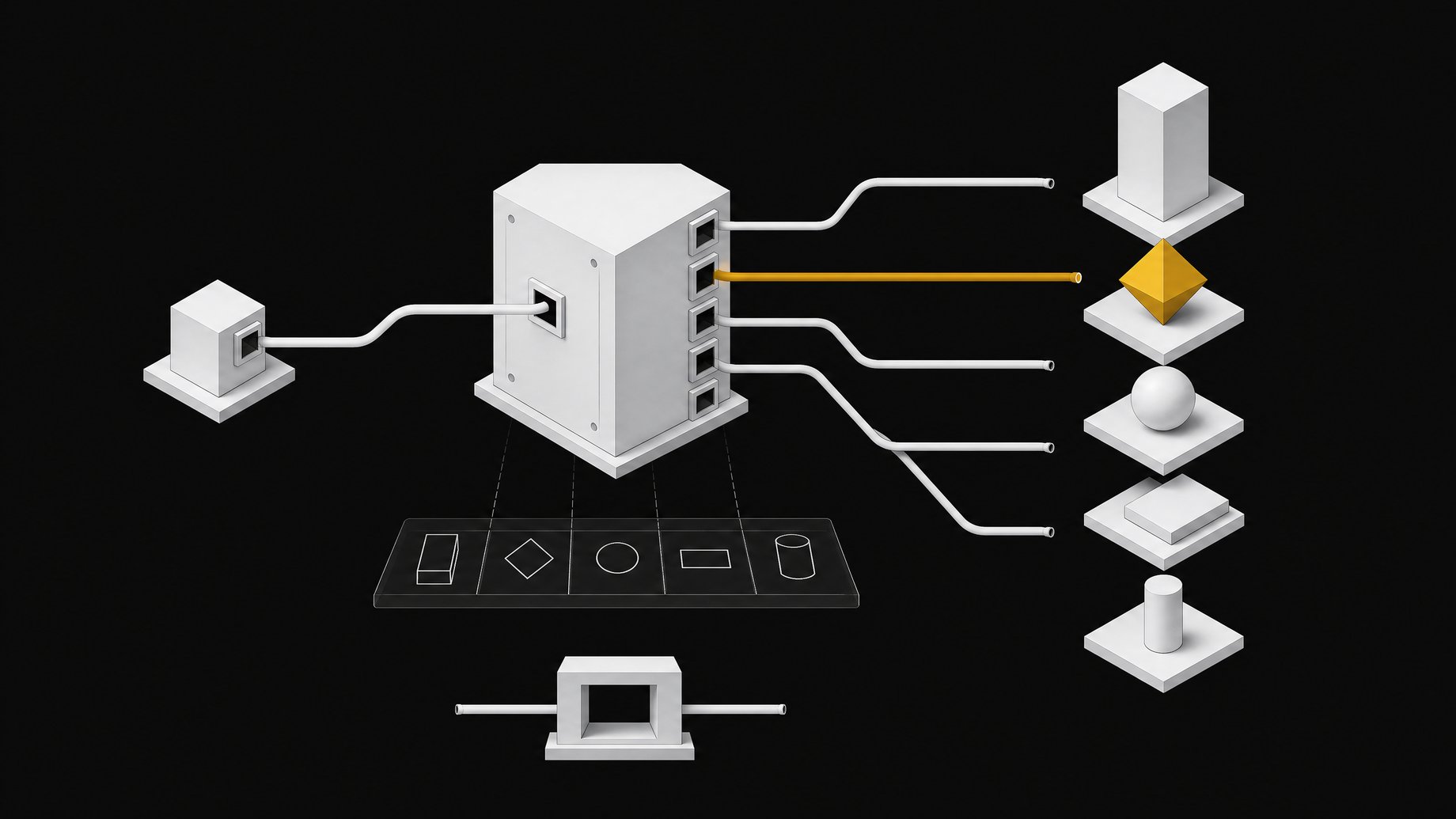
Weave Router chooses the model for you. You plug it into a coding agent, and a trained routing model decides which model should handle each prompt or task. OpenRouter is primarily a gateway. It gives you access to many models behind one API, with fallbacks, and you pick the model. OpenRouter does offer an auto router, but Weave's founders say it isn't built for coding agents and doesn't perform well there.
TL;DR
- Weave Router is an intelligent per-task router, while OpenRouter is best understood as a gateway where you choose the model.
- Weave says its routing model was trained on hundreds of thousands of real coding agent sessions, including downstream signals like what happened to the resulting pull request.
- It works with Claude Code, Codex, Open Code, Pi, and other CLI-based agents, with a one-command setup according to the founders.
- Weave Router is fully open source, with a hosted version for easy setup and a self-hosted option that requires you to bring your own keys.
- It can spread usage across multiple subscription accounts, which matters if you already pay for plans from Anthropic and OpenAI.
- The performance and cost claims (frontier-level results at about half the cost and twice the speed) come from Weave itself, so test them on your own repos before trusting them.
What is Weave Router?
Weave Router is a product from Weave, a company that builds models to measure engineering work. Weave went through Y Combinator in the Winter 2025 batch and recently raised a Series A. Its original product measures what engineers (and now coding agents) actually produce, going beyond lines of code or PR counts. The company names Robinhood, PostHog, Telnyx, Extra Space Storage, and Reducto among its customers.
The router grew out of that measurement work. If you can judge the quality and velocity of engineering output, you can also learn which models do well on which kinds of jobs. The founders describe the router as sending "every task to the best model for that task," so you stop deciding whether a given prompt deserves a top-tier closed model or a cheaper open-weight one.
How does Weave Router decide which model to use?
The routing decision comes from a machine learning model, not a hand-written rule set. The founders describe two training stages:
- Learning from real sessions. The model was trained on hundreds of thousands of coding agent sessions. Weave looks beyond the session itself and also at downstream effects: how the work shows up in the resulting PR, what happens when it merges to production, and how it holds up a month later.
- Reward-based testing. Weave also tested what happens when a task is sent down different models' paths. The router gets a reward when the task succeeds, which teaches it where each model is strong.
The founders stress that this is a trained model and not a set of opinions like "DeepSeek is probably good at this." That visibility into long-term outcomes is the part they argue competitors lack. They tie it to Weave's earlier work measuring engineering output.
How does OpenRouter work, and where does its auto router fall short?
OpenRouter lets you reach a large catalog of models through a single interface. You choose the model, and the service handles access and fallbacks. That is useful on its own. Weave's founders call it valuable, and say it might be better named "OpenGateway."
OpenRouter also has an auto router. According to Weave's founders, it doesn't work well for coding agents and isn't OpenRouter's focus. That is a competitor's assessment, and the discussion didn't cite benchmark numbers for it. If you're weighing the two, run the same real tasks through both and compare.
Weave Router vs OpenRouter at a glance
| Weave Router | OpenRouter | |
|---|---|---|
| Core idea | Picks the model per task | Gateway to many models |
| Who chooses the model | The router | You (or its auto router) |
| Focus | Coding agent workflows | Broad model access |
| Training signal | Coding sessions and downstream PR outcomes | Not covered in the sources |
| Fallbacks | Not detailed in the sources | Yes, a core feature |
| Open source | Yes, fully | Not covered in the sources |
| Subscription pooling | Yes, across multiple accounts | Not covered in the sources |
Which coding agents does Weave Router support?
The founders list Claude Code, Codex, Open Code, and Pi, and say it works with "really anything where you're working in the CLI." You connect it with one command. The router then receives each request from the agent and forwards it to the chosen model.
This design means the router can also act on parts of a conversation. The example given: when an agent is exploring a codebase to find where authentication lives, that sub-agent step can go to a cheaper model while harder reasoning stays on a stronger one.
Can Weave Router save money on subscription plans?
This is where the pitch gets specific. Many heavy users pay for top-tier plans from Anthropic and OpenAI and send everything to the biggest model because the usage feels subsidized. The founders' argument is that you don't need the strongest model for every step, and that offloading easy work stretches your limits.
Their claims:
- For the same plan spend, you "go twice as far."
- You can log in with several accounts and the router moves between those subscriptions, using up subsidized capacity first.
- Open-weight models get mixed in where they perform best, even when subsidized capacity is available.
The open-weight models Weave says it routes to most are DeepSeek, Kimi, and GLM. The founders say these did best in their internal testing. They describe them as not at the frontier but not far behind, and very cheap for the performance. Their examples of good fits: centering a button, or implementing a straightforward CRUD backend. They would not send something like building an ML system to classify a billion images to those models.
Weave also sells subscription plans (the founders mention Max and Boost tiers). Pricing wasn't given in the sources, so check Weave's site for current numbers.
Will a router make my coding agent worse?
It's the obvious risk, and the founders raised it themselves. Sending a hard task to a weak model produces buggy code. Their answer is that Weave's core product measures velocity and quality, so they can check their own use. They report that their team uses the router, ranks in the top 1% of teams in their own data, and has seen no increase in bugs or quality problems.
Treat that as a vendor's self-report from one team. The benchmark claim has the same status: they say the router reaches the performance of a top frontier model at half the cost and twice the speed. No benchmark names or methodology were shared in the sources, so this is a number to verify, not a settled result.
Is Weave Router open source?
Yes. The founders say it is fully open source and that anyone can try it. There are two routes:
- Hosted version: the easiest path, with less setup.
- Self-hosted: possible, but you need to set up all your own provider keys.
Whether OpenRouter's components are open source wasn't covered in the sources, so this comparison point is left open.
Which should you use for coding agents?
The answer depends on what you want to control.
Weave Router fits if you run Claude Code, Codex, or a similar CLI agent heavily, you want model selection taken off your plate, you hit usage limits on paid plans, or you want open-weight models used automatically for simple work.
OpenRouter fits if you want explicit control over which model handles each request, you need one API across a wide catalog of models, or you're building something beyond a coding-agent workflow.
They aren't strictly exclusive in purpose. One is a router that decides, the other a gateway that connects. A reasonable test is to run a week of representative tasks through each and compare cost, latency, and how often you have to redo the agent's work.
Frequently Asked Questions
Is Weave Router a replacement for OpenRouter?
Not exactly. Weave Router decides which model handles each coding task, while OpenRouter mainly provides access to many models and lets you choose. They overlap in routing requests, but the intent differs.
Does Weave Router work with Claude Code and Codex?
Yes. The founders list Claude Code, Codex, Open Code, and Pi, and say any CLI-based coding agent can connect with one command.
Which open-source models does Weave Router use?
The founders say the models they route to most are DeepSeek, Kimi, and GLM, mainly for simpler tasks. They say these performed best in their internal testing.
Can I self-host Weave Router?
Yes. It is open source, and self-hosting is possible. You need to configure your own provider keys, so the hosted version is the lower-effort option.
Are the cost and speed claims verified?
They come from Weave, which says the router matches a top model's performance at half the cost and twice the speed. The sources include no benchmark details, so test on your own codebase before relying on them.
How we source, write, and correct our articles. Editorial standards