Which AI Business Should You Start? 13 Models Ranked
A ranking of 13 AI businesses, from AI SaaS and faceless channels to consulting, scored on technical skill, market demand and durability.

Which AI business should you start?
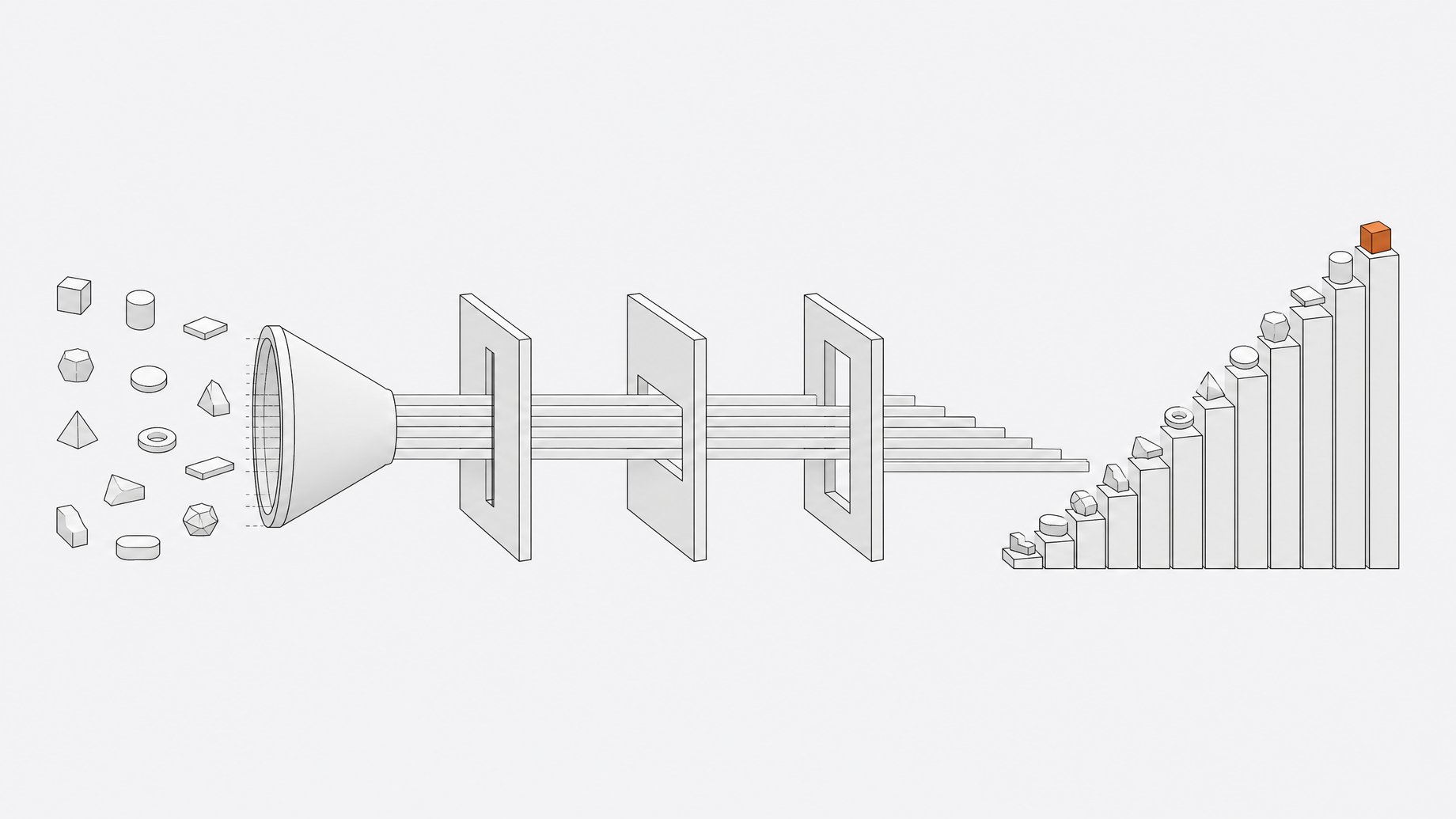
Start with a low-risk offer that sells quickly, then move toward businesses with a clear KPI and a sticky relationship. In one creator's ranking of 13 AI businesses, AI SaaS and faceless channels sit at the bottom as the hardest to make work. AI websites, workshops, and audits are better entry points. AI lead gen, education, and consulting rank highest for durability. The ranking is subjective, built on one operator's experience.
TL;DR
- AI SaaS ranks last because building the app takes days, while distribution and churn are the real business.
- AI websites are the best beginner offer, but the ceiling is low (roughly 10 to 20K a month) and cheap site builders already exist.
- GEO, receptionists, and automation all score a 2 on durability because tools, platforms, or in-house hires are catching up.
- AI lead gen scores a 5 for durability because the KPI is obvious and clients rarely cancel a retainer that brings in customers.
- AI education and personal brands also score a 5 for durability, but audiences take years to build.
- Workshops and audits work as foot-in-the-door offers that often lead to bigger projects.
How were these businesses scored?
Each business gets three scores out of five.
- Technical: how much skill you need to deliver something people will pay for. A lower score is supposed to mean more skill required.
- Market: whether there are more buyers than sellers right now.
- Durability: whether it can become a real business that lasts and keeps growing.
Two caveats. The scores come from one person's experience, and the prices quoted are what businesses charge, not income promises. Also, the technical scores are the least consistent part. AI SaaS gets a 4 even though the reasoning cites security and infrastructure headaches. Read the explanations, not just the numbers.
What does the full ranking look like?
| Rank | Business | Technical | Market | Durability |
|---|---|---|---|---|
| 13 | AI SaaS | 4 | 1 | 3 |
| 12 | Faceless AI channels | n/a | n/a | 1 |
| 11 | AI websites | 1 | 2 | 1 |
| 10 | AI operating systems | 3 | 4 | 2 |
| 9 | GEO | 2 | 3 | 2 |
| 8 | AI receptionists and support | 3 | 4 | 2 |
| 7 | AI automation and integration | 2 | 3 | 2 |
| 6 | AI workshops | 3 | 3 | 3 |
| 5 | AI lead gen | 4 | 3 | 5 |
| 4 | AI creative studio | 3 | 4 | 3 |
| 3 | AI education and personal brand | 3 | 3 | 5 |
| 2 | AI consulting and audits | n/a | n/a | n/a |
| 1 | Chief AI officer | n/a | n/a | n/a |
The source material is cut off partway through the consulting entry, and it doesn't include the top-ranked entry's scores. Those cells are left blank rather than guessed.
Why is AI SaaS ranked worst?
Building the app is the easy part. Getting people to find it, pay for it, and not cancel is the business. Most people who scale SaaS successfully already had an audience, a service business, or money going in.
The market score is a 1. The ranking cites roughly 560,000 new apps hitting the App Store in the first half of this year, almost as many as all of 2025, while downloads barely moved. Durability gets a 3: a real moat can last, but one platform update can kill a thin wrapper. The ceiling is high, which is why it's popular. It's just a rough place to start.
Are faceless AI channels worth building?
They can work, but views alone don't pay. YouTube won't monetize mass-produced repetitive AI content, so you need an audience someone wants to pay to reach. Think a news page that attracts sponsors, or a sports picks account that sells into a paid Discord. Viral brain-rot content has reach but few buyers.
Durability is a 1 because platforms can change the rules overnight. Startup cost is low (a coding-assistant subscription, roughly). Pick the audience first, then automate production.
Is an AI website business a good place to start?
For a total beginner, yes. You can build a demo site in about 20 minutes before pitching, and some dev agencies still charge 5K to 10K for work you can now do in an afternoon with tools like Claude Code, Codex, or Lovable.
The limits are real. Growth past 10 to 20K a month looks hard, and AI site builders already sell for around nine dollars a month. It scores 1 on technical, 2 on market, and 1 on durability. Use it for momentum, then move up the list.
Which AI services have durability problems?
Four mid-ranked services share a pattern: strong demand, weak defensibility.
- AI operating systems (AIOS): one central setup holding a company's agents, automations, tools, and team knowledge. It's a good foot in the door, but it's hard to tie to a business-outcome KPI. It also only works if the owner already believes in AI, or you won't get adoption, a case study, or referrals.
- GEO (generative engine optimization): SEO for AI answers, so a brand gets recommended when someone asks ChatGPT or Perplexity. Profound reportedly raised $180 million at a $1.8 billion valuation, and Vercel's CEO says ChatGPT sends about 10% of new sign-ups. It fits existing SEO people best. ChatGPT now running ads could shift visibility control.
- AI receptionists and support agents: the ROI story is easy. One study of 70 million business calls found only 56% get answered by a person. Setups run roughly 1.5K to 5K plus a monthly retainer. But Podium, ServiceTitan, and Weave are building AI receptionists into software their customers already pay for.
- AI automation and integration: AI integration work on Upwork rose 187% in a year, yet building automations is getting commoditized and companies hire for it internally. A single workflow goes for roughly 500 to 2K. The valuable skill is finding the bottleneck and tying the fix to a business result.
Do AI workshops and creative studios hold up?
Both land in the middle with a 3 on durability.
Workshops pay roughly $1,000 for a half day up to 5K for a full day with a bigger team. Only 36% of employees say they feel properly trained on AI, per the survey cited. The ranker says workshops build instant trust and often lead to larger projects.
Creative studios cover ads, commercials, carousels, and video editing. AI video editing was reportedly the fastest-growing skill on Upwork last year (up 329%). But anyone can hit generate, even inside Meta's ad tools, and average UGC video prices fell about 44% in a year. Clients pay for taste, model selection, and running ads with data to make the next batch.
Why do lead gen and education score highest for durability?
AI lead gen has the clearest KPI on the list: more leads usually means more customers or revenue. Clients don't cancel a retainer that feeds their pipeline. Clay reportedly passed $100 million in annual revenue last year. The catch is that you need to crack lead gen for your own business first. The best position is an existing lead gen agency that adds AI on top. It scores 4 technical, 3 market, 5 durability.
AI education and personal brand (courses, communities, newsletters, videos) is the ranker's own main business, so weigh the score accordingly. The argument is that people invested in you will follow when the tools change. The cost is time: audiences take years, and the ranker did agency work, consulting, and workshops before building one. A brand can later power spin-off businesses.
What about AI consulting and chief AI officer roles?
Consulting and audits sit at number two. The pitch is the doctor analogy: building the fix keeps getting cheaper, so clients pay for diagnosis plus change management, governance, stakeholder buy-in, and culture. It's the consulting layer above automation work. LinkedIn reportedly ranked AI consultants as the second fastest-growing job. The chief AI officer role tops the list, but the source material here doesn't cover its reasoning or scores, so treat it as unverified.
Frequently Asked Questions
What is the easiest AI business for a beginner?
AI websites. You can build a demo in minutes and pitch it before spending real time. The ceiling is low and competition from cheap builders is real, so treat it as a stepping stone.
Which AI business is the most durable?
In this ranking, AI lead gen and AI education both score a 5 on durability. Lead gen wins on a clear KPI and sticky retainers. Education wins because an audience can follow you as tools change.
Is AI automation still a good business?
Demand is growing, with Upwork AI integration work up 187%. But building automations is commoditized and companies are hiring in-house. The ranking suggests selling bottleneck diagnosis tied to a business result, not just workflows.
Do I need an existing audience or agency to start?
It helps a lot for some models. SaaS founders who scale usually had an audience, a service business, or money. Lead gen works best added to an agency that already generates leads, and GEO fits people who already do SEO.
How we source, write, and correct our articles. Editorial standards