Why Is My SaaS Bill Rising Despite AI? Costs and Fixes
Enterprise SaaS spend rose 8% to $55.7M on average even as AI speeds up work. See how vendors recapture savings and what to check before renewal.


Why is my SaaS bill rising despite AI?
Your SaaS bill is rising because vendors have already changed their pricing to capture AI efficiency gains before those gains reach your invoice. AI is making work faster almost everywhere, but the bill for the software that runs that work is still going up. Enterprise SaaS spend rose roughly 8% year over year to an average of $55.7 million annually, even though the number of applications companies run stayed essentially flat at around 305 apps. The efficiency is real. The savings aren't landing on your invoice.
That gap isn't an accident. It's the result of a pricing shift vendors have already made, and it mirrors a fight now playing out in a different industry entirely: corporate law.
TL;DR
- Enterprise SaaS spend rose 8% year over year even though total application counts remained flat.
- SaaS vendors are intercepting AI efficiency gains through new tiers and usage-based pricing instead of passing savings on to buyers.
- 35% of enterprise teams have replaced at least one SaaS tool with a custom AI-built internal app.
- Shadow AI is surging, with 60% of internal builders shipping software outside official IT oversight.
- Governed internal AI initiatives capture savings, while unguarded solo builds fail at a higher rate.
What is the law firm playbook behind "Where's my discount?"
Wall Street banks have started asking their outside law firms a blunt question. If AI is making your lawyers faster, why is our bill the same?
Citigroup, Goldman Sachs, and Morgan Stanley have all pushed elite firms to disclose how much time AI tools are saving on routine legal work, and to lower fees per transaction accordingly. Adam Meshel, Citigroup's global head of legal, put it plainly to the Financial Times: "If the number of hours they're working on a matter has come down because of AI... our expectation is for costs to come down significantly per transaction."
Here's the catch. It isn't happening. Big Law associate billing rates climbed 33% since 2023, to an average of $798 an hour, while partner rates rose 29% over the same period, even as AI adoption spread across the profession. A survey of firms found 58% said AI has not changed their billing practices or reduced billable hours at all. The tool got faster. The invoice didn't get smaller.
Enterprise software buyers are living through the exact same pattern with their SaaS stacks. Different vendor, same contract mechanics.
Do legal billing and SaaS pricing run on the same playbook?
Put the two markets side by side and the mechanics match.
In legal services, the efficiency gain sits inside the billable hour. AI drafts faster, reviews contracts faster, researches faster. But the firm still owns the clock, and nothing forces it to pass hours saved back to the client unless the client has the leverage to demand it, which is exactly what banks are now trying to build.
In SaaS, the efficiency gain sits inside the product. AI features let your team do more with the same seat count. But the vendor owns the pricing model, and it has already restructured that model to intercept the gain before it reaches your renewal. Rather than fewer seats or lower per-seat costs, buyers are seeing new AI tiers, usage-based add-ons, and shortened contract terms that reset the price upward on a tighter clock.
The difference: law firms are resisting a change to their fee structure under client pressure. SaaS vendors already made the change, unprompted, and expect customers to adjust to it. That's why AI-native application spend jumped 108% year over year across enterprises, and 393% among companies with more than 10,000 employees, even as usage per employee grows far more slowly than the price tag suggests it should.
Why Are SaaS Vendors Winning the Efficiency Trade?
SaaS vendors didn't stumble into this. They built a pricing playbook specifically to capture AI-driven efficiency before it reaches your P&L. Five mechanisms show up across the market:
- Renewal uplifts. 79% of IT leaders reported price increases at their most recent renewal, often justified by "AI-enhanced" versions of features you already had.
- AI feature bundling. Core functionality quietly moves into a higher tier, and the AI capability that used to be a differentiator becomes the reason to upgrade.
- Consumption and hybrid pricing. Gartner projects that by 2027, 70% of leading SaaS vendors will offer consumption-based pricing on at least part of their portfolio, layered on top of the subscription you're already paying.
- Shrinkflation. Quotas, seats, or included usage shrink while the sticker price holds steady.
- Unpredictable overage charges. Between 66.5% and 78% of IT leaders say they have been hit with unexpected charges tied to AI or consumption pricing they didn't fully anticipate when they signed.
This is the same dynamic driving software costs up across the wider market. For more on the mechanics, see why data-center power costs and bundling are quietly repricing your stack. The upshot: the efficiency AI creates inside your workflow gets recaptured by the vendor's pricing engine before it ever shows up as a lower bill.
Part of this is a real cost problem for vendors, not only a pricing play. Traditional SaaS kept 80-90% gross margins because serving one more customer cost almost nothing. AI features carry a compute cost that grows with usage, and at AI-native and AI-integrated companies gross margins have compressed to 50-70%, with inference alone taking roughly 23% of revenue. GitHub Copilot is the clearest case: heavy users reportedly cost up to $80 a month against a $10 flat fee. That is why flat per-seat pricing is giving way to credits and tokens.
The size of the increase is worth pinning down. SaaS price inflation is running 8.7-11.4% year over year, against about 2.7% general G7 inflation. Tropic's 2026 pricing report found AI-driven renewal increases averaging 20-37%, compared with a historical 3-9% annual uplift. Examples include Salesforce raising Enterprise and Unlimited Edition prices 6% in August 2025 and Slack's Business+ plan rising 20% the same year.
Beyond tiers and add-ons, buyers report three more tactics to watch for: forced migration off legacy plans onto pricier AI-bundled SKUs, usage billed in opaque "credits" that make cost per unit hard to compare between renewals, and discounts that depend on adopting AI add-ons.
Is building your own tools the escape hatch from vendor pricing?
If vendors control the pricing lever on rented software, the one lever companies still control is what they build themselves. And that lever is getting pulled hard.
Retool's 2026 survey of enterprise builders found that 35% of teams have already replaced at least one SaaS tool with a custom AI-built internal tool, and 78% plan to build more in 2026. The categories most exposed:
- Workflow automation (35%)
- Internal admin tools (33%)
- BI dashboards (29%)
- CRMs (25%)
- Project management software (23%)
The case studies are concrete, not theoretical. ClickUp built six internal AI tools instead of buying more automation SaaS, cutting $200,000 a year in software spend on top of avoided headcount costs. Harmonic replaced a $20,000-a-year third-party tool by building 33 internal apps. These are the companies pocketing the AI efficiency dividend instead of watching it disappear into a vendor's renewal terms. It's the shift covered in why niche SaaS is losing ground to teams that build it themselves, and the same math behind the build-versus-buy calculation for 2026.
What is the shadow AI catch with building your own?
Building your own tools isn't automatically a win. It can just as easily become a new liability wearing a savings costume.
60% of builders inside companies have shipped software outside official IT oversight in the past year. Much of this build-your-own shift is shadow IT, not sanctioned strategy, and it rhymes with a broader pattern: 78% of employees already bring their own AI tools to work without IT approval, and shadow AI usage grew 250% between early 2023 and early 2024.
Even where the building is deliberate, the accounting often isn't. 35% of organizations have not established any AI productivity metrics at all, meaning the savings from replacing a SaaS tool with an internal build frequently go unmeasured and unproven. MIT's 2025 study on generative AI adoption found that internal-build-only AI initiatives succeed roughly one-third as often as projects that buy from vendors or partner with them, a reminder that DIY savings require engineering discipline, not just a coding agent and enthusiasm. Ungoverned agents also have a habit of running up their own bills. Worth reading how event-triggered automations keep an employee's agent from blowing the budget before you scale any build effort past a pilot.
Should You Rent AI Efficiency or Build to Own It?
Three postures are available heading into your next SaaS renewal, and they carry very different odds.
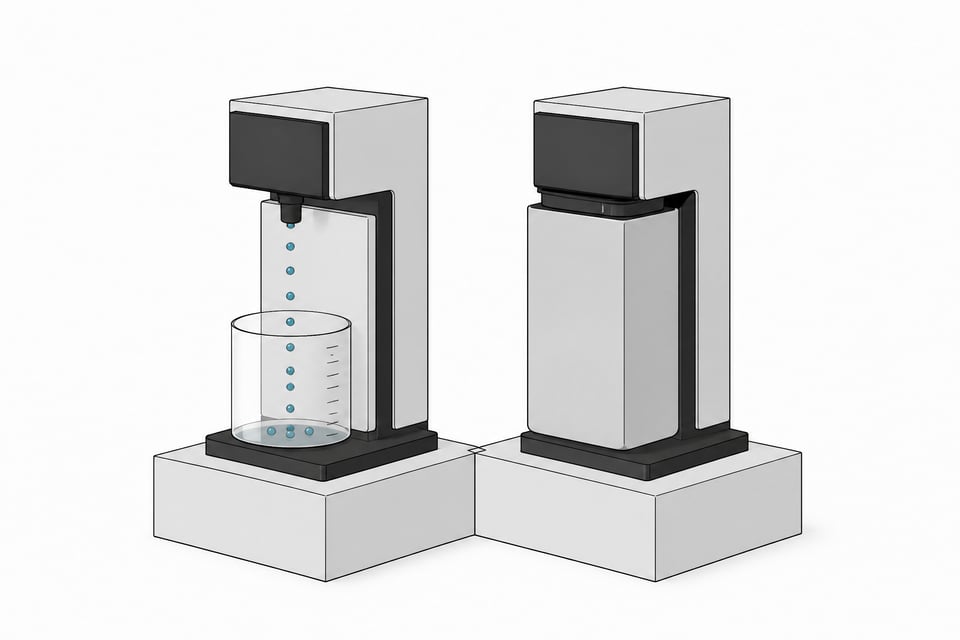
- Stay on vendor SaaS and hope savings pass through. Predictable in the short term, but the data says otherwise: renewal uplifts, AI tiers, and consumption pricing are designed to intercept efficiency gains before they reach you.
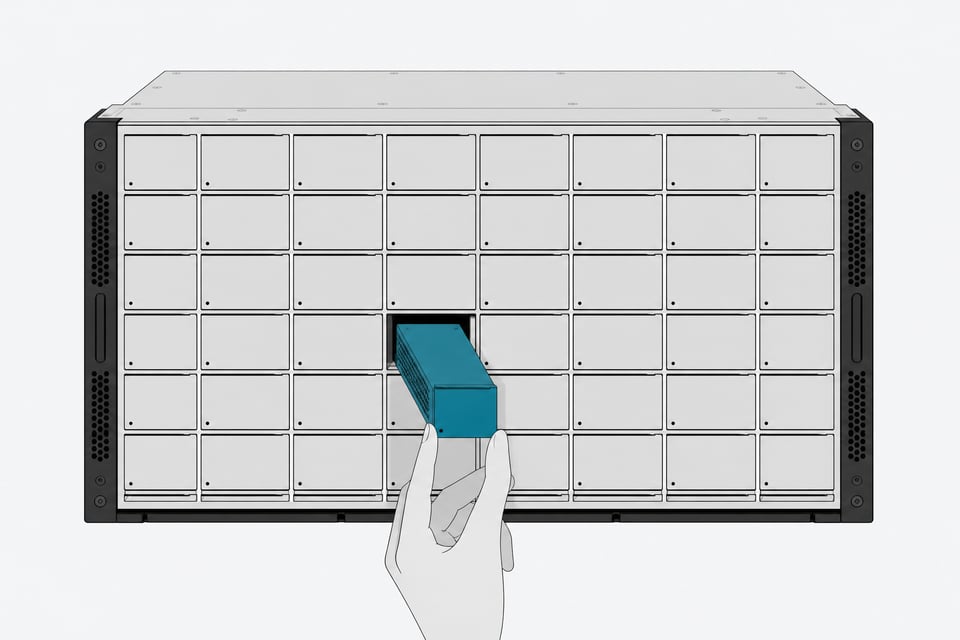
- Build internal AI tools without governance. Real savings are possible, sometimes six figures a year, but 60% of this activity happens outside IT oversight and over a third of organizations can't even measure whether it's working.
- Build with governance in place. This is where teams like ClickUp and Harmonic actually captured and kept their savings, because ownership came with measurement, accountability, and a sanctioned process rather than ad hoc scripts.
| Cost Predictability | Savings Potential | Governance Risk | Negotiating Leverage | |
|---|---|---|---|---|
| Stay on vendor SaaSteams that need predictable short-term costs | High | Low | Low | Low |
| Build without governancefast, ad hoc fixes to a single pain point | Low | Medium | High | Medium |
| RecommendedBuild with governanceteams that want to keep the savings they create | Medium | High | Low | High |
A well-governed internal build practice is the version of this trade that keeps the efficiency dividend where it was earned.
What Should You Do Before Your Next SaaS Renewal?
Line the three postures up and it's not close. Renting and hoping is the weakest position, because vendors have already rebuilt their pricing to keep it that way. Building without discipline just trades one liability for another.
Before your next renewal cycle, do three things:
- Audit renewals for AI-driven inflation. Line up this year's invoice against last year's and flag every new "AI tier," usage add-on, or shrunk quota specifically.
- Treat build capability as leverage. Even if you don't build every tool, having a credible internal alternative changes the negotiating conversation with a vendor.
- Fund governance before scale. Set productivity metrics and an approval path for internal AI tools before you let the build-your-own movement run past a handful of pilots.
Wall Street banks are learning that asking a law firm nicely for a discount doesn't work when the firm controls the billing model. Enterprise software buyers are learning the same lesson about SaaS. The fix in both cases isn't asking harder. It's controlling more of the stack yourself.
Once you have audited the invoice, a few negotiating moves are worth making. Negotiation does work: it cuts the initial AI price-increase ask by about 55% on average, though final uplifts still land around 12% above pre-AI baselines.
- Time the renewal. Vendors have more room at quarter-end and year-end, so renewing off their fiscal calendar gives up leverage.
- Ask for legacy pricing in writing. Forced SKU migrations often have quiet exceptions for customers who push back before the deadline.
- Get a written credit conversion. If a plan bills in credits or units, require a conversion to real dollars per seat or API call before signing.
- Cap spend contractually. Consumption pricing lets a usage spike blow past a flat budget, so set a ceiling in the contract.
- Measure your own AI ROI first. Fewer than a third of companies can show measurable ROI on AI tooling spend, which is a weak position to negotiate from.
Frequently Asked Questions
Is AI actually reducing SaaS spending?
No. Enterprise SaaS spend rose about 8% year over year even as application counts stayed flat, and AI-native app spend jumped 108% overall and 393% among large enterprises. The efficiency AI creates inside workflows is being recaptured by vendors through new pricing tiers rather than passed on as savings.
How are SaaS vendors capturing AI efficiency gains instead of customers?
Through five mechanisms: renewal price uplifts, AI feature bundling into higher tiers, consumption or hybrid pricing layered on top of subscriptions, shortened contract terms, and shrinkflation of included quotas. 79% of IT leaders saw price increases at their last renewal.
Why does the law firm billing fight matter to SaaS buyers?
Banks like Citigroup are demanding law firms lower fees since AI speeds up legal work, but billing rates rose 33% anyway and 58% of firms haven't changed billing practices. It shows that efficiency gains don't automatically flow to the buyer unless the buyer has real leverage, which is the same dynamic playing out in SaaS renewals.
Is building internal AI tools instead of buying SaaS actually safe?
Only with governance. 60% of internal builds ship outside IT oversight, and 35% of organizations have no AI productivity metrics to prove the savings are real. Companies like ClickUp and Harmonic captured genuine savings because they paired building with measurement and accountability, not just enthusiasm.
What should a company do before its next SaaS renewal?
Audit the invoice for new AI tiers, usage charges, or shrunk quotas since the last cycle, build credible internal alternatives for at-risk categories like workflow automation or BI tools, and put productivity metrics and an approval process in place before scaling any DIY build effort.
How we source, write, and correct our articles. Editorial standards