How Much Does Mercury 3 Cost and Where Can You Access It?
Mercury 3 costs $0.10 input and $0.35 output per million tokens at launch, with 90% off cached input. See where to access it and which workloads fit.

How much does Mercury 3 cost and how do I get access to it?
Mercury 3, Inception's diffusion language model, costs $0.10 per million input tokens and $0.35 per million output tokens at launch. That launch price is 50% off, so expect it to rise. Cached input is 90% cheaper. You can call it through Inception's own API, OpenRouter, Baseten, or Vercel. The API is OpenAI compatible, so switching mostly means changing a base URL. It supports tool calling, structured outputs, and a 1M token context window.
TL;DR
- Mercury 3 launched at $0.10 in and $0.35 out per million tokens, and that figure already includes a 50% launch discount that may not last.
- Cached input is 90% off, which matters most for agents that resend the same context on every step.
- You can reach it through Inception's API, OpenRouter, Baseten, and Vercel, with an OpenAI-compatible interface.
- Inception reports 1,068 tokens per second on Nvidia Blackwell, roughly 8x GPT-6 Luna and 4.5x Claude Haiku 5.5 by its own numbers.
- The context window is 1M tokens, up from 260K in the previous Mercury model.
- You are paying for speed, not for cheaper tokens, so the model fits latency-sensitive and high-fan-out workloads best.
What does Mercury 3 pricing look like in detail?
| Item | Launch price |
|---|---|
| Input tokens | $0.10 per million |
| Output tokens | $0.35 per million |
| Cached input | 90% off the input rate |
| Launch discount | 50% off (duration not stated) |
| Context window | 1M tokens (previous model: 260K) |
The sources do not say how long the discount will run or what the undiscounted rate is. Budget with that uncertainty in mind. The creator who tested the model noted that, longer term, it may end up a bit more expensive than GPT-6 Luna or Claude Haiku 5.5. Inception's pitch is not the cheapest token. It is the fastest useful one.
Cached input is the line item worth modeling. A typical agent loop sends a long system prompt, tool definitions, and accumulated context on every step. If most of that prefix is cached, the input side of the bill shrinks by up to 90%, and the 1M window gives you room to keep that context around.
How do I access Mercury 3?
Four routes are available at launch:
- Inception's own API. The direct option.
- OpenRouter. Useful if you already route multiple models through one key.
- Baseten. An option if you run inference workloads there already.
- Vercel. Handy if your app already lives in that stack.
Because the API follows the OpenAI format, a migration from another provider is mostly a config change:
from openai import OpenAI

client = OpenAI(
    base_url="<provider base URL>",
    api_key="<your key>",
)
Check the provider's docs for the exact base URL and model ID. Tool calling and structured outputs work through the same interface, and you can raise or lower reasoning effort to trade answer depth for latency.
How does a diffusion LLM differ from a normal one?
Most LLMs are autoregressive. They write one token at a time, and each token costs a full pass through the model. Decoding speed is limited by that loop.
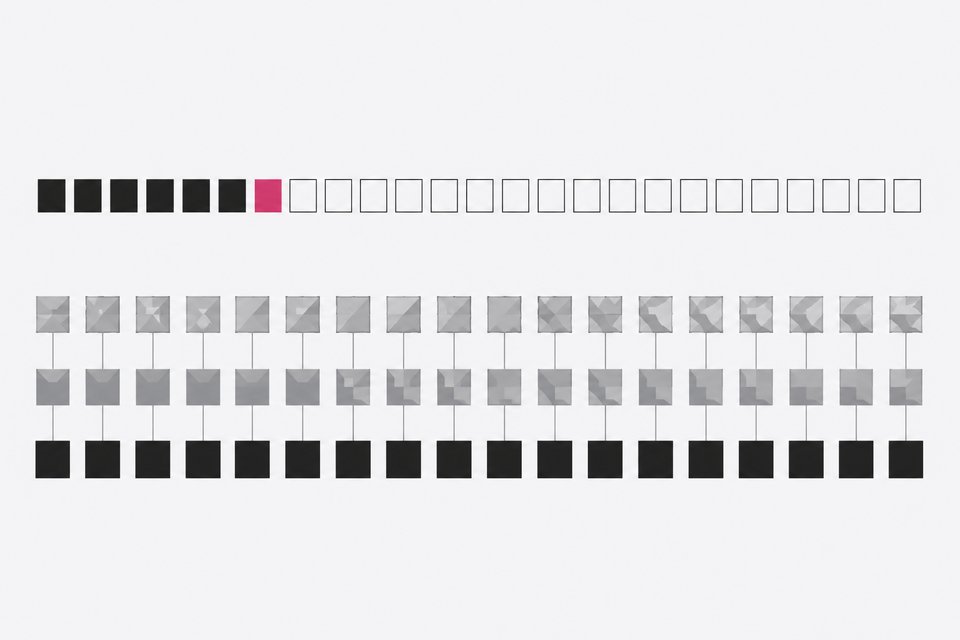
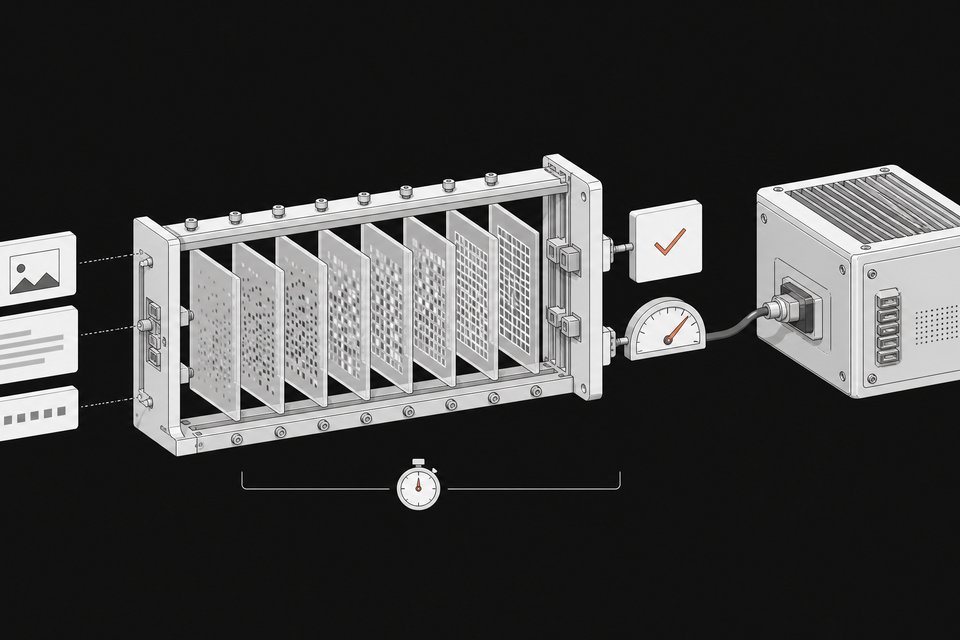
A diffusion model starts with a rough, masked-out draft of the whole response and refines many tokens in parallel over a handful of passes. Inference is mostly limited by memory bandwidth, not compute, so getting more tokens out of each pass is where the speedup comes from. The output reads like any other model's text. Only the generation process differs.
One practical effect: the first tokens can take a moment to appear, then the full response assembles very quickly. In one demo, a long essay prompt showed a visible delay before the first token, then filled in chunk by chunk. The tester reported a roughly 4,200-word result from a 5,000-word request, which is better than many models manage on that kind of prompt.
How fast and how good is Mercury 3?
Inception reports 1,068 tokens per second on Nvidia Blackwell. By its figures, that is about eight times what GPT-6 Luna delivers and 4.5 times Claude Haiku 5.5.
On quality, Inception places Mercury 3 in the same range as those two models. It is strongest on reasoning, instruction following, and search, including a strong GPQA Diamond result. It trails Opus 5.5 on coding benchmarks, so treat it as a fit for medium-difficulty tasks and as a default model for coding sub-agents rather than a replacement for a frontier model on hard problems.
A caveat: the benchmark comparisons come from Inception, and the source video was sponsored by the company. Run your own evals on your own prompts before committing. In the creator's own tests, the model passed a 10-test tool-calling suite 10 out of 10 and went 8 for 8 on a harder set, without the overthinking seen in some models. That is a small sample, but it is a useful sign.
Which workloads justify paying for speed?
Speed pays off when latency is the product, or when you fan out many calls.
- Real-time interfaces. Octane builds search for smart glasses. The source describes generation time of 0.9 seconds with Mercury 3, and notes that on glasses a delay of a few seconds makes users think something is broken.
- Web agents. Tiny Fish, which builds web agents, is cited as a customer that can do more because the model is faster.
- Sub-agent swarms. Reading a large codebase, or splitting a pile of data across many parallel agents, benefits when each call returns almost instantly.
- Search agents and support bots. Instruction following and speed both matter here, and those are the areas where Mercury 3 benchmarks well.
- Loops that repeat many times. Self-improvement or retry loops get cheaper in wall-clock time even if token cost is similar.
If your workload is a single hard, offline task where you only care about the best possible answer, the speed advantage buys you little. A stronger, slower model is the better pick there.
What is Mercury Decide, and is it free?
Mercury Decide is a separate diffusion model from Inception for fast, structured judgments. It does not generate text. You give it a state (text, and in the latest release, images) and a set of typed questions. It returns answers with a probability in one call. Think of questions such as whether a ticket is about billing, whether an agent is stuck, or whether a page loaded.
At the time of the source video, it was free on OpenRouter. Independent testing by Vals AI, as described in the source, reported:
- About 87% on LegalBench versus 74% for the decision model it was compared against.
- Claim verification on par with that model.
- A median of about 0.16 seconds for one judgment and 0.4 seconds for 64 judgments.
- Cost of roughly a quarter of the comparison model.
- Third place on the Artificial Analysis Decision Index for not hallucinating, at 32%.
The design pattern is cheap, fast checks wrapped around a single expensive reasoning call, with confidence scores you can use to escalate to a human.
Is Mercury 3 worth it?
It is worth testing if your bottleneck is latency or call volume. Switching costs are low because of the OpenAI-compatible API, so a side-by-side trial on one workflow is cheap. Do not assume it will save money. The pricing is competitive at the launch discount, but the sources suggest it may land above small models from the big labs later, with cached input softening that.
Frequently Asked Questions
What is the launch price of Mercury 3?
It is $0.10 per million input tokens and $0.35 per million output tokens. This is a 50% launch discount, and the sources do not say how long it will last.
Is Mercury 3 a drop-in replacement for an OpenAI-style integration?
Largely yes. The API is OpenAI compatible, so switching is mainly a base URL change. It also supports tool calling and structured outputs. Verify model IDs and any parameter differences in the provider's documentation.
How large is the Mercury 3 context window?
One million tokens, up from 260K in Inception's previous model. Combined with 90% off cached input, that makes long, repeated contexts more affordable.
Where can I use Mercury 3 besides Inception's API?
It is available on OpenRouter, Baseten, and Vercel. Pick the one that matches the infrastructure and billing you already use.
Is Mercury 3 as smart as frontier models?
No. Inception places it in the range of GPT-6 Luna and Claude Haiku 5.5, and it falls short of Opus 5.5 on coding. It suits medium-difficulty tasks and sub-agents where speed matters more than peak capability.
How we source, write, and correct our articles. Editorial standards