How Good Is Nemotron 3.5 Super VL for Agentic Coding and Vision?
Hands-on results for NVIDIA's open Nemotron 3.5 Super VL (120B, 12B active): bug fixing, vision, translation, circuits, and benchmarks.

How good is Nemotron 3.5 Super VL in real agentic coding and vision tasks?
Nemotron 3.5 Super VL is a fast, capable all-rounder, but not the leader in agentic coding. In a hands-on run it found and fixed a real, silent bug in a multi-container app through the Hermes agent, read a handwritten circuit and caught a wiring error, and handled major-language translation well. It over-edited the codebase, failed on rare languages, and drew a weak dragon. Against Qwen 3.8 Flash, GLM 5.2 Flash and a DeepSeek model, it trails on agentic and coding tests.
TL;DR
- Nemotron 3.5 Super VL is an open-weight vision-language model with 120B total and 12B active parameters, a context window up to 1M tokens, and text, image and video input.
- In a hands-on bug hunt, it located the real root cause (a missing sphere update in a plus-to-minus cylinder conversion), rebuilt the container, and verified the fix.
- It also reported three unnecessary edits in other files where nothing was broken, which matters if you let agents touch production code.
- Vision reasoning was strong: it read a hand-drawn Sallen-Key filter, computed a cutoff near 750 Hz, and spotted that the op amp inputs were swapped.
- Multilingual output was fine for English, Spanish and French but weak on low-resource languages such as Burmese, Pashto and Sindhi.
- NVIDIA's own tables show it behind Qwen 3.8 Flash, GLM 5.2 Flash and a DeepSeek model on agentic and coding tests, while leading on long context and running roughly twice as fast on NVIDIA GPUs.
What is Nemotron 3.5 Super VL?
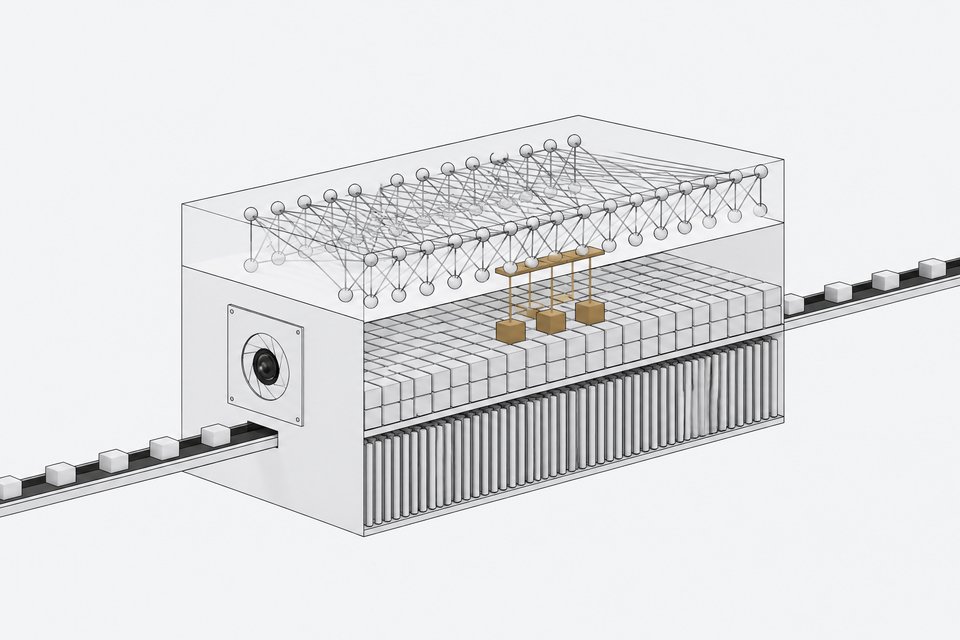
It is NVIDIA's vision-language model for reasoning, coding, tool use, document understanding and video understanding. The architecture interleaves Mamba-2 layers, Mixture-of-Experts layers (512 routed experts per MoE layer) and attention layers, paired with a C-RADIO vision encoder. Only 12B of the 120B parameters are active per token, which keeps inference quick for its size.
A Multi-Token Prediction head enables native speculative decoding. Reasoning can be switched off, set to medium, or fully on through the chat template. The license is OpenMDW-1.1, and the model card says it is ready for commercial and non-commercial use.
| Spec | Value |
|---|---|
| Parameters | 120B total, 12B active |
| Context | Up to 1M tokens |
| Inputs / outputs | Text, images, video in; text out |
| Quantized release | NVFP4, distilled from the BF16 model |
| Listed deployment targets | 1x DGX Spark, 1x H200, 2x H100, or 1x GB200 |
| Recommended sampling | Text: temp 1.0, top_p 0.95. Vision: temp 0.6, top_p 0.95 |
How did it do on a real bug fix with the Hermes agent?
The test app was Lumen RX, a prescription sunglasses studio running locally in Docker (Postgres, Redis, front end, back end). The app calculates lens material, thickness, frame compatibility, price and the lab order sheet. The bug was quiet. Two patients with identical eyes, one prescribed in minus cylinder and one in plus cylinder, got different lenses and different prices. Nothing crashed. A short-sighted customer could be upsold to thicker lenses, and a long-sighted customer could get a lens a full diopter too weak.
The model, wired into Hermes, got a goal with no hint about what was broken. It found the root cause: the engine's plus-to-minus cylinder conversion was missing a sphere update. It fixed that, rebuilt the container and verified the result. After a refresh, the second patient matched the first on every row, including price.
The flaw was scope. The model reported three further fixes in other files, and the tester judged them unnecessary because nothing was broken there. That is a real concern for agent workflows. Review diffs before merging, and consider constraining which files the agent may edit.
How well does it handle images and multilingual text?
Two vision tasks tell most of the story.
Portuguese paragraph to 82 titles. The model read a Portuguese image, grasped the core idea (contentment over happiness), and wrote a three-word title per language. English, Spanish and French looked good. It followed the one-language-per-line format, though some titles ran to four words. Rare languages were a different story. Burmese output was garbage, a Malayalam line had an English word stuck in it, and Pashto and Sindhi failed. Several African languages looked off. The tester wanted native speakers to confirm, so treat that as a preliminary read, but the pattern is a familiar one: strong on major European languages, shaky on the long tail.
Hand-drawn Sallen-Key filter. This was the strongest result. The model read every handwritten label, identified the circuit and did the math cleanly, including a cutoff around 750 Hz that matched the tester's own calculation. Then it checked the drawing against how the circuit should be wired and caught that the op amp inputs were reversed. Its wiring explanation was slightly loose: it said there was no output feedback to the minus input, while the drawing showed the output looping back to the plus input. The tester still scored it a pass, partly because it answered fast without long thinking.
Can it generate decent front-end code?
Mixed. The prompt asked for a single HTML file with no images: a dragon guarding a folded flag and dog tags, a rising sun, and a "never forgotten" banner. The model produced the story elements. The folded flag had its blue field and stripes, the dog tags and glowing sun were there, the banner had a heart and keyhole, and both view buttons worked. The dragon itself was the failure. There were no claws, whiskers or coiling body, and the tester could barely identify it. Pure-code illustration is a hard task for any model, so this says little about its everyday coding ability. It does show that the visual subject can fall short even when layout and theme land.
How does it rank against Qwen, GLM and DeepSeek?
NVIDIA's own comparison table shows that Nemotron 3.5 Super VL is not the overall winner on agentic and coding tests. Qwen 3.8 Flash, GLM 5.2 Flash and a DeepSeek model are all ahead of it. It clearly beats the older Qwen 3.5. Where it leads is long context, and on NVIDIA GPUs its speed is roughly double that of its nearest rivals, according to the comparison and the tester's experience of fast task completion.
A second chart compared agent harnesses. On Terminal-Bench and SWE-Bench Pro the field was tightly packed, with Hermes in the middle of the pack and near the top on one of them, close to Codex and ahead of Claude Code. That suggests the harness matters about as much as the model at this tier.
What do the model card benchmarks say?
The Hugging Face card publishes BF16 and NVFP4 scores. A selection:
| Benchmark | BF16 | NVFP4 |
|---|---|---|
| GPQA-Diamond | 89.52 | 89.90 |
| LiveCodeBench v6 | 88.22 | 87.41 |
| SWE-bench Verified | 71.10 | 71.07 |
| SWE-bench Pro | 51.78 | 51.30 |
| Terminal-Bench 2.1 | 60.67 | 62.78 |
| OSWorld-Verified | 51.14 | 52.3 |
| CharXiv reasoning | 80.82 | 79.88 |
For most tests, NVFP4 tracks BF16 closely, so the smaller checkpoint costs little. There are exceptions. In the offline evaluations, WebVoyager drops from 77.72 to 66.31 and DeepSWE from 24.65 to 18.2. If your workload is browser or deep software-engineering agents, test the quantized build on your own tasks before committing.
What hardware does it need?
The card lists single-node targets: one DGX Spark, one H200, two H100s, or one GB200. The quick-start vLLM recipe is for DGX Spark only. It runs one concurrent sequence with seven speculative tokens per draft, uses a separate draft model, and enables auto tool choice with a qwen3_coder tool-call parser and a nemotron_v3 reasoning parser. Deployment recipes may use a smaller context than 1M to fit GPU memory and concurrency.
curl --fail http://localhost:8000/v1/models
That health check confirms the server is up once kernels finish compiling. The served model name in the examples is nemotron-3.5-super-vl.
Is Nemotron 3.5 Super VL worth using?
It fits teams that want an open-weight model with vision, long context and speed on NVIDIA hardware, especially for agents that mix screenshots, documents and code. It is a weaker pick if you need top agentic coding scores, because several Flash-tier rivals beat it on NVIDIA's own table. Plan for scope control in coding agents, and validate multilingual output yourself if you serve low-resource languages.
Frequently Asked Questions
Is Nemotron 3.5 Super VL open source?
It is open-weight under the OpenMDW-1.1 license, and the card says it is ready for commercial and non-commercial use. NVIDIA describes the Nemotron family as having open weights, training data and recipes.
How big is the context window?
It supports up to 1M tokens, shared across the prompt, images, conversation history, tool results and the response. Individual deployment recipes may use less to fit memory.
Does the NVFP4 version lose much accuracy?
On most listed benchmarks the NVFP4 scores are within about a point of BF16, and a few are higher. Some offline agentic tests, such as WebVoyager and DeepSWE, drop noticeably.
Does it beat Qwen 3.8 Flash or GLM 5.2 Flash at coding?
No, according to the comparison shown from NVIDIA. Those models, plus a DeepSeek model, score ahead of it on agentic and coding tests. Nemotron leads on long context and is faster on NVIDIA GPUs.
How we source, write, and correct our articles. Editorial standards