What Is Kaiser Permanente's AI Scribe? Rollout, Results, Risks
Kaiser Permanente's ambient AI scribe reached 7,260 physicians and 2.5M encounters. See the NEJM results, the Nabla to Abridge switch, and QA guardrails.

What is Kaiser Permanente's AI scribe?
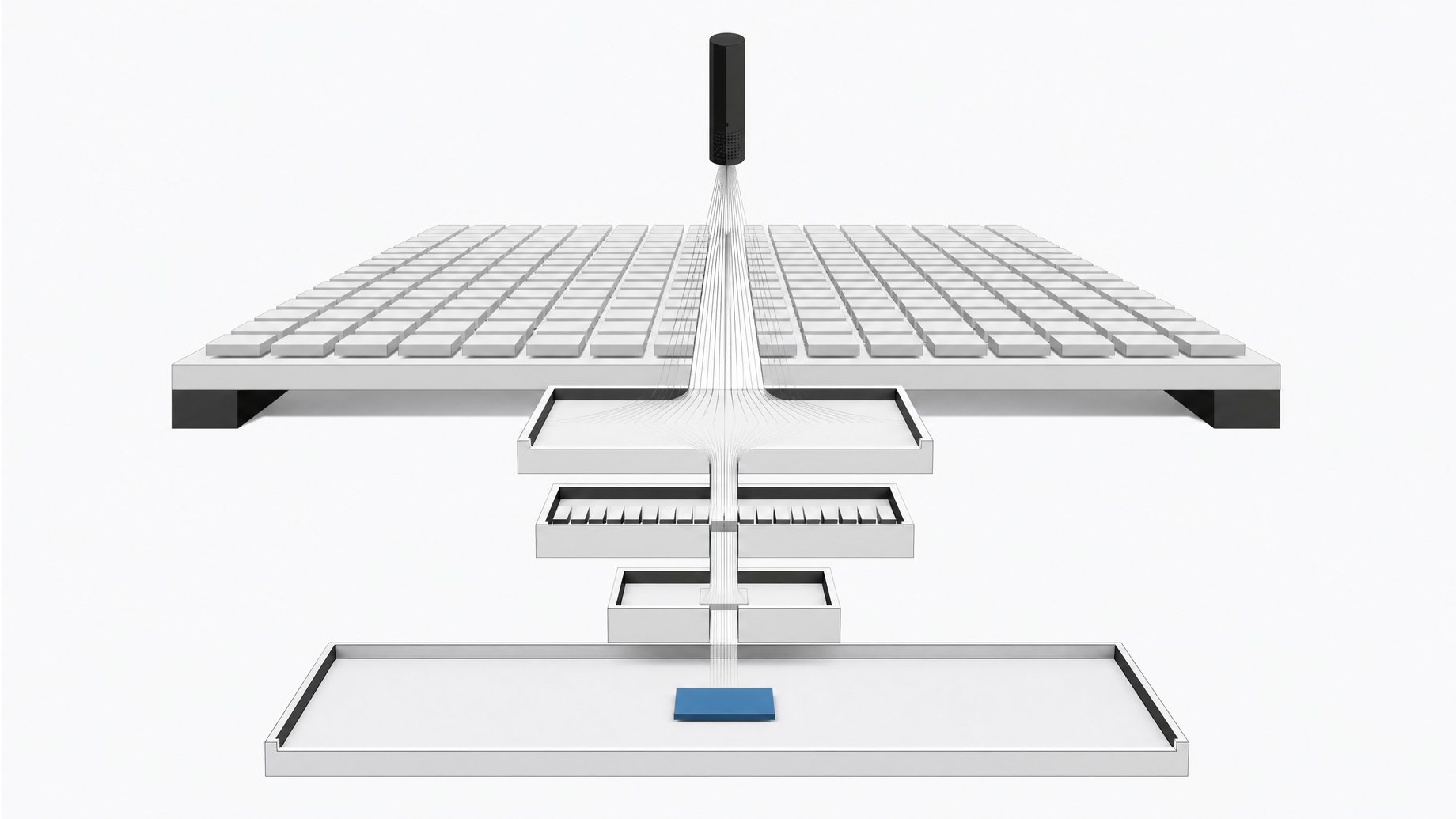
Kaiser Permanente's ambient AI scribe case study covers the largest published real-world deployment of generative AI in a regulated clinical setting: 7,260 physicians across 2,576,627 patient encounters between October 2023 and December 2024. The tool itself is narrow by design. It's a microphone-and-model pipeline that listens to a consented patient conversation and drafts a clinical note, which the physician then edits and signs before it enters the medical record. It doesn't diagnose. It doesn't recommend treatment. That scope, documentation only, not judgment, is what makes everything downstream in this case study defensible.
The rollout started with a pilot vendor, Nabla, and moved to an enterprise-wide contract with Abridge in 2024, a vendor switch mid-deployment that the organization treated as a managed transition rather than a disruption. By August 2024, the tool was live across all eight Kaiser Permanente regions, 40 hospitals, and more than 600 medical offices.
TL;DR
- The one-year study estimated scribe users saved more than 15,791 aggregate clinician hours in documentation time compared with nonusers.
- Physicians in the top third of usage drove 89% of all scribe activations and saw more than double the time savings per note.
- Adoption varied sharply by specialty, with narrative-heavy fields such as mental health, emergency medicine, and primary care showing the highest uptake.
- Usage patterns continued uninterrupted through the mid-deployment switch from Nabla to Abridge.
- A formal quality-assurance loop surfaced specific hallucinations early and fed them directly back to the vendor.
How did the rollout move from a two-week test to a systemwide standard?
Kaiser Permanente didn't flip a switch. It built the deployment in stages, each one gated on data from the last:
- A two-week test with 47 physicians to validate that the tool worked inside existing EHR workflows before any broader exposure.
- A 10-week regional pilot beginning in October 2023 that scaled to 3,442 physicians and 303,266 patient encounters, the dataset later published as a peer-reviewed quality-assurance study.
- Enterprise licensing to more than 10,000 physicians by October 2023, well ahead of full technical rollout, so interest and capacity could be measured against actual usage.
- Full deployment across all regions, hospitals, and medical offices by August 2024, following assessments by more than a thousand clinicians across every market.
- A one-year outcomes study published in March 2025, covering the full October 2023 to December 2024 window and forming the basis for the headline numbers now circulating in health IT press.
Brian Hoberman, MD, executive vice president of IT and CIO at The Permanente Federation, described the adoption pattern in blunt operational terms: physicians who were "a little bit reluctant to try technology" found the tool easy to use because it sat inside the EMR they already worked in, rather than as a separate app. That integration choice, more than any model capability, appears to be what let usage climb instead of stalling after initial curiosity wore off.
What results has Kaiser Permanente actually documented?
The one-year NEJM Catalyst analysis estimated more than 15,791 aggregate clinician hours saved in documentation time for scribe users compared with nonusers, equivalent to roughly 1,794 eight-hour workdays. That figure gets rounded up to "nearly 16,000 hours" in some reporting, but the underlying study language is explicit: it's a workload-measure difference between users and nonusers, not a direct measurement of time returned to patient care.
On the clinician-experience side, 88% of surveyed physicians reported a positive impact on patient interactions, and a separate survey found 84% reporting a positive experience, citing reduced mental workload and better recall of appointment details. No patients reported a negative impact on visit quality, and 47% of surveyed patients said their doctor spent less time looking at the computer screen during the visit.
The benefit wasn't evenly distributed. Physicians in the top third of usage accounted for 89% of all scribe activations and saw more than double the time savings per note compared with low-frequency users, a dose-response pattern that shows up in both the Kaiser data and outside commentary on it.
Independent studies outside Kaiser give a useful sanity check on the magnitude. A six-health-system quality-improvement study of Abridge found clinician burnout fell from 51.9% to 38.8% after 30 days of ambient scribe use, with roughly 10.8 minutes saved per workday on cognitive task load. A broader JAMA multisite study, not Kaiser-specific, found only modest decreases in total EHR and documentation time and a modest increase in weekly visit volume. Kaiser's headline numbers sit at the optimistic end of a real range, not outside it.
Where did the rollout hit friction?
The mid-deployment switch from Nabla to Abridge is the most consequential operational detail in the public record. The one-year study found that adoption and usage patterns continued uninterrupted through the transition, and that prior usage predicted future use regardless of which vendor was behind the tool. That's a meaningful finding for any organization nervous about vendor lock-in on a clinical workflow: the behavior change belonged to the clinician and the workflow, not to a specific product. It's the same logic behind why more organizations are rethinking which parts of their software stack they rent versus own outright, and why vendor portability deserves to be treated as a governance requirement rather than an afterthought baked into a renewal clause.
Adoption also varied sharply by specialty. Uptake was highest among mental health, emergency medicine, primary care, allergy, and cardiology, specialties with heavy narrative documentation burdens. It was lowest among infectious disease, OB-GYN, and urology, where workflows are more procedural or structured-data-driven and the ambient model's narrative strength matters less. That split is a useful warning against treating any ambient AI rollout as a single number: a 72% systemwide adoption rate across a 10,000-plus physician sample hides large gaps at the specialty level.
What governance guardrails made this deployment defensible?
Kaiser Permanente paired the rollout with a formal quality-assurance loop, not a one-time acceptance test. A companion NEJM AI study drew on 1,306 users who left 8,986 star ratings, 1,252 structured self-reviews, and 3,600 free-text comments on AI-generated notes, with an average physician self-review score of 4.35 out of 5 on the PDQI documentation-quality scale. That same review process surfaced specific hallucinations: an AI-generated note that incorrectly recorded a prostate exam as completed, and another that produced a false hand-foot-mouth diagnosis. These weren't edge cases buried in an appendix. They were the kind of findings that fed directly back to the vendor and shaped ongoing monitoring, the sort of after-launch work that never really stops once an agent is live in production, as one team found out running an AI agent unsupervised for 20 hours straight.
The deployment runs on what amounts to a human authority stack:
- Permission. Use of the ambient scribe is voluntary for clinicians, not mandated.
- Consent. Patients must affirmatively consent before any conversation is recorded.
- Review. Every AI-generated draft is reviewed and edited by the treating physician before it becomes part of the medical record.
- Final accountability. The AI does not generate diagnostic or treatment recommendations; clinical judgment and liability stay with the physician.
That stack is backed by procurement, not just policy. Kaiser Permanente maintains standing Artificial Intelligence Requirements that it imposes contractually on every vendor, contractor, and supplier providing AI-enabled services, with defined terms for AI Services, Outputs, and Derived Data, and explicit confidentiality obligations. AI governance here is a line item in the supplier contract, not a slide in a town hall deck.
What should other regulated organizations take from this?
For any organization running mission-critical AI in a high-stakes, audited environment, the Kaiser case offers a transferable checklist, not just a success story:
- Measure workload deltas, not satisfaction scores alone. Clinician-reported positive experience is useful, but the credible number is the measured difference in documentation time between users and nonusers.
- Build the QA feedback loop before you scale, not after. The star-rating and PDQI review process ran on tens of thousands of real notes and caught specific hallucinations early enough to inform vendor fixes.
- Expect benefit concentration, not uniform lift. Plan rollout and training resources around the reality that a minority of heavy users will drive most of the measured value.
- Treat vendor portability as a design requirement. The Nabla-to-Abridge switch worked because the workflow, not the vendor, was what clinicians had adopted.
- Write human authority into the contract, not just the training deck. Consent, voluntary use, mandatory review, and vendor AI requirements all need to survive a change of CIO, not depend on one.
The honest caveat, flagged by outside policy analysis of the deployment, is that 15,791 hours is an aggregate workload measure, not proof of improved clinical outcomes or a staffing reduction anyone can bank. Kaiser Permanente's own publication record is unusually candid about that distinction, which is precisely why this case study is worth studying closely rather than citing as a marketing number.
Frequently Asked Questions
What AI scribe does Kaiser Permanente use?
Kaiser Permanente piloted its ambient AI scribe with Nabla before moving to an enterprise-wide deployment with Abridge in 2024. The one-year outcomes study found adoption and usage patterns continued uninterrupted through that vendor transition.
How many hours did Kaiser Permanente's AI scribe actually save?
The one-year NEJM Catalyst analysis estimated more than 15,791 aggregate clinician hours saved in documentation time for scribe users versus nonusers, equivalent to about 1,794 eight-hour workdays. That figure is a workload-measure difference, not a direct measurement of time returned to patient care.
Does the AI scribe make diagnostic decisions?
No. The tool produces a draft clinical note from a consented conversation. Physicians review and edit every draft before it enters the medical record, and the AI does not generate diagnostic or treatment recommendations.
Did every physician at Kaiser Permanente adopt the AI scribe equally?
No. Adoption was concentrated among heavy users, with the top third of physicians by usage accounting for 89% of all activations, and it varied sharply by specialty, highest in mental health, emergency medicine, and primary care, lowest in infectious disease, OB-GYN, and urology.
How did Kaiser Permanente check the quality of AI-generated notes?
A companion NEJM AI quality-assurance study collected thousands of physician star ratings, self-reviews, and free-text comments on AI-generated notes, averaging 4.35 out of 5 on the PDQI documentation-quality scale, while also documenting specific hallucinations that were fed back to the vendor.
How we source, write, and correct our articles. Editorial standards