How to Bypass SaaS Subscriptions With AI: What It Really Costs
How employees use AI coding tools like Cursor, Lovable, and Claude to clone SaaS features, what it saves, and the security and legal risks involved.

How do employees bypass SaaS subscriptions with AI, and what does it really cost?
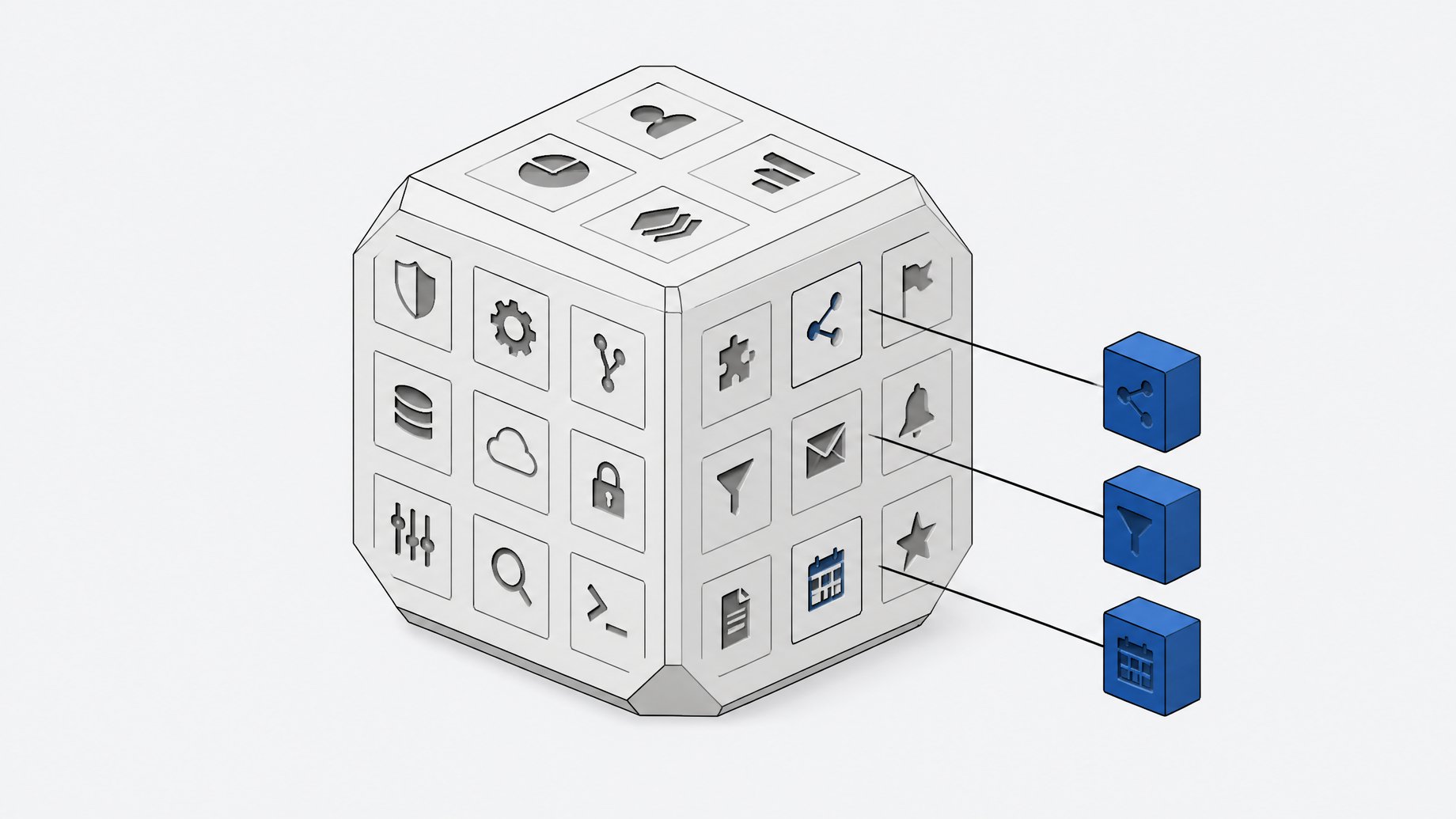
Employees and hobbyists bypass SaaS subscriptions by feeding a tool's visible UI and workflow into an AI coding assistant like Cursor, Lovable, Replit, or Claude, prompting it to rebuild the slice of the product they actually use, and wiring the result directly to their own data through an API key. The subscription becomes optional the moment the clone works well enough.
That is not a hypothetical. There is now a website, Can I Vibe Code It, that catalogs more than 1,093 paid SaaS apps, assigns each one a build verdict, and hands you a ready-made prompt to clone it in an AI coding agent. Users submit "I replaced this" votes for tools like Granola, Wispr Flow, and Linktree Pro, and the site tallies roughly $22,900 a month in aggregate subscription spend that people claim to have walked away from. Promotional posts for the tool put the number of copied clone prompts above 10,000, framed explicitly as a way of bypassing SaaS fees.
Spiceworks collected the real-world version of this story from business owners and IT leaders:
- An agency owner canceled a $1,200-a-month tool that handled client reporting dashboards after vibe-coding a replacement.
- Another business swapped out a roughly $200-a-month reporting tool.
- A marketing team cut a $3,000-plus-a-month credit bill for an email-extraction tool down to under $200 a month.
- A support team walked away from a helpdesk charging more than $100 per seat per month.
- One technical lead now runs internal workflows on a Python and Claude API stack for less than the cost of a single SaaS seat.
This is happening now, inside real companies, at a scale that should worry anyone who still thinks shadow IT means an unapproved Dropbox account.
TL;DR
- Employees are using AI coding agents to bypass SaaS subscriptions by cloning only the specific features they actually use.
- Shadow IT is surging, with 60% of surveyed builders having created software outside of IT oversight in the past year.
- Among builders who have shipped working AI-assisted software, most use AI to write snippets they integrate by hand, and only a small share deploy AI-generated code with zero changes.
- Building your own tool is usually cheaper only for simpler, lower-stakes software, while core systems tend to cost more once maintenance and security are counted.
- Unauthorized AI clones expose companies to breach-of-contract and trade secret misappropriation risks, and the replacement may not be copyrightable either.
- Banning the practice won't work, so companies should inventory what has been built, assign owners, and check what each clone is connected to.
Why is this different from old-school shadow IT?
Shadow IT used to run into two walls: you had to know how to code, and you had to pay for something, which meant a credit card charge or an expense report that finance could eventually see. AI coding tools knock down both walls at once. You no longer need to write software to get software, and you no longer need to buy anything to get the equivalent of what you were buying.
The data backs up the shift in scale. Vanta reports shadow IT growing 36% year over year, driven largely by AI adoption, with organizations discovering an average of about 140 unmanaged tools within 90 days of connecting their monitoring. Retool's 2026 survey of 817 builders found 60% have built something outside IT oversight in the past year, across every seniority level, not just engineers with side projects. This isn't a fringe behavior anymore. It's close to a majority practice, and it maps directly onto the pattern this publication has tracked in the shadow AI tech stack employees are quietly running.
How do people actually use AI to bypass a subscription?
The mechanism is more specific than "they asked ChatGPT to build an app." In practice it breaks down into a few repeatable moves:
- Narrow replication, not full replacement. Users don't try to rebuild the entire SaaS product. They identify the handful of screens and workflows they personally touch and prompt an AI tool to recreate just that slice.
- Stripping the friction, not just the feature. The clone often exists specifically to remove the parts of the original product that justified its price: usage caps, seat limits, ads, or paywalled exports.
- Direct data wiring. Instead of routing through the vendor's hosted service, the clone connects straight to the user's own data via an API, cutting the vendor's margin out of the loop entirely.
Retool's data suggests most of this is not one-shot magic. Among builders who have shipped working AI-assisted software, 72% use AI to write discrete code snippets they then integrate by hand, and only 8% deploy AI-generated code with zero changes. That matches the Spiceworks examples: a client-reporting dashboard, a lightweight reporting tool, a customer-support tool, a CRM-adjacent workflow app. These are real engineering projects, assembled fast with AI doing the heavy lifting, not single prompts that spit out a finished competitor to Salesforce.
Does building your own tool actually save money?
Sometimes, but less often than the headline numbers suggest. RBC Capital Markets built an interactive build-vs-buy calculator and concluded that building your own version of business software is usually more expensive than buying it once you price in maintenance, security, and the opportunity cost of the talent doing the building. The math works for simpler, lower-stakes tools. It rarely works for core systems like payroll, customer records, or compliance-heavy platforms.
Retool's survey points to the same split. The tools most at risk of being replaced are workflow automation and internal admin tools, where the value proposition is thin: a form, a database, a dashboard. The tools least at risk are the ones with deep integrations, compliance coverage, and support contracts behind them, which is a large part of why CRM and ITSM platforms are harder to clone than a reporting dashboard. Already, 35% of surveyed teams have replaced at least one SaaS tool with a custom AI-assisted build, and 78% expect to build more in 2026. The trend line is clearly up. It just isn't uniform across every category of software a company runs.
Who owns the clone?
This is where the opportunity turns into exposure. A SaaS subscription, however annoying the invoice, comes with a vendor behind it: a patch cycle, a security team, usually a SOC 2 report, a support line you can call when something breaks. A vibe-coded clone comes with none of that by default.
One IT architect put it bluntly to Spiceworks: "A vibe coded app is cheap on day one and expensive on the day the framework has a CVE, the person who prompted it into existence has left, and nobody can say which library it pulled in." Vanta's finding that 70% of companies have AI tools accessing their environment without going through procurement describes exactly this condition at scale. Shadow SaaS, the unauthorized subscription nobody told finance about, was at least a product a vendor stood behind. Shadow software has no vendor at all. This publication covers governing exactly this kind of build in the Claudish codebase problem, and the practices for auditing what these clones actually touch once they're wired into production data are laid out in securing AI-generated code.
The behavioral baseline makes this worse, not better. Microsoft and LinkedIn found 78% of AI users already bring their own AI tools to work without formal IT approval, rising to 80% at small and midsize companies. Microsoft's 2026 Cyber Pulse data shows more than 80% of Fortune 500 companies now run active AI agents, many built with low-code or no-code tools, alongside 29% of employees admitting to using unsanctioned AI tools at work. Vibe-coded SaaS clones aren't an isolated phenomenon. They're the natural next step of a behavior that's already normalized everywhere.
What legal exposure aren't companies pricing in?
There's a second risk that almost nobody budgets for: legal exposure baked into the act of cloning itself.
- Breach of contract. Standard SaaS terms of service typically prohibit reverse engineering, decompiling, and using the platform for competitive purposes or to build a substitute product. Studying a licensed account closely enough to replicate it can violate the contract you're actively paying for.
- Trade secret misappropriation. Under the Defend Trade Secrets Act, software architecture, proprietary algorithms, UX logic, data models, and feature implementations can all count as protectable trade secrets, which turns a close clone into a potential federal claim, not just a contract dispute.
- No guaranteed IP protection on the other side. Current US Copyright Office guidance holds that code generated by AI without meaningful human creative selection or modification isn't copyrightable, and may land in the public domain. A company that vibe-codes its way out of a license may end up with no enforceable ownership of the replacement it built either.
This isn't theoretical. In 2026, Runlayer sued Rippling in the Southern District of New York, alleging that Rippling used its position as a licensed, commercial partner to study and clone Runlayer's AI product, and sought a preliminary injunction and expedited discovery. That's the exact mechanism described in this piece, playing out between two companies instead of between an employee and a procurement team. The scale is bigger, but the behavior is identical: use access to a paid product to build your way out of needing it.
What should companies actually do about it?
Banning this outright won't work. The incentive to vibe-code a workaround is too strong, and the tools are too easy to find. The more useful move is to treat it the way this publication treats every other category of software employees build on their own: inventory it before you govern it.
| Upfront Cost | Ongoing Maintenance Burden | Security & Compliance Coverage | Vendor Support Behind It | Legal / IP Risk | |
|---|---|---|---|---|---|
| SaaS Subscriptioncore systems like payroll, customer records, and compliance-heavy platforms | Recurring monthly fee | Low | High | Yes | Low |
| AI-Coded Clonesimple internal tools like dashboards and forms | Near $0 after build time | High | Low | No | High |
- Find out what's already been built. Most companies have no list of the internal clones running against production data, because nobody filed a purchase request for them.
- Assign an owner to anything touching real data. A clone with no named owner is a clone nobody will patch when it breaks.
- Check what it's connected to. API keys wired straight into customer data outside conditional access or SIEM monitoring are the real risk, not the clone's existence.
- Decide which replacements deserve to graduate. Some of these tools are good enough to become sanctioned internal software. Others should be shut down the moment the person who built them changes roles.
- Price the legal exposure, not just the dev time. A clone that saves $1,200 a month isn't a bargain if it triggers a trade secret claim or a breach-of-contract letter.
The lesson here isn't that renting software is always wrong, and this publication has never argued it is. It's that if your employees are going to build software instead of renting it, that software needs the same ownership discipline a company applies to anything it runs in production: a named owner, a security review, a plan for what happens when the person who prompted it leaves. The vibe-coded clone isn't going away. The only real choice is whether your company notices it before the lawsuit does, or after.
Frequently Asked Questions
How is AI actually used to bypass a SaaS subscription?
People use AI coding tools like Cursor, Lovable, Replit, or Claude to rebuild the specific screens and workflows they use in a paid app, strip out usage limits or paywalls, and connect the clone directly to their own data through an API, cutting the vendor out entirely.
Is it legal to clone a SaaS product you're currently paying for?
Not necessarily. Most commercial SaaS terms of service prohibit reverse engineering and using the platform to build a competing or substitute product. If the clone extracts proprietary architecture or logic, it can also trigger a trade secret claim under the Defend Trade Secrets Act.
Does building your own software with AI actually save money compared to buying SaaS?
Sometimes, but not usually for core systems. RBC Capital Markets' build-vs-buy analysis found that once maintenance, security, and talent costs are included, buying SaaS is typically cheaper except for simple, lower-stakes tools like internal dashboards or reporting.
Who owns AI-generated code that replaces a SaaS tool?
It depends on how much human authorship went into it. Under current US Copyright Office guidance, AI-generated code without meaningful human creative modification may not be copyrightable at all, leaving the company with no enforceable ownership of its own replacement tool.
Why is this a bigger governance problem than old shadow IT?
Traditional shadow IT at least involved a vendor with a support line and a security posture. Vibe-coded clones often have no named owner, no patch cycle, and no compliance coverage, while still connecting to production data through personal API keys outside IT's monitoring.
How we source, write, and correct our articles. Editorial standards