How to Run DeepSeek-V4.1-Flash-1017 Without a Jinja Chat Template
DeepSeek-V4.1-Flash-1017 ships MIT-licensed with no Jinja template. See sampling settings, 1M context, the encoding folder and deepseek-recipe.

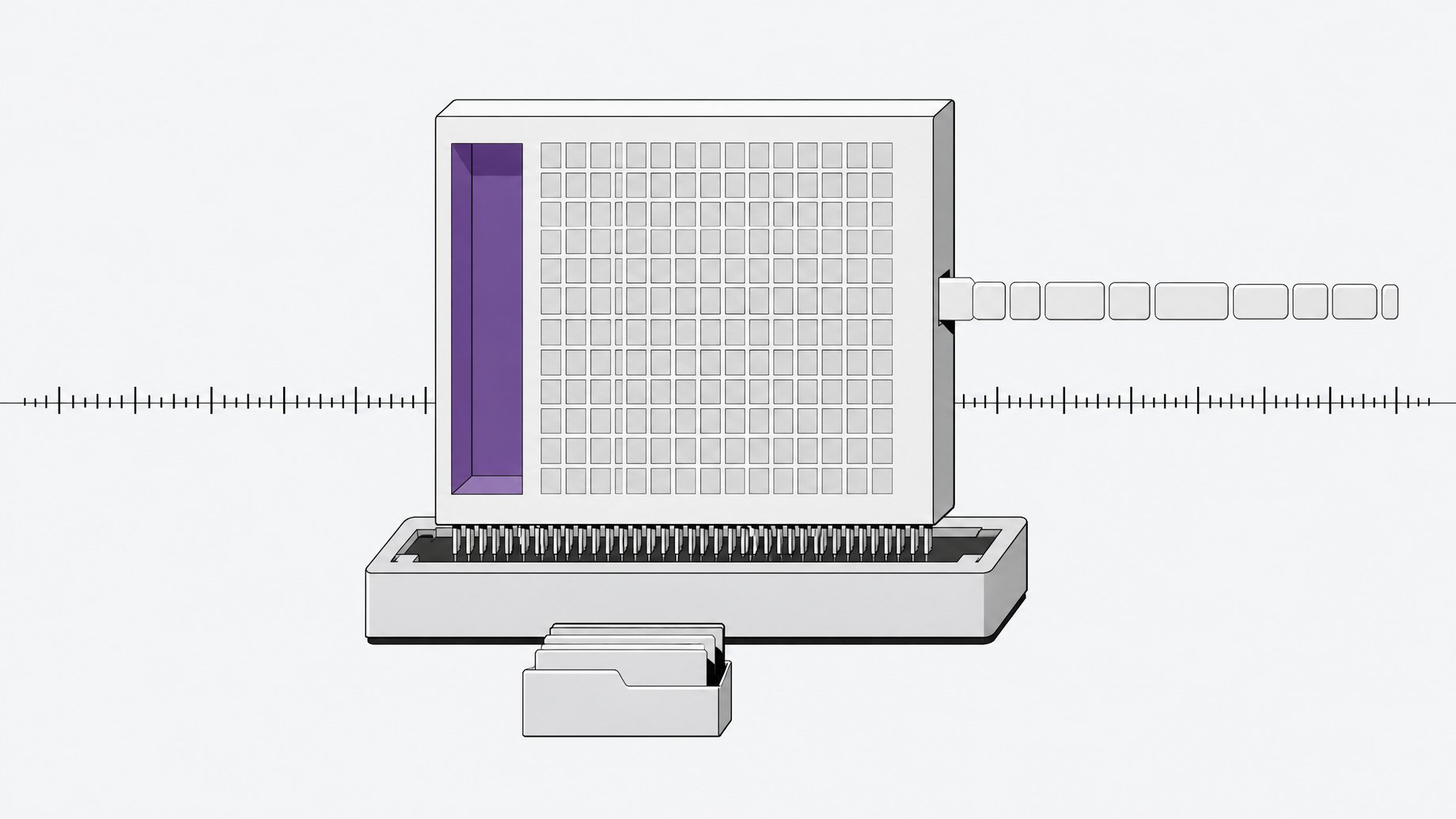
How do you run and prompt DeepSeek-V4.1-Flash-1017 without a Jinja chat template?
You build prompts with DeepSeek's own encoding code instead of a template file. The release includes an encoding folder with a self-contained Python reference (encoding.py) and test cases. For production, DeepSeek also publishes deepseek-recipe, a set of Rust libraries with Python bindings that encodes requests into V4 and V4.1 prompts or token IDs and parses model output. Sample at temperature 1.0 and top_p 1.0, with a 1M-token context window and max_tokens of at least 256K.
TL;DR
- DeepSeek-V4.1-Flash-1017 is a minor update to DeepSeek-V4.1-Flash, with gains in reasoning, coding, agentic tasks and visual benchmarks, plus shorter outputs and faster task completion.
- The release has no Jinja-format chat template, so tools that rely on
tokenizer.apply_chat_templatewill not work out of the box. - The
encodingfolder holds a Python reference implementation covering multi-turn chats, tool calling, thinking mode, numeric reasoning effort, mid-conversation system messages and interleaved images. - For production, deepseek-recipe (Rust with Python bindings) handles request conversion, prompt encoding and output parsing, but leaves inference, tool execution and HTTP to you.
- The recommended sampling is temperature 1.0 and top_p 1.0, with a 1M-token context window and max_tokens of 256K or more.
- Code and weights are under the MIT License.
What is DeepSeek-V4.1-Flash-1017?
It is an updated checkpoint of DeepSeek-V4.1-Flash. DeepSeek describes it as a minor update that improves reasoning, coding, agentic work and visual benchmarks. It also reduces task execution time and output length, which DeepSeek says lets users finish tasks faster and at lower cost across several agent harnesses.
The model card lists these results against the previous Flash release:
| Benchmark | V4.1-Flash-1017 | V4.1-Flash |
|---|---|---|
| HLE w/o tools | 42.6 (44.0† text-only) | 36.8 (39.1†) |
| Terminal-Bench 4.0 | 42.3 | 31.2 |
| DeepSWE v1.1 | 77.0 | 74.2 |
| ProgramBench | 29.1 | 20.3 |
| NL2Repo-Bench | 68.2 | 65.4 |
| Automation-Bench v1.0.6 | 60.5 | 54.8 |
| Apex Bench v1.1 | 72.1 | 64.6 |
Harness matters here. DeepSeek used the Claude Code harness for Terminal-Bench 4.0 and the Mini-SWE-V2 harness for DeepSWE v1.1. These are vendor-reported numbers, so check them against your own workload.
Why is there no Jinja chat template?
DeepSeek chose to ship a reference implementation in code rather than a template string. The prompt format now covers thinking mode, tool calls, numeric reasoning effort, mid-conversation system messages and image content. That is a lot of logic to express in Jinja, and the model card does not give a reason beyond stating the template is absent.
The practical effect is simple. If your serving stack builds prompts by loading a template from the tokenizer config, you need another path. Either call the reference encoder yourself or use deepseek-recipe. Do not hand-write the special tokens from memory, because small formatting errors in thinking or tool-call sections can quietly degrade output.
How does the Python encoding reference work?
The encoding folder in the repository contains encoding.py and a README. It is self-contained, so you can read it, copy it, or port it. The test cases are the most useful part. They show the expected prompt for:
- multi-turn conversations
- tool calling
- thinking mode
- numeric reasoning effort
- mid-conversation system messages
- interleaved image content
A sensible workflow is to run the tests first, then feed your own message lists through the encoder and compare the output to the test fixtures closest to your use case. If you are writing a port in another language, those fixtures give you a ground truth to diff against.
What is deepseek-recipe and when should you use it?
deepseek-recipe is a set of Rust libraries with Python bindings. DeepSeek positions it as the maintained, protocol-aware option for production, while the Python file is the reference.
According to the model card, it does three things:
- Converts Messages, Chat Completions and Responses API requests into DeepSeek's Conversation format.
- Encodes those conversations into DeepSeek V4 and V4.1 prompts or token IDs.
- Parses model output back into complete or streamed responses, covering thinking, tool calls, images and generation settings.
It deliberately stops there. Model inference, tool execution and HTTP transport are left to the caller. That makes it a good fit if you are building your own gateway or adapting an existing OpenAI- or Anthropic-style API surface to a local inference engine. It is not a server you start and query.
What sampling settings and limits should you use?
DeepSeek publishes one recommended configuration:
| Parameter | Value |
|---|---|
temperature | 1.0 |
top_p | 1.0 |
context_window | 1M tokens |
max_tokens | ≥ 256K |
Two notes. First, temperature 1.0 with top_p 1.0 means no truncation of the distribution, which differs from the lower-temperature habits many people carry over from other models. Start here before tuning. Second, the max_tokens floor of 256K is large. Thinking mode and long agentic runs can produce long outputs, and a low cap can cut a reasoning trace off before the answer appears. If your serving layer enforces its own default limit, raise it.
How do you run it locally?
The model card points to the inference folder for weight conversion and local inference instructions. Follow that README for the exact steps. The sources provided do not state parameter counts, quantization formats, or VRAM and hardware requirements, so check the repository and the technical report before planning hardware. A 1M-token context window also implies significant memory use for the KV cache, which is why the citation title of the technical report focuses on KV cache compression, but verify actual memory needs on your setup.
A reasonable local pipeline looks like this:
- Download the weights and convert them using the
inferenceinstructions. - Encode requests with
encoding.pyor deepseek-recipe to get a prompt or token IDs. - Run generation with temperature 1.0, top_p 1.0 and a generous max_tokens.
- Parse the output (deepseek-recipe handles streaming, thinking and tool calls).
- Execute any tool calls yourself and append results as the next turn.
Is the license safe for commercial use?
The repository and the model weights are both licensed under the MIT License. MIT is permissive, allowing commercial use, modification and redistribution as long as you keep the copyright and license notice. As always, read the LICENSE file in the repository for the exact terms.
Frequently Asked Questions
Can I use apply_chat_template with DeepSeek-V4.1-Flash-1017?
No. The release does not include a Jinja-format chat template. Use the Python reference in the encoding folder or the deepseek-recipe libraries to produce prompts.
Do I need deepseek-recipe, or is the Python file enough?
The Python file is enough for experiments and for understanding the format. DeepSeek recommends deepseek-recipe for production because it is maintained, handles several API protocols, and parses streamed output including thinking and tool calls.
Does deepseek-recipe run the model for me?
No. It handles request conversion, prompt encoding and output parsing. Model inference, tool execution and HTTP transport are left to the caller.
What context length does the model support?
The model card lists a 1M-token context window and recommends a max_tokens setting of 256K or higher. Memory needs at that length depend on your inference setup, and the provided sources do not give hardware figures.
Is DeepSeek-V4.1-Flash-1017 a new architecture?
No. DeepSeek calls it a minor update to DeepSeek-V4.1-Flash. The changes are in benchmark performance, task time and output length, not a new model family.
How we source, write, and correct our articles. Editorial standards