Intel and Musk's Terafab: Will New Fabs Ease the Chip Shortage?
Intel is working with Elon Musk on Terafab. Here is why tools, not buildings, cap chip supply, and why Intel says it will invest more in equipment.

What is Intel doing with Elon Musk's Terafab?
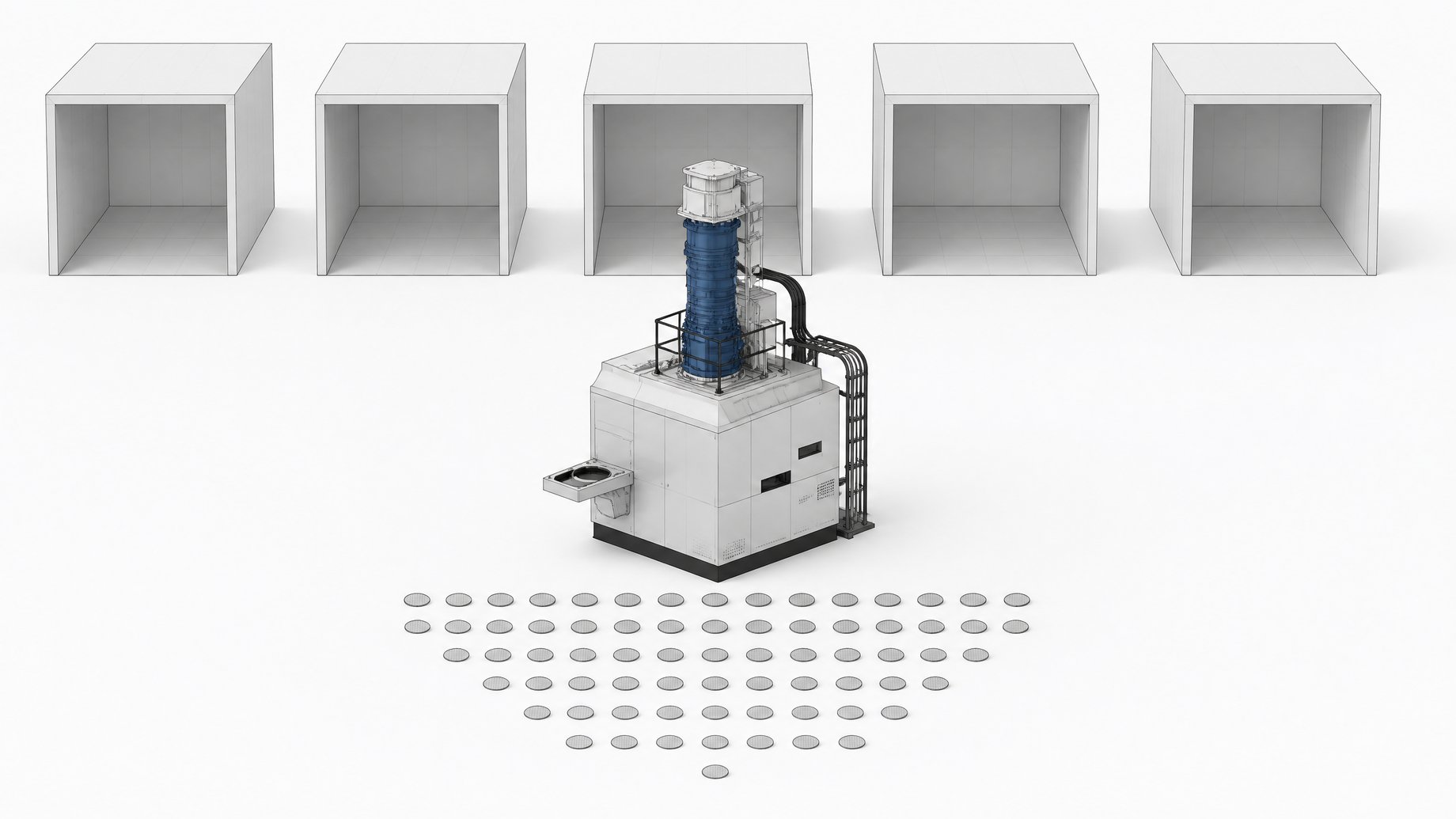
Intel is working with Musk to help him bring up Terafab, a fab he has said he wants to build because his companies need more chips than they can get. An Intel executive described it as a collaboration to "accelerate" that effort, since chipmaking is far more intricate than building something like a car. Public details are thin. Whether Terafab adds to the world's chip supply depends mostly on equipment, not buildings.
TL;DR
- Musk has said that the choice is to build Terafab or not have the chips, driven by what he sees as a huge rise in demand for compute and memory.
- Intel's stated role is to help Musk bring up his fab faster, because the process is too complicated to do alone.
- The interviewer's argument is that tool supply caps net silicon growth, so a new fab mostly shifts who gets guaranteed capacity.
- Intel's executive pushed back mildly: tools matter, but so do power, water, consumables, and clean room space.
- Fab and lithography costs keep climbing, and a high-end EUV scanner with its associated equipment runs about $400 million, by the executive's figure.
- Intel said that knowing what it knows now, it would have invested in tools about a year earlier and will invest more going forward.
Why does Musk want his own fab?
Musk has said publicly that he wants to build a fab. In the clip, he is quoted as saying: "We either build the Terafab or we don't have the chips. And we need the chips."
The Intel executive explained the reasoning this way. Musk sees an enormous increase in demand for silicon, for compute, and for memory. He concluded that his own businesses will need a lot of it. So he considered doing the whole thing himself.
That is a familiar move for him. Owning the supply chain is how he has approached other hardware businesses. But the executive's point was that a fab is not like a car plant. The process is intricate enough that Intel thought it could help Musk get his fab running sooner than he could alone.
The sources do not say what form the partnership takes, what process technology is involved, or on what timeline. Treat any claim about those details as unconfirmed.
Will a new fab increase the world's chip supply?
Not by as much as you might expect, at least in the near term. The interviewer framed it directly: because of the bottleneck at the tool level, the net amount of silicon in the world will not rise much. A new fab would mainly give its owner guaranteed supply that they would not have as a customer of someone else's foundry.
Think of it as a queue. If the number of tool sets available to the industry is fixed in a given period, each set that goes to Terafab is one that does not go to an existing fab. The new fab changes who gets the output. It does not change the total much until toolmakers ship more equipment.
The Intel executive agreed in part. Yes, the industry needs far more equipment. But he said the constraint is broader than tools:
- Fabs need large amounts of power.
- They need large amounts of water.
- They depend on a long list of consumables.
- They need raw fab space and clean room capacity.
The interviewer countered that those inputs can be scaled in ways tools cannot. The executive allowed that some scale more easily than others, which is a fair concession. Power and buildings are hard, but they are not gated by a handful of specialized suppliers.
Why are fabs so expensive to build?
The executive described the business as extremely capital heavy. His rough numbers:
| Item | What he said |
|---|---|
| Cost to build a fab | Roughly doubling every four to five years over the last few decades |
| Lithography cost | The most expensive module, rising faster than overall fab cost |
| High-end EUV scanner plus associated equipment | About $400 million |
He then ran the extrapolation as a sanity check. If patterning cost kept doubling on that schedule, the numbers would soon become absurd. He caught himself mid-sentence on the units (he started to say billion and corrected to million), but the point stood: the trend cannot continue indefinitely.
These are spoken, approximate figures from an interview, not audited numbers. Use them as an order-of-magnitude guide.
Could chipmaking be done differently?
This was the most interesting part of the discussion. The executive argued that the industry is risk averse for good reason. Companies put tens of billions of dollars into a fab, so nobody wants to experiment with the process. Engineers who join learn the existing process flow and treat it as settled.
His suggestion was to ask what could be radically different today that was not possible 20 years ago. He said the answer could involve several areas at once:
- Transistor architecture. The path from planar transistors to FinFETs to gate-all-around is well defined, with many people working on it.
- Fab infrastructure. He asked whether a fab really needs a clean room as sophisticated as today's.
- Chip design. Many CPU design methods were locked in around 30 years ago, though design can tolerate more risk than manufacturing.
The interviewer joked about running a test with people eating hamburgers and smoking cigars in a research lab to see what happens to yield. The executive agreed it would be a great experiment, but said no incumbent such as Intel, TSMC, or Samsung would willingly run it. A day of lost production costs too much.
That is where a newcomer has an edge. A company starting from a clean slate can try ideas that incumbents cannot afford to test. Whether Terafab does that is speculation. The executive only said it is sometimes good to start fresh and rethink everything.
Should Intel lock in tool commitments like Nvidia did with memory?
The interviewer made this case at the end. Nvidia has reportedly locked down memory and other components through commitments worth hundreds of billions of dollars. (That figure was stated as "reportedly" in the discussion and is not verified here.)
The argument runs like this:
- Intel already has foundries and can expand them.
- What it will eventually lack is tools from upstream suppliers.
- So it should raise as much capital as possible now and commit to equipment orders.
- Otherwise, in a couple of years, Intel could be in a position where it could make a fortune on demand, but the tools are all in Taiwan.
The interviewer tied this to a larger goal: having the bulk of the most advanced semiconductor manufacturing happen in the US.
The Intel executive's answer was short. Had Intel known then what it knows now, it would have invested more about a year ago. Knowing it now, he said, Intel will be investing more. He did not give amounts, tool vendors, or timing.
What should builders take from this?
If you build on AI hardware, the practical read is about supply, not announcements. A new fab takes years, and tool availability limits how fast total capacity grows. Expect continued competition for guaranteed capacity, with large buyers locking in supply early. Smaller teams should plan for tight availability and long lead times rather than assume new fabs will bring prices down quickly.
Frequently Asked Questions
What is Terafab?
Terafab is the name Elon Musk has given to a fab he wants to build to secure chips for his companies. He has said the alternative is not having enough chips. Beyond that, the sources give no specifics on size, location, or process technology.
How is Intel involved in Terafab?
Intel's executive said the company thought it could work with Musk to help accelerate the bring-up of his fab. The reasoning is that chipmaking is too intricate for a newcomer to do quickly alone. The terms of the arrangement were not described.
Why do tools limit how many chips the world can make?
Advanced fabs depend on specialized equipment, and the supply of it is limited. Lithography is the costliest step, with a high-end EUV scanner and associated gear costing about $400 million by the executive's estimate. A new fab competes for the same limited tools as existing ones.
Is equipment the only bottleneck?
No. The Intel executive pointed out that fabs also need substantial power, water, consumables, fab space, and clean room capacity. The interviewer's view was that these can scale more readily than tools, and the executive partly agreed.
Is Intel buying more equipment?
The executive said Intel would have invested more about a year earlier if it had known what it knows now, and that it expects to invest more going forward. No figures were given.
How we source, write, and correct our articles. Editorial standards