What Is Dynamic Creatures' Hugo Robot and When Will It Launch?
Hugo is a furry humanoid robot from Dynamic Creatures with 57 joints and 43 actuators, run by a human remotely today, with customer tests planned for 2027.

What is Hugo, the Dynamic Creatures robot?
Hugo is a large, furry, purple, two-legged humanoid robot built by a company called Dynamic Creatures. It is a machine under the fur, not a person in a costume. It is designed to walk around places like theme parks and hotels and interact with guests, including kids. It has 57 joints and 43 actuators. Today a human operates it remotely, and the company plans to begin testing with real customers in 2027.
TL;DR
- Hugo is a character robot, not a costume: a bipedal humanoid with a fur exterior, built for entertainment and hospitality settings.
- The hardware has 57 joints and 43 actuators, which gives it a lot of expressive range for gestures like hugs and high fives.
- Right now Hugo is controlled remotely by a human, so it is not fully autonomous.
- Dynamic Creatures plans customer tests starting in 2027, which means guests are unlikely to meet Hugo at a park before then.
- The company is led by a former Boston Dynamics chief strategy officer, which ties it to one of the best-known names in legged robotics.
- Pricing, launch venues, partners, and battery or runtime figures have not been disclosed in the material available.
What does Hugo actually look like and do?
Hugo is a big, fluffy purple character. In footage from the company's office, it walks around, gives high fives, and pops up from behind computer screens. In one moment, a little girl runs straight at it, and Hugo opens its arms to give her a hug.
That hug matters more than it might seem. Most humanoid robot demos show warehouse tasks or acrobatics. Hugo's job is closer to a mascot: approach people, read the moment, and respond in a way that feels friendly instead of mechanical. The fur and the character design are part of the product, not decoration.
What are Hugo's specs?
Only two hardware figures have been shared. Everything else is unconfirmed.
| Spec | Detail |
|---|---|
| Joints | 57 |
| Actuators | 43 |
| Form | Two-legged humanoid under a fur exterior |
| Current control | Remote human operator |
| Intended settings | Theme parks, hotels |
| Customer testing | Planned from 2027 |
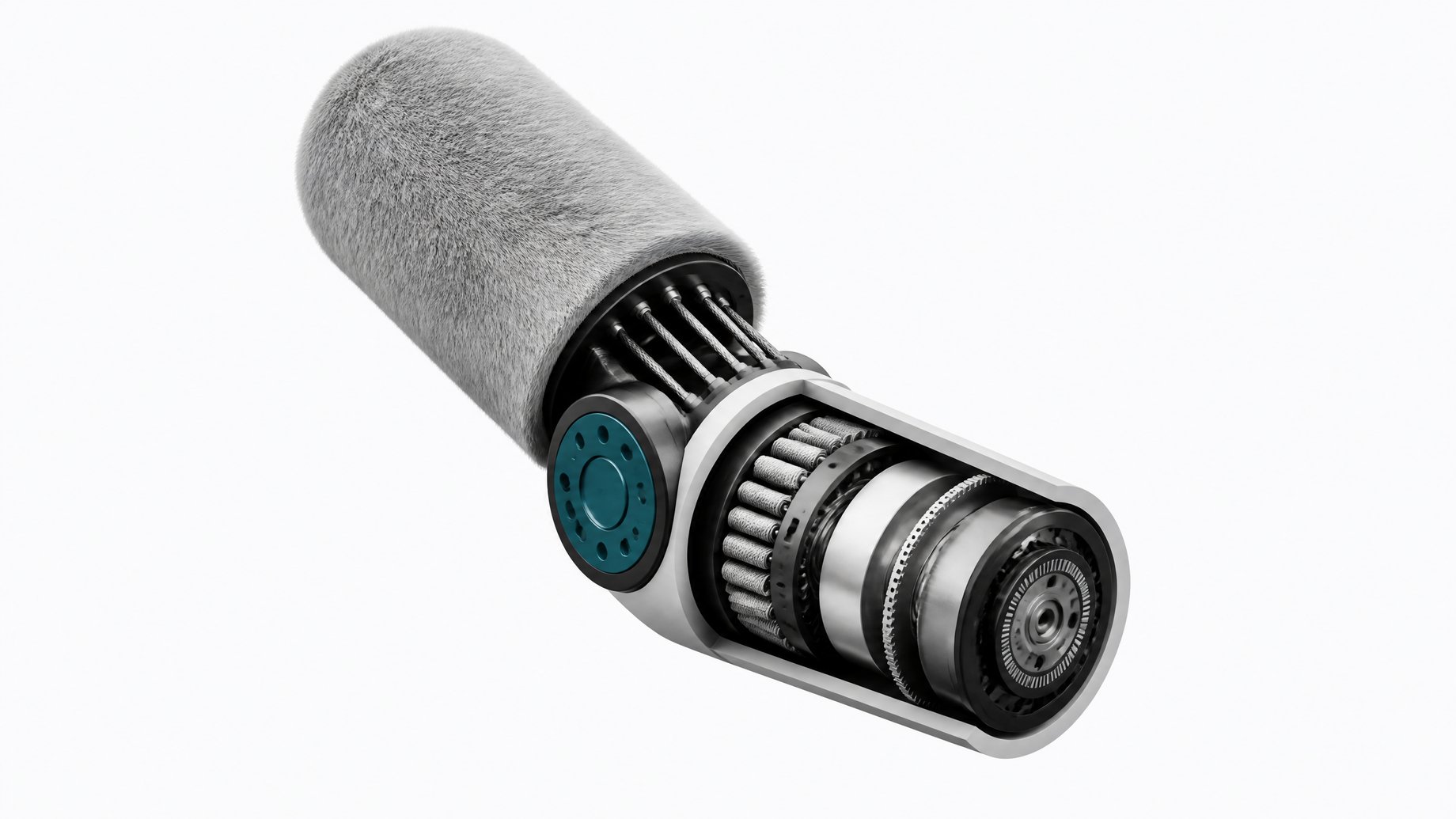
The gap between 57 joints and 43 actuators is worth a note. A robot can have more joints than motors when some joints are linked, passive, or driven together. The company has not explained how Hugo's are split, so any detail beyond the two numbers would be a guess. What the numbers do suggest is a body with many degrees of freedom, which a character needs for expressive movement: arms, hands, head, and torso gestures, not just walking.
Is Hugo autonomous?
No. A human is controlling Hugo remotely right now. The robot is not yet operating on its own in public.
That is a common stage for entertainment robots. Teleoperation lets a team test the body, the movement, and guest reactions while the autonomy stack matures. A human operator can also handle the hard social parts, such as deciding when to hug a child, when to back off, and how to react to a crowd. Those judgment calls are difficult to automate and carry real safety stakes around kids.
The open question is how much of Hugo's behavior will shift to onboard software and by when. The company's stated milestone is customer testing in 2027. It has not said whether those tests will be teleoperated, autonomous, or a mix.
Who is behind Dynamic Creatures?
The company's chief executive used to be the chief strategy officer at Boston Dynamics. Boston Dynamics is known for building impressive legged robots, and that background suggests the team understands what it takes to make a bipedal machine walk, balance, and stay upright around people.
Being led by a former Boston Dynamics executive does not mean Hugo uses Boston Dynamics technology. The sources describe a leadership connection, not a technical or commercial partnership. Treat the two as separate until the company says otherwise.
When will Hugo appear in theme parks?
The only timeline given is that Dynamic Creatures plans to test Hugo with real customers starting in 2027. That is a testing start, not a public launch date. Customer tests could mean a pilot at a single hotel or park, limited hours, or invited guests. The company has not named venues or partners.
So if you are wondering whether you will see Hugo at a major theme park this year, the answer based on current information is no. Even in 2027, expect limited trials rather than a broad rollout.
Why would a theme park want a robot like this?
Theme parks and hotels already rely on costumed performers for character meet-and-greets. A robot character offers a few possible advantages:
- Consistency. A robot can run a shift without the heat and fatigue that come with a full-body costume.
- New character designs. Proportions that a human body could not fit inside a costume become possible, such as unusual heights or limb lengths.
- Repeatable performance. Movements can be refined and reused.
There are real tradeoffs too. A heavy, strong machine moving near children demands careful safety design. Public comfort is another factor. Whether guests will warmly accept a robot hugging their kids is an open question, and one the demonstrating creator openly put to viewers. Those are reasons the testing phase matters.
How does Hugo fit into the wider push for entertainment robots?
Large entertainment companies have been experimenting with bipedal character robots for some time. Disney Research and Disney's parks have shown robotic characters with distinctive walks and personalities, for instance. Hugo fits that direction: the robot is the character, and the engineering serves the performance.
What makes Dynamic Creatures notable is that it is a company built around this use case, led by someone with a legged-robotics background, rather than a general-purpose humanoid maker adapting a body for entertainment. Whether that focus becomes a product advantage depends on things not yet public, like cost, reliability, and how well the robot handles crowds.
Frequently Asked Questions
Is Hugo a person in a costume?
No. Hugo is a two-legged humanoid robot covered in fur. The costume-like look is the robot's exterior design, and the machinery underneath includes 57 joints and 43 actuators.
Does Hugo run on AI?
Not in the sense of acting on its own today. A human controls Hugo remotely. The company has not detailed what autonomy it plans to add or how it will be built, only that customer testing is planned for 2027.
Is Dynamic Creatures part of Boston Dynamics?
Nothing in the available material says so. The company's leader is a former Boston Dynamics chief strategy officer, which is a personal career link, not a stated corporate or technical relationship.
Where can I see Hugo?
Not at a public venue yet. Hugo has appeared walking around the company's office. Dynamic Creatures plans to test with real customers starting in 2027, and it has not named locations or partners.
How much will Hugo cost?
Pricing has not been disclosed. No lease, sale, or service pricing was available, so any figure would be speculation.
How we source, write, and correct our articles. Editorial standards