How to Reduce LLM API Costs: 5 Methods Compared
Learn how to cut LLM API costs with prompt caching, batching, model routing, context trimming, and self-hosting, plus the pricing math behind each method.

How can you reduce LLM API costs?
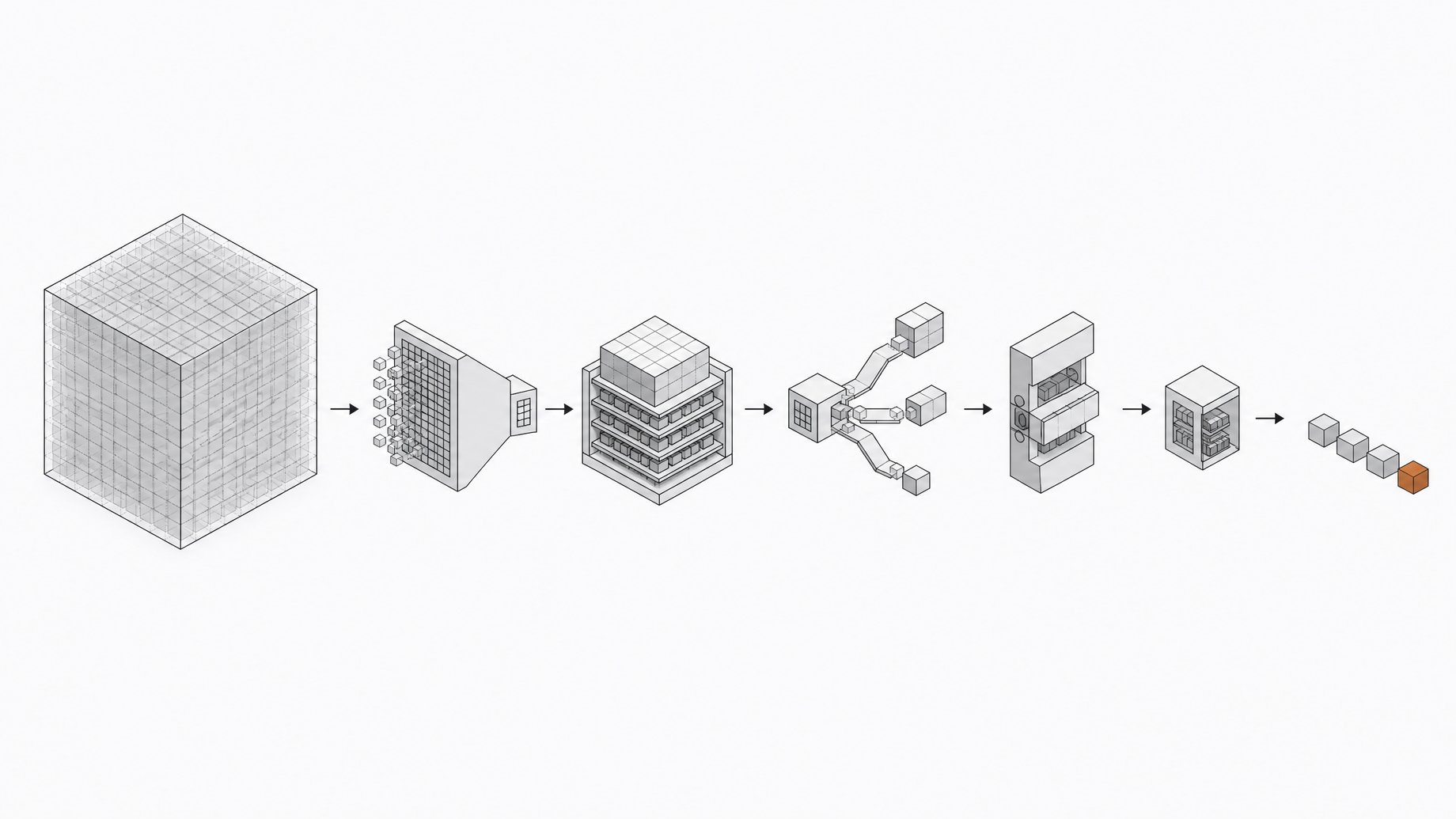
Cutting LLM API costs comes down to five levers you can turn independently: cache what you've already sent, batch what can wait, route easy requests to cheap models, trim the tokens you don't need, and self-host once volume justifies it. Stack two or three of these, and real bills drop 40 to 85 percent, not by switching everything to a cheaper model, but by matching the right lever to the right workload.
| Setup effort | Typical savings | Latency impact | Best for | |
|---|---|---|---|---|
| Cachingrepeated calls against shared context | Low | Up to 90% on cached tokens | Low | Chat and agent workloads reusing the same system prompt or docs |
| Batchingasync-eligible bulk work | Low | 50% on input and output tokens | High | Evals, bulk classification, offline summarization |
| RecommendedModel routinghigh-volume, varied traffic | Medium | 40-85% on overall bill | Low | Mixed-difficulty request volume with cheap and frontier models available |
| Context/token disciplineany workload | Low | Varies, compounds with other levers | Low | Long conversations and agentic loops with growing context |
TL;DR
- Stacking two or three cost levers can cut real enterprise LLM bills by 40 to 85 percent.
- Prompt caching gives a discount of up to 90 percent on tokens you repeatedly send to the model.
- Batch processing cuts input and output token prices in half for asynchronous work, with zero quality tradeoff.
- Model routing exploits a price spread of roughly 100x between the cheapest usable models and frontier models.
- Self-hosting small models can break even in as little as 0.3 months against premium commercial APIs, but only past a real volume threshold.
- Enterprise generative AI spend more than tripled in 2025 to reach $37 billion, so falling token prices alone are not shrinking bills.
Why do LLM API bills keep rising while token prices fall?
Per-token prices keep falling. Your bill doesn't. Gartner forecasts that by 2030, running inference on a 1-trillion-parameter model will cost providers over 90% less than it did in 2025, but warns this won't shrink enterprise spend: agentic workflows burn 5 to 30 times more tokens per task than a standard chatbot query. Token consumption is outrunning the price drop.
The numbers show up on real invoices. In a 2026 survey of 101 enterprise technology leaders, 43% said they're already spending more on AI than they budgeted. Enterprise generative AI spend hit $37 billion in 2025, up 3.2x from $11.5 billion the year before, with foundation-model API spend alone reaching $12.5 billion. Most teams default to the smartest available model for every request, including the routine ones that don't need it. That default is the single most expensive habit in LLM spending, and it's the one the next five levers are built to break.
How does prompt caching stop you from paying to re-read what you already sent?
Every time you send a conversation history, a system prompt, or a document back to the model, you pay full input price to have it read again. Caching lets the provider skip the re-read.
The mechanics differ by provider, but the economics are consistent:
- Anthropic charges cache writes at 1.25x the normal input rate but cache reads at roughly 10% of it: a 90% discount on anything that hits the cache.
- OpenAI caches automatically, no code changes required, at roughly 50% off cached tokens.
- Gemini offers automatic caching on 2.5-and-newer models with the discount applied transparently, and explicit caching through Vertex AI drops cached-token price to 10% of standard input rate.
Put stable content first. System prompts, tool definitions, and reference documents belong at the top of the context window, before anything that changes request to request. Caching doesn't pay off for one-off requests with no repeated structure. It's a lever for repeated calls against a shared context, which is most agent and chat workloads. For a deeper look at how the discount tiers actually move your real bill versus the sticker price, this breakdown of cache pricing mechanics is worth the read.
Why is batching the free 50 percent discount nobody turns on?
If a workload can tolerate a delay, batching is close to a free discount. OpenAI's Batch API and Anthropic's Message Batches API both cut input and output token prices by 50%, in exchange for a processing window of up to 24 hours instead of real-time response.
Good candidates for batching:
- Model evaluations and offline testing runs
- Bulk classification jobs (tagging, routing, moderation at scale)
- Document summarization pipelines that don't feed a live user
- Nightly data enrichment or embedding generation
Bad candidates: anything a user is waiting on. Live chat, real-time agent responses, and interactive coding assistants need synchronous latency, so batching doesn't apply. The mistake teams make is leaving async-eligible work on the synchronous API out of habit. Half of a classification job's cost disappears the moment you move it to batch, with zero quality tradeoff.
How does model routing stop you from sending every request to the smartest, most expensive model?
The price spread between the cheapest usable models and frontier models runs to roughly 100x, from models like DeepSeek V4 at around $0.44 per million input tokens up to GPT-5.5-pro at $30 input and $180 output per million. Most requests don't need the $30 model. Routing is the lever that exploits that spread.
Two approaches work:
- Static rules. Classify requests by task type or complexity ahead of time: simple extraction and formatting go to a cheap model, multi-step reasoning or high-stakes output goes to the frontier model.
- Learned routers. A trained classifier decides per-request which model to call based on predicted difficulty and expected quality. The academic RouteLLM framework showed a trained router choosing between a strong and weak model cut costs by more than 2x on benchmarks without compromising response quality, and the approach held up even when the underlying models were swapped at test time.
In production, teams running a tuned routing layer report bill reductions of 40 to 85 percent. The risk is quality regression: a router tuned on the wrong signal sends hard requests to a cheap model, and output quality drops where you can least afford it. Test the router against a held-out set of your actual hard cases, not just average-case traffic, before you trust it in production.
If you're deciding where routing fits against your other engineering spend, this breakdown of routing versus raw API cost covers the tradeoffs in more depth. The same logic scales up for agentic workloads, which burn tokens far faster than a single chat turn: the token-cost architecture for agents is worth a look if that's your workload.
How does context and token discipline cut costs?
This lever costs nothing to implement, and it compounds with every other one. If your system prompt is 2,000 tokens and you resend it uncached on every one of 200 calls in a session, that's 400,000 tokens spent re-reading the same instructions.
Three habits fix most of the waste:
- Trim conversation history. Don't send the entire chat log on every turn. Summarize or truncate once a conversation passes a reasonable length.
- Set output token limits. Models keep generating until they hit a stop condition or a cap. An unbounded max-tokens setting on a verbose model is an invitation to overpay for output you'll never read.
- Compact context before it's needed. Agentic loops that accumulate tool outputs and intermediate reasoning should periodically compress that history into a summary instead of carrying the full trace forward.
None of this requires new infrastructure. It requires someone to actually look at what's in the context window on a representative request and ask whether it needs to be there.
When should you self-host open-weight models?
Self-hosting is the lever with the highest setup cost and the biggest potential payoff, but only past a real volume threshold. A peer-reviewed cost-benefit study found break-even periods that vary enormously by model size:
- Small models (24B to 32B parameters). Running on a single consumer GPU, they break even against premium commercial APIs in as little as 0.3 months.
- Medium models (70B to 120B). Break even in roughly 2.3 to 34 months, depending on the API they're compared against.
- Large models. Can take upward of 69 months to break even against aggressively priced commercial APIs like Gemini.
Independent industry analysis puts the practical crossover for most teams at around 2 million tokens of volume per day: below roughly 1 million tokens/day, a hosted API stays cheaper even before you account for the engineering and MLOps labor needed to keep GPUs running. Data residency and compliance requirements can justify self-hosting below that volume threshold, independent of the raw math.
The decision isn't "open models are cheaper" or "APIs are cheaper." It's where your volume actually sits relative to the break-even curve for your specific model size and comparison API. This crossover math, worked through with sources, lays out exactly how the curve bends by model size.
How do you put the levers together into a cost-reduction stack?
These levers aren't mutually exclusive. They stack, and they stack in a sensible order:
- Start with caching and token discipline. Both are near-zero implementation cost and apply to almost any workload immediately.
- Add batching for anything async-eligible. Evals, bulk classification, offline summarization: move it off the synchronous API and take the 50 percent discount.
- Add routing once traffic has volume and variety. A router only pays off once you have enough request diversity to tell easy requests from hard ones.
- Consider self-hosting only past the volume or compliance threshold. Below roughly 1 to 2 million tokens/day, the API is still cheaper once labor is counted.
A team running all four levers at once isn't doing anything exotic. It's just not leaving money on the table at any layer of the stack.
Why does tokenomics need to be treated as a governance discipline?
The real problem behind most inflated AI bills isn't pricing. It's visibility. Only 5% of CIOs, CISOs, and CTOs report confidence in their ability to see what AI systems are actually doing in production. When faced with a hypothetical 20% cost increase, the most common planned response among surveyed leaders (32%) was consolidating to fewer vendors, not cutting usage or fixing the underlying inefficiency. That's a symptom of teams managing a bill they don't fully understand, rather than a system they actually own.
Cost control and governance are the same discipline wearing different clothes. You can't cache, batch, route, or right-size a workload you can't see. Visibility into what's actually running, on what model, and at what cost is what turns every lever in this guide into something you act on instead of something you read about after the invoice arrives. Teams that treat AI spend as infrastructure they own, not a subscription they tolerate, end up with the 40-to-85-percent number instead of the 43-percent-over-budget one.
Frequently Asked Questions
What's the single fastest way to reduce LLM API costs?
Prompt caching and token discipline. Both require no new infrastructure, apply to almost any workload, and can be implemented in a day. Anthropic's cache reads run at roughly 10% of standard input price, a 90% discount on anything that hits the cache.
Does model routing actually hurt output quality?
It can, if the router is tuned on the wrong signal and sends genuinely hard requests to a cheap model. The academic RouteLLM framework showed a trained router can cut costs more than 2x without compromising quality, but any router should be tested against your actual hard cases, not just average traffic, before going live.
When does self-hosting an open-weight model actually save money?
Past roughly 2 million tokens of volume per day, according to independent industry analysis, or earlier if data residency or compliance requirements apply. Below about 1 million tokens/day, a hosted API is still cheaper once you count the engineering labor to run GPUs.
Is batching worth it for a chatbot or live agent?
No. Batch APIs from OpenAI and Anthropic cut input and output token costs by 50%, but require up to a 24-hour processing window. That works for evals, bulk classification, and offline summarization, not for anything a user is waiting on in real time.
Why isn't my LLM bill going down even though per-token prices are falling?
Because token volume per task is rising faster than prices are dropping. Gartner notes agentic workflows consume 5 to 30 times more tokens per task than a standard chatbot query, so total consumption outpaces the per-token savings.
How we source, write, and correct our articles. Editorial standards