Will AI Make Us Busier or Free Up Time? Altman's View
Sam Altman says coders are busier than ever, and wants a renaissance over an industrial revolution. What it means for work, compute and inequality.

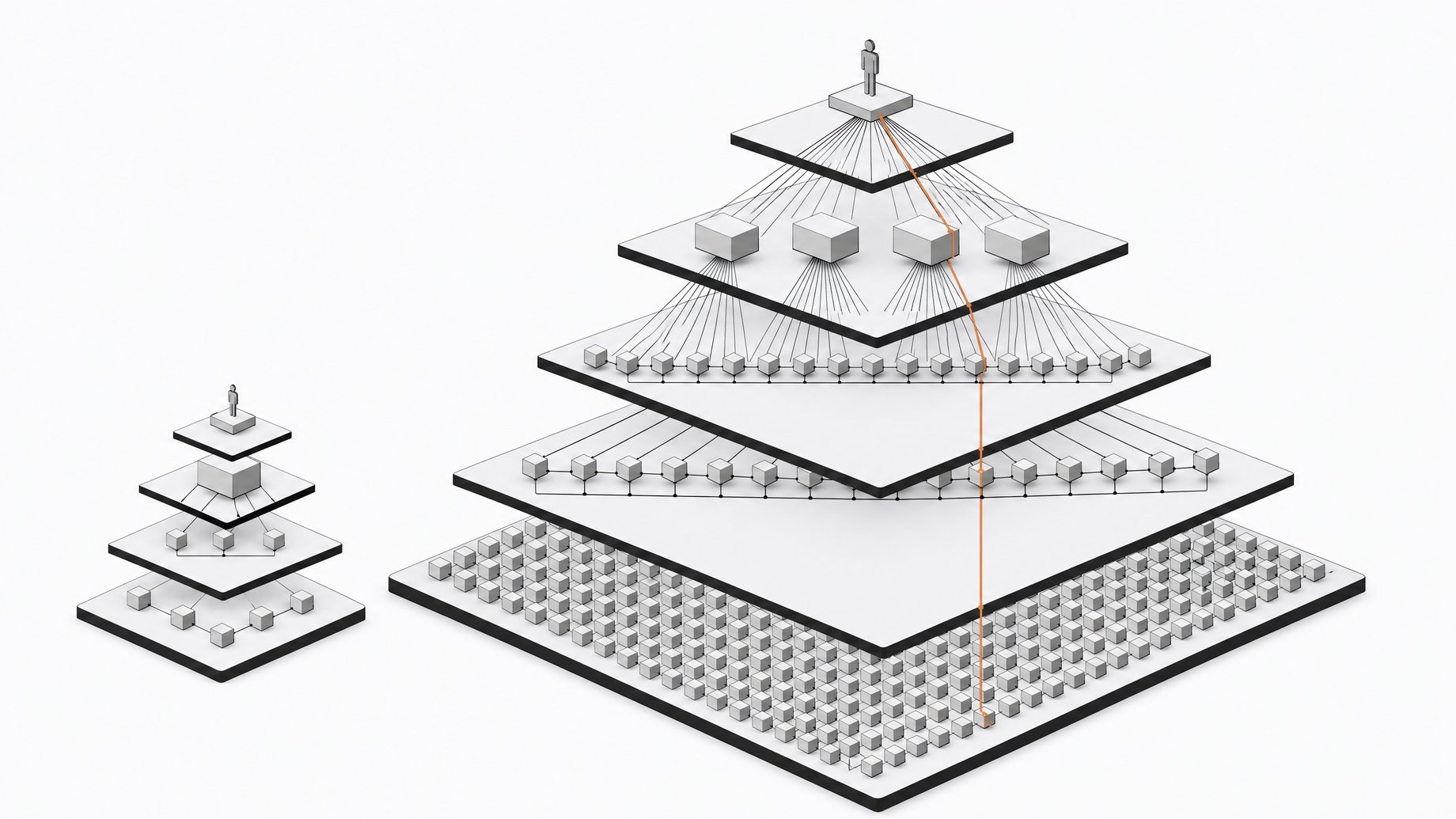
Will AI make us busier or free up time?
So far, it looks like busier. In a recent interview, Sam Altman pointed to coders as an example, saying they are busier than ever and have more impact and earning power. He still hopes technology eventually lets people work less, but he notes that humans keep wanting more out of life and fill the freed time with new work. His framing: aim for a "new renaissance" rather than a "new industrial revolution," because "the future has to be about people."
TL;DR
- Altman says people expected AI to leave them with too little to do, but the early evidence runs the other way: power users feel busier than ever.
- Coding is his main example. Predictions of "no more jobs for coders" were confident not long ago, yet the job changed in texture while demand for software turned out far larger than expected.
- He does not claim the coding pattern carries over to math. He says it is unclear whether total demand for mathematicians will grow.
- On compute, asked how many GPUs he wants working for him, he answered "Infinite. As many as I can get my hands on."
- The interviewer pointed out that AI usage is highly asymmetric, with a small group of power users consuming most of it. The excerpt available here cuts off before Altman's full answer on that.
- Altman says he wants people to have more free time, but admits we are very good at making ourselves busier.
What did Altman mean by a renaissance instead of an industrial revolution?
He said, "We should be shooting more for a new renaissance than a new industrial revolution. The future has to be about people." The quote comes as a short teaser, so the interview excerpt available here doesn't spell out the full argument. The surrounding conversation gives context, though.
The industrial revolution is usually remembered as a story about machines, output and labor. A renaissance is a story about knowledge, creativity and human flourishing. Altman's repeated emphasis is on AI producing new science (math proofs, medicines, materials, energy) and on humans staying central to deciding what matters and how to interpret results. He said questions about what people value "will remain kind of human questions forever."
Why are heavy AI users busier, not less busy?
Altman's explanation is mostly behavioral. He said he always hopes people get to work a little less and have more time for the rest of their lives, and that technology is supposed to enable that. But "it sure seems like we're good at wanting more out of life and wanting more out of the world and making ourselves busier."
The interviewer added a concrete case. Their video editor recently switched to an AI editing tool (called Astra in the conversation) and no longer touches the timeline. The editor still directs and shapes each video. The result was more videos and a busier editor, not a lighter load. Altman said it surprised him how often people describe exactly this.
The interviewer's gloss was that if people were content with life as it was 100 years ago, we might be working an hour a week. Altman called the fact that we aren't "a beautiful thing about human nature."
What does the coding example tell us?
Altman used software engineering as the cautionary tale for confident predictions. Not long ago, many people were sure coding jobs were ending. His read:
- The texture of the job changed a lot.
- Coders have arguably never been busier or had more impact.
- The world had demand for far more software than anyone assumed.
- Employing people to get computers to do things will likely last longer than people thought.
He also said he hasn't read or looked at a line of code in about a year, and doesn't expect to write code again except as a hobby, "like a Revolutionary War reenactment." That is a notable admission from someone who runs a major AI lab. The work moved up a level, from writing code to directing agents.
Does the coding pattern apply to math?
Altman is careful here. He said it is not clear the same demand dynamic applies to mathematics. Some mathematicians reacted to AI-generated proofs with a "we didn't ask for this" attitude, similar to early engineer reactions to AI-written code.
His suggestion is that the role shifts. AI may handle discovering and proving theorems, and humans may increasingly translate dense, hard-to-follow proofs into something people can understand, or write a "beautiful proof" of an AI-found result. He said what it means to be a mathematician next year won't match last year. Whether total demand for mathematicians rises, he said, "I don't know."
He also acknowledged a real loss. Solving hard problems is a source of fulfillment ("I did a hard thing and I'm proud of it"), and AI will do much of that part well. He would still take the trade for cures to diseases, but said he understands the grief people feel and has no answer for it.
Will compute demand keep rising?
Altman's tone suggests yes. Asked how many GPUs he'd want working for him and his personal assistant, he said "Infinite. As many as I can get my hands on."
His reasoning ties back to the busier-not-freer pattern. He described a personal AI assistant (the interview references one called DOT) that he estimates saves him about an hour a day on tasks he didn't want to do. It also flags urgent items he would have missed, and reasons across many sources in a way he's run out of "brain space" to do himself. He thinks most of the technology exists already. What's missing, in his view, is product work, possibly new consumer hardware for ambient awareness, and "a lot more compute."
Economists would recognize the shape of this as the Jevons paradox: when a resource gets cheaper or more efficient to use, total consumption can rise instead of fall. That label is my framing, not Altman's. The transcript excerpt available here cuts off just as he begins to answer how he thinks about global GPU demand, so his full argument on that point isn't covered.
What did Altman say about inequality?
The interviewer raised the issue directly: AI usage is asymmetric, with the top 1% of power users consuming the vast majority and everyone else far behind. The question was how much compute would be needed if half the world used a personal assistant to its full capability.
The portion of the interview available here ends before Altman finishes his answer, so I can't accurately report his position on whether disparities will widen or narrow. What can be said from the excerpt: he treats broad adoption of ambient assistants as a compute-hungry future, and his "future has to be about people" line signals that he wants the benefits to be human-centered. Anything more specific would be speculation.
What should builders take from this?
- Plan for scope expansion, not headcount cuts. If your team adopts AI tools, expect the output target to rise.
- Expect the role to move up a level. The editor still directs, and Altman still decides what gets built. The craft shifts to judgment and direction.
- Demand for compute is a planning risk. If users find assistants useful, they'll want more of them running more often.
- Check domain assumptions. Altman himself says the coding lesson may not transfer to math.
Frequently Asked Questions
Does Sam Altman think AI will reduce how much people work?
He hopes so, and says technology is supposed to enable more free time. But he notes that so far heavy AI users are busier, and that people tend to turn gains into new wants and new work.
What is the "renaissance versus industrial revolution" idea?
Altman said we should aim for a new renaissance rather than a new industrial revolution, because the future has to be about people. The excerpt doesn't elaborate in detail, but the surrounding discussion centers on scientific discovery and keeping human judgment and values central.
Why does Altman say compute demand could be unlimited?
Asked how many GPUs he'd want working for him, he said "infinite." He expects capable personal assistants to monitor tasks, reason across sources and work in the background, all of which requires much more compute than today's usage.
Did Altman say AI will widen inequality?
The available excerpt doesn't include his answer. The interviewer raised the point that a small share of power users consume most AI compute, but the transcript cuts off before his reply.
Is the coding experience a good predictor for other jobs?
Altman treats it as a useful lesson, since demand for software far exceeded expectations. He is explicit, though, that it is unclear whether the same logic applies to fields like mathematics.
How we source, write, and correct our articles. Editorial standards