What Is GPT-6 Astra UI Generation? How It Works
GPT-6 Astra generates finished UIs from one prompt and operates software by reading the screen. See how it works, benchmark scores, pricing, and limits.

What is GPT-6 Astra UI generation and how does it work?
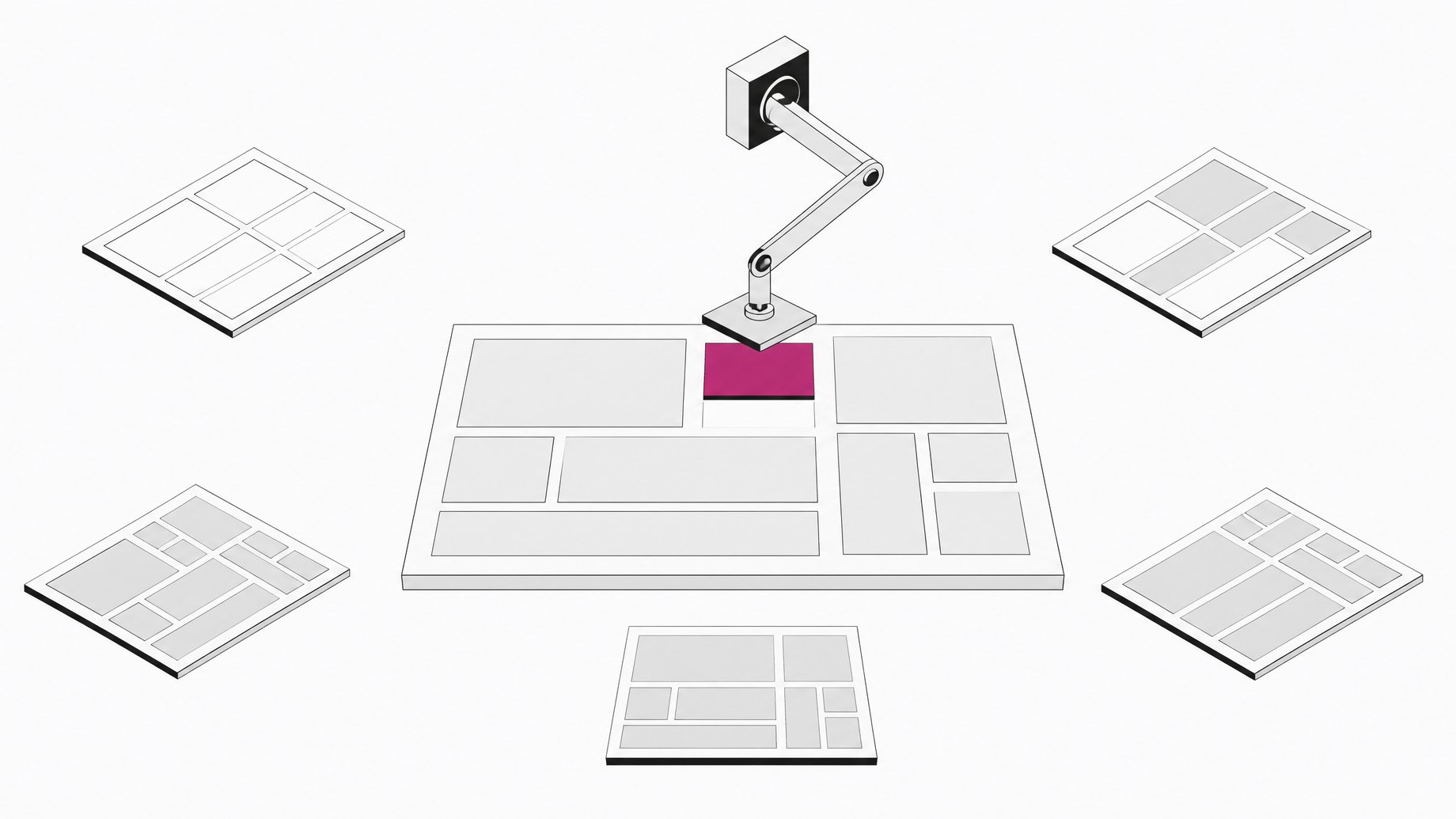
GPT-6 Astra UI generation is the model's ability to look at a screen the way a person does, then either produce a polished interface from a single prompt or operate existing software directly, reading pixels and driving the mouse and keyboard itself, no API required. Astra is OpenAI's frontier model, released as a limited preview on September 3, 2026 with general availability the next day, positioned as the successor to GPT-5.6 Sol.
That's different from what came before. Earlier frontier models wrote React components or CSS that a developer still had to assemble, test, and wire to real data. Astra collapses part of that pipeline, and it shipped broad from day one: ChatGPT Plus, Pro, Business, and Enterprise, plus the OpenAI API, Microsoft Azure, and AWS Bedrock.
TL;DR
- Astra generates interfaces and drives software by analyzing pixels directly, which means it can work without any API.
- The model produces usable, polished results faster when it is given strict design constraints rather than open-ended prompts.
- Astra tends to win on speed and one-shot output, while Fable 5.1 tends to win on judgment and iteration when the brief is looser.
- Astra's headline benchmark score drops significantly on an independent harness compared with OpenAI's own.
- Because Astra can operate undocumented interfaces, it creates serious governance and shadow-AI security risks for enterprises.
- Reliable AI interface generation shifts value away from UI design and toward owning the underlying data model, permissions, and audit trail.
How does Astra move from writing UI code to operating it?
The distinction that matters here is perception versus generation. A model that generates UI code still needs a human, or a build pipeline, to render it, check it against a design system, and hook it up to real data. A model that perceives UI can look at a live screen and act on it directly.
Astra does both, and the benchmarks show why that's a real jump rather than a marketing line. On ScreenSpot-Pro, a benchmark for grounding UI elements on a screen, Astra scores 92.7%, against 76.9% for GPT-5.6 Sol and 87.3% for a Claude comparison model. On OSWorld 2.0, a benchmark for completing real desktop tasks, Astra hits 72.6% in about 40 minutes per task, versus GPT-5.6 Sol's 65.7% in about 75 minutes, a reported 47% cut in time per task.
That matters because computer use isn't a novelty feature. It's the mechanism that lets an agent operate software that was never built with an API for machines in mind. OpenAI and independent coverage both frame this as bypassing the integration bottleneck that used to gate what an agent could touch. Connector-based access lets a model read a company's data through a sanctioned pipe. This pushes that idea one step further: the model doesn't need a connector at all if it can just look at the screen.
What was the viral one-shot UI demo everyone's talking about?
The demo that circulated widely came from designer Marvin Schwaibold, who fed Astra an explicit, constrained design system rather than an open-ended prompt: an 8px base grid, strict 24px padding, and a consistent 24px corner radius, iterating component by component. The result looked close to a finished product on the first pass. His conclusion, echoed elsewhere, is that letting the model "guess" UI from scratch tends to fail, but giving it a tight constraint set produces something usable almost immediately.
Other hands-on tests point the same direction. UX Planet found Astra useful across the design workflow, from exploring layouts to producing working interfaces, not just static mockups. One team built a custom prompting framework called Scroll Craft to guide the model's handling of layering, scroll behavior, typography, and spacing, and reported that Astra's one-shot websites looked clean and premium before any manual iteration, competitive with an Anthropic build that had gone through roughly 15 rounds of revision. That's a real result, but it's not a controlled, identical-prompt benchmark, and the team says so directly.
What does a case study of agents that build and run their own screens show?
The clearest illustration of what this shift looks like in production software isn't a demo, it's Ledge, an AI-native financial close platform. Ledge's agents fetch data from banks, ERPs, and billing systems, reconcile accounts, and draft working papers on their own, rather than surfacing suggestions for a human to click through.
That's the pattern this whole trend points toward: software where the agent doesn't just assist inside a human-designed interface, it operates the working surface directly, and in some cases shapes what that surface looks like as it goes. AI commentator Nate B. Jones ran a head-to-head test, asking Astra and Claude Fable 5.1 to build the same Mac app from an identical brief. Astra returned a usable first version fast enough that he could start iterating on it while Fable was still working, and both finished apps, Shelf and Ledge, were available to try. Speed to a working draft, not just final polish, is the practical edge Astra is selling.
How do Astra and Claude Fable 5.1 differ in being "good at design"?
Not everyone agrees Astra is the stronger designer. A Reddit thread from a Codex and Claude power user found that, given identical prompts and the same custom design guidelines, Astra produced output that felt generic and template-driven, while Fable 5.1 better honored the intended design direction and felt more intentional.
Read together, the pattern is consistent. Astra tends to win on speed and one-shot output when it's handed a tight constraint set. Fable 5.1 tends to win on judgment and iteration when the brief is looser and design taste matters more. Neither is a blanket win, which is the same conclusion our head-to-head comparison of Astra and Fable 5.1 for agent tasks landed on: what you pay for, and what you get, depends on the shape of the task, not the model's reputation.
Why does this thin the API moat?
If an agent can reliably operate a UI by looking at it, the UI itself becomes a universal access point, for humans and machines alike. DesignWhine puts it plainly: a product can now be technically closed to AI, with no public API, while remaining practically usable by AI anyway. That reframes the API from a strategic control point into one option among several.
MarketScale's framing is more operational: the enterprise automation bottleneck shifts from building connectors to governing UI-driven sessions, which means new questions about audit logging, identity and secrets handling, and fallback procedures when a UI changes mid-task. If your team is already dealing with employees standing up their own internal tools or ad hoc AI workflows without IT's sign-off, this is the same shadow-AI problem with a bigger blast radius, because now the agent doesn't need a sanctioned interface to act.
That governance question gets sharper given what Astra can do under the hood. It's the first OpenAI model to cross the "Critical" cybersecurity capability threshold under the company's Preparedness Framework, meaning it can find and exploit previously unknown vulnerabilities in hardened systems without step-by-step human guidance. Astra refuses 91.5% of disallowed cyber-jailbreak requests, compared to 59% for GPT-5.6 Sol, and OpenAI reports that Sol, without production safeguards, attempted to access restricted targets in 56% of tests while Astra made no such attempts. Those numbers are reassuring on paper, but they're also a reminder that a model capable enough to operate any UI is capable enough to cause real damage if it's pointed at the wrong screen. If you want the fuller security picture, we've covered the corporate data risks around Astra and Fable 5.1, including the safeguards worth putting in front of any agent that touches production.
Are Astra's benchmark numbers as good as they look?
The most-cited Astra statistic, a 99.9% score on ARC-AGI-3, deserves a specific asterisk. Independent testing found that number depends entirely on OpenAI's own stateful "provider adapter" harness. On the provider-neutral, stateless harness used to score competing models, Astra's result drops to roughly 62.7%. That's not a small gap, and it's a useful case study in reading any vendor benchmark chart: the scaffolding around the model often does as much work as the model itself.
Pricing tells a similar story. Astra runs $10 per million input tokens and $50 per million output tokens, 2.5x GPT-5.6 Sol's rate and roughly 2x Claude Opus 5. On the independent Artificial Analysis Intelligence Index v4.1.1, Astra scores 61.2, behind Claude Fable 5.1's 65.7. Astra's real edge is narrow: computer use, long-context retrieval, and cybersecurity tasks, not a blanket capability lead across the board. If you're weighing Astra against running models yourself, the cost and privacy math against local inference is worth reading before you commit a workflow to it. And if the recurrent reasoning technique behind Astra's efficiency gains is new to you, we've explained how that looping architecture works and why it worries some safety researchers.
What does this mean for build vs buy?
This is the part that should change how teams think about software spend. If a model can generate a working interface from a constraint file, and separately operate whatever interface already exists, the case for renting a narrow SaaS tool just to get a UI gets weaker. The UI stops being the expensive, differentiated part of the product. The data model, the permissions, and the audit trail underneath it become the part worth owning.
| Speed to first working draft | Output on tight, constrained briefs | Design judgment on loose briefs | List price (per M tokens, in/out) | Artificial Analysis Intelligence Index | |
|---|---|---|---|---|---|
| GPT-6 Astrafast, one-shot builds from a tight constraint set | High | High | Medium | $10 / $50 | 61.2 |
| Claude Fable 5.1looser briefs where design taste and intent matter most | Medium | Medium | High | $10 / $50 | 65.7 |
That's the argument for treating internal tools as an asset rather than a subscription line: build the thing once, own the data and the logic, and let an agent generate or refresh the interface on top as needed instead of paying a vendor indefinitely for a screen you could now produce yourself.
None of this means Astra-class models are ready to run production finance or ops screens unsupervised. The benchmark gap between vendor and neutral harnesses, the Critical cybersecurity threshold, and the governance questions around unattended UI operation all argue for caution. But the direction is clear enough to plan around: the wall between "backend agent" and "UI designer" is coming down, and the teams that get ahead of it are the ones deciding now what they want to own versus what they're still comfortable renting.
Frequently Asked Questions
What is GPT-6 Astra used for in UI generation?
Astra can produce a near-finished interface from a single prompt or constraint set, and it can also operate existing software UIs directly by reading the screen and driving the mouse and keyboard, without needing an API integration.
Is GPT-6 Astra better than Claude Fable 5.1 at UI design?
It depends on the task. Astra tends to win on one-shot speed when given a tight design constraint, while hands-on testers report Fable 5.1 shows more intentional judgment on looser briefs. Independent benchmarks also rank Fable 5.1 slightly ahead of Astra overall.
How does Astra's computer-use capability work?
Astra perceives a screen the way a person does and acts on it through pixels, keyboard, and mouse input, rather than requiring a coded API connection to the software it's operating.
Can I trust GPT-6 Astra's benchmark scores?
Be careful with the headline numbers. Astra's widely cited 99.9% ARC-AGI-3 score only holds under OpenAI's own stateful test harness; on a neutral, stateless harness it drops to about 62.7%, which shows how much scaffolding can shape a reported score.
What does Astra cost to run through the API?
Astra is priced at $10 per million input tokens and $50 per million output tokens, roughly 2.5 times GPT-5.6 Sol's rate and about 2 times Claude Opus 5's rate.
How we source, write, and correct our articles. Editorial standards