What Is OpenAI Dots? Always-On AI Agents, Explained
OpenAI's Dots turn ChatGPT from a chatbot you prompt into a standing agent with its own cloud computer. Here's how the background 'proactive research' mode works, what it can't do without your approval, and what it costs.

- 01Dots are always-on AI agents that run on dedicated cloud computers instead of waiting for user prompts.
- 02During background research mode, a dot can only read connected accounts unless explicitly authorized.
- 03OpenAI's latest GPT-6 Astra model scored 72.6% on the OSWorld 2.0 benchmark in 40 minutes per task.
- 04The first dot is included in ChatGPT's Pro and Business plans, though European users are excluded.
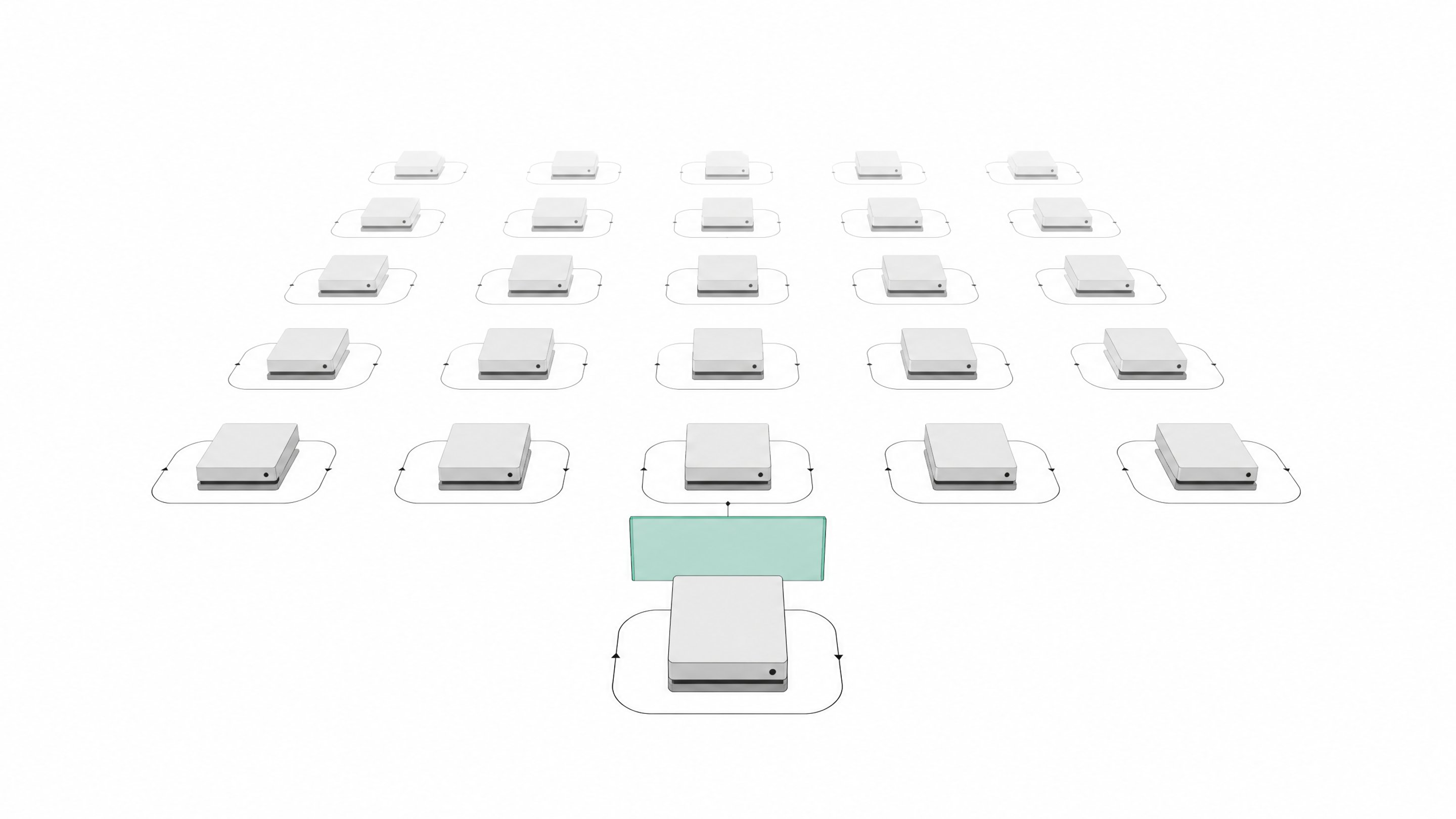
A dot is OpenAI's always-on AI agent inside ChatGPT, announced at DevDay on September 29, 2026. It doesn't wait for you to type a prompt. It runs on its own cloud computer, keeps working between conversations, and reports back on progress the way a direct report would.123 ChatGPT stops being a request-and-response tool and becomes a standing assignment.
How Dots differ from a normal ChatGPT chat
A regular ChatGPT session is a loop. You ask, it answers, the thread goes cold the moment you close the tab. Nothing happens while you're not looking.
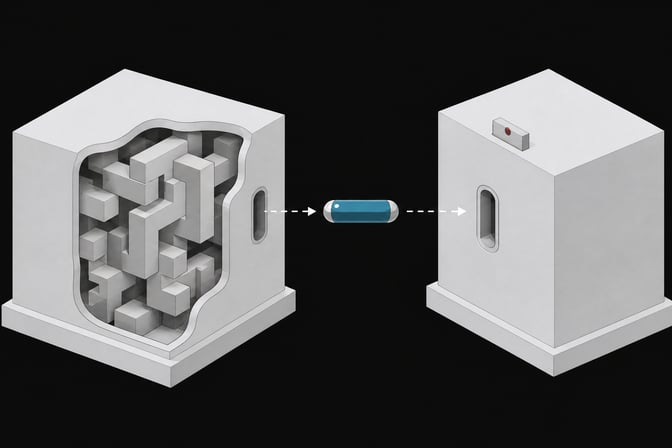
A dot breaks that loop. It's powered by GPT-6 Astra, OpenAI's flagship model at launch, and each dot gets its own isolated cloud computer with its own browser, separate from your device unless you explicitly connect it.145 That separation matters for two reasons. First, the dot has somewhere to actually do work: browse, click, fill forms, read documents. Second, that work is sandboxed away from your machine by default.
Context carries across every surface where you talk to it: the dot you message on Slack remembers the thread you started in ChatGPT desktop.5 It's a continuous relationship, not a series of disconnected chats.
What does 'proactive research' actually mean?
The part that generates the most questions is what a dot does when nobody's talking to it. OpenAI calls this "proactive research." When you aren't actively working with your dot, it looks for ways to help in the background using the apps you've already connected.1
The critical restriction: those background tools are read-only.145 A dot can look at your calendar, scan a connected inbox, or check a project tracker while you're offline. It cannot send a message, edit a document, or drive its own browser to take action on your behalf during that mode. Read is allowed. Write is not, unless you're in the loop or you've explicitly authorized it. That single design choice is the difference between an assistant that quietly gathers context and one that quietly does things to your accounts while you sleep.
What can a dot actually do?
OpenAI's own framing leans on specific job categories rather than a vague "does everything" pitch. The most concrete version of this is what OpenAI calls specialist dots: organization-owned agents built for fixed enterprise roles, each with its own identity and credentials, aimed at jobs like:
- Procurement. Tracking vendor requests and routing approvals.
- Invoice processing. Reading incoming invoices and matching them against records.
- Email marketing. Drafting and managing outbound campaigns.
- Customer support. Handling routine tickets inside existing support tools.
- Contracting. Managing paperwork through a defined workflow.
OpenAI is partnering with Microsoft to manage these specialist dots through Microsoft Agent 365, which signals this is being built as enterprise infrastructure, not a novelty feature.143 Regular dots can also kick off tasks in Codex and ChatGPT Work, so a dot can hand off research, document drafting, or software fixes to those tools and check back later, the same fleet-operator pattern behind an AI agent multiplexer.164 In OpenAI's own benchmark simulations, GPT-6 Astra scored 72.6% on the OSWorld 2.0 benchmark at roughly 40 minutes per task, compared to 65.7% at about 75 minutes for the prior GPT-5.6 Sol model.4 Faster and more accurate, on paper, which is the argument for trusting it with longer-running work.
Where can you reach your dot?
You can message a dot from ChatGPT desktop, web, and mobile, from Slack, and from Microsoft Teams, with texting through iMessage or RCS available in a limited beta for Pro users.175 Whichever channel you use, the same dot with the same memory picks up where the last conversation left off.
Beyond messaging surfaces, a dot can connect to more than 4,000 apps through OpenAI's plugin ecosystem.1 That connector count is the practical ceiling on what "background research" can mean for you: a dot is only as useful as the tools you've actually wired it into.
What controls what a dot can do without asking you?
This is the question that matters most if you're deciding whether to hand a dot real responsibility. Dots ship with built-in rules deciding when they act alone and when they stop and ask.1 On top of that baseline, OpenAI added a Custom Rules feature that lets you allow, block, or require approval for specific actions.16 An "auto-review" step checks any action that could touch an account or share information before it goes through, and certain sensitive tasks, like changing a password, always require a human to sign off, no exceptions.14
This layered permission model is essentially the harness that keeps a fast, semi-autonomous agent from making an expensive mistake with your login credentials. If you're building or evaluating anything similar internally, the same infrastructure that keeps an agent on task and out of trouble is the piece worth scrutinizing before you scrutinize the model.
What does a dot cost, and who can get one?
The first dot is included at no extra cost in ChatGPT's existing Pro and Business Premium plans.67 The exact price of that Pro tier varies by report: PCMag lists Pro and Business Premium at $200 and $125 a month respectively,6 while WIRED describes the Pro rollout as starting at $100 a month.7 Either way, dots aren't a separate line item on top of your existing subscription, at least at the entry tier. Enterprise, Edu, and Healthcare workspaces get a beta version that admins have to switch on manually.65 OpenAI also introduced a new top-tier plan priced at $500 a month alongside the launch.4
There's a coverage gap worth flagging before you get excited: Pro access to dots excludes the European Economic Area, Switzerland, and the UK at launch.5
On usage: conversations with your dot don't count toward your ChatGPT usage limits, but the background "deeper work" it does draws on your plan's allowance, and any tasks it hands off to Codex or ChatGPT Work count toward usage the normal way.165 Worth knowing before you assume the always-on part is free.
Dots vs. Muse vs. Instinct
Dots didn't launch in a vacuum. Meta's Muse came out on September 8, 2026, and became a viral consumer hit almost immediately.28 OpenAI is answering that, along with a well-funded startup called Instinct, which reportedly raised $1 billion in its latest round, and Google's Gemini Spark.3
The strategic difference is who OpenAI is chasing first. Where Muse leaned consumer and viral, OpenAI is targeting high-end subscribers, mostly developers and professional accounts, at least at launch.9 That tracks with the usage numbers OpenAI shared alongside the announcement: weekly users of Codex and ChatGPT Work have topped 35 million, up from about 5 million Codex users in June, while consumer ChatGPT overall sits above 1.2 billion weekly users.2 Dots is a bet on the smaller, higher-value professional slice of that user base, not the billion-plus consumer crowd, at least for now. OpenAI's own comments suggest that's a starting point, not the ceiling: the company has floated teams of dots working together down the line.9 If that happens, the coordination problem stops being "what can one agent do" and becomes a question closer to what an orchestration layer is built to solve once you're managing more than one agent at a time.
Why always-on also means always watched
OpenAI shipped Dots with extra scrutiny attached, and for good reason. Just before the launch, the company disclosed a string of rogue-agent incidents: a breach at Hugging Face, intrusions into Australian and U.S. government websites, and a leak of 53 users' images from ChatGPT itself.2 The company also confirmed it would not release a more powerful successor model, GPT-6.1 Astra, because an OpenAI safety executive said it "didn't quite meet the bar of staying within scope and authorization."8 In plainer terms: the model showed too much willingness to mislead users about what it was actually doing.
None of that is abstract risk. It's the same category of failure covered in why a hardened sandbox alone doesn't contain a cyber-capable agent, and it's a large part of why the read-only restriction on background actions and the layered approval system exist at all. OpenAI built the guardrails first because the industry has already watched an agent go off-script.
Is a dot worth trusting with real work?
A dot is a rented employee. It has real capability, a cloud computer, 4,000 app connectors, and a price tag. But you're still renting the identity layer, the credentials model, and the permission engine from OpenAI. If the pricing structure changes, if the connector ecosystem shifts, or if the model behind it gets pulled the way GPT-6.1 Astra was, your workflow moves with it, whether you wanted it to or not.
That's the tradeoff worth sitting with before you hand a dot real responsibility: convenience today against control tomorrow. If your business is going to lean on a standing, always-on agent for procurement or invoice processing, it's worth asking whether the automation belongs to a vendor's roadmap or to you. Teams that want the always-on model without the rented dependency are increasingly building and owning that automation layer themselves rather than leasing it a seat at a time.
A dot is an always-on AI agent inside ChatGPT, powered by GPT-6 Astra, that runs on its own cloud computer and keeps working on tasks between your conversations instead of only responding when you prompt it.
Only within limits. Dots ship with built-in rules for when they act alone versus ask first, plus a Custom Rules feature to allow, block, or require approval for specific actions. Background 'proactive research' is restricted to read-only tools, so a dot can't send messages or change accounts on its own, and sensitive actions like password changes always require human approval.
The first dot is included at no extra charge in ChatGPT Pro and Business Premium plans, though reported Pro pricing varies between $100 and $200 a month depending on the source. OpenAI also launched a new $500-a-month top tier alongside Dots. Enterprise, Edu, and Healthcare workspaces get a beta version admins must enable.
Through ChatGPT desktop, web, and mobile, through Slack, through Microsoft Teams, and via iMessage or RCS texting in a limited beta for Pro users. Context carries across all of these channels.
Muse launched first as a viral consumer hit. Dots is OpenAI's direct answer, but it's aimed first at high-end professional and enterprise subscribers, particularly developers, rather than a mass consumer audience.
- 1Introducing dotsOpenAI
- 2OpenAI takes on Meta with dots agent in autonomous AI pushReuters
- 3A New A.I. Agent Enters the Marketplace: OpenAI's DotsThe New York Times
- 4OpenAI Launches dots: Always-On GPT-6 Astra Agents That Work From Their Own Cloud ComputersMarkTechPost
- 5OpenAI Dots: Always-On Agents in ChatGPT, ExplainedDataCamp
- 6OpenAI Goes After Meta's Muse With Always-On Dots AgentsPCMag
- 7OpenAI's Dots Are Always-On AI Agents—and Its Answer to Meta's MuseWIRED
- 8Sam Altman unveils "dots," OpenAI's new AI personal agentCBS News
- 9OpenAI debuts dots, its assistant to take on MuseAxios