How Much Does Kimi K3.1 Pro Cost? Pricing and Usage Limits
Kimi K3.1 Pro costs $2 per million input and $10 output tokens. See cached rates, high-speed pricing, a real $32 benchmark bill, and plan limit complaints.

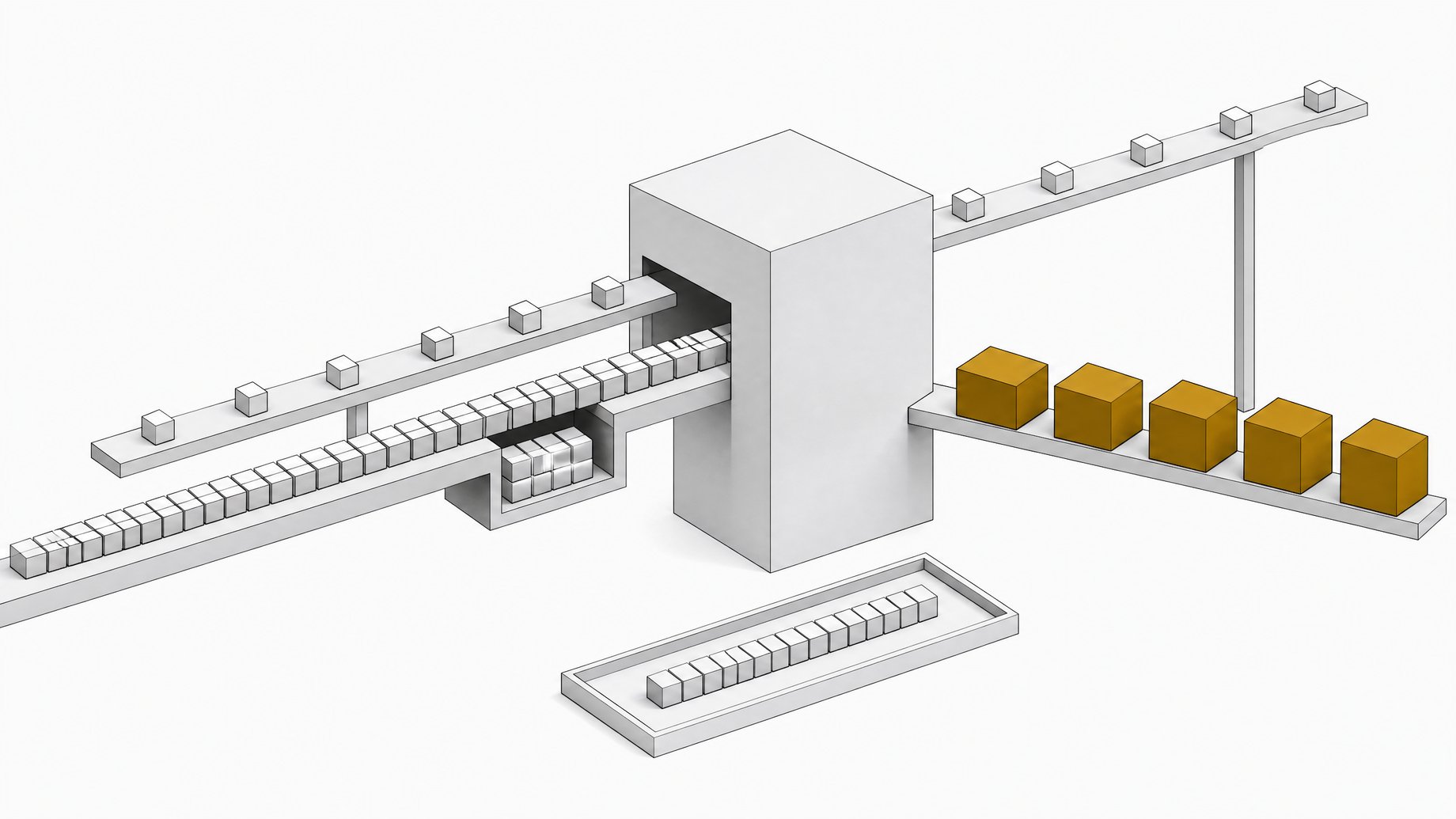
How much does Kimi K3.1 Pro cost to use?
Kimi K3.1 Pro costs $2 per million input tokens, $0.20 per million cached input tokens, and $10 per million output tokens through Moonshot's API. A high-speed version, which Moonshot says runs two to three times faster, costs double: $4 input and $20 output. One reviewer's full six-task agent benchmark run used about 112 million tokens and came to roughly $32 at standard rates, or about $42 on high-speed.
TL;DR
- Standard pricing is $2 input, $0.20 cached input, and $10 output per million tokens, a cut from K3's $3, $0.30, and $15.
- The high-speed tier doubles the price to $4 input and $20 output, in exchange for 2x to 3x faster responses.
- A full six-task agent benchmark run cost about $32 on standard and about $42 on high-speed.
- Output was not the main cost driver. Cached rereads of context (about 110 million tokens, roughly $22) cost far more than the roughly $7 of output.
- Early reports on X describe five-hour plan limits draining fast, especially in fast mode. One reviewer could not verify this because he tested through an API key instead of a plan.
- In one reviewer's tests, K3.1 Pro scored 5.37 out of 10, in the middle of the pack, so the price looks weaker against cheaper rivals that scored similarly.
What does each Kimi K3.1 Pro price tier include?
K3.1 Pro is the first model in Moonshot's K3.1 series. Moonshot describes it as K3 with substantially more post-training. It keeps a 1 million token context window and is available in the Kimi app, in Kimi Code, and through the API.
| Tier | Input | Cached input | Output |
|---|---|---|---|
| K3 (previous) | $3 | $0.30 | $15 |
| K3.1 Pro | $2 | $0.20 | $10 |
| K3.1 Pro high-speed | $4 | not stated | $20 |
All figures are per million tokens. A cached rate for the high-speed tier was not given in the material reviewed, so check Moonshot's pricing page before budgeting around it.
One reviewer placed the standard price in direct competition with Gemini 4 Argon, Sonnet 5.5, and GPT 6.1 Soul. He also said Argon's price is expected to double in a month or two, which would change that comparison. For a cheaper GPT-6.1 option, see GPT-6.1 Terra pricing and specs.
What does a real agent run actually cost?
Per-token prices only tell part of the story. A reviewer ran all six KingBench 4 tasks through an agent harness at max effort, which is also the setting Moonshot uses for its own benchmarks. The tasks ran in parallel and finished in under an hour. The fastest took about 24 minutes and the slowest about 58.
The totals:
- About 112 million tokens across 793 requests.
- About $32 at official standard rates.
- About $42 if the same run used the high-speed tier.
Where does the money go in an agentic run?
Not into output. K3.1 Pro wrote fewer than 700,000 tokens in the whole run, worth about $7. The bulk came from roughly 110 million cached tokens that the agent re-read on every step, adding up to about $22 on their own.
The cached rate is only a tenth of the input rate, and it still dominates the bill. Long agent loops resend a growing context at each step, so the cost scales with the number of steps times the context size. If you plan to run K3.1 Pro as a coding agent, estimate cached-token volume first, not output length.
The parallel run also hit Moonshot's organization rate limit nine times. The harness retried each request and continued without problems, but teams running several agents at once should expect throttling.
Is Kimi K3.1 Pro worth the price?
It depends on what you compare it to. In the reviewer's chart, K3.1 Pro scored 5.37 out of 10, sixth of eleven models. Here is how the cost and score compare for the models with figures in the review:
| Model | Score | Approx. run cost |
|---|---|---|
| Claude Opus 5.5 | 5.78 | $46 or more |
| GPT 6.1 Soul | 5.50 | at least $6 |
| Gemini 4 Argon | 5.43 | at least $10 |
| Haiku 5.5 | 5.42 | about $7.40 |
| Kimi K3.1 Pro | 5.37 | about $32 |
| DeepSeek V4.1 Flash | 5.17 | under $2 |
On those numbers, K3.1 Pro costs more than four times as much as Haiku 5.5 for a slightly lower score. It costs about 16 times as much as DeepSeek V4.1 Flash for a score two tenths of a point higher. It is cheaper than Opus 5.5, but it does not match Opus on quality. The reviewer's verdict was that pay-per-token API users have no clear spot where it is the smart pick.
This is one reviewer's benchmark on six tasks, and it contrasts with Moonshot's own claims. Moonshot reports 65.7% on Terminal Bench 4.0, next to Opus 5.5 at 66.4, and says its hardest-factual-test hallucination rate fell from 23.4% on K3 to 8.3%. Another reviewer called the benchmark table impressive for a model of this size. Your own workload may land differently.
The reviewer did note real strengths. The model honestly reported what it had not built, blocked all 20 malicious container images in a security test, and handled a real keyboard protocol better than most models he had tested.
What are people saying about Kimi plan usage limits?
Early reports are negative. One reviewer saw posts on X from people on monthly Kimi plans saying their five-hour usage limit disappeared almost immediately when using K3.1 Pro, apparently most often in fast mode and across several plan tiers.
Treat this as unconfirmed. That reviewer tested through an API key with vouchers, not a subscription, and said he could not speak to plan limits or final pricing. He pointed out that a similar limits problem appeared at another lab's launch and turned out to be a bug that was later fixed. So the complaints may reflect a launch-week issue, or they may reflect real limits.
Another reviewer who paid for a Kimi subscription and used the desktop app for several builds did not report limit problems in the material reviewed. A plan can make sense when you want predictable spend, since cached rereads do not hit your wallet directly. For a pricier plan example, see the $500 Codex Ultrafast plan against Claude. Check your actual quota burn in the first days before committing.
Will cheaper K3.1 Pro hosting appear when the weights release?
Possibly. Moonshot says the full open weights arrive by November 4th. Once released, other providers can host the model, which could push prices lower. K3 is already open weight on Hugging Face under Moonshot's own license, described as close to MIT with extra conditions for very large companies.
Two caveats apply. The model is in the 3 trillion parameter class, so self-hosting means a rack of GPUs, not a laptop. Moonshot also says it removed cyber-related training data from the open release, so the downloadable model may not match the API version on cyber tasks.
Frequently Asked Questions
How much is Kimi K3.1 Pro per million tokens?
Standard pricing is $2 for input, $0.20 for cached input, and $10 for output. The high-speed variant costs $4 for input and $20 for output.
How much did a full benchmark run cost?
A reviewer's six-task agent run used about 112 million tokens over 793 requests. At standard rates that came to roughly $32, or about $42 on high-speed.
Why is the bill so high if output is cheap?
Agents resend their context at each step. In that run, about 110 million cached tokens cost roughly $22, while under 700,000 output tokens cost about $7.
Are the Kimi plan usage limits a problem?
Some users on X reported five-hour limits draining almost instantly, especially in fast mode. These reports are early and unverified, and a past launch from another lab had a similar issue that turned out to be a bug.
Can I run Kimi K3.1 Pro myself?
Moonshot says full weights will be released by November 4th. At roughly 3 trillion parameters, running it yourself requires a multi-GPU server, and the open version has cyber-related training data removed.
How we source, write, and correct our articles. Editorial standards