Is Withings Apple Health Sync Free? New Withings+ Paywall Explained
Withings now charges new accounts $99.99/year for Apple Health and Health Connect sync. See who is affected, what stays free, and why the change matters.

Is Withings Apple Health sync free?
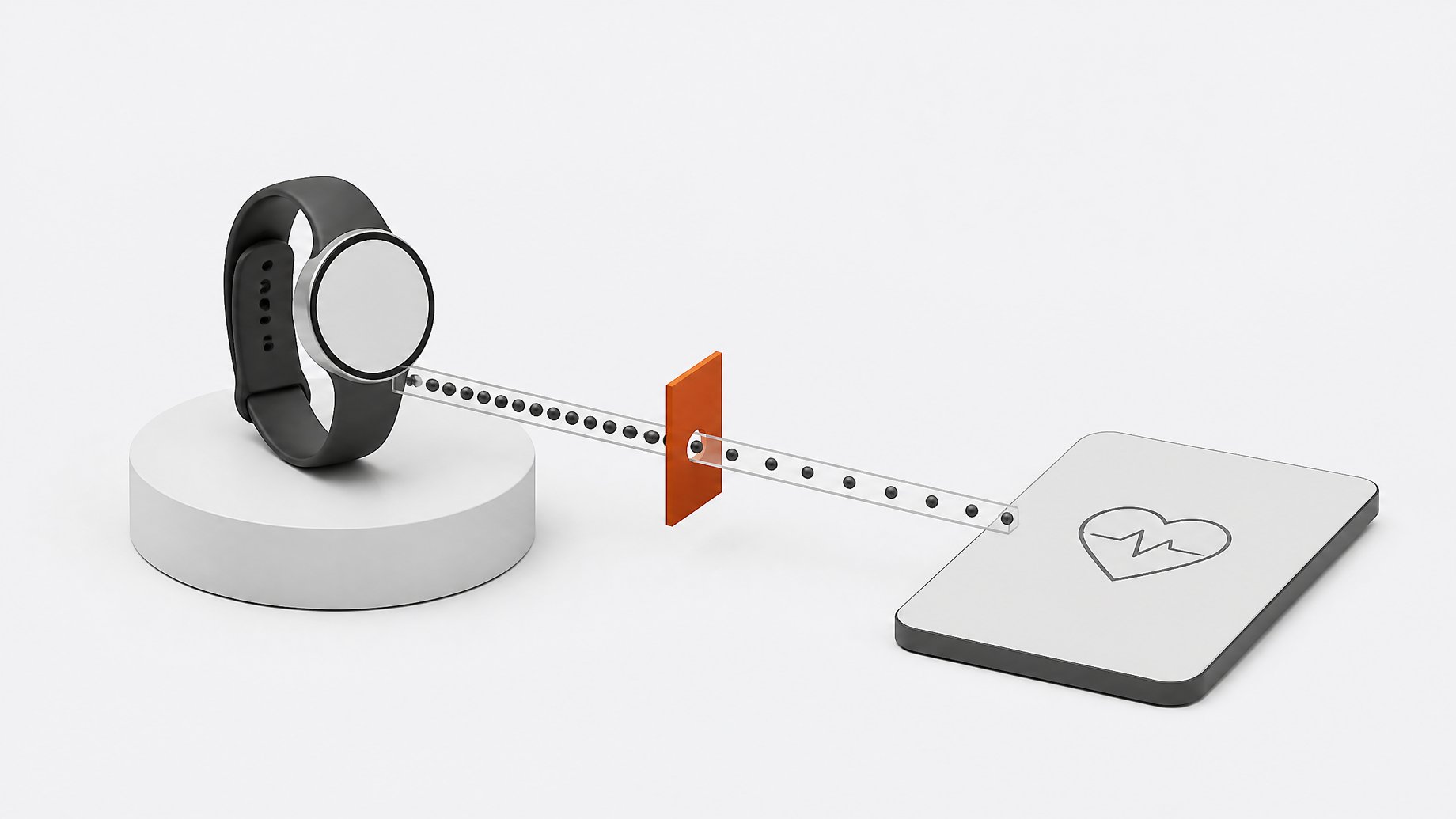
No, not for new accounts. Starting October 13, 2026, anyone who creates a new Withings account has to pay for Withings+ ($99.99 a year or $9.99 a month in the US) just to get their scale, watch, or blood pressure cuff to sync automatically with Apple Health or Google Health Connect. That syncing was free for every Withings customer the day before. It's still free for anyone who made an account on or before October 12, 2026. The cutoff is tied to your account creation date, not when you bought the hardware.
That last detail is the sneaky part. Buy a brand-new Withings scale today, hand it to your spouse or kid to set up on their own account, and they'll hit the paywall even though the box said nothing about a subscription.
TL;DR
- New Withings accounts must now pay for a Withings+ subscription to sync health data with Apple Health, a feature that was previously free.
- Apple Health sync is a local process on the phone, so Withings incurs zero cloud costs to run the newly paywalled feature.
- Hardware makers like Withings, Garmin, and BMW are increasingly paywalling built-in features of devices customers already own.
- Companies bet that one more recurring charge won't register, since U.S. households spend about $273 a month on subscriptions and most underestimate their total.
- Backlash can work against the most visible paywalls, as BMW's heated seat reversal shows, but the underlying strategy continues elsewhere.
- Before buying anything "smart," check account-creation gates and how the company talks about future updates.
What did Withings actually change?
The mechanics are simple. If your Withings account predates October 13, 2026, nothing changes. If it postdates that line, automatic data export to third-party apps, including Apple Health, Health Connect, and similar integrations, now requires an active Withings+ subscription. Manual workarounds like CSV or PDF export, and sharing a report with your doctor via HealthLink, stay free.
Withings' official explanation ties the change to its new AI Connector, an MCP-based tool that lets ChatGPT, Claude, or Grok query a user's health data, along with what the company calls "new privacy measures." Its support page states plainly: "Any account created after October 13th, 2026 will be asked to sign up for a Withings+ subscription in order to export their Withings data to third party apps like Apple Health and Health Connect." A separate writeup from the health-data platform Terra says the subscription also funds "clinical validation, regulatory work and the infrastructure behind its health platform."
Why doesn't the technical justification hold up?
Writing data from the Withings app into Apple HealthKit is a local, on-device operation. The phone's operating system handles the write. Withings doesn't need to run a server, process anything with AI, or spend compute cycles to make it happen. A user who raised the issue on Withings' own support forum put it directly: "Writing to Apple Health via HealthKit is a local process on the phone. It requires zero cloud computing or server costs from Withings."
That's the gap between the stated reason (AI connector costs, privacy infrastructure) and the actual feature being gated: a basic, decade-old sync that cost Withings nothing to run before and costs nothing extra to run now. Bundling a genuinely new AI feature with a toll on an old, free, local function is a way to dress up a plain price increase as the cost of innovation.
One commenter on the Withings forum went further, arguing the move may violate Apple's own App Store Review Guidelines, specifically section 4.10 on "Monetizing Built-In Capabilities," which restricts charging for access to HealthKit. They said they'd filed a formal complaint with Apple over it.
Is this just a Withings problem, or a wider pattern?
Withings is just the most recent and clearest example of a move that's become routine across hardware categories: ship the device, then move previously included functionality behind a subscription once customers are locked in.
- Garmin Connect+, launched in March 2025, charges $6.99 a month or $69.99 a year for features that used to be free inside the Garmin Connect app. Garmin's own CEO, Clifton Pemble, told investors on a Q1 2025 earnings call the company plans to reserve more future features for the paid tier, even on watches like the Fenix 8 that already cost over $1,000.
- BMW's heated seat subscription, launched in 2022, charged roughly $18 a month for heated seats that were already physically installed in the car at the time of purchase. The backlash was loud enough that BMW killed the specific heated-seat offer in 2023. A BMW communications executive later admitted, "The criticism we got was from the seat heating, so this was probably not the best way to start with it." BMW is still fully committed to function-on-demand subscriptions elsewhere in its lineup, and so is Tesla, which has paywalled previously standard features behind its FSD subscription.
- John Deere's repair software, the most consequential version of this pattern, kept proprietary diagnostic tools locked away from farmers and independent mechanics, so repairs on tractors they already owned had to go through Deere's dealer network. The FTC sued, and the resulting 10-year consent decree, finalized in mid-2026, forces Deere to give farmers and independent shops the same access to diagnostic tools its dealers get. U.S. PIRG estimated these restrictions cost American farmers about $4.2 billion a year in downtime and excess repair costs.
Three industries, three products, same architecture: the hardware sale happens once, but the software layer that makes the hardware useful can be re-priced at will, long after the customer has stopped shopping around.
Why do hardware companies keep doing this?
This behavior isn't random. It's a rational response to a math problem every hardware company shares: you sell a device once, but you want revenue every month. A $300 scale or a $1,000 smartwatch is a single transaction. A $99.99-a-year subscription attached to that same device is a recurring one, and it compounds across a customer base that doesn't churn fast, because replacing a scale or a watch isn't something most people do annually.
Consumers are already stretched thin on this front. U.S. households now spend roughly $273 a month on subscriptions in total, and 89% of people underestimate how much they're actually paying across all their subscriptions combined. Every company adding a new recurring line item is betting that one more $8-a-month charge won't register against a backdrop that large, and for a while, that bet pays off. Then it hits a nerve, as BMW found out, and the backlash becomes the story instead of the feature.
Who actually controls the value you paid for?
The deeper issue the Withings case exposes is that owning the hardware and owning the thing that makes the hardware useful are two different claims, and companies increasingly only sell you one of them.
The FTC's case against Deere is the clearest legal articulation of this problem to date. It established, through a decade-long enforcement order, that locking farmers out of the software layer controlling equipment they'd already bought was an antitrust violation, not just an inconvenience. Withings' change doesn't rise to that level of harm. But it's built on the identical structure: the company that controls the software connecting your device to the rest of your life gets to decide, at any point after the sale, what that connection costs. We've covered this dynamic before when writing about why you don't own your hardware if you don't control the device, and the Withings case is a tidy, low-stakes version of the same lesson: the receipt proves you bought the box, not that you control what the box does.
It's part of why the software ownership argument keeps resurfacing across unrelated product categories, from cloud-dependent appliances that can be bricked by a bad firmware push to the enterprise SaaS stack, where the same incentive produces cancellation dark patterns and SSO paywalls. It's also the reasoning behind a broader shift toward owning the software you depend on rather than renting access to it piece by piece, whether that means a company building its own tools instead of subscribing to another vendor's locked-down app, or a consumer thinking twice before buying hardware whose core function depends on a server somewhere else.
What should the backlash teach buyers?
The response to Withings+ followed the same script as Garmin's and BMW's before it. A thread on r/withings calling for pressure on the company to reverse the change racked up thousands of upvotes, with commenters pledging not to buy Withings hardware again. Coverage spread across MacRumors, Gadgets & Wearables, and Terra within days of the policy taking effect. The App Store guideline complaint adds a regulatory wrinkle Garmin and BMW didn't face, since Apple has previously enforced section 4.10 against developers who tried to charge for HealthKit access on other apps.
| Paywall cost | Feature originally free/included | Reversed after backlash or legal action | Drew formal regulatory or App Store scrutiny | |
|---|---|---|---|---|
| Withings+Health data sync | $99.99/yr | Yes | No | Yes |
| Garmin Connect+Watch app features | $69.99/yr | Yes | No | No |
| BMW heated seatsIn-car comfort features | ~$216/yr ($18/mo) | Yes | Yes | No |
| John Deere diagnosticsEquipment repair access | Dealer-only access (no direct fee) | Yes | Yes | Yes |
BMW's reversal shows this pressure can work, at least on the most visible, most mockable version of a paywall. It doesn't mean the underlying strategy goes away. BMW killed heated seats specifically and kept expanding subscriptions everywhere else. Garmin hasn't reversed Connect+ and has said more features are coming to the paid tier, not fewer.
So before buying anything described as "smart," check a few things first:
- Find the account-creation gate. Features tied to "new accounts" rather than "new devices" are the easiest paywall to miss, because the box and the marketing page describe what the product did for existing customers, not what you'll get.
- Separate the hardware claim from the software claim. A device review from a year ago may describe free features that are now gated for anyone setting up fresh. Check the company's current support documentation, not just reviews.
- Look at how the company talks about future updates. If a CEO or support page says more features will be "reserved for premium offerings" going forward, as Garmin's did, assume today's free features aren't guaranteed to stay free.
- Check what happens if you walk away. If the core function of the device, not an add-on, depends on a subscription you can cancel, you haven't bought a scale or a watch. You've bought a hardware deposit on a software rental.
For current Withings customers on an account older than October 13, 2026, nothing changes today. But the lesson of this entire category is that "nothing changes today" has an expiration date the company sets, not you.
Withings didn't invent this move. It just made it unusually easy to see, because the feature it paywalled used to require nothing from Withings at all.
Sources: MacRumors, Gadgets & Wearables, Terra, r/withings, Tom's Guide, Forbes, TechSpot, The Drive, Tech Times, Readless, Withings Support.
Frequently Asked Questions
Does the Withings Apple Health sync paywall affect existing customers?
No. The subscription requirement only applies to accounts created on or after October 13, 2026. If you created your Withings account on or before October 12, 2026, automatic syncing to Apple Health and other third-party apps remains free, even if you buy new Withings hardware later.
How much does Withings+ cost?
Withings+ costs $99.99 a year or $9.99 a month in the US (some sources list it as $99.50/year or $9.95/month). It's required for new accounts to automatically sync data to Apple Health, Google Health Connect, and similar third-party apps.
Why is syncing to Apple Health not free anymore if it doesn't cost Withings anything to run?
Critics, including a user on Withings' own support forum, point out that writing data to Apple HealthKit happens locally on the user's phone and requires no server-side computing from Withings. Withings has instead tied the change to its new AI Connector feature and unspecified 'privacy measures,' bundling a basic, previously free function into the cost of a separate AI rollout.
Is the Withings Apple Health paywall a violation of Apple's App Store rules?
At least one Withings forum user has argued it may violate App Store Review Guideline 4.10, which restricts monetizing built-in HealthKit capabilities, and said they filed a complaint with Apple. There's no confirmed ruling from Apple on this as of the policy's rollout.
Is Withings the only hardware company doing this?
No. Garmin introduced a similar Connect+ subscription in 2025 for features that used to be free, and has said more features will move behind that paywall over time. BMW tried a monthly heated-seat subscription for seats already installed in purchased cars, reversed it after backlash, but kept other subscription features. John Deere faced a 10-year FTC consent decree over software-based repair restrictions on tractors farmers already owned.
How we source, write, and correct our articles. Editorial standards