Build vs Buy Helpdesk Software: Is Building Cheaper?
Compare per-agent helpdesk SaaS pricing from Zendesk and Freshdesk with building an internal ticketing tool on Cloudflare Workers and D1 for about $5 a month.

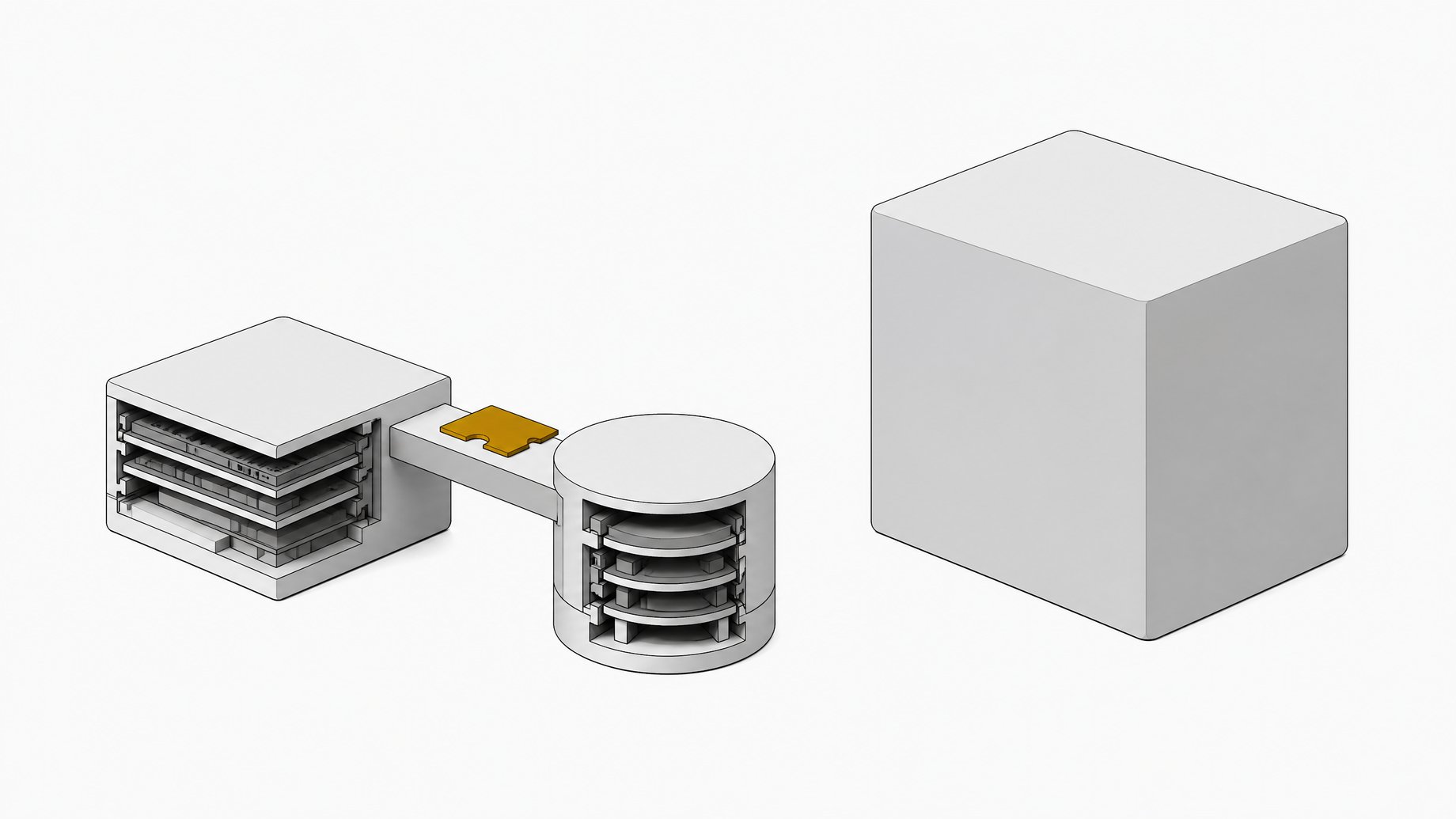
Is building a helpdesk cheaper than buying helpdesk software?
Yes, for most internal helpdesks, building is cheaper. Buy a helpdesk SaaS if you need deep omnichannel routing, compliance-heavy customer support, or a support org too large to maintain its own tools. For everything else, and that's most internal helpdesks, build one. A small dev team can stand up a ticketing tool on Cloudflare Workers and D1 and run it for a few dollars a month instead of paying per agent forever.
TL;DR
- Buy a helpdesk SaaS only if you need deep omnichannel routing, compliance-heavy support, or a support org too large to maintain its own tools, and build for everything else.
- Mid-market helpdesk SaaS teams commonly pay $165 to $265 per agent monthly once AI, QA and workforce management tools are included.
- Edge platforms remove devops overhead, which is one of the biggest reasons internal tools traditionally fail.
- Running an internal helpdesk on a managed serverless stack costs roughly $0 to $5 a month.
- Ungoverned SaaS and shadow AI tools increase the average cost of data breaches by about $670,000.
What is the hidden math behind "just $19/agent/month"?
Helpdesk pricing looks cheap until you multiply it. Zendesk's entry-level Support Team plan starts at $19 per agent per month, but the plan most teams actually adopt, Suite Team, runs $55 per agent per month, and Suite Professional climbs to $115. Add AI features, QA tooling, and workforce management, and real-world blended costs for mid-market teams commonly land between $165 and $265 per agent per month.
Freshdesk markets itself as the budget option, and it is cheaper at the low end, starting around $15 to $29 per agent per month. But its advanced Omni Pro tier still runs $79 to $89 per agent per month. Add ten agents at even the modest end and you're paying $6,600 a year for software that, structurally, is a database, a UI, and some workflow rules.
Helpdesk SaaS pricing is per-seat, and per-seat pricing compounds with headcount in a way flat infrastructure costs never do. That's the whole argument in one sentence.
Why does build vs buy look different now?
The old rule of thumb was simple: buy unless you have six months and a full engineering team to spare. That made sense when building anything meant writing an API from scratch, standing up a database, wiring authentication, and hosting it all on servers someone had to patch.
AI-assisted coding has cut the upfront cost of building narrowly scoped internal tools dramatically, though it hasn't equally reduced the long-term maintenance tail. That distinction matters: the build side of the ledger has gotten cheap, the run side hasn't, unless you also change the infrastructure you build on. That's the piece most build-vs-buy arguments skip, and it's the one this piece is about. It's also the broader trend behind why niche SaaS is bleeding out as teams build their own tools. Our sister piece on how Fable 5.1 flips the math covers the coding side of this shift in more depth.
Is an internal helpdesk a good build candidate?
Not every internal tool should be built. Retool's build-vs-buy framework uses seven factors, sometimes called the 7Cs, to sort candidates: Core Capability, Cost, Complexity, Competence, Cohesion, Competitive Advantage, and Culture. Run a basic internal helpdesk through that lens and it scores well on almost every axis:
- Core capability. Ticket intake, assignment, status tracking, and comment threads are commodity CRUD plus a workflow layer, not a novel problem.
- Complexity. A basic helpdesk needs a data model, an API, and a UI. It does not need a rules engine spanning a dozen channels.
- Competence. Any team that can build one CRUD app can build this one. It's the same shape as an inventory tracker or a status page.
- Cost. The build is bounded. At a fully loaded engineer rate of roughly $85 to $110 an hour, a few days of focused work is a small, one-time cost against a subscription that never stops.
- Cohesion and culture. An internal-only tool with no external customer exposure carries far less risk if something breaks on day one.
What doesn't clear this bar: a helpdesk fielding thousands of customer conversations across email, chat, phone, and social with strict SLA and compliance requirements. That's real omnichannel infrastructure, and it's exactly the kind of deep, competitive-advantage-adjacent capability the 7Cs framework flags as a buy. The angle here is specifically internal ticketing: IT requests, facilities tickets, employee support, not customer-facing CX at scale.
What does the Cloudflare Workers and D1 stack look like?
This used to fail for one reason: someone had to run a server, patch it, scale it, and keep the lights on at 2 a.m. Edge platforms remove that job entirely.
Cloudflare Workers runs your API and application logic without a server to manage. D1 is Cloudflare's serverless SQLite database, so your ticket, agent, and comment tables live in a managed, replicated store you never provision or patch. Layer in Cloudflare Access for authentication and, if you need file attachments, R2 for object storage, and you have a full stack with zero servers to babysit.
This is the part traditional build-vs-buy guides underweight. Retool's own analysis of internal tool failures points to devops overhead, hosting, patching, and access management, as one of the biggest reasons homebuilt tools rot. A serverless, edge-native stack removes most of that surface by design.
How do you build a lean internal helpdesk step by step?
Here's the actual path, scoped to something a small team can ship in days, not months.
- Scaffold the Worker. Initialize a Cloudflare Worker project as your API layer. This is the single service that handles every request from the UI.
- Define the D1 schema. Three tables cover most of what an internal helpdesk needs: tickets (id, title, description, status, priority, requester, assignee, timestamps), agents (id, name, email, role), and comments (id, ticket_id, author, body, created_at).
- Build ticket CRUD endpoints. Create, list, update status, assign, and comment routes. This is the bulk of the logic, and it's entirely standard REST-over-SQL work.
- Add a minimal UI. A ticket list, a detail view, and a create form are enough. Polish can come later; internal users forgive a plain interface much faster than external customers do.
- Wire up authentication. Put the whole thing behind Cloudflare Access so only employees on your identity provider can reach it, with no separate login system to build or secure.
- Deploy. Push the Worker and bind it to your D1 database. No server to provision, no container to orchestrate, no load balancer to configure.
You can do all of this by hand, or use an AI coding assistant to generate the boilerplate for schema, routes, and UI in an afternoon. Either way: this is a bounded, well-understood build, not an open-ended project.
What does it actually cost to run?
This is where the economics get stark. Cloudflare Workers' free tier includes 100,000 requests a day, far more traffic than a 20-to-50-person internal helpdesk will generate. D1's free tier includes 5GB of storage and 5 million row reads and writes a day, which comfortably covers years of ticket history for a team that size.
If you outgrow the free tier, the Workers Paid plan is a flat $5 a month base fee with generous included usage. Put plainly: a helpdesk serving dozens of employees can run entirely free, or for about $5 a month, against a SaaS bill that starts at hundreds of dollars a month for the same headcount and climbs from there.
The pattern holds elsewhere too. One team migrating observability workloads from AWS to Cloudflare Workers reported over 95% cost reduction, dropping from roughly $790 a day to about $25 a day. Edge compute isn't just cheaper for helpdesks specifically. It's cheaper for the whole class of workload a helpdesk belongs to.
What ownership costs does SaaS not advertise?
Build advocates sometimes undersell the maintenance side, and it's worth being honest about it. Internal tools historically failed from underestimated ongoing maintenance, unclear hosting responsibility, and knowledge loss when the original builder left the company. Those are real risks, and no stack eliminates them entirely.
What a managed, serverless architecture does is remove the largest single failure mode: infrastructure rot. There's no OS to patch, no server to resize under load, no load balancer configuration to inherit from someone who left two years ago. What remains is application-level maintenance, adding a field, fixing a bug, adjusting a workflow, and that's exactly the kind of work a small team, or an AI coding assistant, handles in hours, not weeks. Our practitioner's guide to building internal tools with AI walks through what that ongoing maintenance loop actually looks like day to day.
Why do shadow IT and shadow AI make the case for owning your helpdesk?
There's a governance argument here too, easy to miss if you only look at the price tag. The average company now runs something like 100 to nearly 300 SaaS applications, and IT departments typically only know about 30 to 50% of them. Every ungoverned tool, including a helpdesk nobody centrally tracks, adds to that sprawl.
The cost of that sprawl isn't only wasted license spend. IBM's 2025 breach research found that incidents involving shadow AI or ungoverned tools cost organizations roughly $670,000 more on average than standard breaches, $4.63 million versus $3.96 million. A helpdesk you build, host, and access-control yourself is one fewer opaque vendor relationship and one more system your IT team can actually see into.
This isn't hypothetical. Cloudflare itself has started building an open-source internal platform, Cloudflare OS, explicitly to give employees governed, self-service tooling on Workers-and-D1-style primitives instead of ad hoc SaaS and shadow AI tools. When the infrastructure vendor builds its own internal tools this way, that's a signal worth taking seriously, not a coincidence.
Should you build your helpdesk? A quick decision checklist
Use this to make the call fast:
- Is this internal-only? If your helpdesk never faces external customers, the risk profile of a build drops sharply.
- Do you need omnichannel routing across email, chat, phone, and social at scale? If yes, buy. That's genuine complexity, not commodity CRUD.
- Do you have compliance requirements that demand a vendor's certifications? If yes, buy, or at least don't build alone.
- Can your team ship CRUD apps already? If they've built an inventory tracker, a status page, or a dashboard, they can build this.
- Are you willing to run it on a managed, serverless stack, rather than a server you have to patch? If yes, the maintenance risk that sank past internal tools mostly disappears.
- Does the math actually favor building? Compare a few developer-days at $85 to $110 an hour against your current or projected per-agent SaaS bill over even one year. For most teams under 50 seats, it isn't close.
| Upfront Cost | Ongoing Cost | Cost Scales With Headcount | Governance Visibility | |
|---|---|---|---|---|
| RecommendedBuild on Cloudflare Workers + D1internal-only ticketing at small-to-mid team sizes | A few dev-days at $85-110/hr | $0-$5/mo | No | High |
| Buy a helpdesk SaaSdeep omnichannel routing or compliance-heavy customer support | $0 (subscription) | $19-$265 per agent/month | Yes | Medium |
If you answered build on most of these, the case is straightforward. Renting a per-seat helpdesk forever, for a workflow this well understood, on infrastructure this cheap, is a decision that gets harder to defend every quarter you keep paying for it.
Frequently Asked Questions
Is it cheaper to build an internal helpdesk than to buy Zendesk or Freshdesk?
For a small-to-midsize internal team, usually yes. Zendesk's commonly adopted Suite Team plan runs $55 per agent per month, and blended mid-market costs often land between $165 and $265 per agent per month once add-ons are included. A helpdesk built on Cloudflare Workers and D1 can run entirely within the free tier or for around $5 a month regardless of headcount.
What does it cost to run a helpdesk on Cloudflare Workers and D1?
Workers' free tier includes 100,000 requests a day and D1's free tier includes 5GB of storage plus 5 million row reads and writes a day, which covers most 20-to-50-person teams outright. Beyond that, the Workers Paid plan is a flat $5 a month base fee with generous included usage.
When should a company buy helpdesk software instead of building it?
Buy when you need deep omnichannel support across email, chat, phone, and social at real scale, or when compliance requirements demand a vendor's certifications and audit trail. Those capabilities score poorly for building under frameworks like the 7Cs, since they carry real complexity and competitive-advantage weight, unlike basic internal ticketing.
What are the hidden risks of building your own internal helpdesk?
The classic failure modes are underestimated ongoing maintenance, unclear hosting responsibility, and knowledge loss when the original builder leaves. A serverless stack like Workers and D1 removes the infrastructure-patching risk, since there are no servers to manage, but application-level maintenance and documentation still need real ownership.
Does building internal tools instead of buying SaaS actually help with governance?
It can. Companies now run on the order of 100 to nearly 300 SaaS apps, much of it undocumented shadow IT, and IBM's research found breaches involving shadow AI or ungoverned tools cost roughly $670,000 more on average. A self-owned, access-controlled helpdesk is one fewer opaque vendor relationship for IT to track.
How we source, write, and correct our articles. Editorial standards