How Does ChatGPT Choose Which Sources to Cite?
How ChatGPT and Perplexity pick citations: query rewriting, crawler-fed retrieval, ranking by authority and freshness, and why only some pages get cited.

How does ChatGPT choose which sources to cite?
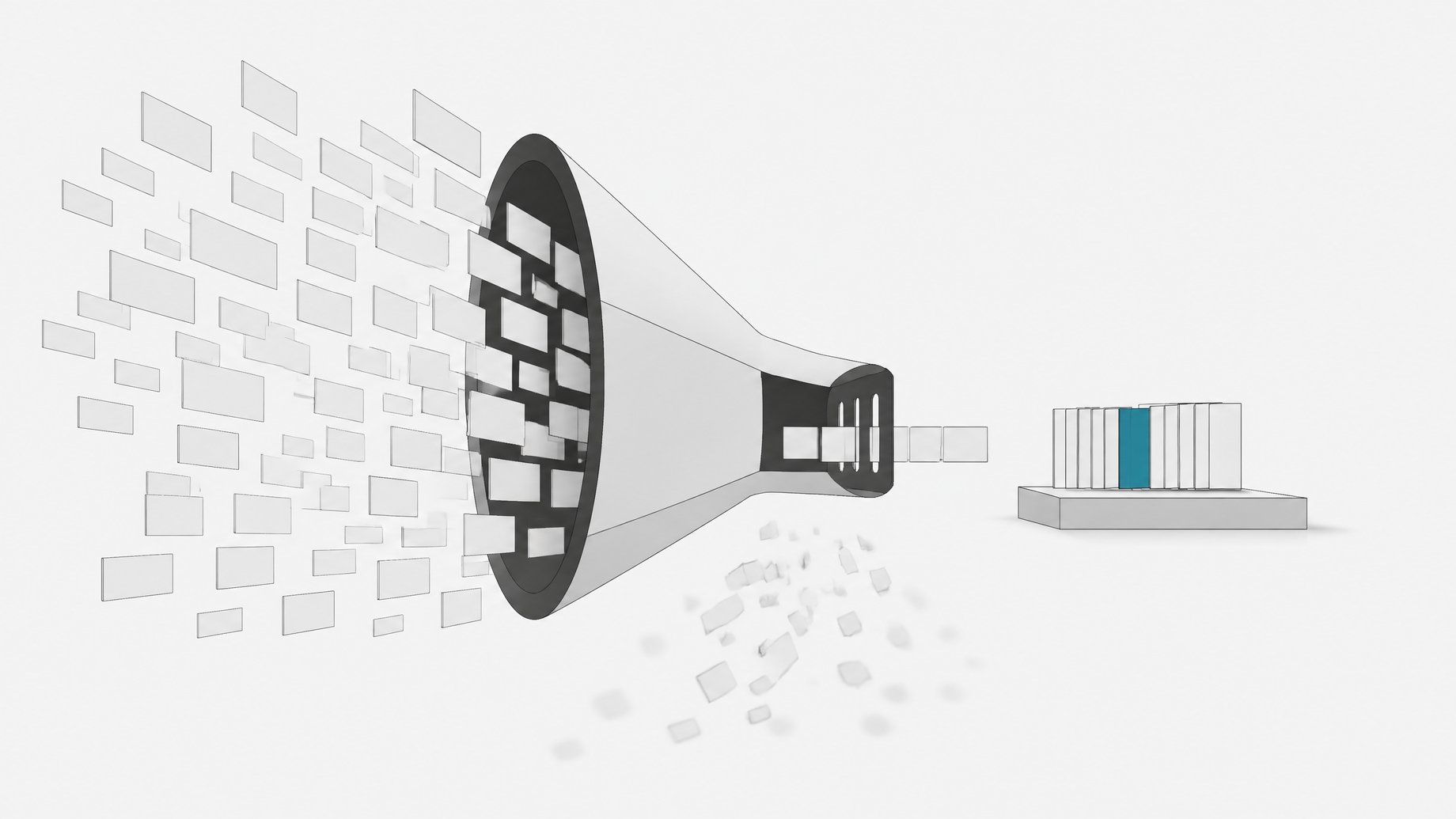
ChatGPT and Perplexity choose sources through a retrieval-augmented generation pipeline: your question gets rewritten into one or more search queries, a crawler-fed index returns a pool of candidate pages, a ranking layer scores those pages for relevance and authority, and the model cites only the handful of passages it actually used to write the answer. That last step is the one most people miss. Being found is not the same as being cited.
TL;DR
- ChatGPT and Perplexity use a retrieve-then-generate loop, so being retrieved is not the same as being cited in the final answer.
- Your prompt is rewritten into several search queries, which is why the same question asked two ways can return different citation lists.
- Ranking leans on relevance, authority, and freshness, and domain authority and recent updates strongly predict which pages ChatGPT cites.
- Wikipedia, homepages, and reference sites account for roughly two-thirds of ChatGPT's top citations, leaving only about a third that publishers can influence.
- Over 28% of ChatGPT's top-cited pages had zero traditional organic search visibility, so conventional SEO rank does not fully predict citation.
- A citation is a pointer to check, not proof that the adjacent claim is accurate.
Is ChatGPT's citation system RAG rather than a ranked list?
Google Search returns ten blue links ranked by one algorithm. ChatGPT and Perplexity do something structurally different. They run a retrieve-then-generate loop: fetch candidate documents first, then have a language model read them and write an answer grounded in what it found. It's the same architecture behind most internal tools built on retrieval-augmented generation, just pointed at the open web instead of a company wiki.
In practice, ranking and citing are two separate events. A page can be retrieved, scored highly, and still never show up as a citation if the model didn't lean on it to write a specific sentence.
How does your question become several search queries?
Neither assistant searches on your exact words. OpenAI documents that ChatGPT's web search rewrites a user's prompt into one or more targeted search queries sent to search providers, and can issue additional, more specific follow-up queries after reviewing the first batch of results. Google's AI Overviews and AI Mode use a comparable mechanic called query fan-out, where a single question generates a set of concurrent, related sub-queries so the system pulls in more than the literal search term would surface.
This is why the same question asked two different ways can return a different citation list. The assistant isn't searching your sentence. It's searching a set of sentences it generated on your behalf.
Who actually fetches the pages?
Before any ranking happens, something has to retrieve the candidate pages. Each platform plumbs this differently.
- ChatGPT runs OAI-SearchBot, a dedicated crawler built specifically to surface websites in ChatGPT's search features. It's separate from GPTBot, which crawls for model training, and from ChatGPT-User, which fetches pages a user asks about directly. A site has to allow OAI-SearchBot and its published IP ranges to be eligible for citation at all.
- Perplexity built its own retrieval and ranking engine, called Photon, after outgrowing a third-party open-source engine. Photon runs a hybrid pipeline, lexical and embedding scoring followed by a more expensive cross-encoder reranking pass, inside a tight latency budget, with index-building kept separate from query-serving.
- Google's AI features sit on top of the existing Search index. A page has to already be indexed and snippet-eligible under standard technical requirements to be grounded into an AI Overview or AI Mode answer. The generative layer doesn't replace the ranking layer. It sits on top of it.
How does ChatGPT rank candidate pages before citing them?
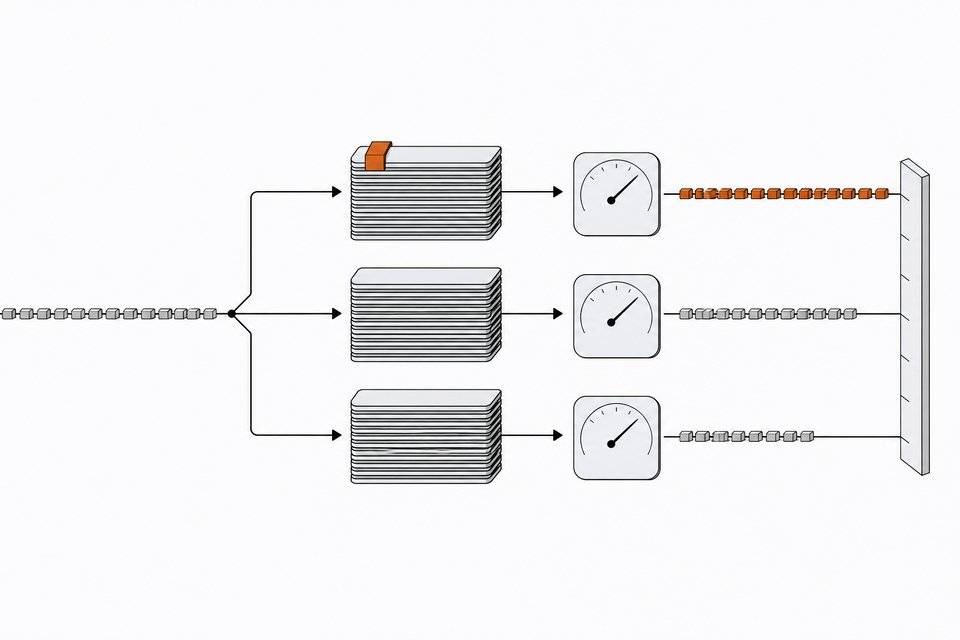
Once a pool of candidate pages exists, each system scores them before anything gets handed to the model for writing. Perplexity describes its own process plainly: an LLM interprets the question, searches the internet in real time for information from what it calls "authoritative sources," summarizes the most relevant insights, and attaches numbered citations back to the originals.
The signals that decide who survives this scoring stage read like a standard search algorithm with one generative twist layered on top:
- Relevance. Lexical and embedding matches against the rewritten query.
- Authority. Domain-level trust signals, which Ahrefs found matter far more than page-level popularity for ChatGPT citations, where 65.3% of cited pages with search visibility sit on domains with a Domain Rating of 81 or higher, median DR 90.
- Freshness. A documented recency bias: 76.4% of ChatGPT-cited pages with a detectable update date had been refreshed within the prior month, and artificially updating a publish date has been shown to move a page's AI-search ranking by as much as 95 positions.
Perplexity's Sonar system adds a strict grounding rule on top of this ranking: the model is only supposed to state what the retrieval layer actually found and must cite it, and if the retrieved sources are thin, it's designed to say so rather than invent an answer. By mid-2025 Perplexity was fielding roughly 30 million of these cited answers a day.
Why do only some retrieved pages get cited?
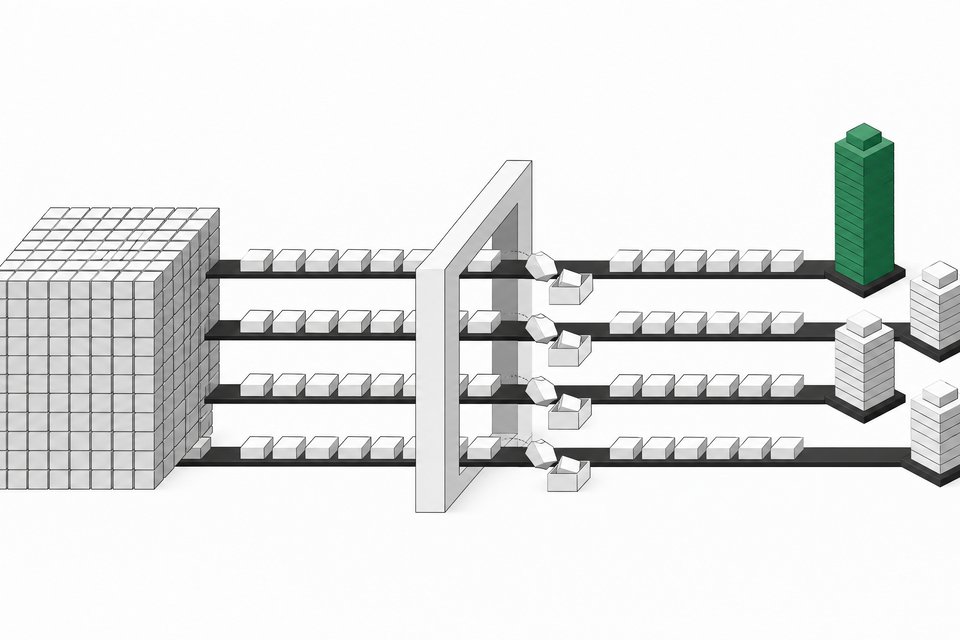
This is where the gap between fetched and footnoted opens up. The model cites only the passages it actually leaned on to support a specific claim. Everything else in the retrieved pool gets discarded quietly.
Research on medical queries found this plays out as source concentration, not source diversity: ChatGPT's response text closely mirrored the single top Google Search result, with a mean text-similarity score of 7.2 against that top result versus 2.7 for a randomly generated comparison text. The same study found this pattern got stronger, not weaker, between model versions, with similarity to top Google results rising measurably from ChatGPT 3.5 to 4.0. When strong consensus sources existed, the model stuck close to high-quality academic material. When they didn't, it drifted toward lower-quality commercial sources instead of academic or government ones.
Which pages actually get cited most often?
An Ahrefs analysis of ChatGPT's top 1,000 cited pages in September 2025 put real numbers behind the pattern. Wikipedia alone accounted for 29.7% of citations, with homepages and landing pages at 23.8% and educational pages at 19.4%. Add those categories up and roughly two-thirds of top citations are what the report calls "dead" from a publisher's perspective: reference sites, homepages, and app pages that outreach or content strategy can't realistically move. Only about 32.3% of citations came from content types a publisher can actually influence, like educational pages, reviews, news, and blog posts.
Two other findings complicate the simple "authority wins" story. First, 28.3% of ChatGPT's top-cited pages had zero traditional organic search visibility, no ranked keywords at all in Ahrefs' index, meaning the model is finding and citing content that conventional SEO ranking hasn't caught up to yet. Second, citation share is volatile, not fixed. A 13-week study across 230,000 prompts and more than 100 million citations on ChatGPT, Google AI Mode, and Perplexity found Reddit and Wikipedia in the top five cited domains on all three platforms, but ChatGPT's citation rate for both collapsed sharply in September 2025, Reddit falling from near 60% of prompts to around 10%, Wikipedia from roughly 55% to under 20%, while Perplexity and AI Mode stayed comparatively stable. Semrush's Head of Organic and AI Visibility, Sergei Rogulin, attributed the drop to a deliberate internal change: "I believe the main reason for the drop is an attempt to avoid over-citing on certain websites, to be less biased toward them." Citation selection includes active anti-manipulation controls, not just a relevance score.
How do ChatGPT, Perplexity, and Google AI Overviews compare?
All three run some version of retrieve-then-generate, but the plumbing underneath differs.
- ChatGPT rewrites your prompt into search queries, fetches candidates via OAI-SearchBot and search partners, and shows a strong lean toward dominant, high-authority sources with a measurable recency bias.
- Perplexity runs its own in-house index and ranking engine, Photon, with strict grounding rules that keep the model from saying anything the retrieval layer didn't actually surface.
- Google AI Overviews and AI Mode sit directly on top of the existing Search index and ranking systems, using query fan-out to pull in related sub-queries, which means standard indexing and snippet eligibility remain the gating layer underneath the generative one.
The shared logic is retrieval first, generation second, citation only for what got used. The differences come down to whose index does the retrieving, and how aggressively each system filters for diversity versus authority.
| Retrieval Source | Ranking Engine | Grounding Strictness | Recency Bias | Active Diversity/Anti-Manipulation Controls | |
|---|---|---|---|---|---|
| ChatGPTbroad web coverage with strong authority weighting | OAI-SearchBot + search partners | Proprietary relevance/authority scoring | Medium | High | Yes |
| Perplexitytightly grounded, citation-verified answers | Own crawler and index (Photon) | Hybrid lexical + embedding + cross-encoder (Photon) | High | Medium | No |
| Google AI Overviews / AI Modeanswers grounded in the existing Search index | Existing Google Search index | Standard Search ranking + query fan-out | Medium | Medium | No |
How do you get your pages cited by ChatGPT and Perplexity?
The mechanics point to a short list of levers that actually move citation odds, not tactics that just feel like SEO:
- Freshness is a live signal, not a vanity metric. Pages updated recently are disproportionately represented in ChatGPT's citations, so a stale page sitting unedited for a year is working against itself.
- Domain authority matters more than individual page popularity. The cited pages themselves often have very low internal page authority scores even while sitting on high-authority domains, which means building domain-level trust matters more than optimizing any single post.
- Structure your content so machines can parse it, not just rank it. Clear headings, direct answers near the top, and machine-readable formatting help a retrieval system extract a usable passage instead of skipping your page for a cleaner one. If you're serving internal docs or a knowledge base to AI agents, the same logic applies to making your pages legible to the crawlers that feed these answers.
- Accept that roughly two-thirds of top citations are structurally out of reach. Reference sites, homepages, and platform pages dominate the pool, so realistic strategy targets the influenceable third: educational content, reviews, and timely news coverage.
Tracking whether any of this is working is a different measurement problem than the SEO dashboards most teams already run. Citation share and organic rank are measured differently and move independently. The old rank-tracking playbook doesn't map onto a system that cites six sources instead of ranking ten.
Does a citation mean the claim is accurate?
A citation next to a sentence looks like verification. It isn't automatically one. Independent analysis of how these systems select sources separates discovery, citation, and actual support into distinct, measurable events: a source being discoverable doesn't mean it gets cited, being cited doesn't mean it supports the adjacent sentence, and a supporting citation isn't necessarily reflected accurately in the answer's wording. That gap is exactly why the medical-answer research found ChatGPT's text could closely track a single dominant source even in cases where that source wasn't the strongest available one.
The takeaway for readers and publishers alike is the same: treat an AI citation as a pointer to check, not a formal proof that the claim is true. The retrieval and ranking machinery behind it is sophisticated, but it was built to produce a plausible, well-sourced-looking answer fast, not to run a peer review.
Frequently Asked Questions
Does ChatGPT rank websites the same way Google does?
No. Google ranks pages with one search algorithm and returns a results list. ChatGPT retrieves a pool of candidate pages through rewritten search queries, scores them for relevance and authority, then generates an answer and cites only the passages it actually used to write it.
Why does ChatGPT cite Wikipedia so often?
Wikipedia alone made up 29.7% of ChatGPT's top 1,000 cited pages in a September 2025 Ahrefs analysis, likely because it combines high domain authority with broad topical coverage and frequent updates, all signals the retrieval layer weights heavily.
Can a page get cited by ChatGPT without ranking well on Google?
Yes. Ahrefs found 28.3% of ChatGPT's top-cited pages had zero traditional organic search visibility, meaning the model's retrieval system is surfacing content that conventional keyword ranking hasn't picked up yet.
Is a citation from ChatGPT or Perplexity proof the information is accurate?
No. Discovery, citation, and factual support are separate events. A source can be cited without actually supporting the claim next to it, which is why practitioners measure them independently rather than treating a citation as verification.
Why do ChatGPT's cited sources change so much over time?
Citation share is volatile by design. A 13-week study of over 100 million citations found ChatGPT's citation rate for Reddit dropped from near 60% of prompts to around 10% in a single month, a shift attributed to deliberate anti-bias adjustments rather than a stable ranking change.
How we source, write, and correct our articles. Editorial standards