DuckDB vs Cloud Data Warehouse: Which Costs Less and Scales?
DuckDB vs Snowflake and BigQuery compared: real cost data from Okta and Definite, concurrency limits, and when unikernels can replace DevOps work.

Is DuckDB cheaper than a cloud data warehouse, and does it scale?
The honest answer to "DuckDB vs. cloud data warehouse" is: DuckDB wins on cost and simplicity for bounded, single-machine workloads, and cloud warehouses still win on concurrency, governance, and scale. Most teams asking this question don't actually need a warehouse. They need a database that fits on a laptop and doesn't bill them for idle time.
That's the real story under this search query. The cost of running internal software, data layer and deployment layer both, has collapsed. DuckDB killed the assumption that analytics requires a managed warehouse. Unikernels are doing the same to the assumption that shipping a service requires a DevOps team. Here's the breakdown, with the numbers.
TL;DR
- Self-hosting DuckDB instead of renting a cloud warehouse can cut analytics infrastructure costs by over 70%, as Definite's move off Snowflake showed.
- DuckDB fits bounded, single-machine workloads, while cloud warehouses still win on concurrency, governance, and scale.
- Unikernels strip out the general-purpose OS layers, so applications boot in milliseconds with far less attack surface.
- Average SaaS spend per employee rose to $4,830 in 2025, which pushes teams to rethink the default of renting.
- Many organizations run a hybrid pattern, using DuckDB for local iteration and a warehouse for production.
- Lower barriers also make it easy to spin up shadow infrastructure, so someone has to explicitly own every self-hosted pipeline.
How Much Cheaper Is DuckDB Than a Cloud Data Warehouse?
Start with the numbers people are actually comparing. Snowflake's typical startup cost runs $500 to $5,000 a month; enterprise contracts land between $50,000 and $500,000-plus a year. DuckDB is open source under the MIT license: $0 in licensing, and infrastructure costs ranging from $0 for local use to roughly $100 a month for a cloud VM.
That gap isn't theoretical. Definite migrated its analytics workload off Snowflake onto a self-hosted DuckDB setup, two VM instances backed by GCS, and reported more than 70% in cost savings, with DuckDB on GCP running 55% to 77% cheaper than equivalent Snowflake warehouse sizes depending on usage hours.
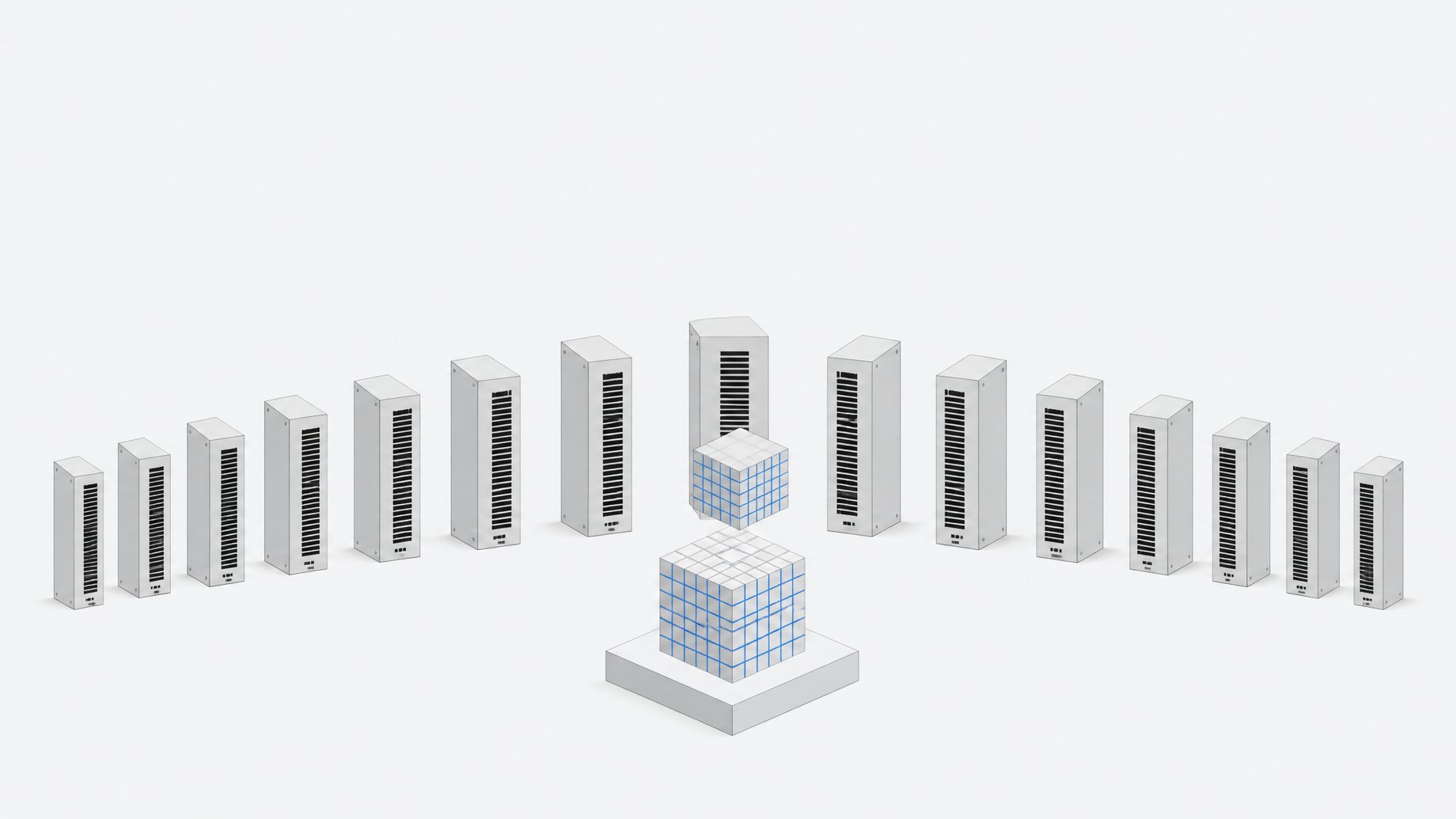
Okta's security engineering team took it further. They cut data processing costs from roughly $2,000 a day, about $60,000 a month, on Snowflake down to a small fraction of that, running thousands of small DuckDB instances in parallel inside AWS Lambda to process 7.5 trillion log records over six months, with daily volume spiking from 1.5TB to over 50TB.
MotherDuck customers show the same pattern outside security logs. Gardyn cut its daily analytics pipeline from over 24 hours to under one hour, a 24x speedup, at roughly 10x lower cost than the alternative cloud warehouses it evaluated. FinQore shrank an 8-hour ETL job to 8 minutes, a 60x improvement.
These are documented production numbers, not vendor marketing math. That's why the question keeps getting asked.
When Should You Use DuckDB Instead of a Cloud Warehouse?
DuckDB is designed to run embedded, in-process, on one machine. That constraint is also its advantage for a specific class of workload:
- Dev and test environments. Spinning up a warehouse-equivalent query engine for CI or local development costs nothing and takes seconds, not a provisioning ticket.
- Startup and small-team analytics. If your dataset fits on a laptop or a modest VM, you don't need distributed compute you're paying for by the hour.
- One-analyst or small-team shops. A single person running reports doesn't need hundreds of concurrent seats.
- Privacy-sensitive or air-gapped data. Keeping data on hardware you control, rather than a vendor's cloud, removes a whole category of exposure.
This is the same logic driving the broader shift toward self-hosted alternatives across entire infrastructure categories: when the workload is bounded, renting elastic infrastructure for it is paying for scale you'll never use.
When Do You Still Need a Cloud Data Warehouse?
The counterweight matters just as much. Chris Riccomini's critique is blunt: DuckDB can't be deployed to serve an enterprise's full population of business users, product managers, analysts, finance, ops, simultaneously, and it can't handle the largest, highest-value queries, financial reconciliation, recommendation systems, advertising, that actually drive revenue. His conclusion: DuckDB is "amazing middleware," not a warehouse replacement.
The capability gap is concrete. DuckDB is limited to a single machine with a small number of concurrent users and manual, file-copy-style backup and data sharing. Snowflake offers effectively unlimited scale, hundreds of concurrent users, native data sharing, and compliance certifications, SOC2, HIPAA, FedRAMP, that a DuckDB deployment leaves entirely on your team to build and maintain.
If your workload involves dozens of simultaneous analysts hitting the same tables, regulated data requiring third-party attestation, or petabyte-scale joins across business units, a cloud warehouse is still the right tool. The cost premium is buying something real: concurrency control and someone else's compliance paperwork.
What Hybrid Pattern Are Companies Actually Running?
In practice, almost nobody runs a pure DuckDB-only or warehouse-only stack. The pattern that's emerged looks like this:
- Dev on DuckDB, prod on the warehouse. Teams iterate locally against DuckDB, then promote finished pipelines to Snowflake or BigQuery for production serving.
- Hybrid local-cloud execution. MotherDuck splits query computation between a local DuckDB engine on the user's machine and cloud compute, letting a laptop's spare cycles do real work instead of shipping every byte to a remote cluster, cutting both data movement and cloud compute spend.
- Serverless fan-out. Okta's architecture runs DuckDB inside thousands of parallel Lambda functions rather than one persistent cluster, treating DuckDB as disposable compute rather than a standing warehouse.
- Lakehouse-scale DuckDB via DuckLake. Newer tooling extends DuckDB's model to larger, lake-backed datasets, narrowing the gap between "fits on a machine" and "fits in a warehouse."
This is the same build-versus-buy math playing out across the modern data stack, where open-source infrastructure now covers workloads that used to require an enterprise SaaS contract by default.
How Do Unikernels Replace the DevOps Layer in the Second Half of the Stack?
Storage isn't the only barrier that's fallen. Deployment has too, and unikernels are why.
A unikernel compiles an application directly against a minimal kernel into a single bootable image, no general-purpose OS, no shell, no package manager underneath it. NanoVMs' tooling, called ops, builds these images and claims boot times in milliseconds, running 2 to 3x faster than equivalent workloads on standard GCP and AWS deployments.
A controlled academic benchmark from TU Berlin backs the speed claim with real numbers: Nanos unikernels booted in a median 12ms, versus 158ms for Docker containers running a Go workload and 219.5ms for Node.js, a 13x to 18x advantage in time-to-ready. The same study found Nanos images came in 2.4x smaller than equivalent Docker images for a Node.js app. The same benchmark is fair about the tradeoff: containers stayed more stable than unikernels for JIT-compiled workloads like Node.js under severe memory constraints below roughly 128MB, where unikernel throughput could collapse by nearly 80%. Unikernels aren't a free upgrade for every workload. They're a strong fit for bounded, well-understood services.
The security argument is the sharper one. Because a unikernel image contains no shell, no package manager, and no interactive userland, there's no SSH, no users, no passwords to compromise or manage. That eliminates most of the standard remote-code-execution attack surface and lateral-movement paths that make container and VM security a full-time job.
That security posture is also a staffing argument. NanoVMs frames a unikernel-based internal developer platform as removing or radically simplifying the five components every traditional platform needs: config management, infra orchestration, environment variables, deploy management, and RBAC, because there's nothing left to secure internally. That's the "death of DevOps" half of this piece's thesis: operations work doesn't disappear, but the surface area that needs a dedicated team shrinks hard.
Why Does This Combination Kill the Case for "Just Buy SaaS"?
Put the two trends together and the economics shift fast. Average SaaS spend per employee rose to $4,830 in 2025, up 21.9% year-over-year, the first increase in three years, with IT, software, and healthcare companies spending over $10,000 per employee. Organizations now spend an average of $55.7 million a year on SaaS overall, and 98% of executives admit to bypassing IT for tech purchases entirely.
Against that backdrop, a stack that costs under $100 a month to run and deploys in milliseconds isn't a curiosity. It's a direct challenge to the default "rent it" instinct. The same engineer who used to need a platform team, a Snowflake contract, and a Kubernetes cluster to ship an internal tool can now build it with DuckDB handling the data and a unikernel handling the deployment, often with an AI coding agent doing most of the implementation.
That same math is why engineering teams are rebuilding entire categories rather than swapping one SaaS line item for a cheaper one.
Who Is Accountable When Shadow AI and Shadow Infra Spread?
Lower barriers cut both ways. The same forces making it trivial to spin up a DuckDB pipeline or a unikernel service also make it trivial to spin one up without anyone else knowing.
The shadow AI numbers are a preview of what's coming for shadow infrastructure generally:
- 78% of AI users at work bring their own unapproved AI tools, outside IT's visibility.
- Shadow AI usage grew 250% between Q1 2023 and Q1 2024.
- Only 34% of organizations have a formal detection program for it, and most security teams lack visibility into which AI tools employees are even using.
Swap "AI tool" for "DuckDB pipeline" or "unikernel deployment" and the gap is the same shape. An engineer can now stand up a working internal data service in an afternoon, on hardware or cloud credits nobody budgeted for, with no ticket, no review, and no line in a compliance audit. That's exactly the accountability problem this publication keeps returning to: owning your software is only an asset if someone actually owns it.
When Should You Self-Host and When Should You Rent?
Run through this before defaulting either way:
- Data size and shape. If it fits comfortably on a single machine or a modest VM, DuckDB is almost certainly cheaper and faster to stand up.
- Concurrency. Dozens of simultaneous analysts or business users hitting shared data points toward a warehouse's native multi-tenant handling.
- Compliance requirements. SOC2, HIPAA, or FedRAMP obligations mean someone has to own that certification work. A warehouse vendor already has, and that's part of what you're paying for.
- Query complexity and stakes. Revenue-critical, large-scale joins (reconciliation, recommendations, ad serving) belong on infrastructure built for that scale.
- Team size and ownership. A one- or two-person data team benefits most from DuckDB's zero-infra model. A larger org needs to decide, explicitly, who owns the self-hosted pipeline once it exists.
- Deployment surface. If the workload is a bounded service rather than a general-purpose app, a unikernel deployment can cut both attack surface and operational overhead meaningfully.
| Typical Cost | Concurrency | Compliance Certifications | Max Practical Scale | Setup Time | |
|---|---|---|---|---|---|
| DuckDB (self-hosted)bounded, single-machine workloads | $0-$100/mo | Low | No | Low | Minutes |
| Cloud Data Warehouse (e.g., Snowflake)enterprise-wide concurrency and governance | $500/mo-$500k+/yr | High | Yes | High | Weeks |
None of this requires picking a side forever. The companies getting the best results, Okta, Gardyn, Definite, aren't running pure DuckDB or pure warehouse. They're running DuckDB where the workload fits and a warehouse where it doesn't, and treating that decision as an engineering choice, not a vendor relationship.
Frequently Asked Questions
Is DuckDB a replacement for a cloud data warehouse like Snowflake?
Not a full replacement. DuckDB handles bounded, single-machine analytics well and at a fraction of the cost, but it lacks the concurrency, native data sharing, and compliance certifications that enterprise warehouses provide for large user populations.
How much cheaper is DuckDB than Snowflake in practice?
Documented cases show 55% to 77% cost reductions on GCP depending on usage hours, with one company (Definite) reporting over 70% savings after migrating, and Okta cutting roughly $2,000 a day in warehouse costs down to a small fraction using DuckDB in Lambda.
What are unikernels and how do they relate to DuckDB?
Unikernels compile an application into a minimal bootable image with no shell or OS underneath, cutting attack surface and boot time dramatically. They're the deployment-side counterpart to DuckDB's data-side simplification, both lower the barrier to running internal software yourself instead of renting managed infrastructure.
When should a company still choose a cloud data warehouse over DuckDB?
When you need hundreds of concurrent business users, formal compliance certifications like SOC2 or HIPAA, native data sharing across teams, or you're running the largest, revenue-critical queries like financial reconciliation or recommendation systems at scale.
What's the risk of letting individual engineers build their own DuckDB or unikernel infrastructure?
The same governance gap seen in shadow AI: tools get built and deployed without IT visibility or a formal detection process, so nobody is officially accountable for security, backups, or compliance on infrastructure that technically exists in production.
How we source, write, and correct our articles. Editorial standards