How to Use Claude Opus 5.5 for Long Coding Tasks
Five habits for keeping Claude Opus 5.5 on track during hour-long coding runs: simple prompts, benchmarks, tests, reference designs, and team orchestration.

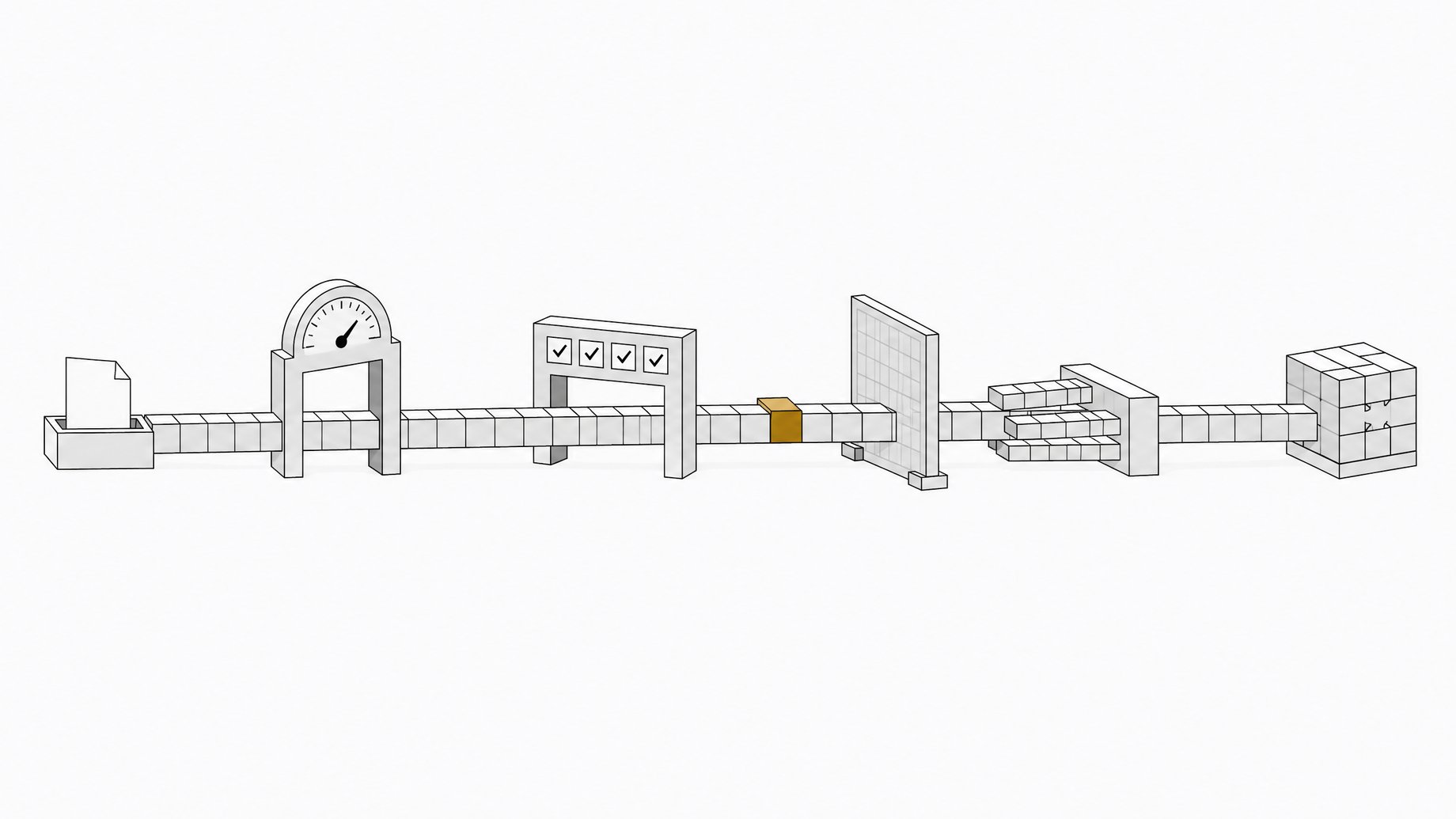
How do you get Opus 5.5 to finish long coding tasks without getting lost?
Give it less instruction and more feedback. Keep prompts short (goal, definition of done, off-limits areas), hand it a measurable benchmark, require careful tests before you review anything, attach reference designs for UI work, and split big jobs across an orchestrated team. A developer who built a large desktop app (Pandode) mostly with Opus 5.5 reports that these five habits fixed most of the "starts well, then drifts" problem on runs of an hour or more.
TL;DR
- Short prompts beat step-by-step scripts. State the goal, the done condition, and what the agent must not touch, then let Opus pick the path.
- Turn vague goals into a number. A benchmark gives the agent a source of truth, so it keeps iterating instead of stopping at the first idea.
- Make passing tests the gate. Ask for tests on empty, error, and concurrent cases, and review only after they pass.
- Reference images replace guessing. Screenshots from design sites keep the output from drifting into a generic look.
- Orchestration is the fix for context overload. An Opus architect, Sonnet workers, and a Codex reviewer keep each context small and the quality steady.
Why do long tasks go wrong in the first place?
Two things usually break. First, over-specified prompts. If you script every step, the agent follows your order even when a better one exists. Second, context. In a single chat the window fills up, earlier decisions get lost, and quality drops near the end of the run.
The habits below attack both. The first four make the agent's work checkable. The fifth keeps any one agent from carrying too much.
Habit 1: How simple should your prompt be?
Simpler than most guides suggest. The creator's resume-at-reset feature in Pandode started from about three sentences: an agent can hit its usage limit mid-task, the app should wait for the reset and continue on its own, and the user must be able to cancel. No files named, no storage plan.
Opus found the places where each agent reports its limits and built the feature around them. Hand-written steps would have missed some of those spots, because the author did not remember where they all were.
A simple prompt still needs three things:
- What you want.
- How you will know it is done.
- What the agent must not touch without asking (for example, the database format or user data).
Keep the goal and the limits clear. Leave the route open.
Habit 2: Why give the agent a benchmark?
"Make it faster" is a weak goal. The agent edits code, declares victory, and you cannot verify it. A benchmark changes that. The agent runs it, makes a change, runs it again, and knows immediately whether the number improved.
This also suits long runs. The number tells the agent there is more to do, so it does not quit at the first plausible fix.
Examples from Pandode:
| Target | Benchmark | Reported result |
|---|---|---|
| App feels light | Window open time and idle memory | Window opens in about a third of a second, idle memory about 130 to 160 MB |
| Claude Code follow-ups feel slow | Time from sending a follow-up to the first word of the reply | About 8 seconds down to about 4 |
The follow-up gain came from starting the next process in the background when a turn ends. Opus tried several ideas, and the benchmark showed which one worked.
The prompt pattern is two steps: "Write a benchmark for this and show me the number," then "Make the number better."
Habit 3: How do you get good tests out of Opus?
Ask for them directly. The creator's observation is that Opus writes strong code but can ship a feature with one small test or none. You then find a basic error within seconds of opening the app, and on a long task that wasted time compounds.
Ask the agent to think about how the feature can break. Request a small, deliberate set, not a hundred hollow ones:
- The empty case
- The error case
- Two things happening at the same time
Then set the rule: nothing reaches you until it passes. Tests also protect long runs from silent regressions, since a change in one file can quietly break another over an hour of edits.
A real case is the worktree merge in Pandode. Merging agent commits into main is risky, so Opus wrote tests for uncommitted changes and for conflicts. In both, the app must stop and change nothing. That is how it behaves today.
To avoid retyping this, put a line in your CLAUDE.md, such as: write careful tests for every feature and run all tests before saying you are done.
Habit 4: Do reference designs really help?
Yes, for anything visual. "Make it look good" forces the model to guess your taste, and guesses tend toward the familiar generic look (purple gradients, big rounded cards). Collect a few screenshots from design inspiration sites, attach them, and say "make it feel like this."
According to the creator, Opus 5.5 reads reference images well. It picks up spacing, font sizes, colors, and mood. In Pandode, elements like the approval bar above the prompt box, the collapsed "worked for" row, and the task board all followed supplied references. If you have no reference, even a rough sketch of the layout beats nothing.
Habit 5: How should you orchestrate Opus, Sonnet, and Codex?
Use one lead agent and several workers. The lead plans, splits the job, and reviews. Each worker gets a small, clear task with fresh context. This addresses the main failure mode of long single-chat runs.
The setup described:
- Opus 5.5 as architect. Planning and reviewing.
- Sonnet as workers. Faster and cheaper, and strong when the job is well defined.
- Codex as reviewer. A model from a different company tends to catch different mistakes than Opus and Sonnet do.
The earlier habits carry over. The architect can assign one worker a benchmark and another the optimization, have a worker write tests that everyone else must pass, and pass the mood board to the design worker.
The Pandode GitHub view (repos, pull requests, issues, one-click actions) came from one team task. One Sonnet worker took the data layer, another took the interface and the reference designs, a third wrote tests, and Codex reviewed the whole change. It came back passing tests and matching the references.
Pandode lets you save named teams, such as an Opus plus Codex team for hard features or a cheaper team with GLM workers for simple jobs. You do not need that specific app to copy the pattern. Any setup that separates planning, implementation, and independent review follows the same logic.
What small habits help on any long run?
- Queue or steer mid-run. In Pandode, Enter queues a message for when the agent finishes, and Command+Enter steers immediately without stopping.
- Use a worktree. The task runs on its own branch and cannot disturb other agents working on main.
- Watch your limits. Long tasks burn tokens. A resume-at-reset option lets a task continue after a usage limit clears instead of dying overnight.
Is this workflow foolproof?
No. The creator is candid that the architect sometimes splits work oddly and a worker can head the wrong way. You still review the result. The gain is that you review less often, and the basic problems are already gone when you do. Note too that the claim that Opus 5.5 is the best model for this work is one practitioner's opinion, not a benchmarked result.
Frequently Asked Questions
Should I write detailed step-by-step prompts for Opus 5.5?
Not by default. The reported experience is that long scripted workflows can make results worse because the agent follows your order even when a better one exists. State the goal, the done condition, and the limits, and let it choose the path.
What counts as a good benchmark for an AI coding agent?
Anything you can turn into a number the agent can rerun: startup time, idle memory, page load time, or render counts after a state change. The key is that the agent can measure before and after on its own.
Why add Codex as a reviewer if Opus is already the architect?
A second model from a different vendor has different blind spots. The workflow described found that Codex often caught issues that both Opus and Sonnet missed.
Do I need a special app to run an architect and worker team?
No. The pattern is what matters: one planning agent, several scoped workers with fresh context, and an independent reviewer. Pandode packages it as agent teams, but you can approximate it with any tooling that runs multiple agents.
How we source, write, and correct our articles. Editorial standards


