Build vs Buy Internal Tools: Is Single-Feature SaaS Still Worth It?
Compare building vs buying single-feature SaaS in 2026, with data from Retool, Gartner, and Forrester on costs, SaaS waste, and AI-built internal tools.

Is it better to build or buy internal tools in 2026?
Here's the plain answer: for narrow, single-feature internal tools, building now usually beats buying. AI foundation models absorb the specific capability you used to pay a SaaS vendor for. Builders ship a working replacement in days, not months. The economics that favored renting software for fifteen years have flipped. That's not a hot take anymore. It's showing up in acquisition prices, stock selloffs, and survey data all at once.
I've spent most of my career on the buy side of this decision. Evaluate three vendors, run a pilot, sign a two-year contract, forget about it until renewal. That playbook made sense when building meant hiring engineers and burning quarters. It stops making sense when the feature you're paying for is something a general-purpose model does by default.
TL;DR
- AI foundation models now include capabilities natively that used to require a dedicated subscription, so single-feature SaaS is being absorbed into the platforms you already use.
- Over a third of teams (35% in Retool's survey) have already replaced at least one SaaS tool with a custom in-house build.
- The average enterprise runs about 305 SaaS applications, which leads to nearly $20 million in annual license waste per large organization.
- Gartner estimates that up to $234 billion of enterprise software spend is at risk from AI agents bypassing traditional interfaces.
- Building cheaply does not mean skipping security, so governance and code ownership still apply to any internal micro-tool.
- SaaS is not dead, and vertical vendors with proprietary data or deeply embedded workflows are the ones most likely to survive.
Was single-feature SaaS always a bet that building was too expensive?
The entire point-solution SaaS category, meeting notes, BI dashboards, A/B testing, scheduling, exists because building any one of those used to take specialized engineering effort most companies couldn't justify for a single function. You didn't hire a data scientist to build an experimentation framework. You rented one from a vendor who'd already built it and amortized the cost across thousands of customers.
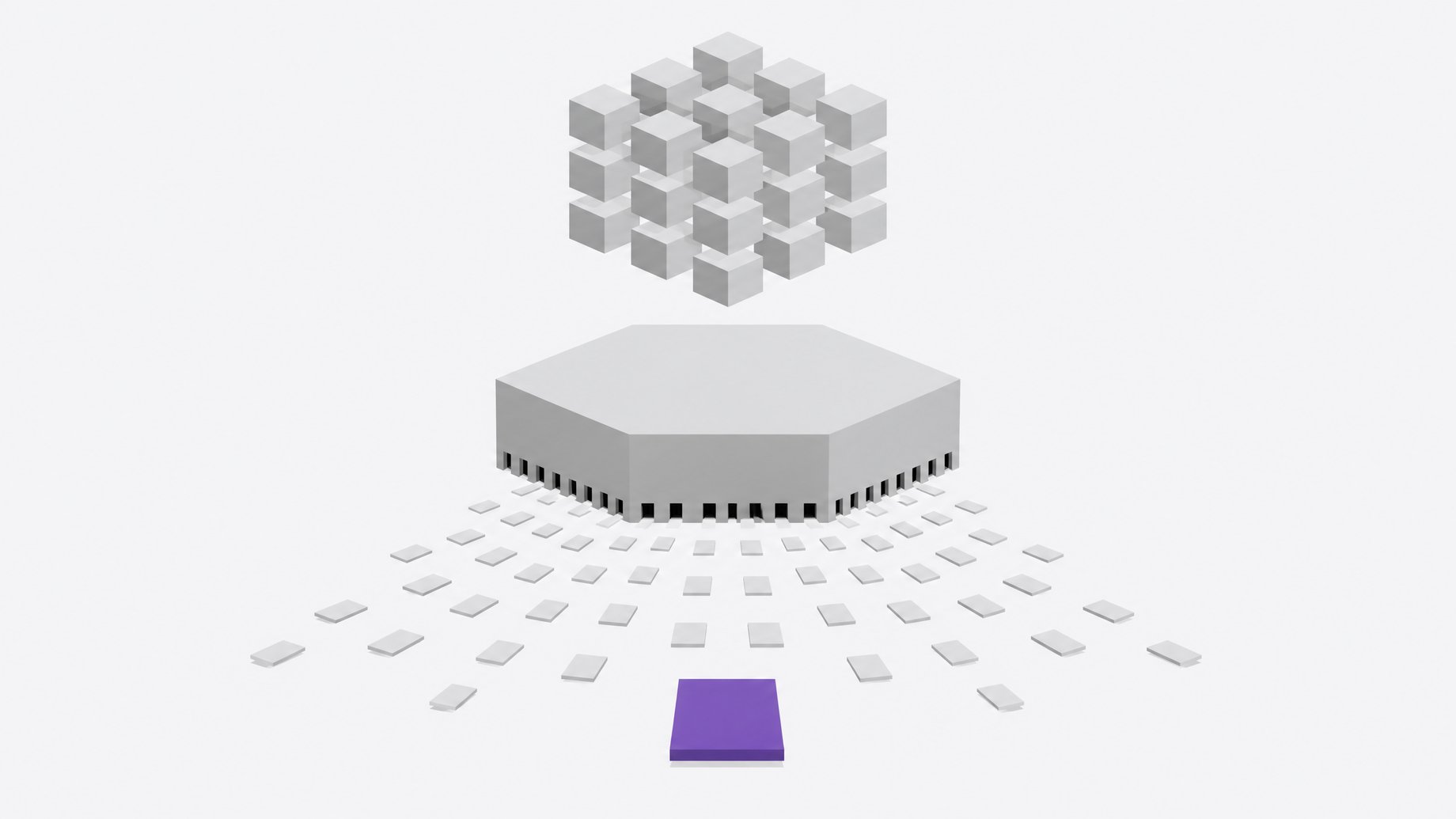
That logic depended on one assumption staying true: that building is expensive and buying is cheap. AI broke that assumption from both directions. Foundation models now ship the capability natively, and the tools to wrap a thin interface around that capability got radically cheaper. When the thing you were buying becomes a feature of something you already have, the subscription stops being a bargain and starts being a tax.
Which three features quietly disappeared into the model?
You don't have to take my word for this. Watch where the money and the acquisitions are going.
- Transcription. Zoom's AI Companion now ships meeting transcription, summaries, and action items for free, built directly into Zoom Workplace. It competes head-on with paid notetaking tools like Otter.ai and Fireflies.ai that built entire businesses around a single feature. If the platform you already pay for does it free, good luck defending the standalone subscription to your budget committee.
- Data querying. BI practitioners are saying out loud what their own roadmaps already show: general-purpose models with code execution and file analysis can query and visualize data without a dedicated dashboard layer. One data professional put it bluntly after cancelling a planned analyst hire: ChatGPT killed the role before the job req even closed. The discipline of good data analysis isn't going away. The GUI tool that used to be mandatory for it is losing its monopoly.
- Experimentation. OpenAI didn't write a blog post about this shift. It paid for it. In September 2025, OpenAI acquired Statsig, a product-experimentation and A/B-testing platform, for $1.1 billion in an all-stock deal, one of the largest acquisitions in the company's history. Statsig's whole business was feature flags and real-time decisioning, the exact single feature that justified a standalone SaaS category. OpenAI didn't buy it to resell it as a separate product. It folded the capability directly into ChatGPT and Codex development.
Three different categories, three different vendors, same pattern: the feature that used to require a dedicated subscription is becoming a built-in capability of the platform you're already using.
Did the market already call it?
If this were just a few bloggers noticing a trend, I'd be more cautious about writing a whole piece around it. It isn't. In the first week of February 2026, software and services stocks lost almost $1 trillion in market capitalization in seven days, as investors reckoned with the possibility that AI agents and vibe-coded replicas would erode the per-seat SaaS moat.
Gartner put a number on the specific mechanism: up to $234 billion of enterprise application software spend, roughly 20% of enterprise SaaS spend, is at risk from what it calls "agentic arbitrage" by 2030, as AI agents complete cross-system tasks and bypass the software interfaces that used to be mandatory. Forrester, while pushing back on the more apocalyptic "SaaS is dead" framing, agrees that horizontal point-solution vendors, the single-feature category this whole piece is about, are the ones most exposed.
Why did building internal tools get cheap enough to compete with SaaS?
The absorption of features into foundation models explains the demand side. The supply side matters just as much: building a replacement got cheap enough that the labor math works in favor of in-house tools.
Retool's 2026 survey of 817 builders found that 35% of teams had already replaced the functionality of at least one SaaS tool with something built custom, and 78% expect to build even more in 2026. Workflow automation, internal admin tools, and BI tools were the categories most at risk of replacement, the exact categories that used to be the bread and butter of single-feature SaaS.
About half of builders who shipped production software with AI assistance reported saving six or more hours a week. That's the labor-cost side of the internal AI workflow math: inference is now cheap enough, and generation fast enough, that a team can prototype and ship a narrow internal tool in the time it used to take to get through vendor security review.
What is the math on a bloated subscription vs. a disposable micro-tool?
The sprawl numbers make the case even without AI in the picture. The average enterprise now runs about 305 SaaS applications, with license utilization sitting around 54%, up from 47% the year before, and estimated annual license waste of $19.8 million per large organization. That's not a hypothetical cost of "maybe someday building it ourselves." That's money being spent right now on seats nobody uses, for features that increasingly ship free inside tools employees already have open.
Retool's case studies give a concrete before-and-after. ClickUp's go-to-market team built six internal AI tools connected to Salesforce, Zendesk, and Snowflake instead of buying point solutions, saving hundreds of thousands in headcount costs and cutting $200,000 a year in automation software spend. Harmonic, a startup discovery platform, rebuilt a $20,000-a-year third-party tool in-house after getting tired of slow vendor support, and now runs 33 internal apps. Neither of those is a company betting the business on a risky experiment. They're companies doing the same arithmetic covered in the 2026 SaaS waste breakdown and concluding that the disposable, purpose-built tool costs less than the subscription they were already resenting.
Does building in-house mean giving up governance, or is it a new build discipline?
The obvious objection is real: 60% of builders in that same Retool survey had built something outside official IT oversight in the past year. Shadow AI is real, and ungoverned vibe-coded tools carry real security costs. A scan of 5,600 production vibe-coded applications found zero had CSRF protection, zero had standard security headers, and zero had properly scoped access policies. Research across Fortune 50 environments found AI-generated code had 322% more privilege-escalation paths than human-written code. That's not a rounding error. That's the price of treating "cheap to build" as license to skip the basics.
Building your own micro-tool instead of renting a point solution doesn't mean skipping security review, access control, or code ownership. It means doing that review on a tool you control, instead of trusting a vendor's SOC 2 report and absorbing the hidden costs of enterprise SaaS when their roadmap changes under you. The discipline doesn't go away. The subscription markup does.
Is pricing already moving from seats to outcomes?
The per-seat model that single-feature SaaS relied on is also dying from the vendor side. Gartner predicts at least 40% of enterprise SaaS spending will shift from seat-based to usage-, agent-, or outcome-based pricing by 2030. a16z's enterprise team frames this as software becoming labor: when an AI agent completes the outcome a feature used to merely facilitate, charging per seat for access to that feature stops making sense for buyer or seller. This is the same repricing pattern covered in AI is repricing SaaS, and it confirms the thesis from a different angle: the packaging that justified single-feature SaaS is breaking apart on both sides of the transaction.
What survives: vertical, proprietary-data, and deeply embedded SaaS?
None of this means SaaS is dead. Forrester still projects global SaaS spend will rise from $318 billion in 2025 to $576 billion by 2029. What it means is that the SaaS worth paying for is changing shape. Vertical and domain-specific vendors with proprietary data, deep regulatory expertise, or workflow so embedded that ripping it out would break a business process, those have a real chance of surviving this shift, according to Forrester's own assessment. What doesn't survive is the horizontal point solution whose entire value proposition is one feature that a foundation model now does by default.
What is the new default for build vs. buy?
If you're the person who owns the build-or-buy call this year, here's the heuristic I'd use. Ask three questions before you sign the next renewal:
| Upfront cost | Time to deploy | Governance control | Moat durability | Ongoing cost | |
|---|---|---|---|---|---|
| RecommendedIn-house micro-toola narrow, well-defined feature you'd otherwise rent | Low (days of dev time) | Days | High | Low | Near zero, mostly inference cost |
| Horizontal point-solution SaaSa quick fix before a vendor review existed | Low to moderate per-seat subscription | Weeks of vendor evaluation | Low | Low | Recurring, often underused |
| Vertical / embedded SaaSworkflows with proprietary data or deep regulatory lock-in | Moderate to high | Weeks to months | Medium | High | Recurring, justified by workflow depth |
- Is the feature now native to a model or platform we already pay for? If the answer is yes, you're renting something you already own.
- Does the vendor's moat come from proprietary data or deep vertical workflow, or just from being first to wrap a UI around a common capability? The first survives. The second doesn't.
- Could a small internal team ship a narrower, governed version of this in a week with the tooling available today? If yes, that's usually the cheaper, more defensible bet.
The single-feature SaaS era ran on the assumption that building was always the expensive option. That assumption is gone. The companies winning the next few years of software spend aren't the ones buying every point solution on the market. They're the ones that know which features to keep renting and which ones to just build, use, and throw away.
Frequently Asked Questions
Is building internal software always cheaper than buying SaaS now?
No. It's cheaper specifically for narrow, single-feature tools where a foundation model already absorbs the core capability, like transcription, data querying, or basic workflow automation. Vertical SaaS with proprietary data or deep regulatory embedding still tends to beat building in-house, and Forrester still projects overall SaaS spend growing from $318 billion in 2025 to $576 billion by 2029.
What internal tools are companies replacing SaaS with first?
Retool's 2026 survey found workflow automation, internal admin tools, and BI tools were the categories most at risk of replacement, with 35% of teams already having swapped out at least one SaaS tool for something custom-built.
Is vibe-coded shadow IT safe to run in production?
Not without real review. A scan of 5,600 vibe-coded production apps found zero had basic protections like CSRF defenses or standard security headers, and AI-generated code showed 322% more privilege-escalation paths than human-written code in Fortune 50 environments. Treat a cheaply built micro-tool with the same security rigor as anything you'd buy, not less.
Why did OpenAI buy Statsig instead of just building A/B testing itself?
OpenAI paid $1.1 billion for Statsig in September 2025 to get the team and the product-experimentation infrastructure fast and fold it directly into ChatGPT and Codex development, rather than building that capability from scratch or continuing to treat it as an external category.
Will SaaS vendors keep charging per seat if AI absorbs their core feature?
Increasingly, no. Gartner predicts at least 40% of enterprise SaaS spending will shift from seat-based pricing to usage-, agent-, or outcome-based models by 2030, as the per-seat logic that supported single-feature pricing breaks down from the vendor side too.
How we source, write, and correct our articles. Editorial standards