AI Voice Agent vs Answering Service for Contractors: Which Wins?
Should a plumber replace its answering service with an AI voice agent? Compare coverage, costs, missed-call math, and low-risk ways to start.

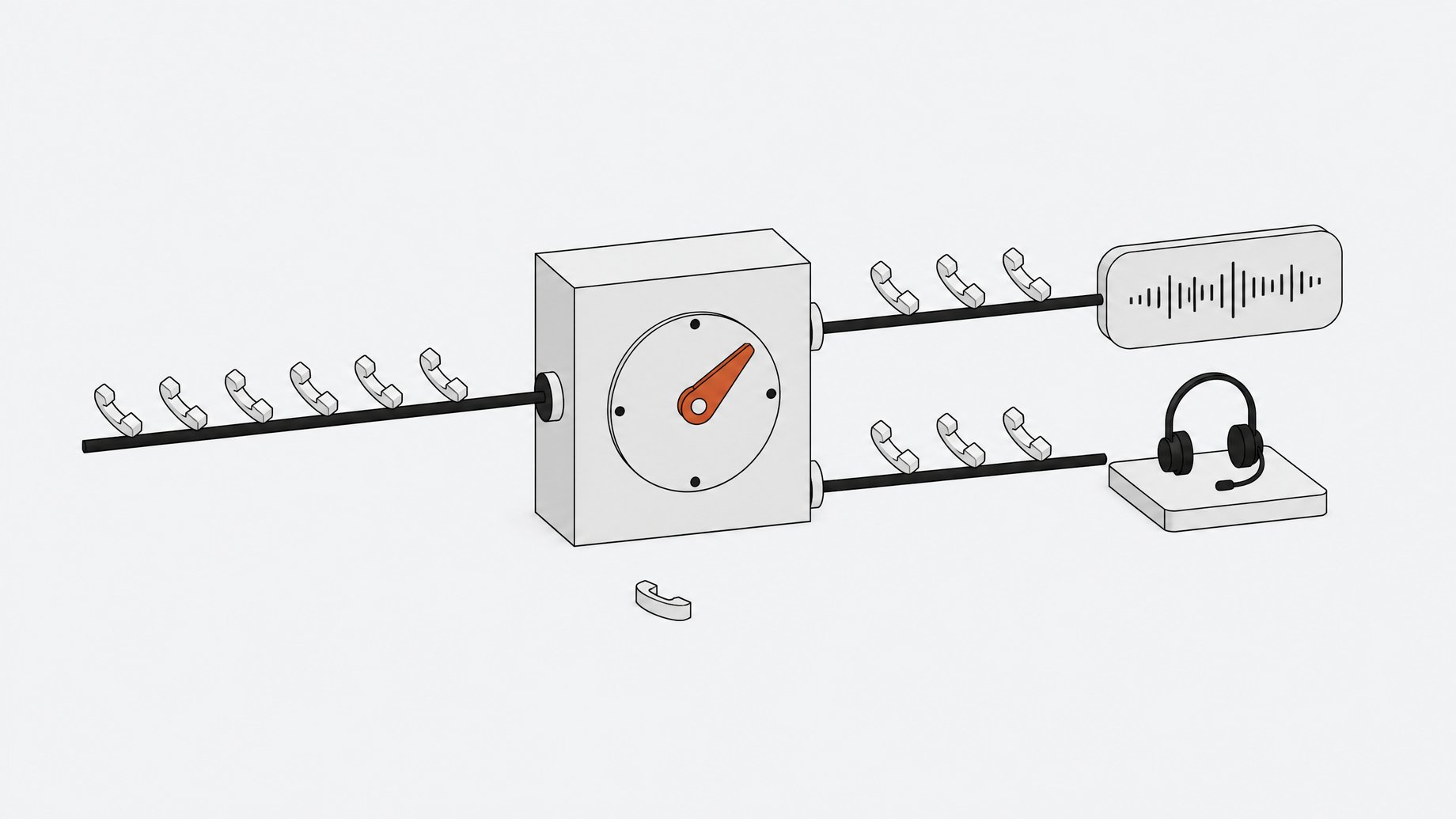
Should a plumbing or home-services business replace its answering service with an AI voice agent?
Often yes, but not all at once. An AI voice agent answers every call instantly, at any hour, and can book jobs straight into a schedule. A human answering service or voicemail usually takes messages and passes them on. Most contractors should pilot AI on after-hours overflow or appointment confirmations, measure booked jobs against the old setup, and keep a human fallback for emergencies and edge cases until the numbers justify a full switch.
TL;DR
- Missed calls are the real cost. A call that goes to voicemail often becomes a competitor's job, so the comparison is booked revenue, not just the monthly bill.
- Answering services mostly take messages. AI agents can also qualify the caller, schedule the appointment, and follow up by text.
- The vendor evidence is self-reported. Broccoli, a Y Combinator home-services AI company, says it serves over 500 customers and that its AI-booked jobs run at over a billion dollars annually, but those are company claims.
- Start with low-risk workflows. Appointment confirmations, reminders, and after-hours overflow carry less downside than handling every emergency call.
- Contractors distrust AI pitches. Founders in this space found owners open up when you listen first, so expect to prove results rather than sell a concept.
- Run your own math. Your call volume, close rate, and average ticket decide the answer, not an industry average.
How do voicemail, answering services, and AI voice agents differ?
All three cover calls you cannot take. They differ in what happens next.
| Voicemail | Human answering service | AI voice agent | |
|---|---|---|---|
| Answers live | No | Yes | Yes |
| Hours | Always | Depends on plan | Always |
| Books appointments | No | Sometimes, via scripts | Yes, if wired to your calendar or CRM |
| Handles several calls at once | Yes, but nobody talks to the caller | Limited by staff | Generally yes |
| Follows up by text | No | Rarely | Yes, in some products |
| Judgment on odd situations | None | Human | Limited, needs escalation rules |
| Pricing model | Free or nearly so | Typically per minute or per call, with monthly plans | Varies by vendor |
Voicemail asks the customer to do the work. Many callers with a burst pipe will not leave a message and wait. They call the next company on the list.
Human services fix that by putting a person on the line. The limit is what that person can do. Many follow a script, take down details, and hand the lead back to you in the morning. That still leaves a delay between the call and a booked job.
AI agents aim to close that gap. Broccoli describes its product as automating the whole front office: answering customer calls, following up on leads, and scheduling appointments across voice, text, and SMS. Other vendors sell narrower versions.
How do you calculate what a missed call costs?
Skip industry averages. Pull your own numbers from your phone system for a month.
- Count calls that went unanswered or to voicemail, including after hours.
- Estimate what share of those callers were new customers who would have booked.
- Multiply by your average job value.
- Subtract the callers who left a message and still booked after you called back.
Here is a hypothetical example, not a benchmark. Say you miss 40 calls a month. Half are real new-customer requests, so 20. If you would have booked 30% of them at an average ticket of $400, you lose about $2,400 a month. Add what you already pay your answering service, and compare the total to the AI vendor's quote plus any setup cost.
The same math cuts the other way. If your service already captures most leads and you book them quickly, the AI's advantage shrinks to cost savings and speed. If you rely on voicemail, the gap is much larger.
Check two other things: how fast you call back, and how many callers say they already phoned someone else. Both show up quickly in a month of call logs.
What does the market evidence show?
Treat the public numbers as vendor claims. Broccoli's founders said their company serves over 500 customers, that AI-booked jobs are running at over a billion dollars annually for those customers, and that they expect to end the year above $60 million in ARR after having zero revenue two years earlier. Those figures are impressive, but they come from the company, and "booked" does not mean "completed and paid."
The larger context is easier to trust. ServiceTitan, a leading CRM for the trades, does over a billion dollars in revenue and has gone public. That shows a large, software-ready market of contractors who already run their schedules and invoices digitally. An AI agent needs that kind of system to write appointments into, which is part of why this niche attracted voice-AI startups.
The founders also described how they picked it. After pivoting away from an EV software business, they wanted a market that was big from day one and a problem that sat at the top of the customer's priority list, not third or fourth. They narrowed to contractors and then spoke with 140 of them over two months before settling on a product. Phone coverage and front-office work was where that research landed.
Where is the low-risk place to start?
A full cutover is a bigger bet than most shops need. Safer entry points share one trait: a bad outcome is cheap.
- Appointment confirmations and reminders. The script is narrow, the customer already booked, and the failure mode is a missed reminder rather than a lost lead.
- After-hours overflow. Keep your current service during the day. Route only calls that would hit voicemail to the AI and compare results.
- Lead follow-up. Texting web-form and missed-call leads quickly is a task humans often skip.
- Rescheduling and simple questions. Hours, service areas, and arrival windows are predictable.
Emergencies deserve explicit rules. Define which phrases (gas smell, flooding, no heat in winter) trigger an immediate transfer or page to an on-call tech. Test those rules with real calls before going live.
What are contractors worried about?
Trust is the first obstacle. The founders recounted that cold pitches to plumbers went badly. One owner told them to leave, and a stretch of door-to-door attempts produced no conversations. What worked was showing up as students who wanted to learn about family-run shops. Owners then talked at length about their businesses, and the founders began getting about eight conversations a day.
The lesson for buyers is that your skepticism is normal and the vendor should expect it. Ask for a trial on a limited call group, recordings of real calls, and a clear way to hand any call to a person.
Other practical concerns:
- Brand voice. Your callers may be older or stressed. Listen to a dozen recordings before deciding.
- Integration. Booking only helps if the agent writes to the calendar or CRM you use.
- Accuracy. Wrong addresses or misheard phone numbers cost jobs. Check transcripts for errors.
- Disclosure and consent. Call recording and AI disclosure rules vary by state and country. Confirm what applies to you.
When should you keep the human answering service?
Keep it, or keep a human fallback, if your calls are mostly complex or emotional, if you serve a market where callers expect a person, or if your volume is low enough that missed calls are rare. Hybrid setups are common: AI handles routine bookings, and anything flagged as urgent or confusing goes to a person.
Frequently Asked Questions
Is an AI voice agent cheaper than an answering service?
It depends on vendor pricing and your call volume, and the sources here give no verified price figures. Compare total monthly cost for both options, then add the revenue difference from booked versus missed jobs. Cost savings alone rarely tell the full story.
Can an AI agent book jobs, or only take messages?
Some can book directly if connected to your scheduling or CRM software. Broccoli, for instance, describes scheduling appointments as part of its product. Ask any vendor which systems it integrates with and whether it confirms the booking back to the customer.
What is the safest first use case?
Appointment confirmation and reminders. The customer has already committed, the script is short, and mistakes are easy to catch. After-hours overflow is the next step once you trust the call quality.
Should I worry that customers will hate talking to AI?
Some will. Test with a limited call group, review recordings, and make it easy to reach a person. Track booking rate and complaints against your previous setup rather than relying on assumptions in either direction.
How we source, write, and correct our articles. Editorial standards