
AI Coding Tools ·
How to Write Specs for AI Coding Agents
AI made writing code cheap. Correctness is the expensive part now. Here's how to write specs that actually guide coding agents to build it right.
For people building with AI: new models, local AI, coding tools, pricing and security, explained plainly.
AI made writing code cheap. Correctness is the expensive part now. Here's how to write specs that actually guide coding agents to build it right.

How to secure internal AI agents with scoped credentials, sandboxed execution, and hard action limits instead of relying on alignment alone.
Bans don't stop shadow AI. Here are 5 open-source tools IT leaders use to inventory, secure, and govern employee-built AI agents instead.

Employee-built AI automations inherit a frozen model worldview. Here are 5 ways training cutoffs and model drift quietly break shadow-built tools.

Omarchy's $18M backing and 192GB desktops make local AI a real alternative to cloud APIs. Here's the honest cost, privacy, and capability math.

Losing an AI coding vendor means losing sealed chat history and reasoning, not just code. Here's how to keep that context portable and owned.

Infinite-parameter LLMs turn live data into model weights instead of prompts. Here's how they work, and what they change for data engineering teams.
No-code tools let employees build real agents fast. Here's the identity-based, lifecycle-aware framework for governing shadow AI before it breaches you.
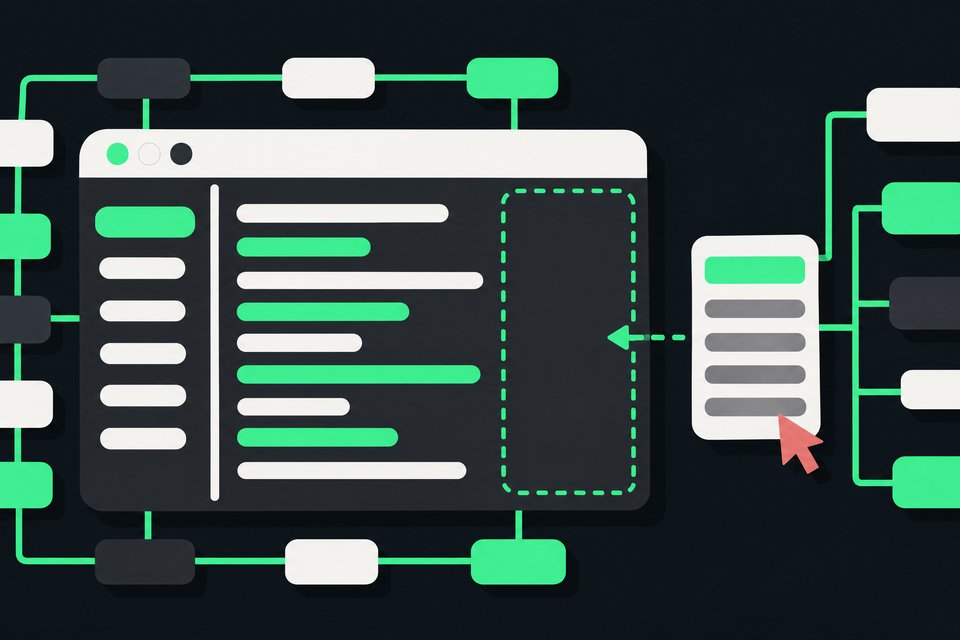
The best AI coding agents in 2026 don't autocomplete, they ship. A practitioner's guide to Claude Code, Cursor, Devin, and the local tools replacing SaaS.

An AI formal proof in Lean 4 is a machine-checked guarantee, not a guess. Here's what that means, what AI can prove today, and what it can't.

Long-running agents like Astra now work unsupervised for days. Here's why IT governance built for software licenses fails, and the framework that replaces it.

A self-hosted AI development stack in 2026: Rails 8, Omarchy, and Ollama replace your PaaS, Redis, and API bills. The math, the 37signals case study, and the limits.
GPT-6 Astra ties Fable 5.1 on coding benchmarks at a fraction of the cost, but Fable 5.1 wins on cache economics and long runs. Here's how to pick.

AI content is now roughly half the web. Here's how to build a self-hosted AI slop detector with Binoculars, Fast-DetectGPT, ZipPy, SynthID, and bot filters.

How to build a mandatory security scanning gate into AI coding agent workflows, with SAST, SCA, human review, and logging for agents like GPT-6 Astra.
GPT-6 Astra costs 2.5x more than its predecessor and still isn't private by default. Here's the real cost and privacy math against local coding models.

Is it cheaper to buy GPUs or rent cloud AI for internal tools? The break-even is lower than you think. Here's the real math and a decision framework.
AI writes the code and runs incident response, but no one understands the system that broke. Here's the governance gap turning outages into crises.

AI persistent memory is durable, external storage for facts and decisions outside the context window. Here's how it works and why internal tools need it.
SKILL.md files carry full agent privileges and most go unreviewed. Here's the step-by-step framework to inventory, scan, and govern them like production code.

SKILL.md skills files are plain-text onboarding guides for AI agents. Here's how progressive disclosure works, why sprawl and security risks are real, and how skills pair with MCP.

Anthropic cut Claude's cache-read price 75% without touching the sticker rate. Here's how token cache pricing works and why it decides your real AI bill.

DVRs, cars, printers, and tractors are turning into subscriptions. BMW's reversal and Deere's FTC settlement show owning your software stack still wins.

Same list price, different bills. Compare GPT-6 Astra and Claude Fable 5.1 on cost-per-task, cache pricing, and benchmarks for internal AI agents.