Stop Using OCR: Why Visual Document Retrievers Are the Future of Internal Data
OCR flattens tables and charts into garbled text. Visual document retrievers like ColPali skip that step. Here's the benchmark data and when each wins.

Why are visual document retrievers replacing OCR for internal data?
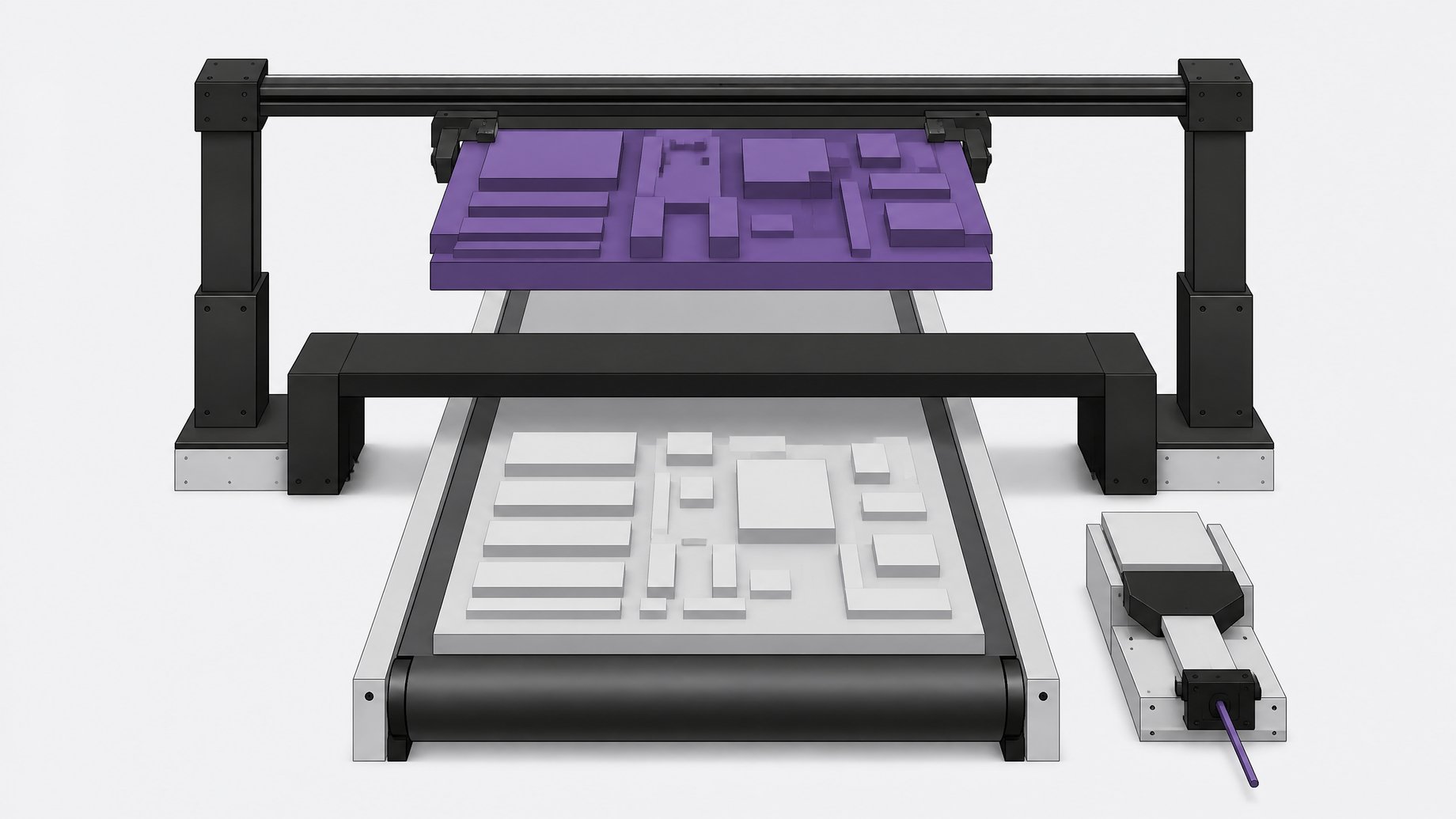
On documents with tables, charts, or complex layouts, visual document retrievers beat OCR-based pipelines by a wide margin because they never throw away the page's structure in the first place. The leading visual model, ColPali, scores 81.3 nDCG@5 on the ViDoRe benchmark versus 66.1 for a strong OCR-plus-dense-retrieval pipeline, a roughly 23% relative gain. For clean, text-only documents the two approaches are close. For the messy, visual-heavy files that make up most corporate knowledge bases, OCR is quietly losing answers your team never notices are missing.
TL;DR
- Visual document retrievers beat OCR pipelines on tables, charts, and complex layouts because they never discard the page's structure.
- ColPali scores 81.3 nDCG@5 on ViDoRe versus 66.1 for a strong OCR-plus-dense-retrieval pipeline.
- OCR flattens tables and loses chart values, and character accuracy drops to 60 to 80 percent on photocopies, handwritten annotations, or mixed-font pages.
- Every text-based approach clusters tightly on the leaderboard, so the ceiling is set by what OCR threw away.
- OCR still wins on clean, born-digital text, since visual retrievers store roughly 1,024 vectors per page instead of one.
- Most teams land on a hybrid setup, with OCR and dense text search for clean corpora and visual retrieval for the document classes where OCR drops answers.
- Instead of picking one architecture, split your corpus by document type and measure retrieval quality on each bucket separately.
What does OCR actually do to a document?
A standard OCR pipeline runs in stages: recognize characters, detect layout, reconstruct reading order, chunk the text, embed it, and store the vector. Every stage assumes a document is fundamentally a sequence of words. That assumption holds for a plain contract. It breaks for a financial statement, a slide deck, or a scanned form.
Tables are the clearest failure. OCR reads left to right, top to bottom, and flattens a table into a run of numbers with the row and column relationships gone. A revenue figure and its header end up in different chunks, or in the same chunk with no signal about which cell belongs to which label. Charts are worse: the data lives in the geometry of bars and axes, so OCR extracts a legend and axis labels while the actual values never become text at all.
The damage compounds on real-world files. Character recognition accuracy drops from 95 to 99 percent on clean typewritten text down to 60 to 80 percent on photocopies, handwritten annotations, or mixed-font pages. At 80 percent accuracy, a 500-word page produces roughly 100 garbled tokens, and you then embed that garbled text as if it were the truth. Multi-column layouts add a second failure mode: heuristic reading-order reconstruction misorders sentences on dense two- or three-column pages badly enough to make retrieval unreliable.
How do visual document retrievers work instead?
ColPali, introduced by researchers at Illuin Technology and CentraleSupélec, skips character recognition entirely. It treats every page as an image, splits it into a grid of roughly 1,024 patches, and encodes each patch with a vision-language model (PaliGemma) rather than parsing text first. At query time, it uses a ColBERT-style "late interaction" operation called MaxSim: each term in the query is matched to the single most relevant patch on the page, and those best-match scores are summed to produce the final relevance score.
That patch-level matching is why the model can find the exact table cell that answers "what was Q3 revenue" instead of pooling the whole page into one blurry vector. It also explains why ColPali beats even a pipeline that uses a strong proprietary vision model (Claude Sonnet) to caption every chart and figure before embedding: captioning still forces a human-written summary to stand in for the pixels, and summaries lose detail nobody knew would be queried later.
What do the benchmark numbers look like side by side?
Across the ViDoRe leaderboard, every text-based approach clusters tightly, whether it uses OCR, captioning, BM25, or a dense retriever. That clustering is the real story: once a page has been flattened to text, which retrieval method you pick barely moves the ceiling, because the ceiling was already set by what OCR threw away.
Where does OCR still win?
This is not a case for ripping out OCR everywhere. Text-only, born-digital documents (contracts, policies, transcripts, code) are faithfully represented as text, and a single embedding per chunk retrieves them well at a fraction of the storage cost. Visual document retrievers store roughly 1,024 vectors per page instead of one, which is on the order of 100 times more raw vector data before compression. For a corpus of 1 million pages, that is the difference between roughly 100GB of index and over 500GB, before quantization.
There's also a practical gap: a pure visual index retrieves the right page image but hands you no extracted text. If your workflow needs to highlight a passage, redact a field, or pull a structured value into a downstream system, you still need OCR's byproduct, the actual characters. The realistic setup most teams land on is a hybrid: OCR and dense text search for fast filtering and clean text-heavy corpora, visual retrieval reranking or handling the specific document classes where OCR measurably drops answers. On financial PDFs specifically, one deployment benchmark found dense text retrieval hitting 62% nDCG@5 versus 84% for a visual retriever on the same corpus, the largest gap in the study, driven by multi-line tables and mixed numeric formats that OCR parsers routinely misread.
Why does this matter for build vs. buy?
Most enterprise search SaaS was built around the OCR-and-chunk pipeline: parse the PDF, extract the text, embed it, index it, sell you the seat license. That architecture is now the weaker option for a meaningful share of corporate documents, and it is not proprietary anymore. Open models like ColPali, ColQwen2, and lighter variants such as ColSmolVLM are available to run yourself, and self-hosting the indexing step on rented GPU time can run dramatically cheaper per page than a managed document AI API, by one estimate around 37 times cheaper per page than a standard cloud document intelligence tier at scale.
That is the same math that shows up across the case for owning your AI stack instead of renting it: once the open model matches or beats the proprietary pipeline on the metric that matters, the SaaS markup stops buying you accuracy and starts just buying you convenience. For a team already comfortable running its own retrieval layer, tools like Remy make it straightforward to wire a visual retriever into an internal knowledge base without recreating the whole stack from scratch, which changes the calculus on whether you need to buy an enterprise search platform at all.
The governance side matters too. If someone on your team spins up a ColPali index on a laptop to solve a document search problem this quarter, that is the same shadow-AI pattern covered in the shadow AI governance piece: useful, fast, and invisible to IT until it becomes load-bearing.
How should you decide which approach to use?
Do not pick one architecture for your whole document corpus. Split it by document type. Route contracts, transcripts, and clean text-heavy files to OCR and dense retrieval, the cheap and mature path. Route financial reports, slide decks, scanned forms, and anything with charts or dense tables to a visual retriever. Measure retrieval quality on each bucket separately, because a single blended accuracy number will hide exactly where you are losing answers.
How we source, write, and correct our articles. Editorial standards