OpenAI API vs Local GPU: Which Is Cheaper for AI Agents?
Compare OpenAI API pricing with a $2,000 local GPU for agentic workloads. See break-even times, token costs, and when renting beats owning.

Is the OpenAI API or a local GPU cheaper for AI agents?
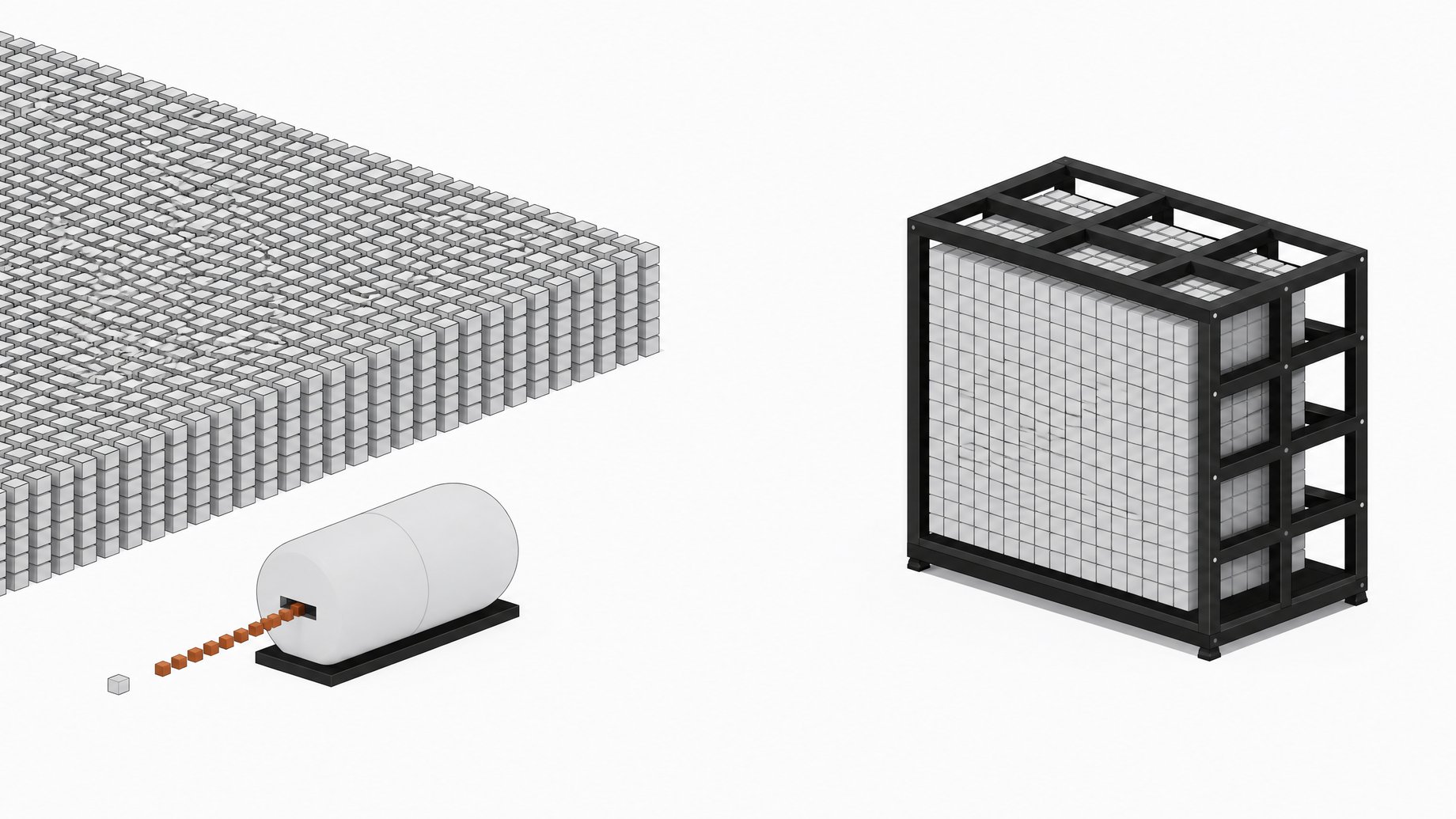
Renting OpenAI's API beats owning a GPU for light, occasional use. For sustained agentic workloads, like a coding agent running all day, break-even against a $2,000 consumer GPU running an open-weight model can arrive in weeks, not years. The reason: agentic loops consume roughly 1,000 times more tokens than a chat conversation. That multiplier, not the number printed on OpenAI's pricing page, is what decides whether renting or owning wins.
TL;DR
- Agentic tasks consume roughly 1,000 times more tokens than standard chat, which breaks per-token cost models.
- Small open-weight models on a $2,000 consumer GPU can break even against API costs in as little as 0.3 months, under two weeks.
- About 60 percent of an agentic task's cost comes from refining and verifying an answer rather than the initial generation.
- Uber exhausted its annual AI coding budget in four months of a twelve-month plan, then capped spend per employee per tool.
- The API usually still wins for light or bursty usage, under roughly 2-3 million tokens per day.
- For the largest open models against the cheapest API, break-even can take up to 69.3 months, so renting often wins there.
Why is dollars per token the wrong number?
Most comparisons of API pricing versus local GPUs start with a spreadsheet of dollars per million tokens. Wrong unit. A chat session and an agentic coding session on the same model can differ in total token consumption by three orders of magnitude, because an agent has to re-read its own growing context at every single step it takes. A single agentic scenario can run around 90 tool calls and burn roughly a million tokens over hours of execution. Price per token matters. Tokens per task matters more. Multiply a modest per-token rate by that kind of volume and the monthly bill stops looking like a SaaS subscription and starts looking like a second payroll line.
How much does OpenAI's API actually cost?
Here's where OpenAI's pricing sits today. The flagship tier, GPT-6 Astra, runs $10 per million input tokens and $50 per million output tokens. A mid-tier model built for agentic workflows, GPT-6.1 Sol, costs $2 per million input tokens and $10 per million output tokens. The budget tier, GPT-6 Luna, runs $0.10 per million input tokens and $0.50 per million output. That's roughly a 100x spread between the cheapest and most capable tiers, before anyone has written a line of agent logic.
For context on how fast these numbers move, GPT-5 launched at $1.25 per million input tokens and $10 per million output tokens. Sticker price on frontier capability has fallen on some tiers and risen sharply on others, which is exactly the kind of noise that makes "per-token price" a misleading anchor for budgeting an agent fleet.
Why are agentic tasks a different cost animal?
The structural reason agentic workloads blow past chat-based cost models comes down to a few mechanics researchers have now measured directly.
- The 1,000x multiplier. Agentic coding tasks consume roughly 1,000 times more tokens than code-reasoning or code-chat interactions on the same models, driven by input tokens rather than output, because the agent re-ingests its own accumulating context on every step.
- Run-to-run variance. Identical tasks on the same model can differ by up to 30x in total tokens consumed, and agents can't reliably predict their own costs ahead of time.
- No accuracy payoff for the extra spend. More tokens doesn't mean more accuracy. Accuracy tends to peak at intermediate spend and saturate beyond it, so the most expensive runs are often not the most useful ones.
- Refinement loops, not generation, drive cost. McKinsey and Pay-i researchers find that about 60 percent of an agentic task's cost is tied to refining and verifying an answer, not the initial generation, alongside long-lived context, costly multi-model orchestration, and reasoning applied to trivial sub-tasks.
- Falling unit prices haven't lowered bills. Pay-i's telemetry shows per-token inference cost for a fixed model size has fallen about 86 percent since 2022, yet real enterprise invoices have gone up anyway, because task complexity and token volume are rising faster than price is falling.
Put plainly: the API's per-token rate is the wrong number to budget against. The right number is tokens consumed per task, multiplied by tasks run per day.
What does a local GPU rig actually cost?
Owning hardware isn't free, but it's a fixed, depreciating cost, not a variable, compounding one. A single NVIDIA RTX 5090 with 32GB of VRAM runs about $2,000 and can run small open-weight models like EXAONE 4.0 32B, Qwen3-30B, or Magistral Small at usable throughput. A step up, dual NVIDIA A100 80GB cards at roughly $15,000 each, handles 70B-120B class models such as Llama 3.3 70B or OpenAI's own open-weight gpt-oss-120B. That model reaches near-parity with OpenAI's proprietary o4-mini on core reasoning benchmarks while running on a single 80GB GPU, and the smaller gpt-oss-20B matches o3-mini on just 16GB of memory. Open-weight no longer means second-tier capability at the small end of the task spectrum.
| Upfront Cost | Break-Even vs. API | Control Over Stack | Maintenance Burden | Model Capability Ceiling | |
|---|---|---|---|---|---|
| OpenAI API (Rent)light, bursty, or frontier-only workloads | $0 | N/A (pay-as-you-go) | Low | Low | High |
| RecommendedSmall GPU rig (~$2,000)sustained agentic use with sub-30B open models | $2,000 | 0.3-3 months | High | Medium | Low |
| Medium GPU setup (~$30,000)70B-120B class models at steady volume | $30,000 | 4-34 months | High | High | Medium |
| Large GPU clusterfrontier-scale open models at very high volume | $60,000+ | up to 69.3 months | High | High | High |
For readers sizing a build, a practical breakdown of GPU options from $2,000 to data-center rack covers the throughput and VRAM tradeoffs in more depth than fits here.
When does owning beat renting?
A Carnegie Mellon cost-benefit framework modeled 54 deployment scenarios comparing on-premise hardware against commercial APIs from GPT-5, Claude 4, and Gemini 2.5 Pro. The pattern it found maps cleanly onto model size:
- Small models (sub-30B params) on a single ~$2,000 consumer GPU break even against commercial API pricing in as little as 0.3 months, under two weeks, and typically within three months at sustained usage.
- Medium models (70B-120B params) on a dual-A100 setup (~$30,000) break even within roughly 4 to 34 months, depending on how heavily the hardware is used.
- The largest open models against the cheapest available API can take up to 69.3 months to break even, nearly six years, long enough that hardware refresh cycles beat the payback period.
A separate total-cost-of-ownership model from SitePoint, using mid-2025 pricing, puts the crossover point against OpenAI's GPT-4.1 API at roughly 2 to 3 million tokens per day for a consumer-hardware setup. At heavy usage, around 50 million tokens per day, a fully depreciated local enterprise GPU server lands around $7.15 per million tokens over 36 months, undercutting OpenAI's roughly $6.90 nominal rate once you account for the $126,000-plus annual bill that volume actually generates, and undercutting Anthropic's $9.86 per million as well. For the full math behind these crossovers, see the real break-even math between local models and API cost.
The takeaway: for small models, the math isn't close. For the biggest models chasing frontier capability, renting still often wins. The deciding variable is volume, and agentic loops push volume up fast.
Is there real-world proof the trap is already happening?
This isn't a hypothetical spreadsheet exercise. Uber deployed Claude Code and Cursor to its engineers in December 2025. By April 2026, four months into a twelve-month budget, the company had burned through its entire annual AI coding budget, with per-engineer monthly costs ranging from $500 to $2,000. Uber's response: cap spend at $1,500 per employee per agentic tool, per month. Ninety-five percent of Uber's engineers now use AI tools monthly, and 70 percent of committed code originates from AI. That's the kind of sustained, high-volume agentic usage where per-token pricing stops being an abstraction and starts being a line item that needs a cap.
Gartner's own forecast backs up why this will keep happening: by 2028, AI coding costs are expected to surpass the average developer's salary, as token consumption keeps rising and the industry shifts from seat-based to consumption-based pricing. Most organizations currently lack the governance frameworks to control that spend.
When does the API still win?
None of this means owning hardware is always the right call. The API wins when usage is light or bursty, when a task genuinely needs frontier-only capability that open-weight models can't match on the hardest benchmarks, or when a team has no appetite for managing GPUs, drivers, and model updates. A side project, an internal tool used by a handful of people, or a workload that spikes once a quarter doesn't justify a capital purchase. The break-even math above only pays off once volume is sustained. Occasional, exploratory use is a different situation entirely.
How should you decide, and why is tokens per month the variable that matters?
The practical question isn't "is the API expensive." It's "how many tokens will this workload actually burn in a month, and how predictable is that number."
- Estimate real agentic volume, not chat volume. If the workload is an agent looping through tool calls, multiply your naive per-task estimate by up to 1,000x before you budget, not after.
- Check where you land against the crossover bands. Under roughly 2-3 million tokens/day, the API usually still wins. Sustained usage in the tens of millions of tokens/month on a small or mid-size open model puts you inside the 0.3-to-34-month break-even window where owning pays for itself.
- Account for variance, not the average. A 30x swing in token consumption for the same task means your worst-case month matters more than your average month when you're deciding whether a fixed-cost GPU or a variable-cost API bill is the safer bet.
- Decide who owns the governance, not just the hardware. Uber's fix wasn't to abandon agentic tools. It was to cap and monitor spend per employee, per tool. That's a governance problem as much as a procurement one, and it's the same problem that shows up when employees start building their own internal tools with AI on personal accounts with no visibility for the company.
For teams that decide owning makes sense, the practical setup, from model choice to toolchain, is covered in a step-by-step guide to running agents locally.
Why does this decision only get more urgent?
Goldman Sachs Research forecasts that agentic AI will drive a 24-fold increase in global token consumption by 2030, reaching roughly 120 quadrillion tokens processed per month, even as per-token inference costs keep falling 60 to 70 percent per year. Those two trends aren't in tension. They're the whole story: falling unit prices and exploding volume mean aggregate spend keeps climbing even as the sticker price keeps dropping. Pay-i's data shows the same pattern already playing out inside enterprise bills.
The question "what does OpenAI charge per token" is the wrong first question. The right one: how many tokens will a sustained agentic workload actually consume, and at what point does a GPU sitting under a desk start costing less than a usage meter that never stops running.
The bottom line
Price-per-token comparisons make for easy headlines but bad budgets. The number that actually governs this decision is volume, not rate, and agentic loops are built to inflate volume by orders of magnitude that a chat-based mental model never anticipates. For teams running agents around the clock, the math in this piece says the break-even point arrives faster than most procurement cycles move. For teams running them occasionally, it doesn't arrive at all. Know which team you're on before you sign the invoice or the purchase order.
Frequently Asked Questions
Is OpenAI's API cheaper than running a local GPU?
It depends entirely on volume. For light or bursty usage, the API is cheaper because you avoid hardware costs. For sustained agentic workloads, a $2,000 consumer GPU running a small open-weight model can break even against API pricing in as little as 0.3 months, because agentic tasks consume roughly 1,000x more tokens than chat.
Why do AI agents cost so much more than chatbots to run?
Agents have to re-read their own growing context at every step of a multi-step task, which makes input tokens, not output tokens, the main cost driver. Research measuring agentic coding tasks found they consume about 1,000x more tokens than equivalent chat or reasoning interactions on the same model.
What's the break-even point for buying a GPU instead of paying for API tokens?
A Carnegie Mellon cost-benefit study found break-even within about 0.3 to 3 months for small open models (under 30B parameters) on a single consumer GPU, 4 to 34 months for medium models (70-120B) on dual-A100 hardware, and up to about 5.75 years for the largest open models against the cheapest commercial API.
Can open-weight models actually replace OpenAI's models for agentic tasks?
For many tasks, yes. OpenAI's own open-weight gpt-oss-120B model reaches near-parity with its proprietary o4-mini on core reasoning benchmarks while running on a single 80GB GPU, and the smaller gpt-oss-20B matches o3-mini on just 16GB of memory.
How much daily token volume justifies switching from the API to local hardware?
One total-cost-of-ownership analysis puts the crossover point against OpenAI's GPT-4.1 pricing at roughly 2 to 3 million tokens per day for a consumer-hardware setup, with local hardware pulling further ahead at higher volumes once it's fully depreciated.
How we source, write, and correct our articles. Editorial standards