AI Agents vs SaaS Software: Which Should Run Business Workflows?
Real examples of AI agents running business workflows in labs, support, legal review, coding, and scheduling, plus where SaaS seats still win.

Should AI agents or SaaS software run business workflows?
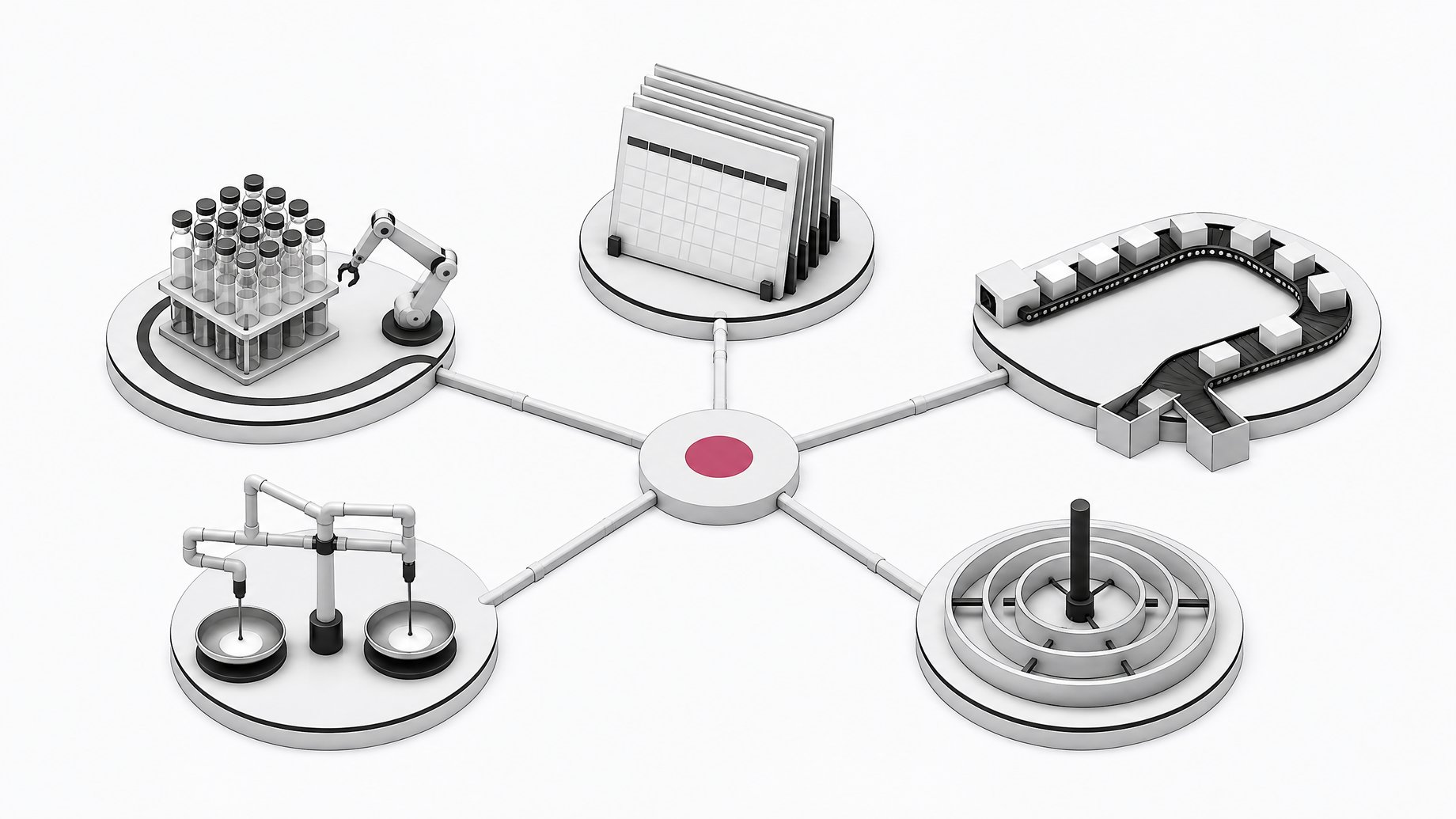
AI agents should run high-volume, pattern-based business workflows, while SaaS seats still win where quality is judged subjectively or the stakes of an unverified result are high. Examples of AI agents in business workflows now span materials science, customer support, legal review, software engineering, and calendar management. In each case, the agent isn't assisting inside a piece of software. It's doing the job the software was built to support. That distinction matters. A SaaS tool waits for a human to open it, click through it, and decide what happens next. An agent runs the loop itself: it reads the situation, takes an action, checks the result, and moves on without anyone opening a dashboard.
TL;DR
- Bain & Company predicts agentic AI could eventually claim up to half of enterprise tech spending, as budgets shift from per-seat licenses toward agents that complete outcomes directly.
- Klarna's AI assistant handled 2.3 million conversations in its first month, yet the company later resumed hiring human customer-service staff.
- Devin resolved nearly 14% of real-world GitHub issues unassisted, far surpassing the 1.96% prior state of the art.
- Harvey AI reached an $11 billion valuation by scaling to more than 100,000 lawyers, absorbing spend that used to go to traditional legal tools.
- Even the flagship autonomous-science case, Berkeley Lab's A-Lab, drew a 2026 correction and re-analysis questioning how many of its compounds were genuinely novel.
- The best candidates for handoff are high-volume, pattern-based work with a clear success criterion, like first-pass legal review, routine coding tickets, and scheduling.
- The connective layer that lets an agent see your calendar, tickets, and contracts is worth building rather than renting.
How does the shift from software you use to agents that do the work change things?
Most enterprise software is priced per seat because a human has to sit at that seat to get value from it. That pricing model only makes sense if a person does the work and the software just helps. Once an agent can run the entire workflow end to end, the seat stops being the unit that matters. Bain & Company has started calling this out directly, arguing that agentic AI is positioned to disrupt the SaaS model itself, with AI agents eventually accounting for as much as half of overall enterprise technology spending as budgets shift from per-seat licenses toward agents that complete outcomes directly. That's the backdrop for the five examples below, and for a related look at where AI agents are already replacing specific categories of software.
How are self-driving labs replacing research software and research assistants in materials science R&D?
Berkeley Lab's A-Lab is the clearest version of this. Over 17 days of continuous, unattended operation, the lab ran 355 experiments and synthesized 41 novel inorganic compounds out of 58 computationally predicted targets, a roughly 71% success rate, with robots and AI handling synthesis, analysis, and the decision of what to try next. The facility runs 24/7 and can process 50 to 100 times as many samples per day as a human researcher. That's not lab-management software with a scientist at the controls. It's an agent doing the scientist's job.
Carnegie Mellon's Coscientist, built on GPT-4, did something similar from the other direction: it searched the chemistry literature, wrote its own lab-automation code, and executed real palladium-catalyzed cross-coupling reactions, the same chemistry that won a Nobel Prize in 2010, in under four minutes, including catching and fixing its own coding error without a human prompting it.
Neither result should be read as a finished story. A 2026 correction and independent re-analysis of the A-Lab paper raised real questions about how many of the 41 claimed compounds were genuinely novel, with some reviewers concluding the fully automated runs failed to produce new materials at the rate first reported. Even the flagship case for autonomous science needs scrutiny before anyone treats it as a settled replacement for human-led R&D.
Can customer support agents really absorb two-thirds of service volume?
Klarna's OpenAI-powered assistant is the number everyone cites, for a reason. In its first month, it handled 2.3 million conversations, two-thirds of all Klarna customer service chats, doing the equivalent work of 700 full-time agents. It resolved customer errands in under two minutes, versus 11 minutes for a human agent, cut repeat inquiries by 25%, and was estimated to add $40 million to Klarna's 2024 profit.
Then came the correction. By May 2025, Klarna reversed course and started rehiring human customer-service staff. CEO Sebastian Siemiatkowski told Bloomberg that cost had become too dominant a factor in how the company organized support, and that the result was lower quality. It's the single most important caveat in this list: a widely cited full-replacement success story quietly became a human-in-the-loop story within about a year.
Are contract review and research agents replacing seat-based legal software?
Harvey AI has scaled to more than 100,000 lawyers across 1,300 organizations, including a majority of the Am Law 100, and reached an $11 billion valuation in March 2026 on roughly $190 million in annual recurring revenue, which nearly doubled from $100 million since August 2025. That's not incremental adoption. That's a legal-tech platform absorbing spend that used to go to traditional legal research tools, contract-review software, and outsourced review labor.
The underlying case for this goes back to a 2018 LawGeex benchmark: AI reviewed NDAs with 94% accuracy in 26 seconds, versus 85% accuracy and 92 minutes for experienced human lawyers doing the same task. Microsoft's case study on Harvey reports a corporate lawyer saving 10 hours of work per week after adopting the platform, a real-world figure rather than a lab result.
How do autonomous coding agents compare with dev-tooling subscriptions in software engineering?
Cognition's Devin was marketed as "the first AI software engineer," and the SWE-bench numbers back up the framing more than most launch claims do. Devin resolved 13.86% of real-world GitHub issues unassisted, against a prior state-of-the-art of 1.96%, and even when the best previous models were handed the exact files to edit, they only resolved 4.80% of issues. The gap isn't about writing better autocomplete. It's about an agent that plans the fix, writes the code, runs the tests, and opens the pull request without a human in the editor.
That speed creates its own problem. Once an agent can open pull requests faster than any pipeline can review them, validating that code becomes the real bottleneck. It's worth reading this alongside a closer comparison of what Devin, Claude Code, and Cursor actually replace if you're weighing which parts of an engineering workflow are actually ready to hand off.
Is calendar management the smallest, most mundane agent replacement?
Not every example needs to be dramatic to matter. Calendar agents like Reclaim.ai now defend focus time, reschedule meetings, and manage recurring habits across a user's calendar without manual input, and the company reports its users gain roughly 7.6 hours of focus time per week and 2.3 fewer meetings per week. This is the task that used to belong to an executive assistant or a passive scheduling tool that just displayed free and busy blocks. Now an agent negotiates it directly. The market shakeout backs up how real the shift is: Clockwise, one of the category's established players, shut down in 2026.
Why is this happening now?
The pattern across all five examples isn't that AI got slightly better. It's that enterprise buyers are rethinking what they're actually paying for. A few forces are converging at once:
- Per-seat pricing stops making sense when there's no seat. If an agent runs the workflow end to end, licensing by human headcount is the wrong unit of measurement, which is the core of Bain's thesis that agentic AI could eventually claim as much as half of enterprise technology spending.
- CIOs are already planning for a mostly agent-run future. Gartner's survey of more than 700 CIOs found that by 2030 they expect 0% of IT work to be done by humans without AI assistance, 75% by humans augmented with AI, and 25% by AI acting alone.
- The economics are still unsettled even as adoption accelerates. In that same Gartner survey, 73% of EMEA CIOs said their current AI investments are breaking even or losing money. Agent adoption is running ahead of agent ROI in a lot of organizations.
- Employees aren't waiting for procurement. Microsoft WorkLab found 78% of employees bring their own, unsanctioned AI tools to work, and over half say they wouldn't tell a manager they'd used AI to complete a task. A lot of agentic replacement is happening informally, inside shadow workflows, before it ever shows up in a vendor contract.
Where do AI agents still need a human in the loop?
Klarna is the cleanest cautionary tale here, not because the AI stopped working, but because cutting humans too deep hurt perceived quality, which is a judgment call no benchmark captures. The A-Lab correction tells a related story from the research side: even a result built on real robots and real published chemistry needed a second look before anyone could trust the headline number. Full autonomy and full reliability are not the same claim, and the gap between them is exactly where a human still needs to be checking the work.
Should you replace SaaS with an agent, or keep the seat?
The honest framing for a buyer isn't "replace everything" or "replace nothing." It's figuring out which workflows tolerate full handoff right now and which still need a person reviewing the output:
- Ripe for agent replacement now: high-volume, pattern-based work with a clear success criterion, like first-pass legal review, routine coding tickets, and scheduling.
- Not ready yet: workflows where quality is judged subjectively by the end customer, like customer support at scale, or where the stakes of an unverified result are high, like novel scientific claims.
- Worth building rather than renting: the connective layer that lets an agent actually see your calendar, your ticket queue, or your contract repository and act on it, instead of paying for another seat-based tool that just displays the same information back to a human.
That last point is where the software-ownership argument gets practical. If an agent is going to do real work across your calendar, your support queue, and your codebase, the orchestration layer that connects those systems is infrastructure worth owning, not another subscription to rent, the same tradeoff playing out across the visual automation tools teams use to wire agents into their existing systems. The five workflows above aren't an exhaustive list. They're a signal that the per-seat software model is being tested in more places than most buyers have noticed yet.
Frequently Asked Questions
What are the clearest real-world examples of AI agents replacing business software?
Berkeley Lab's A-Lab running autonomous chemistry experiments, Klarna's AI customer-service assistant, Harvey AI in legal review, Cognition's Devin in software engineering, and scheduling agents like Reclaim.ai are the clearest documented cases of agents executing a full workflow rather than assisting a human inside a SaaS tool.
Did Klarna actually replace its customer service team with AI?
Partially, and not permanently. Klarna's AI assistant handled two-thirds of service chats and the equivalent of 700 full-time agents' worth of work in its first month, but by May 2025 the company reversed course and began rehiring human staff after concluding it had cut too deep on cost at the expense of quality.
How accurate are AI agents at legal contract review compared to human lawyers?
In a 2018 LawGeex benchmark, AI reviewed NDAs with 94% accuracy in 26 seconds, versus 85% accuracy and 92 minutes for experienced human lawyers on the same documents. That gap underpins the scale platforms like Harvey AI have since reached in real law firms.
Can AI coding agents really finish software tickets without a developer?
Cognition's Devin resolved 13.86% of real-world GitHub issues completely unassisted at launch, a step change from the prior state of the art of 1.96%, by planning, coding, testing, and submitting the pull request itself. It's a meaningful jump, but it still leaves most issues needing human involvement.
Why are enterprises shifting spend from SaaS subscriptions to AI agents?
Per-seat pricing assumes a human has to use the software to get value from it. Once an agent can run a workflow end to end, that pricing logic breaks down. Bain estimates AI agents could eventually represent as much as half of overall enterprise technology spending as a result.
How we source, write, and correct our articles. Editorial standards