Can You Opt Out of AI Scraping? Robots.txt vs Self-Hosting
Does robots.txt stop AI crawlers? See how Meta's chatbot opt-out, GPTBot and Cloudflare data compare, and why self-hosting is the stronger defense.

Can you opt out of AI scraping, or is self-hosting the only real defense?
Mostly, no. The mechanisms built to let you say no to AI data collection, from platform toggles to robots.txt files, don't actually work, so real protection means owning the infrastructure yourself.
Meta scraping consent October 30 refers to a coalition letter sent that day asking the FTC to halt Meta's plan to use AI chatbot conversations for ad targeting. Thirty-six privacy, consumer, and civil-rights groups, led by EPIC and the Center for Digital Democracy, told the Commission that Meta's policy violates its existing consent decree and Section 5 of the FTC Act, and asked regulators to suspend the program before it launches. The letter is a direct response to Meta's October 1 announcement that starting December 16, interactions with Meta AI across Facebook, Instagram, and WhatsApp will feed ad and content personalization, affecting more than 1 billion monthly users of the chatbot.
That's the news. The bigger story is what it reveals about the word "consent" in 2025: the mechanisms built to let you say no to AI data collection don't actually work. Platform toggles are porous. Courtesy text files get ignored outright. If you want real protection, stop asking nicely and start owning the infrastructure.
TL;DR
- AI crawlers routinely ignore robots.txt files, with scraping that bypasses robots.txt growing more than 40% between the third and fourth quarters of 2024.
- Bots now account for 65% of Wikimedia's most resource-intensive traffic while generating only a minority of actual pageviews.
- Meta's chatbot opt-out is not a real opt-out, because excluding sensitive categories from ads does not keep conversations out of the data pipeline.
- Self-hosting works because it is a technical fact rather than a promise, so data that never leaves your infrastructure can't be scraped or trained on.
- About 91% of enterprise AI tools operate as shadow IT entirely outside IT control.
- Breaches at organizations with high levels of shadow AI run $670,000 above the global average breach cost.
What Does Meta's Chatbot "Opt-Out" Actually Opt You Out Of?
Read Meta's own language and the opt-out evaporates. Users engaging with Meta AI can't fully opt out of having chat data used for personalization. Meta carves out a short list of "sensitive" categories, religion, health, political views, sexual orientation, race and ethnicity, trade union membership, that won't feed ad targeting. Those same conversations still get stored and used internally for product improvement. Exclusion from ads isn't exclusion from the data pipeline.
The rules aren't even universal. Meta's new AI data-usage policy rolls out everywhere except the EU, UK, and South Korea, where local privacy law forces its hand. That's the tell. Your "choice" about how chatbot conversations get used isn't a choice. It's a jurisdiction lottery. Live somewhere with teeth in its privacy law and you get a carve-out. Everyone else gets a settings menu that doesn't unplug anything.
Does Robots.txt Actually Stop AI Crawlers From Scraping Your Site?
If platform-level consent is this thin, the web's oldest opt-out mechanism is thinner. Robots.txt has always been a request, not a barrier: a plain-text note asking crawlers to stay out of certain directories. For twenty-some years, most crawlers mostly listened. AI crawlers broke that compact.
A Tollbit report found AI bot scrapes bypassing robots.txt grew more than 40% between the third and fourth quarters of 2024, with scrapes per website doubling in the same stretch. Ziff Davis followed OpenAI's own published opt-out instructions and set disallow rules in robots.txt. GPTBot kept scraping anyway, reportedly scraping more after Ziff Davis asked OpenAI to stop, which is now the basis of Ziff Davis's lawsuit against OpenAI. Skift, the travel news outlet, got hit by GPTBot roughly 60,000 times a week despite a standing disallow rule. Even after deploying blocking tools, Meta's own crawler kept showing up about 12,000 times a week. Publishers aren't choosing to be scraped. They're asking not to be, in writing, using the exact tools AI companies told them to use, and getting ignored anyway.
This isn't a new problem unique to AI chatbots. We've covered this asymmetry before: big AI labs scraped the internet and mostly won or settled their way clear, and the pattern here is identical. The people asking for consent have no leverage to enforce it.
Do the Bots Already Outnumber the Readers?
Zoom out and individual opt-outs look almost comic. Cloudflare sits in front of about 20% of the web, and made AI-crawler blocking the default for every new domain starting July 1, 2025, because the old voluntary, opt-in model had failed to stop uncompensated scraping. More than one million Cloudflare customers had already flipped on one-click AI-bot blocking in the ten months before that change. That's not a niche concern. That's majority behavior among people with the technical means to act.
Wikimedia tells the same story from the receiving end. Since January 2024, bandwidth used for downloading multimedia content on Wikimedia Commons has grown 50%, driven overwhelmingly by bots scraping training data for large language models, not by human readers. Bots now account for 65% of Wikimedia's most resource-intensive traffic while generating only a minority of actual pageviews. The scraping isn't a side effect of the AI boom. It is the AI boom, measured in server load.
Why Is Self-Hosting the Only Real Defense Against AI Scraping?
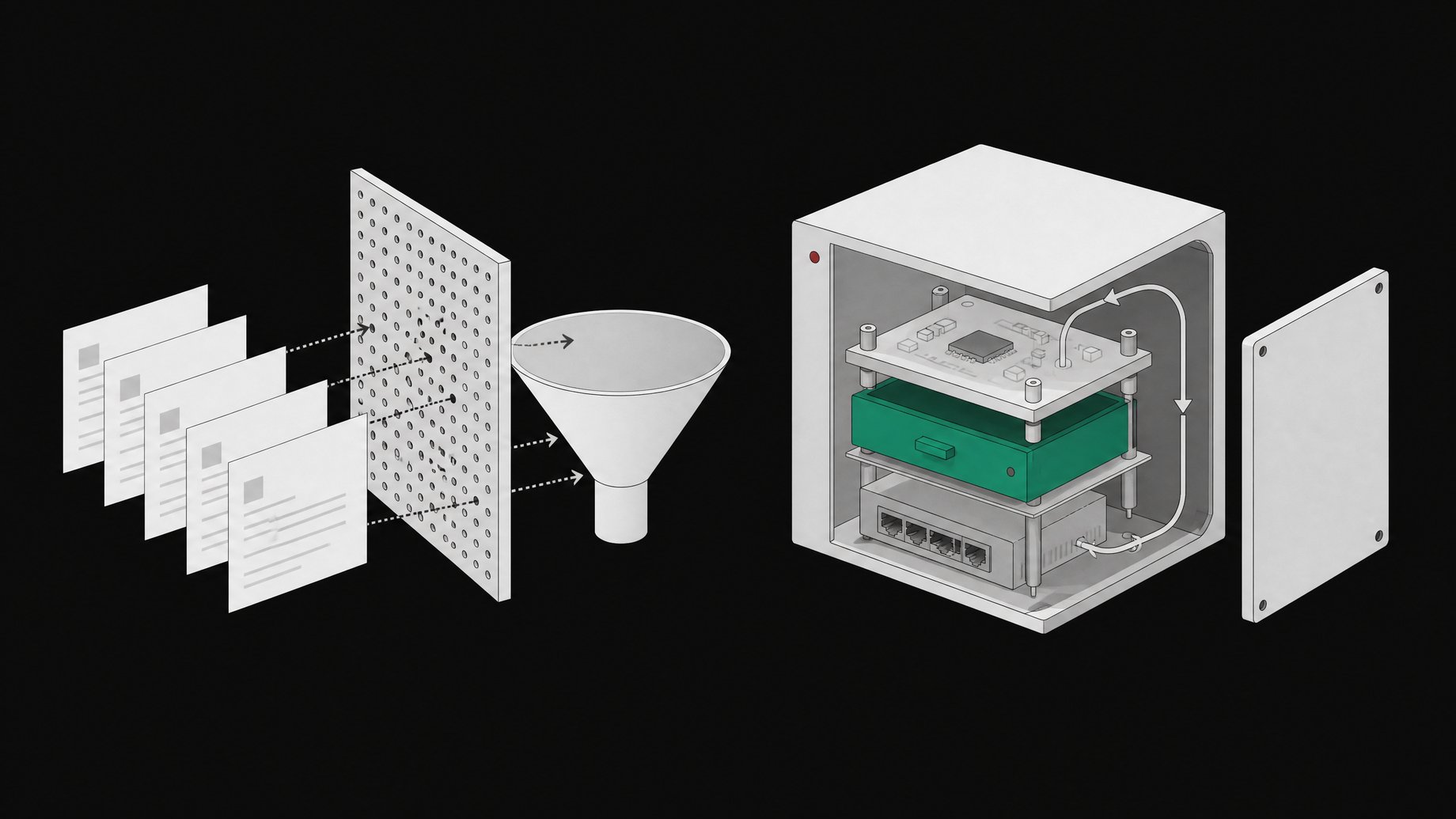
Here's the practitioner's math. A policy toggle is a promise. A robots.txt file is a request. Both depend on the other side choosing to honor them, and the evidence above says they routinely don't. Self-hosting isn't a promise. It's a technical fact. If a model never leaves infrastructure you control, there's nothing for anyone to scrape, train on, or quietly repurpose, because the data never left the building.
Replicated puts it well: instead of asking a vendor to please not use your data and hoping for compliance, an air-gapped or self-hosted deployment makes unauthorized use difficult or impossible by design. That's the real difference between contractual control and technical control. One is enforceable only through lawsuits and regulatory letters, which, per the FTC letter above, take months and may not even work. The other removes the vendor's access entirely, on day one.
For teams who want AI tooling without handing a vendor their conversation logs, running and owning the agent layer beats trusting a settings page you don't control. For individual publishers and enterprises alike, the lesson from Skift and Ziff Davis isn't "configure your robots.txt better." It's that defenses dependent on the other side's goodwill will eventually fail, and the only durable fix sits on your own hardware.
What Is the Governance Gap Inside Your Own Walls?
Blocking external crawlers only solves half the problem. The other half is sitting inside your own company, in the form of shadow AI: tools employees adopted on their own, feeding company and customer data into third-party models nobody vetted.
IBM's 2025 Cost of a Data Breach Report found that 63% of breached organizations had no AI governance policy at all. The Cloud Security Alliance, citing Reco's 2025 State of Shadow AI Report, puts the number of enterprise AI tools operating entirely outside IT control at 91%. The cost isn't abstract: breaches at organizations with high levels of shadow AI run $670,000 above the global average breach cost. If you've spent real effort keeping GPTBot off your site while your sales team pastes customer records into a free chatbot tier, you haven't closed the data-exposure gap. You've just moved it inside.
The fix looks a lot like the external one: treat internal AI tools the way you'd treat any other piece of infrastructure you're responsible for, not a convenience someone downloaded. Our playbook on self-hosting internal tools safely covers the mechanics of doing this without creating a bureaucratic bottleneck that pushes employees back toward shadow tools in frustration.
What Does Strict Internal AI Data Governance Actually Look Like?
In practice, closing both the external and internal gaps comes down to a short list of concrete moves:
- Audit what's already running. You cannot govern tools you don't know exist. Inventory every AI tool touching company or customer data, sanctioned or not.
- Default to self-hosted or open-weight models for sensitive workloads. If data can't leave your infrastructure, there's nothing to scrape, train on, or subpoena out of a vendor's logs.
- Treat data boundaries as infrastructure decisions, not legal boilerplate. A privacy policy clause is not a technical control. A network boundary is.
- Set a real adoption path for new AI tools, fast enough that employees don't route around it with personal accounts and free tiers.
- Review vendor terms for training rights explicitly, and assume anything not technically blocked will eventually be used, based on the pattern of robots.txt noncompliance above.
None of this requires exotic engineering. It requires treating control over your own data as a prerequisite, not an afterthought.
| Enforceability | Control Over Data Location | Setup Effort | Depends on Vendor Compliance | |
|---|---|---|---|---|
| Platform Opt-Out ToggleUsers with no technical control over infrastructure | Low | Low | Minutes | Yes |
| Robots.txt Disallow RulePublishers signaling intent to crawlers | Low | Low | Minutes | Yes |
| RecommendedSelf-Hosted / Air-Gapped InfrastructureTeams that need data to never leave their control | High | High | Weeks | No |
Why Is It Own It or Lose It?
The honest reason most organizations haven't done this yet isn't technical difficulty. People on r/SelfHostedAI report standing up a locally hosted server in under a month, technically straightforward, then watching it stall because "nobody had the balls to greenlight it" past a risk-averse DPO and a procurement team that defaults to outsourcing. The barrier is institutional will, not capability.
That's the real takeaway from October 30. Regulators can send letters. Advocacy groups can demand investigations. None of that stops a crawler that's already ignoring your robots.txt file today. The FTC may or may not act on the EPIC coalition's request. GPTBot will keep scraping regardless. The only lever you actually control is whether your data, and your employees' AI usage, ever leaves infrastructure you own in the first place. Everything else is a request you're hoping someone honors.
Frequently Asked Questions
What happened with Meta and the FTC on October 30, 2025?
A coalition of 36 privacy and consumer groups, led by EPIC and the Center for Digital Democracy, sent the FTC a letter urging it to halt Meta's plan to use AI chatbot conversations for ad targeting, arguing the practice violates Meta's existing consent decree and Section 5 of the FTC Act.
Can I fully opt out of Meta using my AI chatbot data?
No. Meta's policy, effective December 16, 2025, lets users adjust ad preferences and excludes a short list of sensitive topics from ad targeting, but there is no mechanism to fully opt out of having chatbot conversations used for personalization and product improvement, and the rules don't apply uniformly outside the EU, UK, and South Korea.
Does robots.txt actually stop AI crawlers from scraping a website?
Not reliably. Tollbit data showed AI bot scrapes bypassing robots.txt grew more than 40% in a single quarter, and publishers like Ziff Davis and Skift documented continued scraping by GPTBot and Meta's crawler even after implementing disallow rules.
Why is self-hosting considered a better defense than opt-out settings?
Opt-out settings and robots.txt files are requests that depend on another company's compliance. Self-hosted or air-gapped AI infrastructure removes the vendor's access to the data entirely, making unauthorized use a technical impossibility rather than a policy promise.
What is shadow AI and why does it matter for data governance?
Shadow AI refers to AI tools employees adopt without IT approval. Research cited by the Cloud Security Alliance found 91% of enterprise AI tools operate outside IT control, and IBM found breaches involving high levels of shadow AI cost $670,000 more than average, often because 63% of breached organizations had no AI governance policy at all.
How we source, write, and correct our articles. Editorial standards