How Do You Use the Apify Connector for AI Research?
Use Apify scrapers through Claude to mine Reddit, YouTube comments and social posts, then turn the research into decisions. Availability and costs covered.

How do you use Apify with an AI assistant to research and make decisions?
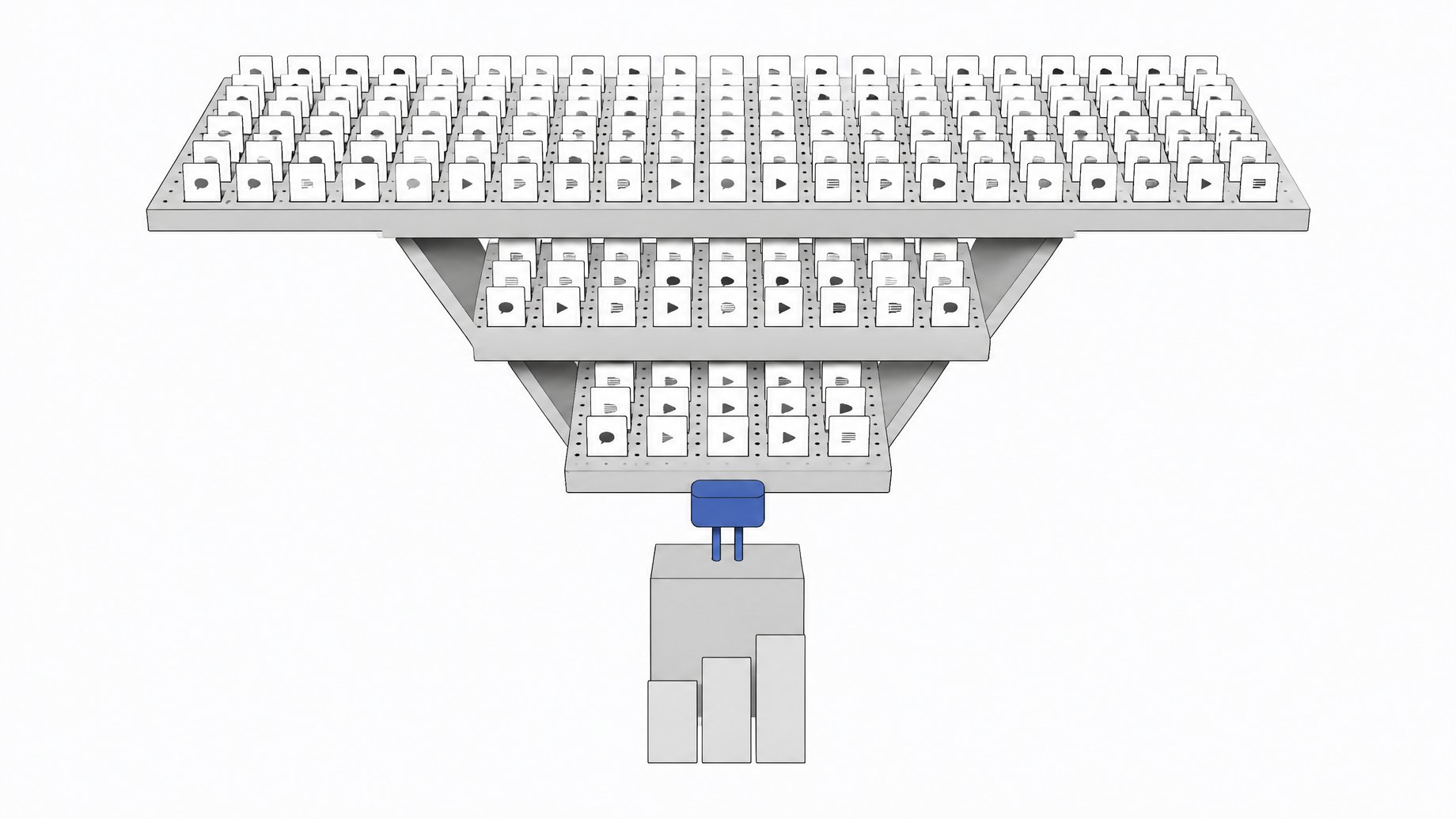
Connect the Apify connector to an AI assistant that supports it, such as Claude, and ask the assistant to run Apify scrapers against sources normal search can't reach: Reddit threads, YouTube comments, Instagram posts. The assistant pulls that raw, user-generated data into the chat. In a second step, you ask it to weigh the findings against your goals and recommend a choice. That is the "research into decision" pattern.
TL;DR
- The research-then-decision pattern has two separate steps: gather evidence first, then ask the AI to help you choose.
- Built-in deep research tools are good, but they mostly read what a search engine can index, so Reddit threads, YouTube comments and Instagram posts often stay out of reach.
- Apify supplies scrapers (called Actors) that collect that data, and the connector lets an AI assistant run them for you.
- According to the creator who demonstrated this, the connector is available in Claude, not in ChatGPT, and it also works in an always-on agent app. Apify also offers direct API access for self-built agents.
- The free plan runs out quickly. The creator says heavy use for an agent setup pushed them onto a $500 plan, so check Apify's current pricing before committing.
What is the research-into-decision pattern?
It is a habit more than a product. You use AI to research a question, then you use AI again to turn that research into a decision. People often skip the second half. They read the report and decide on gut feel, or they ask for a decision with no evidence behind it.
Splitting the work keeps each step honest. The research step collects material. The decision step applies your criteria to that material: your budget, your audience, your constraints, what you're trying to avoid. Giving the model a clear question in each step produces better output than one vague prompt that tries to do both.
The creator who described this workflow called it "such a big pattern" that you have to know about, and said that researching with AI and then making an informed decision with AI is "goated." The research step is where tooling choices matter most.
Why isn't regular deep research enough?
Deep research modes in ChatGPT and Claude (ChatGPT calls it deep research, Claude calls it research) go out, gather a large number of links, read them and compile a report. The creator described pulling in something like 100 to 200 links, and says the results beat default web search by a wide margin.
The limit is the source pool. A lot of the most useful information for consumer-facing questions sits in places a search crawl handles poorly:
- Reddit boards where people argue about what works
- Comment sections under YouTube videos
- Instagram posts and related social content
That user-generated material tends to show what real people think, complain about and ask for. If you're trying to understand what a customer base wants, or what the community consensus is on a tool, comments often beat articles.
What does Apify actually do?
Apify runs scrapers. Scraping means gathering information from the web in an automated way. In Apify's catalog, each scraper is packaged as an Actor, and the creator says there are tens of thousands of them. The source describes them as workers, and the examples it gives include:
- Scraping the comment section of YouTube videos
- Scraping Reddit posts
- Scraping Instagram follower names
When you plug these into an AI assistant through the connector, you describe what you want in plain language and the assistant picks and runs the relevant Actor. The output lands in your conversation, where the model can summarize it, cluster it and compare it.
Where is the Apify connector available?
Based on what the creator saw when browsing connectors:
| Platform | Apify connector |
|---|---|
| Claude | Available |
| ChatGPT | Not available (at the time of the demo) |
| Always-on agent app (called "Grok Bot" in the transcript) | Available |
| Self-built agents such as OpenClaw | Direct API access |
Connector directories change often, so check your own assistant's connector list for "Apify" before building a workflow around it. The API route matters if you run a custom agent on your own machine. The creator said they have used it that way with their OpenClaw setup since early on.
How does the two-step workflow run in practice?
A reasonable way to structure it:
- Define the decision first. Write down what you need to choose and what would change your mind. For example: which topic to cover next, which product to build, which tool to adopt.
- Pick sources that match the question. If you want honest opinions, point the scraper at Reddit threads or YouTube comment sections on relevant videos.
- Run the research step. Ask the assistant to use the Apify connector, collect the data, and report patterns: repeated complaints, requests, praise, objections. Ask it to separate what many people say from what one loud person says.
- Check the evidence. Skim a sample of the raw comments yourself. Scraped data is noisy, and a model can overstate a trend.
- Run the decision step. Give the assistant your criteria and ask for a ranked recommendation with reasons tied to the data. Ask what would make the recommendation wrong.
Keep the two steps in clearly separate prompts, even in the same chat. It makes the reasoning easier to audit.
Does it work with other agent setups?
Yes, with caveats. The same source describes always-on agents, which run continuously on their own cloud computer and can be scheduled to do recurring work. The Apify connector is one of the connections that makes those agents more useful for research. The creator also noted that the context you build (rules, instructions, preferences) is just text, so you can move it between assistants if you change tools. The same applies to a research prompt you've refined.
How much does Apify cost?
The source gives only two data points. You can start on a free plan and get real work done, but you will hit the limit quickly. For heavy, recurring use inside an agent setup, the creator is on a $500 plan and uses it every month.
The source does not list the plans in between, so I won't guess at their prices or limits. Scraping cost generally depends on how much data you pull, so a few targeted runs cost far less than scraping thousands of comments daily. Look at Apify's current pricing page and start small. Run one focused research question on the free plan and see how much of your allowance it consumes.
The creator said the recommendation is not sponsored, and that they declined a sponsorship offer. Treat it as one user's experience.
Is this worth doing?
It is worth it if your questions depend on what ordinary people say rather than what publishers write. Product ideas, content planning, audience research and competitor sentiment all fit. It is less useful for questions answered well by documentation or news articles, where built-in deep research is enough and costs you nothing extra.
Two practical cautions. Scraped social data can be biased toward people who comment, and scraping may be restricted by a platform's terms, so understand the rules for the sites you target. Also keep a human check between the research step and the decision step.
Frequently Asked Questions
Can I use the Apify connector in ChatGPT?
According to the source, the connector was not available in ChatGPT when the creator checked, but it was available in Claude. Directories change, so search for "Apify" in your own connector list. If it's missing, the API is the alternative for custom agents.
What kinds of data can Apify scrapers collect?
The examples in the source are YouTube comment sections, Reddit posts and Instagram follower names. Apify's catalog holds many more Actors, but the source only covers these, so check the catalog for your specific site.
Do I need to know how to code?
Not for the connector route. You describe the research in plain language and the assistant runs the Actor. Coding is only relevant if you want to use Apify's API directly from a self-built agent.
Is Apify free?
There is a free plan, and the creator says you can get things done on it but will reach the limit fast. Heavier use requires a paid plan. The creator's own plan is $500 for a recurring agent workload. Check Apify's pricing page for the tiers between.
Why separate research from the decision?
One prompt that asks for both tends to produce confident conclusions on thin evidence. Collecting data first, then applying your criteria, lets you inspect the evidence and catch mistakes before they shape the choice.
How we source, write, and correct our articles. Editorial standards