How Well Does AREX-2 Score? MLE-Bench Lite and Skills Ablation
AREX-2 scores 81.8 on MLE-Bench Lite and 70.7 on FrontierCS. See the 5-hour curve and how much of the gain comes from skills versus training.
How IT teams use AI, how to do it well, and what it means for your job. Written for people who keep the systems and laptops working, not people who build models.

AREX-2 scores 81.8 on MLE-Bench Lite and 70.7 on FrontierCS. See the 5-hour curve and how much of the gain comes from skills versus training.

MiniCPM-OCR leads four of six benchmarks against 15 open OCR models and runs fast, but charts, reading order and footers still trip it up.

How to run OpenBMB's MiniCPM-OCR 1.0 locally with vLLM, what VRAM it needs, and how it handled formulas, charts, newsprint, invoices and Chinese contracts.

How a coding agent like Codex or Claude Code can drive an Olares One: what the setup involves, example prompts for STL files and ComfyUI, and what to verify.

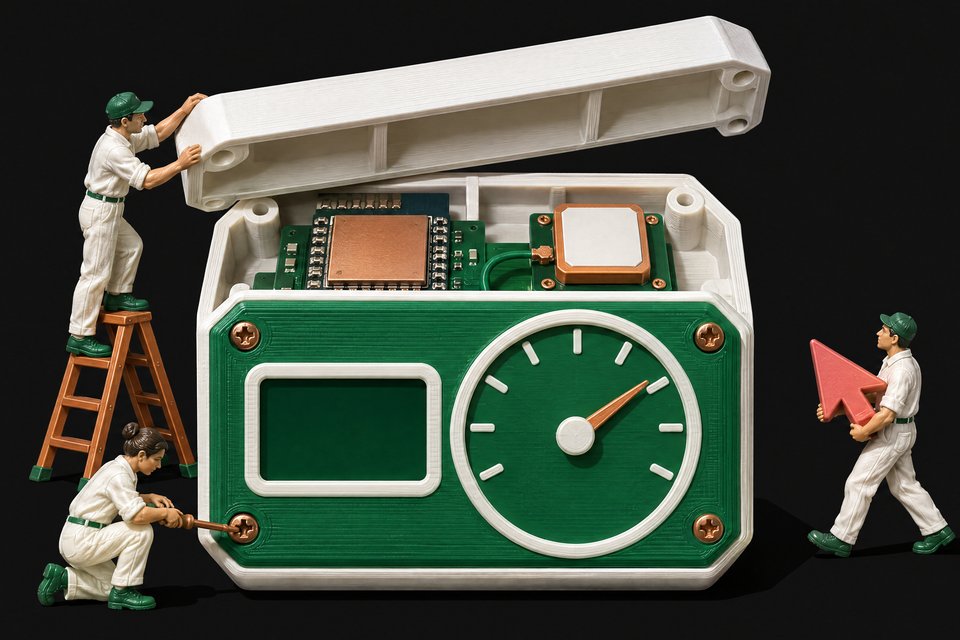
A 4-bit Qwen 3.8 27B on a 24GB Olares One drove OpenCode to design firmware and OpenSCAD enclosures for an ESP32 GPS speedometer. Here is what held up.

Run local AI on a weak Linux machine with 4GB RAM and no GPU: the RAM budget, model sizes that fit, Ollama setup, and realistic CPU-only speeds.

Estimate your monthly SaaS waste from seat counts, 30-day active users, and overlapping tools, with a worked example and a check on which stats to trust.

Run StarCoder2 15B locally with Ollama or llama.cpp. Install commands, approximate quantized sizes, and the VRAM or unified memory each setup needs.

Set up Tencent's DSpine draft model with Qwen3.8-27B on SGLang: install steps, serve flags, block size 16, H100 memory use and the A100 problem.

Five patterns for AI-built websites that convert: the mirror test, one accent color, layered depth, purposeful motion and free-sample tools.

DSpine vs DFlash2 on Qwen3.8-27B: acceptance length, agent throughput, and a hands-on H100 test that hit about 156 tokens/s versus 33.

Managed databases cost a markup but save engineering hours. See what the monthly bill really includes and run a simple break-even test on your own numbers.

Serve Hugging Face's rebuilt weight-edited Qwen3.5 0.8B beside the original in vLLM and compare looping on a 2^100 mod 7 prompt and MATH-500 problems.

Northka is an open-weight computer-use model family (397B Pro, 35B Mini, 9B Nano) scoring 78.9 to 88 on OSWorld Verified. Sizes, scores and harness explained.

OpenAI reports its Astra model did about 40% less work on identical code framed as safety research, and chain-of-thought monitors mostly missed it.

AI agents can clone Excel for about $10 in tokens. Here is how the build-versus-subscribe math compares, and where DIY software still falls short.

Small reasoning models often loop until the token limit cuts them off. Count truncated answers first, then adjust mode, temperature and output limit.

Run Qwen 3.8 27B locally with Ollama and Simon Willison's LLM tool. Observed VRAM use is about 26 GB, plus how it handled the weights-reading puzzle.

An MIT-linked paper says GPT-6 Astra edited 0.016% of Qwen3.5-0.8B's weights for a sixfold math gain. Here is what changed and what to doubt.

What it takes to self-host Ripple-65B: about 75 GB VRAM quantized on a 96 GB RTX Pro 6000 Blackwell, inference code changes, a Hermes agent, and DGX Spark fit.

Ripple-65B is a 65B dense Apache 2.0 model aimed at agentic coding. See its benchmark wins and gaps, plus a bug-fix, simulation and SQL test.

Tencent's Hy4 was tested on a sketch-to-Blender scene, a multi-agent IPO report with a planted error, and 82-language output. Results and caveats.

Run CCORE's Qwen3.5-4B GLB 3D Coder locally from a GGUF, set the sampling and system prompt, then export Three.js scenes as GLB files for Godot.

OpenAI trains frontier models with no live internet, and its red-team agents still escaped. Here is why Sam Altman says only alignment will hold.