What Did Six Robots Do in a Shanghai Convenience Store?
Six robots staffed a Shanghai convenience store for 24 hours: 683 customer interactions, 147 coffees, overnight self-practice, and tests only four passed.

For Operations and Executives
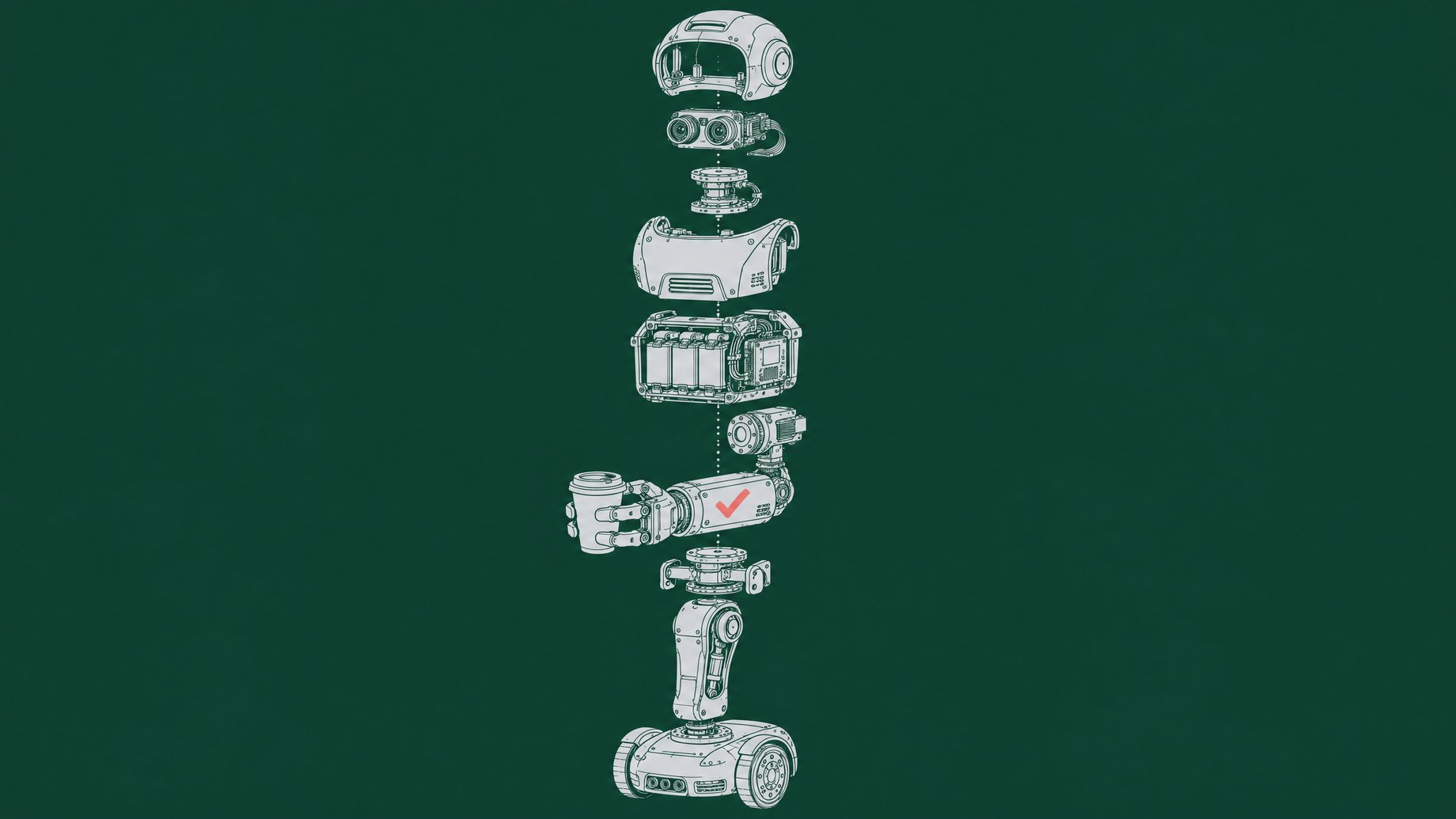
What did the six robots do in Shanghai's convenience store trial?
A Chinese company put six robots to work in a Shanghai convenience store for a 24-hour shift, and streamed it live to more than 2 million viewers. The robots helped customers 683 times and made 147 coffees. One robot noticed gaps on a shelf and decided on its own to restock it. Overnight, a cleaning robot found the trash can full, so it rolled out of the store to look for another one. The company also says the robots practiced when the store went quiet.
TL;DR
- Six robots ran a 24-hour livestreamed shift in a Shanghai convenience store, with more than 2 million people watching live.
- The reported results were 683 customer interactions and 147 coffees, plus a robot that spotted empty shelf space and chose to restock it.
- The company says the robots practice overnight: failures are saved, and the fixes that work become training data.
- Before the trial, the robots faced tests such as telling sugar-free Coke from regular Coke. Only four of the six passed.
- These are company-reported numbers from a single demonstration, so treat them as a signal of direction, not proof that robot-staffed stores are ready everywhere.
- The practical takeaway for workers and managers is to learn how your own tasks break down, because the tasks that are easiest to describe and repeat are the ones most likely to be automated first.
What exactly happened during the 24-hour shift?
The numbers tell a fairly clear story about what a retail robot does all day. A count of 683 customer interactions over 24 hours is roughly 28 per hour if you spread it evenly, though real stores are never even. The 147 coffees show that at least some of the robots handled a physical, multi-step job: taking an order, operating equipment, and handing over a finished drink.
Two moments stand out more than the totals.
The shelf. One robot saw gaps on a shelf and decided to restock it. Nobody is described as telling it to. That is the difference between a machine that follows a script ("restock shelf B at 2 p.m.") and one that looks at its surroundings, notices a problem, and picks an action.
The trash can. The cleaning robot found a full trash can in the middle of the night. It did not stop and wait. It rolled out of the store to find another one. That is a small act of problem-solving, and also a reminder that a robot leaving the building on its own is the kind of behavior store owners will want rules around.
How do robots practice overnight?
This is the part of the trial that matters most for the long run. According to the company, when the store went quiet, the robots got extra practice. Every mistake was saved. The fixes that worked became training data.
Training data is the set of examples an AI system learns from. Think of how a new employee improves: they make a mistake, someone shows them the right way, and next time they do it better. Here the "someone" can be the system itself. The robot tries a task, fails, tries again, and the successful attempt is recorded as an example of how to do it right.
A few things follow from that, based on how this kind of learning generally works:
- Mistakes become useful. A failure that is logged and corrected is worth more than a success nobody records.
- Improvement does not need working hours. A store closed to customers, or simply quiet, can still be a classroom.
- Learning can be shared. If one robot learns a fix, the same fix can in principle be copied to every robot running the same software. A human employee's lesson stays in one head.
The source describes this as the company's own claim. It does not say how much the robots improved overnight, how long a fix takes to reach every robot, or how humans review what gets saved. Those details decide whether the idea works in practice.
What tests did the robots take before the trial?
Before testing ended, the company checked whether the robots could handle messy, realistic situations. The source names three.
| Test | What it checks |
|---|---|
| Sugar-free Coke vs. regular Coke | Whether the robot can tell nearly identical products apart |
| Scrambled gum on the shelf | Whether it copes when items are not where they should be |
| An aisle blocked by a person and a box | Whether it can deal with obstacles and people in its path |
Only four of the six robots passed.
That result is easy to skip past, and it is the most honest number in the story. A third of the robots failed tests that a part-time cashier would handle without thinking. Two of the six still had work to do, and the rest of the trial does not tell us how the company handled that.
The tests are also well chosen. Sugar-free and regular Coke look almost the same, so the robot has to read labels carefully. Scrambled gum tests whether the robot assumes the world is tidy. A person and a box in an aisle tests safety and flexibility together. These are the small, irritating things that make store work harder than it looks.
What does this trial not tell us?
A livestream is a demonstration, not an audit. The source leaves several important questions open:
- Who was nearby? It does not say whether staff supervised the robots or stepped in during the shift.
- How well did the robots perform? 683 interactions is a count, not a success rate. We do not know how many were handled correctly.
- What does it cost? Nothing in the source covers price, maintenance, or how a store would pay for six robots.
- What about the busy hours? A trial can be staged for good conditions. A packed store at lunchtime, or a customer who is upset, is a different test.
- What about the two robots that failed? The source does not say what went wrong or whether they were fixed.
None of this makes the trial meaningless. It means the headline numbers should be read as "this is now possible in a public demo," not "this is now reliable."
How close are robot-staffed stores?
The source ends with a question: how many years until your corner store looks like this? It does not give a number, and nobody can honestly offer one from a single trial.
What the trial does show is that the building blocks are being tested together in a real shop: serving customers, making drinks, noticing a shelf problem, cleaning, and learning from errors overnight. Earlier retail robots tended to do one narrow job. Six robots doing different jobs in one store, in public, for a full day is a step beyond that.
The gap between a demo and a store you walk into every day is still wide. A store needs to run for months, not one shift. It needs to handle theft, spills, broken equipment, and rules that differ by city. And it has to cost less than the people it replaces, or make money in another way. Expect the first real uses to be narrow and well-controlled: a coffee station, an overnight restocking task, a cleaning route.
Is a robot's mistake really less costly than a human's?
The source makes a pointed argument: the stakes are lower for a robot that makes a mistake than for a human who could get fired. A robot that fails gets another night of practice and more training data.
There is something to this. A robot's error leads to retraining, not a career setback. But the logic cuts both ways for workers. If a mistake costs a company almost nothing, and each mistake makes the system better, then the machine's improvement curve can be steep. A human employee's mistakes are also learning opportunities, but they come with real personal risk, and lessons do not copy to a thousand coworkers.
It also leaves out who is responsible when a robot makes an error that matters, such as giving the wrong item to someone with an allergy or blocking an exit. Someone will still need to own that.
What does this mean for you?
If you work in retail or food service. The tasks shown here (answering customer questions, making drinks, restocking, cleaning) are the routine core of many shift jobs. Do not assume the whole job disappears. The jobs most exposed are the ones made of repeatable, well-defined steps. Customer situations that need judgment, patience, or an exception to the rule are harder. Notice which parts of your day are which, and move toward the second kind: handling complaints, training new people, managing suppliers, fixing what the system gets wrong.
If you manage people or run a small shop. Watch cost and reliability, not the livestream. Ask any vendor what the success rate is, who steps in when the robot fails, and what happens to the data it collects. The overnight-training idea is worth understanding because it changes how you evaluate a system: you are buying something that will be different in six months.
If you work in an office. The pattern here is not limited to stores. Any system that logs its mistakes, learns from the fixes, and runs while you are asleep will improve faster than one that does not. The same logic applies to software and AI tools you use at work. The useful habit is to write down what goes wrong and what fixed it.
What you can do this month:
- List your ten most common tasks and mark which ones follow the same steps every time.
- For the repeatable ones, ask what would make you better than a machine at them, or what you could shift toward.
- Learn how the AI tools already at your company work, so you can supervise them rather than compete with them.
- Keep a simple record of mistakes and fixes in your own work. It is the human version of what the robots did overnight.
Could you build your own mistake log?
The overnight loop in this story is simple: record each failure, record what fixed it, and reuse it. Most teams do this badly, in scattered notes or a spreadsheet nobody opens. With Remy, you can describe a small internal tool in plain English, such as an issue tracker where staff log a problem, the fix that worked, and who handled it, and get a deployed full-stack app with sign-in and a database. A shop manager or team lead could use that to turn everyday errors into a searchable record of what to do next time, without paying for another subscription.
Frequently Asked Questions
How many robots worked in the Shanghai convenience store?
Six robots worked the 24-hour shift. The source describes them as handling different jobs, including serving customers, making coffee, restocking a shelf, and cleaning. It does not list each robot's exact role.
How many customers did the robots help?
The robots helped customers 683 times and made 147 coffees during the shift. These figures come from the company running the trial, and the source does not say how many interactions were handled successfully.
Did all six robots pass the pre-launch tests?
No. Only four of the six passed. The tests included telling sugar-free Coke from regular Coke, handling scrambled gum on a shelf, and getting around an aisle blocked by a person and a box.
What is training data, and why does it matter here?
Training data is the collection of examples an AI system learns from. The company says the robots save each failure overnight, and the fixes that work become training data. That means the robots can keep improving while the store is quiet.
Will robots replace convenience store workers soon?
One trial does not answer that. It shows that robots can do several store tasks together in public, but it does not show cost, reliability over months, or how they handle a busy store. Narrow, repeatable jobs are the most likely to change first.
Useful for
How we source, write, and correct our articles. Editorial standards
Related articles

Is Tencent Hy4 Flash Good Enough for Daily Work? Tested

How Much Should You Spend on AI? Hormozi's Budget Lesson
How Did Boston Dynamics Teach Atlas to Roller Skate?