What Is the Subvocal Company and What Does It Make?
Subvocal is the company behind silent-speech glasses that turn jaw and lip movements into text. Here is what it makes and how the technology works.

What is the Subvocal company?
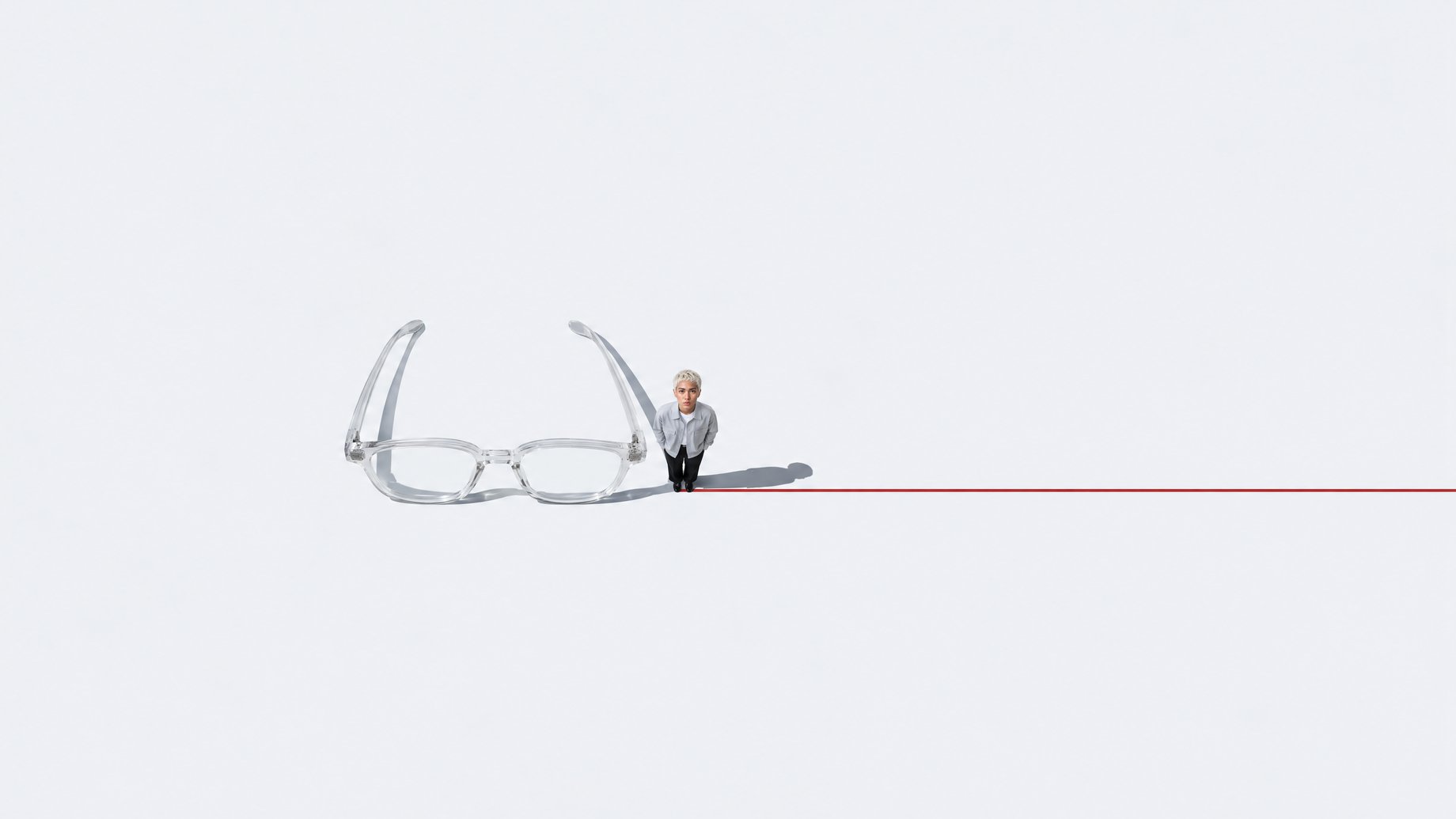
Subvocal is a company that makes silent-speech glasses. You mouth words without making a sound, the glasses pick up the movement of your jaw and lips, and software turns that movement into written text. The company's stated top speed is up to 200 words a minute. That figure is a performance claim, not an independent test result. The company is not related to the many voice tools that show up when you search its name, which turn typed text into spoken audio or record your voice.
TL;DR
- Subvocal makes wearable glasses that read jaw and lip movement and output text, so you can "write" without speaking out loud or touching a keyboard.
- The headline claim is up to 200 words a minute, which would be well above average typing speed and above normal speaking pace. Treat it as a ceiling, not what most people will get on day one.
- Silent speech is a different category from voice dictation. Dictation listens for sound. Silent speech reads muscle and mouth movement.
- Search results for "subvocal" are crowded with unrelated voice-tool lists and news blurbs, so check that you are reading about the right company.
- Before you rely on any silent-speech product, ask about accuracy, setup time, privacy, price and availability. This article could not confirm those from the material available.
- The main people who may care are those who work in noisy or shared spaces, people who want private input, and anyone who finds typing or talking hard.
What do Subvocal's glasses do?
The product is a pair of glasses. Instead of recording your voice, they watch for the small physical signals that happen when you form words. According to the description of the product, those signals are jaw and lip movements. Software then works out which words you meant and writes them as text.
In practice, the idea is that you could be in a meeting, on a train or in an open office, silently shape a sentence, and have it appear as a message or note. No one around you hears anything, and you never raise your voice.
A few details are not confirmed here, and you should not assume them:
- the price
- the ship date
- which languages are supported
- how much training the system needs for each new user
- how the sensors are built into the frame
If any of those matter to you, check the company's own site for current information.
How does silent speech technology work?
Silent speech is an established research area, not a brand-new idea. The basic chain has three steps.
- Sensing. Something on the device detects the physical side of speaking. Depending on the design, that can be muscle activity, small skin movements, or the motion of the jaw and lips.
- Decoding. A machine learning model, trained on examples of people mouthing known words, maps those signals to likely words or sounds.
- Output. The decoded words are assembled into text, often with a language model to fix likely errors and fill in gaps.
Subvocalization itself is the term for the faint "inner speech" many people produce when they read or think. Researchers have long studied whether those tiny signals can control a computer. MIT's Media Lab, for example, has published work on a wearable that reads signals from the face and jaw. Subvocal's glasses are described as reading visible jaw and lip movement rather than inner thought, which is a more practical target than reading thoughts.
Be careful with the word "reads." These devices do not read your mind. They respond to movements you make on purpose, and they only work if you mouth the words.
Is 200 words a minute actually fast?
Yes, if it holds up. Most people type at roughly 40 words a minute on a keyboard. Normal conversational speech is usually quoted at about 120 to 150 words a minute. A rate of 200 words a minute would beat both.
Two caveats matter more than the number:
- "Up to" means a maximum. Real-world speed depends on accuracy. If you spend time correcting mistakes, your effective speed drops.
- Speed is not the main selling point for most people. The appeal of silent input is usually privacy and convenience, not raw output.
When you see any speed claim for this kind of device, ask how it was measured, with how many people, and with what vocabulary. Reading a prepared sentence is far easier for a system than free, messy, everyday talk.
How is this different from voice dictation?
The two are easy to confuse because both turn "speaking" into text. The inputs are completely different.
| Voice dictation | Silent-speech glasses | |
|---|---|---|
| What it listens to | Sound from your voice | Jaw and lip movement |
| Do others hear you? | Yes | No |
| Works in loud rooms? | Often poorly | Not affected by background noise in principle |
| Privacy in public | Low | Higher |
| Needs hardware you wear? | No, a phone mic is enough | Yes |
| Maturity | Widely used | Newer, fewer products |
Dictation is free or cheap and built into most phones and computers. Silent speech asks you to buy and wear dedicated hardware, so the benefit has to be worth that trade.
Why does searching for "Subvocal" return so many unrelated results?
The name sounds like a voice product, so search engines pull in the neighboring category. Lists of text-to-speech tools, voice changers and AI voiceover services dominate, for example tutorials about ElevenLabs, which generates spoken audio from text. News feeds under "sound" or "streaming" add more noise. None of that is about silent-speech glasses.
A quick test: if the page is about making a computer talk, or recording and changing your voice, it is a different product. If it is about wearing something that turns silent mouth movement into text, you are in the right place.
Who might this change things for?
It depends on how real the product is in your workplace, but the likely groups are clear.
- People in open offices and shared spaces. Dictating a message out loud is awkward there. Silent input removes that barrier.
- Field and frontline workers. Anyone in a loud environment where voice recognition fails, or whose hands are busy.
- People with injuries or conditions that make typing painful. A hands-free option may help, though anyone in this situation should check suitability with the maker and a professional.
- Privacy-minded professionals. Lawyers, recruiters, finance staff and others who handle sensitive information and do not want to speak it aloud in public.
For most office workers, this is not something to rush out and buy. It is something to understand, so you can judge it when it appears in a vendor pitch or an IT request.
What should you ask before trusting a silent-speech product?
Use this list when evaluating Subvocal or any similar device.
- How accurate is it on my own speech patterns, and what is the error rate on real sentences?
- How long is setup? Does the system need to be trained on you before it works?
- Where does the data go? Facial movement data is personal. Find out if processing happens on the device or in the cloud, and who can see it.
- What does it cost, including any subscription?
- What happens if I stop paying or the company closes? Does the hardware still work?
- Is it approved for use at my employer? Wearable cameras and sensors often face workplace policy limits. Check with IT and security before bringing one in.
- Which languages and accents does it support?
If a company cannot answer the first three plainly, wait.
What can you do about it now?
You do not need to act on Subvocal specifically. A few small steps are enough.
- Bookmark the company's own site rather than relying on search results, and check back for pricing and availability.
- Try existing dictation first. If your real problem is typing speed or fatigue, built-in voice typing on your phone or computer costs nothing.
- Keep a short log of what you test. If your team pilots any new device, write down what you tried, what worked and what failed. A shared record makes the decision easier later.
Could you build a simple tracker for testing new devices like this?
If your team ever pilots wearables or other new tools, the usual pattern is a shared spreadsheet that goes stale. A small purpose-built app works better: a request form, a list of pilots with owner and status, a scorecard for the questions above, and a place for notes. With Remy, you describe that app in plain English and it builds and deploys it with sign-in and a database, so you own a tool that fits your process instead of renting another subscription. It is a reasonable fit for any evaluation process, silent-speech glasses included.
Frequently Asked Questions
What does the Subvocal company make?
Subvocal makes silent-speech glasses. They read jaw and lip movements as you mouth words and turn them into text. The company's stated maximum is up to 200 words a minute.
Are Subvocal glasses the same as voice dictation?
No. Voice dictation records and interprets the sound of your voice. Silent-speech glasses respond to the movement of your mouth, so nobody nearby hears anything and background noise matters less.
Can the glasses read my thoughts?
No. This type of device responds to physical movement you make on purpose. You have to mouth the words for it to produce text.
Is Subvocal related to the voice tools that appear in search results?
No. Tools like text-to-speech and voiceover generators create or alter spoken audio. Subvocal's product goes the other direction: silent mouth movement in, text out.
Where can I find the price and release details?
This article does not state a price or ship date because they could not be confirmed from the material reviewed. Check the company's official website for current information before making any decision.
How we source, write, and correct our articles. Editorial standards
Related articles

What Are Subvocal's Silent-Speech Glasses and Do They Work?
GPT-6.2 Astra vs 6.1 Sol vs Fable 5.2: Which Should You Use?

How does Inkling 2 Mini compare to Qwen3.8-27B and Gemma 4 31B?