Self-Hosted AI vs Cloud AI: What the Triple Outage Proved
ChatGPT, Claude, and Grok all went down the same morning. Here's what that reveals about self-hosted AI vs cloud AI, and how to de-risk your stack.

Is self-hosted AI safer than cloud AI after the triple outage?
Self-hosted AI runs on infrastructure you control, so a vendor's outage, price hike, or policy change can't take your operations down with it. Cloud AI is faster to start with, but it ties your business to someone else's data center, someone else's routing table, and someone else's bad day. September 3, 2026 showed exactly what that trade-off costs.
TL;DR
- A simultaneous outage of ChatGPT, Claude, and Grok exposed hidden shared infrastructure among top AI vendors, because Anthropic rents Claude compute at the same Memphis facility that took Grok offline.
- Although 89% of enterprises believe they could switch AI vendors within a month, 58% of actual migrations among those who tried failed outright or took far more effort than expected.
- Self-hosting small models can break even against commercial APIs in as little as 0.3 to 3 months.
- Relying solely on cloud AI leaves companies exposed to unexpected repricing and export controls, as the Claude Fable 5 episode showed.
- Open models like K2 Horizon offer a model you can inspect and run without fear of losing access.
- The first practical step is to stand up a local fallback model so a vendor outage doesn't stop your business.
What happened when three frontier AI companies went dark at once?
On the morning of September 3, 2026, ChatGPT and Codex went down. So did Claude. So did Grok. All within the same few hours, on the same day OpenAI launched its GPT-6 Astra model.
The causes were unrelated on paper. OpenAI blamed a routing error that started around 7:43am PT and was fixed about a half hour later. Anthropic cited an unspecified infrastructure issue that kept Claude down for roughly three hours, with service restored at 16:16 UTC. Grok's outage ran about three and a half hours, which SpaceXAI later attributed to a failure at its Memphis compute center.
Three companies, three explanations, one morning. If you were running agentic workflows across any of these providers, the post-mortem didn't matter. Your systems stopped either way.
Why didn't a multi-vendor strategy save anyone?
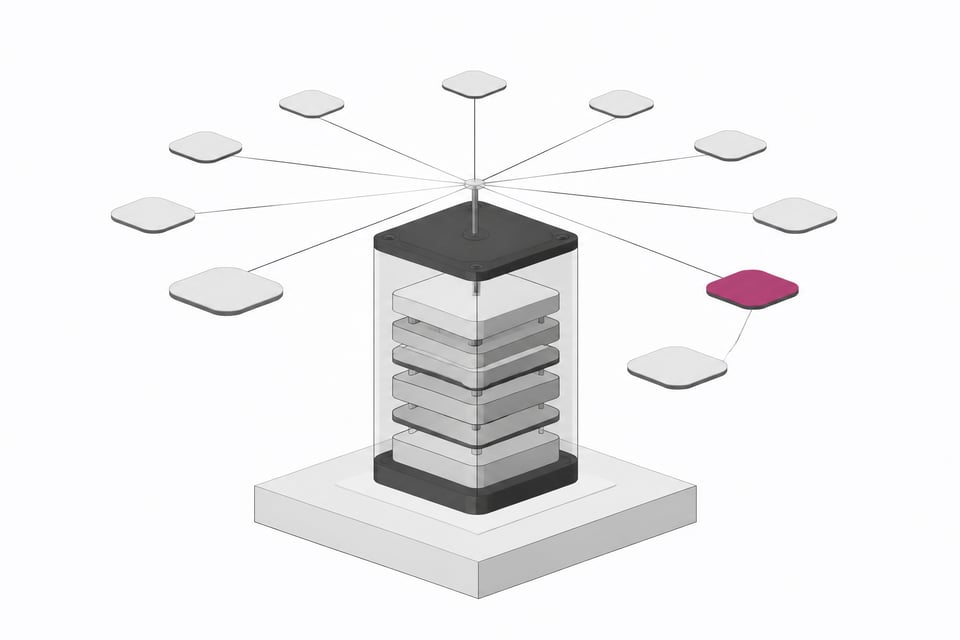
Here's the detail that should worry every IT leader who thought a multi-vendor strategy already solved this: Anthropic rents its Claude compute from Elon Musk's SpaceXAI, reportedly paying $1.25 billion a month, at the same Memphis facility that took Grok offline. Two "independent" AI vendors were quietly sharing a single point of failure.
That's the part multi-cloud dashboards don't show you. A company can pay three different AI vendors and still be exposed to the same data center, the same undersea cable, the same regional power grid. Diversifying invoices is not the same as diversifying infrastructure.
Analysts who watched the outage unfold weren't shy about the takeaway. Info-Tech's Jackson argued enterprises need to treat their AI model as "a commodity that can be hot-swapped with an alternative," including a self-hosted open-weight option they actually control.
Was the outage a fluke, or a structural risk enterprises have ignored?
The outage was dramatic. The dependency underneath it is not new, and the data on it is not flattering.
- 74% of enterprise leaders say losing their primary AI vendor would disrupt operations or leave them fully reliant on someone else's fix.
- Only 6% say they could stop using their AI vendor tomorrow with zero interruption.
- 89% believe they could switch AI vendors within a month, but among the two-thirds who actually tried, 58% say the migration failed outright or took far more effort than expected.
- 81% are at least somewhat concerned about vendor dependency, citing data migration difficulty and single-vendor overreliance as the top two risks.
Companies are responding, but slowly. 37% of enterprise CIOs now run five or more AI models in production, up from 29% a year earlier, and 35% have added open-source models specifically to spread the risk. That's progress, but it means the majority still haven't.
Outages aren't even the only failure mode. In mid-2026, the U.S. Commerce Department ordered Anthropic to pull its Claude Fable 5 model offline under export-control authority. When it came back two weeks later, it was repriced at double the rate of Opus 4.8. No warning, no negotiation, no input from customers who'd built products on top of it. That's the other half of vendor dependency: it's not just downtime, it's zero say over your own cost structure or availability.
What does self-hosted AI actually mean compared with renting intelligence?
Cloud AI means calling an API. You send a prompt to OpenAI, Anthropic, or xAI, their infrastructure runs the model, and you get an answer back. It's fast to adopt, requires no hardware, and scales without you thinking about it. The cost is that your availability, your pricing, and your compliance posture are all subject to someone else's decisions.
Self-hosted AI means running an open-weight model on infrastructure you own or lease under your own terms: your own GPU box, your own cloud VM, your own data center. You take on the setup work and the hardware cost. In exchange, you get a model that doesn't go down when a routing table breaks in San Francisco or a data center trips in Memphis, and data that never has to leave your environment. That last point matters more than most companies admit: 44% of organizations already cite data privacy and security as the top barrier to adopting LLMs via cloud APIs.
Neither approach is universally right. Cloud AI is renting convenience. Self-hosted AI is buying resilience. Most serious businesses need some of both, a case we've made in more detail in our guide to self-hosting your company's AI stack.
When does self-hosting actually pay off?
The ideological case for owning your models is easy to make. The financial case depends entirely on scale, and it's worth doing the math before you commit.
A Carnegie Mellon cost-benefit analysis of on-premise LLM deployment found the payback period varies enormously by model size:
- Small models (roughly 30B parameters). Break even against premium commercial APIs in as little as 0.3 to 3 months.
- Medium models (70B to 120B). Break even in 3.8 to 34 months.
- Large models (200B and up). Break even anywhere from 3.5 months to nearly 9 years, depending on which commercial API you're comparing against.
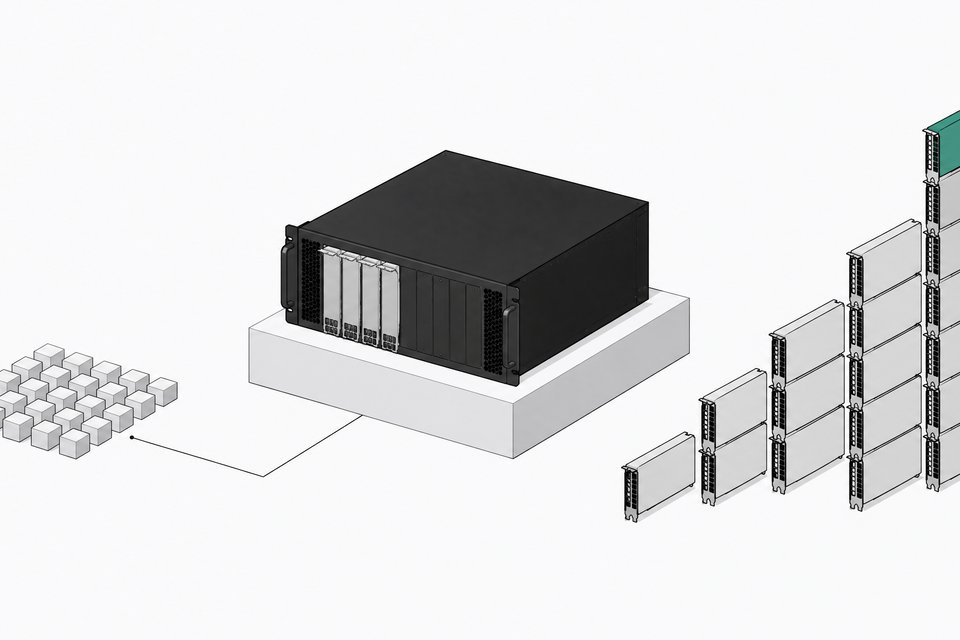
The hardware side backs this up. A small open model can run on a single consumer GPU like an RTX 5090, around $2,000. A frontier-scale 1-trillion-parameter model needs a multi-node cluster that can run past $200,000. For most mid-size businesses, owning your model stack at the small-to-medium scale isn't a moonshot. It's a purchase order. We've walked through this math in more detail in the real break-even numbers between local models and API costs, and it's worth running your own numbers before you assume either extreme is right for you.
What is K2 Horizon, and what new class of models can you actually run?
The timing of the outage produced an odd coincidence. On the same day ChatGPT, Claude, and Grok went dark, the Institute of Foundation Models released K2 Horizon: a fleet of six fully open, Apache 2.0-licensed models ranging from 0.9B to 375B parameters, covering everything from edge devices to enterprise servers.
This isn't a stripped-down "open" release with the interesting parts held back. IFM shipped the training data, training recipes, checkpoints, and training logs alongside the weights. The flagship 375B-A23B model ranks among the top open-weight models under 400B parameters on reasoning, coding, and agentic benchmarks, and posted a reward-hacking flag rate of 3.37% on TerminalBench 2.1, in line with leading frontier models. The smaller 36B-A4B and 32B variants are built for local workstations and on-prem deployment, with day-zero support in vLLM, SGLang, and Ollama.
Analysts read the licensing choice as deliberate. Moor Insights & Strategy called K2 Horizon's Apache 2.0 terms and full training transparency "another viable path besides closed proprietary models," aimed squarely at enterprises trying to avoid vendor lock-in while staying compliant. It's the concrete answer to the abstract problem the outage exposed: a model you can inspect, run, and never lose access to.
What does software ownership look like in the AI era?
None of this is new. It's the same lesson companies learned with SaaS: renting is fine until the thing you rented becomes load-bearing, and then every outage, price change, or policy shift becomes your emergency. AI models are just the newest, most consequential version of that dependency, because so much of the business now runs through them.
We've made this case before with GitHub's outages and the case for owning your dev stack, and the Anthropic-Fable-5 repricing shows the same dynamic applies to models, not just tools. Whether it's an IDE, a database, or a language model, the question is the same: what happens to your business the day this vendor has a bad morning? If the answer is "we stop," you don't have a vendor relationship. You have a dependency. Tools like goremy.ai exist for exactly this shift, giving teams a way to run and manage their own models instead of treating every AI capability as something they have to rent.
| Setup Speed | Upfront Cost | Outage Exposure | Control Over Pricing | Data Leaves Your Environment | |
|---|---|---|---|---|---|
| Cloud AI (API)fast adoption, no hardware | High | $0 | High | Low | Yes |
| RecommendedSelf-Hosted AIresilience and compliance | Low | $2k-$200k+ | Low | High | No |
What is a practical checklist for de-risking your AI stack?
You don't need to rip out your cloud APIs tomorrow. You need a plan for the day one of them goes dark.
- Inventory your AI footprint. List every product feature, internal tool, and workflow that calls an external AI vendor, and note which ones would stop your business, not just annoy it.
- Stand up a local fallback model. Pick a small open-weight model, run it on modest hardware, and confirm it can handle your most critical workflow at reduced but functional quality if the primary API disappears. Our guide to running AI workflows locally walks through the setup.
- Decouple your application code from a single vendor's API. Build an abstraction layer so swapping models doesn't mean rewriting your product. This is the difference between the 89% who believe they could switch vendors quickly and the 58% who actually tried and failed.
- Match model size to workload sensitivity. High-volume, low-complexity tasks are often where self-hosting pays back fastest. Save the frontier cloud models for the work that genuinely needs them.
- Reassess your compliance exposure. If data privacy is a top concern in your industry, self-hosting removes the question of where your data goes entirely.
The outage lasted a few hours. The lesson should last longer. Any business that can't fail over to a model it controls is one routing error, one Memphis power failure, or one government order away from a full stop it never chose.
Frequently Asked Questions
What is the difference between self-hosted AI and cloud AI?
Cloud AI means calling a vendor's API, where their infrastructure runs the model and handles scaling, but your availability and pricing depend entirely on them. Self-hosted AI means running an open-weight model on infrastructure you control, trading setup effort and hardware cost for independence from vendor outages, price changes, and policy shifts.
Is self-hosting an AI model actually cheaper than using a cloud API?
It depends on scale. Research from Carnegie Mellon found small open models can break even against commercial APIs in as little as 0.3 months, medium models in 3.8 to 34 months, and large models anywhere from 3.5 months to nearly 9 years, so the payback period varies enormously by model size and workload volume.
Does using multiple AI vendors protect against outages?
Not necessarily. On September 3, 2026, ChatGPT, Claude, and Grok all went down within the same morning. Anthropic rents Claude's compute from the same Memphis data center operator that caused Grok's outage, meaning two separate vendors shared one underlying point of failure.
What hardware do I need to self-host an AI model?
Small open-weight models, around 30 billion parameters, run on a single consumer GPU like an RTX 5090, roughly $2,000. Larger frontier-scale models with a trillion or more parameters require multi-node clusters that can cost over $200,000, so hardware needs scale sharply with model size.
What is K2 Horizon and why does it matter for self-hosted AI?
K2 Horizon is a fleet of six fully open, Apache 2.0-licensed models from the Institute of Foundation Models, ranging from 0.9B to 375B parameters, released with full training data, recipes, and checkpoints. It gives enterprises a frontier-capable, fully self-hostable alternative to closed cloud models, with day-zero support in tools like vLLM, SGLang, and Ollama.
How we source, write, and correct our articles. Editorial standards