Product Roadmap Template: Build and Update It with AI
A copy-ready product roadmap template (Now, Next, Later), a filled-in example, and AI prompts to build the first draft and update it every quarter.

For Product Management, Executives and Managers
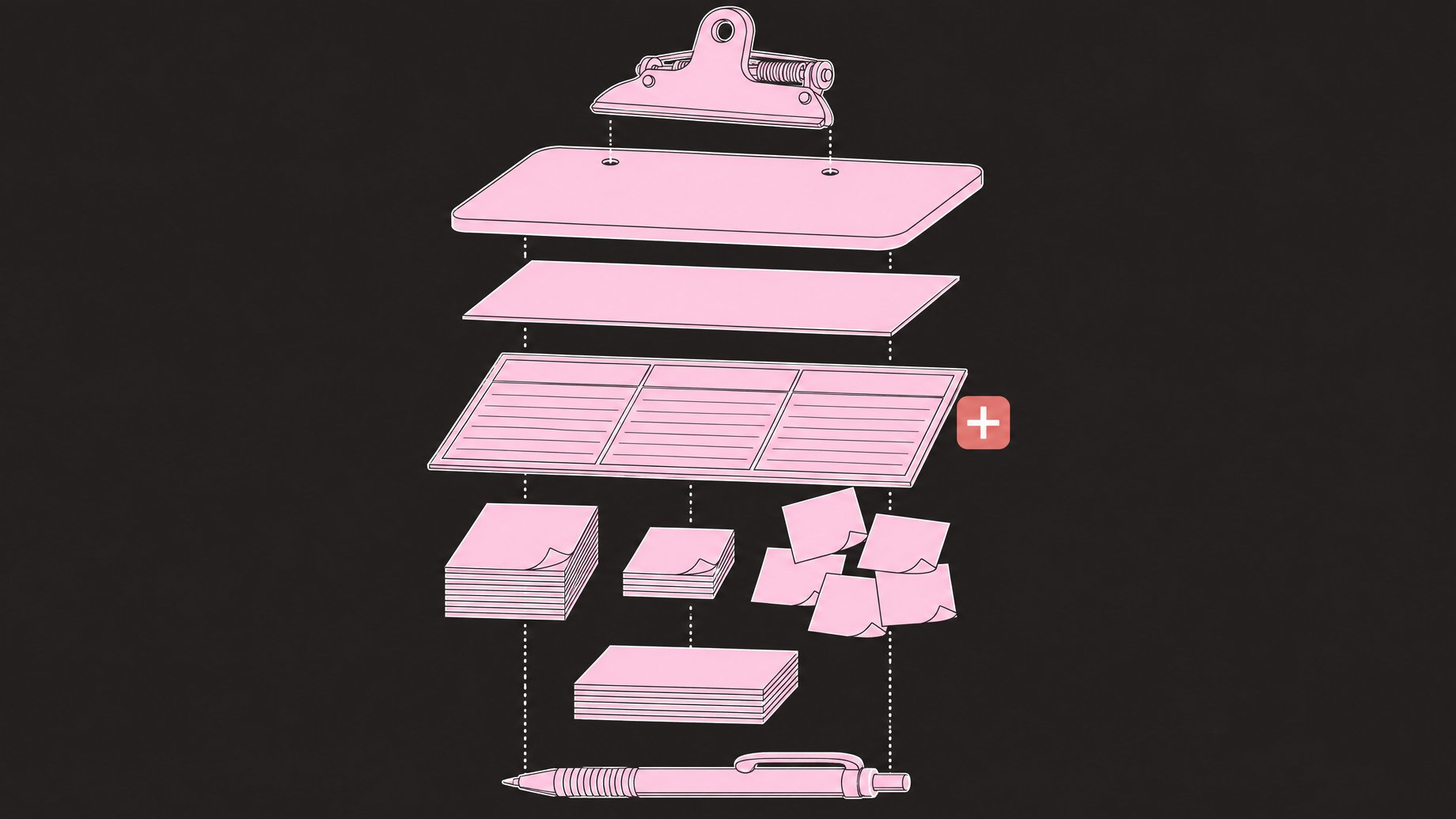
What should a product roadmap template include?
A good product roadmap template has six parts: the goal the roadmap serves, a short list of initiatives grouped by time horizon (Now, Next, Later), the problem or outcome behind each initiative, an owner, a measure of success, and a confidence level. It also has a "not doing" list and a change log. Dates are optional and should be loose. The template below includes all of it, ready to copy.
TL;DR
- Use a Now / Next / Later layout unless a hard external deadline forces a calendar timeline. It survives change better and is easier to defend in a review.
- Every line on the roadmap should name the problem or outcome, not just a feature, plus an owner and a success measure.
- Add a confidence level and a "not doing" list. These two fields prevent most roadmap arguments before they start.
- AI is good at turning messy notes into a first draft and at rewriting the same roadmap for different audiences. It is not good at knowing your capacity, your dates, or your customers.
- Update the roadmap on a fixed rhythm (monthly light touch, quarterly rebuild) and log what changed and why.
- Keep one source of truth and generate the executive one-pager from it, not the other way around.
What is the best product roadmap template to copy?
Here is the template. Paste it into a doc, a spreadsheet, or a wiki page. Fill every field. If a field feels impossible to fill, that is useful information about the plan.
PRODUCT ROADMAP
Product / area: [name]
Roadmap owner: [name]
Period covered: [e.g. Q1 to Q2, or "next 6 months"]
Last updated: [date]   Next review: [date]

1. GOAL
Company or business goal this roadmap serves: [one sentence]
Product goal for this period: [one sentence, with a measure]
Target customer or user: [who, specifically]

2. ASSUMPTIONS AND CONSTRAINTS
- Team capacity assumed: [e.g. 2 squads, 1 designer shared]
- Fixed dates we cannot move: [launch, contract, regulation, event]
- Key assumptions that, if wrong, change the plan: [list]

3. NOW (committed, in progress or starting this period)
| Initiative | Problem / outcome | Owner | Success measure | Dependencies | Confidence | Status |
|---|---|---|---|---|---|---|
| | | | | | High/Med/Low | |

4. NEXT (planned, scoped but not started)
| Initiative | Problem / outcome | Owner | Success measure | Dependencies | Confidence | What we need to learn first |
|---|---|---|---|---|---|---|
| | | | | | | |

5. LATER (directions we believe in, not committed)
| Theme | Why it matters | Evidence so far | What would move it to Next |
|---|---|---|---|
| | | | |

6. NOT DOING (and why)
- [Item]: [reason, and what would make us revisit]

7. RISKS
| Risk | Likelihood | Impact | Mitigation | Owner |
|---|---|---|---|---|
| | | | | |

8. CHANGE LOG
| Date | What changed | Why | Decided by |
|---|---|---|---|
| | | | |
Why this layout and not a calendar?
A calendar roadmap (Gantt chart or quarter-by-quarter timeline) is a promise of dates. Most teams cannot keep those promises more than a quarter out, and executives remember the dates anyway. Now / Next / Later promises order and intent instead.
| Roadmap style | Best for | Weak spot |
|---|---|---|
| Now / Next / Later | Most product teams, mixed audiences | Stakeholders who want dates will keep asking for them |
| Timeline (by quarter or month) | Hard deadlines, regulatory work, coordinated launches | Looks more certain than it is |
| Outcome-based (goals with bets under each) | Teams with mature metrics and trust from leadership | Needs good measurement to work |
| Theme-based | Early-stage products, strategy conversations | Too vague for delivery planning |
If you have fixed dates (a contract, a conference, a compliance deadline), put them in section 2 and mark the affected initiatives. That gives you the honesty of Now / Next / Later and still respects the real constraints.
What does each field do?
- Problem / outcome. "Add saved filters" is a feature. "Support agents spend too long re-finding the same ticket views" is a problem. Write the problem, and the feature can change without the roadmap collapsing.
- Success measure. One number or observable change. "Reduce average time to first response" works. "Improve experience" does not.
- Dependencies. Other teams, vendors, data, legal review. Most slips come from here.
- Confidence. High means scoped and staffed. Medium means scoped, not staffed or not validated. Low means a bet. Showing low confidence openly builds more trust than hiding it.
- What we need to learn first. In the Next table, this keeps discovery work visible so it does not get skipped.
- Not doing. The fastest way to end repeat requests. Write the reason, and what evidence would change your mind.
What does a filled-in example look like?
This example is fictional. It is an internal tool for a mid-sized company's field service team, so you can see the level of detail to aim for.
PRODUCT ROADMAP
Product / area: Field Service Scheduler (internal)
Roadmap owner: Priya Raman, Product Manager
Period covered: Next 6 months
Last updated: [date]   Next review: [date, one month out]

1. GOAL
Company goal: Cut cost per completed service visit.
Product goal: Reduce missed or rescheduled visits from 14% to 9%.
Target user: Dispatchers (primary), technicians (secondary).

2. ASSUMPTIONS AND CONSTRAINTS
- Capacity: one engineering squad, designer at 50%.
- Fixed date: new customer contract requires appointment reminders by month 4.
- Assumption: most reschedules are caused by unclear arrival windows, not technician shortage. (Unvalidated.)

3. NOW
| Initiative | Problem / outcome | Owner | Success measure | Dependencies | Confidence | Status |
| Customer appointment reminders (SMS + email) | Customers miss visits because they forget | Marcus (Eng) | No-show rate down by a third | Messaging vendor contract | High | In progress |
| Dispatcher reschedule view | Dispatchers rebuild routes by hand after each change | Priya | Median reschedule handling time under 3 minutes | None | Medium | Design |

4. NEXT
| Initiative | Problem / outcome | Owner | Success measure | Dependencies | Confidence | What we need to learn first |
| Narrower arrival windows | Wide windows drive missed visits | Priya | Missed visits down | Traffic and job duration data | Low | Do durations vary enough to predict? |
| Technician mobile checklist | Paper forms delay billing | Dana (Ops) | Days from visit to invoice | Finance sign-off | Medium | Which forms are legally required? |

5. LATER
| Theme | Why it matters | Evidence so far | What would move it to Next |
| Parts availability check at booking | Visits fail when parts are missing | 3 support escalations | Inventory data access confirmed |

6. NOT DOING
- Custom per-customer branding: low demand, high upkeep. Revisit if two enterprise customers ask in writing.

7. RISKS
| Messaging vendor delay | Medium | High | Start with email only, add SMS later | Marcus |

8. CHANGE LOG
| [date] | Moved narrower windows from Now to Next | Data pull showed job durations too inconsistent | Priya, with Ops lead |
Notice what makes it work. The fixed date appears once and explains why reminders come first. The Low confidence item sits in Next with a question attached. The "not doing" line gives a reason and a trigger for revisiting.
How do I build a product roadmap with AI?
AI is a fast way to get from scattered inputs to a structured first draft. It will not decide your strategy. Give it your raw material: meeting notes, a list of requests, customer feedback themes, the goal, and your constraints.
Before pasting anything, check your company's policy on what you can share with an AI tool. Remove customer names, personal data and confidential figures unless your company has approved the tool for that use.
The prompt to paste
You are helping a product manager draft a roadmap. Use ONLY the information I give you. If something is missing, put "[NEEDED: what's missing]" in the field instead of guessing.

Format: Now / Next / Later. For each initiative in Now and Next, give: initiative name, the problem or outcome it addresses (not just the feature), a proposed owner role, one success measure, dependencies, and a confidence level (High, Medium, Low) with a one-line reason. For Later, give theme, why it matters, evidence so far, and what would move it to Next. Add a "Not doing" list and a short risks table.

Context:
- Product and users: [paste]
- Company goal and product goal for this period: [paste]
- Team capacity: [paste]
- Fixed dates and constraints: [paste]
- Raw inputs (requests, notes, feedback, ideas): [paste]

Rules:
1. Do not invent customer evidence, metrics, dates or dependencies.
2. Do not assign specific named people unless I named them.
3. Maximum 3 initiatives in Now unless my capacity supports more. Say why you chose them.
4. After the roadmap, list the 5 questions I should answer before sharing this with leadership.
The last rule matters most. The questions AI asks back are often the real work: "What is the measure for this?" "Who owns the vendor relationship?" Answer them, then re-run the prompt with the new information.
What to check in the answer
- Invented specifics. Scan for any number, date, customer name or "research shows" that you did not provide. Delete it or replace it with a real source.
- Too many things in Now. AI tends to be agreeable and will fit everything in. Compare the Now list to your real capacity.
- Features dressed as problems. If the "problem" column just restates the feature, rewrite it.
- Weak success measures. "Improve satisfaction" is not a measure. Ask for one you already track.
- Dependencies it could not know. Legal review, security review, procurement, a freeze period. You know these. It does not.
How do I prioritize what goes in Now, Next and Later?
Pick a simple method and apply it the same way to every item. Many teams use a scoring approach such as RICE (reach, impact, confidence, effort) or a plain value-versus-effort grid. The method matters less than consistency and being open about the inputs.
A workable process:
- List every candidate initiative with its problem statement.
- Remove anything that does not serve this period's goal. Move it to "Not doing" or Later.
- Score the rest on impact against the goal and on effort. Mark your confidence in each estimate.
- Check dependencies and fixed dates. A lower-scoring item with a contract deadline may belong in Now.
- Fit the top items to real capacity. Leave room for bugs, support and unplanned work. Teams that plan to 100% of capacity slip.
- Put validated, staffed items in Now, scoped items in Next, and bets in Later.
AI can help you draft scoring criteria or pressure-test your list ("What assumptions am I making about reach for item 3?"). Do not let it produce the scores. Impact and effort estimates come from people who know the customers and the codebase.
How do I update a roadmap with AI each quarter?
Updating is where most roadmaps die. Set a rhythm: a light monthly check (statuses, confidence, change log) and a full quarterly rebuild (goals, Now / Next / Later reshuffle, not-doing review).
Gather what changed since last time: shipped items, slipped items, new customer feedback, metric results, shifts in company priorities. Then use this prompt.
Here is our current roadmap (below) and what has changed since it was last updated.

Current roadmap:
[paste]

What changed:
- Shipped: [list]
- Slipped or blocked, and why: [list]
- Metric results: [paste actual numbers]
- New requests or feedback: [paste]
- Changes in company priorities or capacity: [paste]

Tasks:
1. Propose an updated roadmap in the same format. Keep unchanged items as they are.
2. For every item you move, add, or remove, write a change log entry: what changed and why, using only the information above.
3. Flag any initiative whose success measure was missed and suggest whether to continue, change approach, or stop. Give your reasoning.
4. List anything in Next that now looks ready for Now, and anything in Now that should drop to Next.
5. Do not invent data. Mark gaps as [NEEDED].
The change log output is the part to keep. A roadmap with a history of reasoned changes is far easier to defend than one that quietly differs from last quarter.
How do I show the roadmap to executives, engineers, and customers?
One roadmap, several views. Keep the full template as the source of truth, then ask AI to produce each version from it.
| Audience | What they need | What to leave out |
|---|---|---|
| Executives | Goal, top 3 to 5 outcomes, risks, decisions needed | Task-level detail, internal ticket names |
| Engineering and design | Problems, dependencies, what to learn first, confidence | Marketing language |
| Sales and support | What is coming, in plain words, with the right level of commitment | Low-confidence items stated as promises |
| Customers (external) | Themes and direction, no dates | Anything internal, anything not yet committed |
A prompt for this:
Using the roadmap below, write a one-page summary for [audience]. Keep to [length]. Use plain language. Include only items marked [Now/Next]. Do not state dates or commitments that are not in the source. For items with Low confidence, describe them as "exploring". End with the decisions or help we need from this audience.

[paste roadmap]
For external versions, always have a person review the wording. A sentence that sounds like a promise can end up in a sales conversation or a contract discussion.
Where should I not trust AI with a roadmap?
- Dates and capacity. AI does not know your team's real velocity, vacations, or the legal review that always takes six weeks.
- Customer evidence. If you did not provide it, it cannot cite it. Models can produce confident, plausible, made-up "insights."
- Prioritization calls. It can organize the trade-offs. Someone accountable has to make them.
- Politics. A roadmap is also a set of agreements between people. AI cannot tell you which executive needs a heads-up before the meeting.
- Confidential data. Follow your company's rules before pasting anything sensitive.
What mistakes make roadmaps fail?
- Listing features instead of problems. The roadmap becomes a wish list.
- Hiding uncertainty. Everything looks High confidence until it slips, and then trust drops.
- No "not doing" list. Every request stays alive forever.
- Updating only when someone complains. Set the review date in the template and keep it.
- Multiple versions that disagree. The slide, the spreadsheet and the wiki page drift apart. Pick one source.
- No success measures. You cannot tell whether shipping the thing worked, so you cannot learn from it.
Can I build my own roadmap tracker instead of using another tool?
If your roadmap lives in a spreadsheet that nobody keeps current, you could turn the template above into a small internal app. With Remy, you describe it in plain English: initiatives with owner, status, confidence and success measure, a change log that records each edit, a read-only executive view, and sign-in so each team sees what it should. Remy builds the full-stack app, with a database and authentication included, and deploys it to a live URL. You own the code, and the spec stays readable, so changing a field later is a description, not a ticket. For a roadmap, that means the template's structure is enforced instead of just suggested.
Frequently Asked Questions
How far ahead should a product roadmap look?
Most teams plan Now in detail for the current quarter, Next in outline for the following one or two quarters, and keep Later as themes only. Detail beyond about six months is usually guesswork. If your industry has long lead times (hardware, regulated products), stretch the horizon but keep confidence levels visible.
What is the difference between a product roadmap and a backlog?
A roadmap shows direction and priorities: which problems you will tackle and roughly in what order. A backlog is the detailed list of work items (stories, bugs, tasks) the team pulls from. The roadmap should be readable by executives. The backlog should be readable by the team doing the work.
How often should I update a product roadmap?
Review it monthly for status, confidence, and the change log, and rebuild it quarterly against your goals and capacity. Update sooner if a major event changes priorities, such as a lost deal, an incident, or a shift in company strategy. Always log what changed and why.
Can AI write my whole product roadmap?
AI can produce a solid first draft from good inputs, and it is very useful for rewriting the roadmap for different audiences and drafting change log entries. It cannot know your capacity, customers, or politics. Treat its output as a draft to challenge, and verify every number, date, and claim against your own sources.
Should I share dates on a roadmap?
Share dates only where they are real commitments, such as a contract or regulatory deadline. For everything else, use Now / Next / Later and confidence levels. If someone insists on dates, give a range and state the assumptions behind it.
How we source, write, and correct our articles. Editorial standards
Related articles

Which Visual Workspace Tools Are Popular Right Now?
OKR Examples by Team (Marketing, IT and More) + AI Template

Should You Rewrite Your Codebase With AI? Octar's Lessons