What Is NVIDIA MotionBricks and What Can You Do With It?
MotionBricks is NVIDIA's real-time generative motion model for humanoid robots and game characters. What it does, how it works, and where to download it.

For Engineering and Design
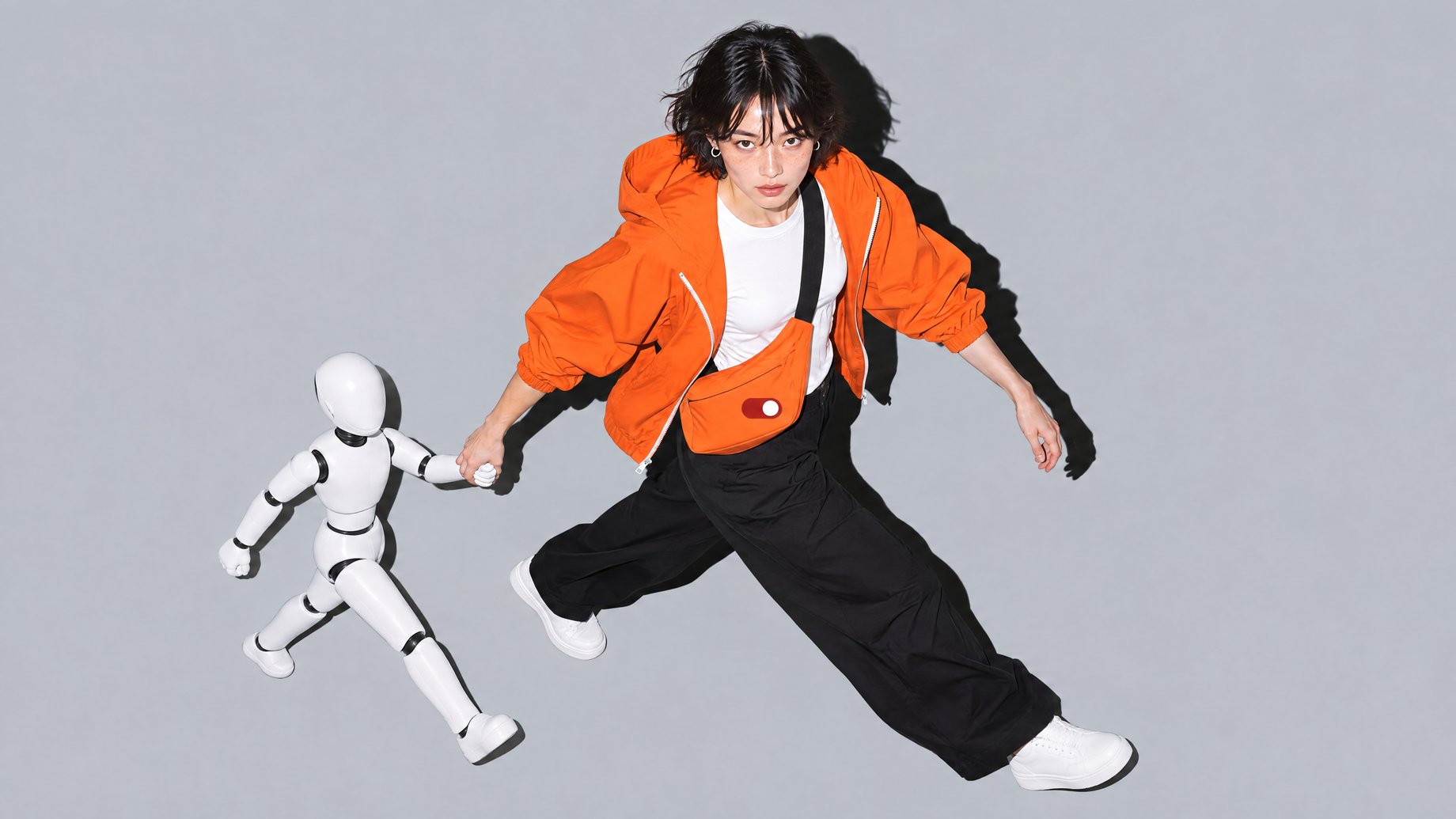
What is MotionBricks?
MotionBricks is a generative motion model from NVIDIA. It produces body movement (walking, turning, reaching, and similar actions) for humanoid robots and animated characters, and it does it fast enough to run live. NVIDIA published it on Hugging Face, the main site for sharing AI models, with pretrained weights for two targets: SOMA and the Unitree G1 humanoid robot. A project page shows it animating both characters and robots.
If you are not a robotics or game developer, the short version is this: it is a building block that lets software decide how a body should move, moment to moment, instead of a person animating every motion by hand.
TL;DR
- MotionBricks generates movement on demand, for humanoid robots and for animated characters, rather than replaying a fixed animation.
- A social media post announcing the release reported 15,000 frames per second at 2 milliseconds of latency, across more than 350,000 motion clips.
- Pretrained weights for SOMA and the Unitree G1 are on the Hugging Face Hub, so developers can try it without training from scratch.
- A model that responds in about 2 ms is fast enough to sit inside a live game loop or a robot's control cycle.
- Open questions remain, such as how it behaves on uneven ground. A reader raised exactly that under the announcement, and the post did not answer it.
- If you are not a developer, this is mostly a signal about where animation and robotics are heading, not a tool you will open on Monday.
What does "generative motion model" actually mean?
Most character movement in games and films is authored. An animator builds a walk cycle, a jump, a wave. The software plays those clips back and blends between them. This works, but it is limited to what someone made in advance, and it takes a lot of labor.
A generative motion model learns from a large library of recorded movement and then produces new motion that looks like it belongs in that library. You give it a situation ("go from here to there," "end up facing this way") and it writes the movement.
The training library in this case is reported as more than 350,000 motion clips. More clips generally means a wider range of movement the model can imitate. It also means the model's quality depends on what is in that library, which matters for the open questions below.
How does MotionBricks generate motion in real time?
The approach described for this project is in-betweening. The term comes from traditional animation: a lead animator draws the key poses, and assistants draw the frames in between. Here the model plays the assistant. Given where a body is now and where it needs to be next, it fills in the movement between.
That framing is useful for a few reasons:
- It gives you control. You, or a game, or a robot's planner, decide the targets. The model decides how to get there naturally.
- It is cheap to run continuously. Short stretches of motion are much easier to predict than a whole animation, so the model can keep working as goals change.
- It fits how robots and games already work. Both run in loops: look at the situation, choose the next move, repeat many times a second.
The "bricks" in the name suggests building up movement from smaller pieces. I would check the project page for exactly how NVIDIA defines them, since I am describing the idea in general terms and not summarizing the paper.
How fast is it, and why does that matter?
The announcement post reported 15,000 FPS and 2 ms latency. Two different ideas are packed in there.
- Latency is how long you wait for an answer. At 2 ms, the model responds in about two thousandths of a second.
- FPS (frames per second) here describes how much motion it can produce per second of computing.
For scale, a game running at 60 frames per second has about 16.7 ms to do everything for each frame: physics, graphics, game logic, and animation. A motion model that answers in 2 ms leaves room for the rest. Robot controllers also run on tight timing, so a slow model is a non-starter there.
One caution. The numbers come from a social media post summarizing the release. I did not find the hardware they were measured on in the material I reviewed. Treat them as a headline, and check the project page or the model card before you plan around them.
What is actually available to download?
According to the announcement, NVIDIA posted:
- Pretrained weights for SOMA and for the Unitree G1 on the Hugging Face Hub, at huggingface.co/nvidia/MotionBricks.
- A project page at nvlabs.github.io/motionbricks with demonstrations of characters and robots being animated.
"Weights" are the learned numbers inside a model. Having them means you can run the model yourself instead of training one, which would need the full motion library and serious computing power.
The Unitree G1 is a commercially available humanoid robot, so the robot-side weights are aimed at a real machine. SOMA appears to be the character-side target. The project page should say precisely what it covers.
The project may also include an open code repository and exports in ONNX format. ONNX is a common file format that lets a trained model run in many different programs and on many kinds of hardware, including inside a game engine or on a robot's onboard computer, without the original training software. I could not confirm the contents of the repository from the material I reviewed, so look at the Hugging Face page for the file list before you commit time to it.
Who is this for?
Robotics developers and researchers. If you work with a humanoid, a fast motion generator is a way to produce natural-looking movement without hand-coding each behavior. Pretrained Unitree G1 weights give you a starting point on a known robot.
Game and animation developers. Characters that respond to the player without a giant library of hand-built transitions are a long-standing goal. A model that answers in a couple of milliseconds is the kind of thing that can sit inside a game.
Simulation and training teams. Companies that simulate crowds, workers, or robots to test software need lots of believable movement. Generated motion is cheaper than recorded motion.
Everyone else. You will not use MotionBricks directly. But if you work in an industry that touches robots, games, film, or virtual training, this is the type of tool that will change how those products get made.
How can you try it?
If you are comfortable with Python and a command line:
- Open the Hugging Face page (huggingface.co/nvidia/MotionBricks) and read the model card and file list.
- Watch the demonstrations on the project page to see what the output looks like.
- Check the license on the model page before using it in anything commercial.
- Download the SOMA or Unitree G1 weights and follow the repository's setup instructions.
- Start with a small test: one character, a few target poses, and look at what comes out.
If you are not a developer, do step two only, then forward the project page to the engineer on your team who would care.
What are the open questions?
A reader under the announcement asked whether it holds up on uneven ground, or whether most of the 350,000 clips were recorded on a flat floor. That is the right question. The post did not answer it, and I did not find an answer in the material I reviewed.
It points at a general issue with any model trained on recorded motion: it is best at what it has seen. Real robots meet stairs, slopes, clutter, and slippery floors. Smooth animation on a screen does not prove balance on a real machine.
Other things to check before betting a project on it:
- What hardware produced the speed numbers.
- What the license allows.
- How much control you get over style and over the exact target poses.
- Whether it works with your own character skeleton or only the supported ones.
Could a small internal tool help you evaluate it?
MotionBricks is a research-grade model, not a business app, and Remy does not run it. But a team trying it out tends to end up with a messy spreadsheet of test clips, notes, and verdicts. With Remy, you could describe a small review tracker in plain English: a form to log each test, a place to attach clips, a rating and notes field, and a dashboard showing which setups passed. Remy builds it as a full-stack app with a database and sign-in, so colleagues can review together without another subscription.
Frequently Asked Questions
Is MotionBricks free to use?
The weights are posted on Hugging Face, so you can download them. Whether you can use them commercially depends on the license, which I could not confirm from the material I reviewed. Read the license on the model page before you build anything you plan to sell.
What is the difference between SOMA and Unitree G1 weights?
They are two separate sets of pretrained weights for two different targets. The Unitree G1 is a physical humanoid robot. SOMA appears to be the character-side option. Pick the one that matches what you are animating or controlling.
Do I need to be a programmer to use MotionBricks?
Yes, for now. It is released as a model and project files for developers, not as a finished app. Non-developers can still watch the demonstrations on the project page to see what it does.
Can MotionBricks run on a real robot?
NVIDIA released weights for the Unitree G1, a real humanoid, and the project page shows robots being animated. How well it performs on a physical machine in your setting, especially on uneven ground, is something you would need to test yourself.
Useful for
How we source, write, and correct our articles. Editorial standards
Related articles
How Does ReShoot 4D Change a Video's Camera Angle With AI?

How Good Is Qwen4 Max? Hands-On Tests vs Qwen 3.8
Fish Audio Live 3 Pricing: What Voice Agents Cost Per Minute