What Is EGM AI? Google's Elephant-Goldfish Model Explained
EGM AI is not an AI model. It's Google's open-source plugin where one agent designs a feature and a fresh agent reviews it before any code gets written.

For Engineering and Product Management

What is EGM AI?
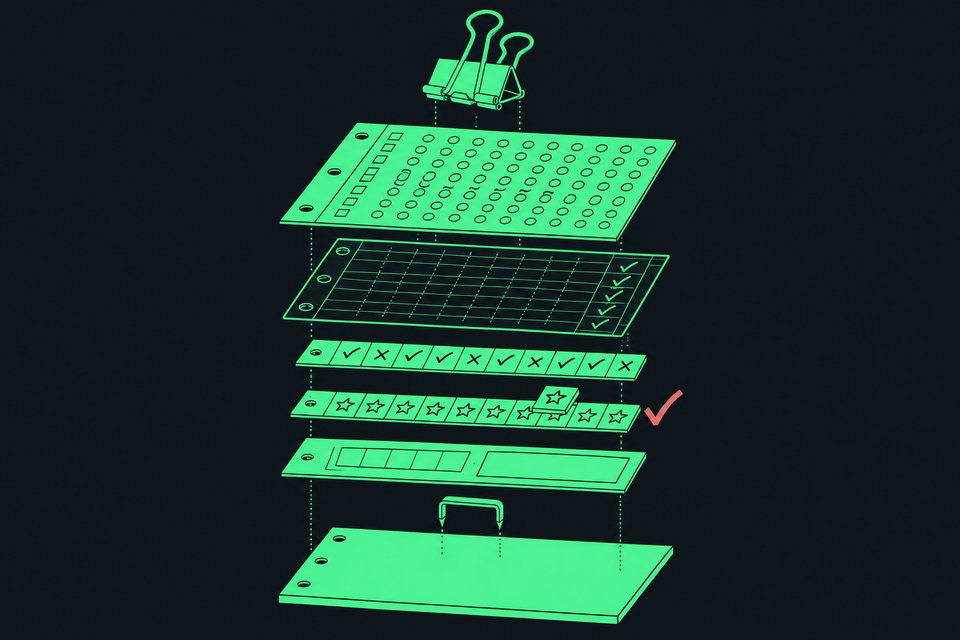
EGM stands for Elephant-Goldfish Model. Despite how people search for it, "EGM AI" is not an AI model. It is a development method, released by Google as an open-source plugin, that sits on top of the AI coding agent you already use. One agent (the "elephant") holds the full project context and writes a design document. Other agents (the "goldfish") read only that document, with no memory of the conversation behind it, and look for gaps before any code is written.
TL;DR
- EGM is a process, not a model. It adds a design-and-review workflow to a coding agent you already have, rather than being a new AI system.
- The elephant designs and the goldfish reviews. The elephant keeps long-running context and writes no code. The goldfish start fresh and see only the written design.
- The point is fewer blind spots. After a long chat, you and your agent share assumptions a new reader would not. A fresh reviewer catches what you both stopped noticing.
- It is open source and not tied to Google's tools. It is Apache 2.0 licensed, lives on GitHub, and installs into Claude Code, Codex and Google's Antigravity.
- The workflow has four stages. Brainstorm, draft, review and resolve each map to a command, and the review stage runs five separate passes through fresh sub-agents.
- It is most useful for features that take real thought. For a one-line fix, the extra steps probably cost more than they save.
Is EGM an AI model?
No. This is the most common confusion, and it comes from the name. You cannot "pick EGM" in a model dropdown the way you would pick a version of Claude or Gemini.
EGM is a set of skills and sub-agent prompts. Think of it as a playbook plus a team roster that your existing coding agent follows. The underlying intelligence still comes from whichever model your agent runs on. EGM changes how that model is used: who talks to it, in what order, and what each session is allowed to know.
Google announced the plugin on its open source blog on October 22, 2026. The announcement was written by Brian Suchy, Jim Quinn, Elise Ewing, Oliver Newth and Dave Rensin on behalf of the EGM team. The code is in the google/elephant-goldfish-model repository on GitHub.
Why does EGM exist?
AI coding tools made writing code much faster. The EGM team's argument is that speed alone has a cost. Faster code also means faster "slop," more bugs, and what they call session context collapse. In their words, without guardrails you end up "auto-scaling our mistakes rather than simply writing code faster."
The specific failure EGM targets is easy to recognize. You spend an hour with an AI agent talking through a feature. Along the way you make dozens of small decisions and assume things you never wrote down. The agent has seen all of it, so it shares your assumptions. When you ask it to review its own plan, it agrees with you, because it has the same blind spots you do.
The authors' summary is a line from co-author Dave Rensin: "Design is the new code." The idea is that when AI writes the code, the valuable human work moves earlier, into deciding clearly what should be built. The stated goal is for the AI to produce the code you wanted the first time you press Enter.
What are the elephant and the goldfish?
The names come from two well-known animal traits: elephants remember everything, and goldfish (the joke goes) remember nothing.
The elephant is a long-running AI session with deep context. It holds the architectural vision and the project's memory. No code is written in this session. It is for design, intent, and capturing small decisions. It also interviews you. The AI asks questions, and you debate the merits of your choices with it.
The goldfish are stateless sessions with zero context. They exist only to validate the specification. Because they were not part of the conversation, they share none of your blind spots. They act as objective critics, probing for gaps and edge cases.
An analogy from ordinary work: you write a project brief after weeks of meetings. It makes perfect sense to you. Then you hand it to a colleague who missed every meeting, and they ask five questions you could not answer from the page. The goldfish is that colleague, on demand.
How does the EGM workflow work, step by step?
The plugin maps the process onto four stages, each triggered by its own command in your coding agent. The exact command names are in the project's documentation, so check the repository rather than relying on a blog summary.
- Brainstorm. You work with the elephant. It interviews you about the feature, pushes back on weak choices, and records the decisions you make. No code appears.
- Draft. The elephant turns that conversation into a written design document. This document is the only thing the reviewers will ever see, so it has to stand on its own.
- Review. Fresh sub-agents receive the document and the files it references, and nothing else. This stage runs five separate review passes. The reviewer personas are explicitly told not to flatter you, so expect blunt feedback rather than polite approval.
- Resolve. You and the elephant go through the findings. Some mean the document was unclear, so you fix the writing. Some reveal a real design problem, so you change the plan. Only after this does the agent start building.
The key design choice is the handoff. Because the goldfish cannot ask the elephant what it meant, every ambiguity in the document shows up as a finding. A gap that a fresh reader trips over now is cheaper than a bug found after the code ships.
Which tools does EGM work with?
Google has its own AI coding products, including Gemini, Gemini CLI, Jules and Antigravity. Even so, the plugin ships with install support for Claude Code and Codex, and it works through Cline too, since those tools support markdown skills and sub-agents. It also installs into Antigravity.
That matters if you are not in Google's ecosystem. You do not have to switch tools to try the method. Your coding agent needs to support skills and sub-agents, and EGM supplies the rest.
The license is Apache 2.0, which is a permissive open-source license. Teams can read the prompts, adjust them, and run them internally.
When should you use EGM?
This is a judgment call, and the sources do not give a formal rule. Here is a practical way to think about it.
| Situation | EGM likely worth it? |
|---|---|
| New feature touching several parts of a system | Yes |
| Work that will take an agent a long session to build | Yes |
| A design you debated for a long time and now feel too close to | Yes |
| A change that others will need to review or maintain | Yes |
| Renaming a variable or fixing a typo | No |
| A throwaway script or quick experiment | Probably not |
The rough test: if a wrong assumption would be expensive to discover late, spend the time on a fresh-eyes review up front. If a wrong guess costs you thirty seconds to undo, skip it.
What does this mean for you?
If you write code with AI tools: Try EGM on one real feature, not a toy. Pay attention to how many of the reviewers' questions you could not have answered from the document alone. That count tells you how much context lived only in your head and the chat.
If you manage engineers: The useful idea here is not the plugin. It is the habit of writing the design down and having someone with no context challenge it before work starts. You can ask for that from your team today, with or without EGM.
If you do not code at all: The principle carries over to anything you hand to an AI. If you have been iterating with a chatbot on a report, a plan or a policy, open a new chat, paste in only the finished draft, and ask it to find the gaps. That is a goldfish review. A fresh session does not know what you meant, only what you wrote, which is exactly why it is useful.
Can you build a design review tracker without another subscription?
If your team adopts a design-first habit like this, you will quickly want somewhere to keep the design documents, the reviewer findings and whether each one was resolved. Many teams start with a shared spreadsheet. Remy is a product agent that builds a full-stack app from a plain-English description, so you could describe a small internal tracker (a page per feature, a list of findings with status and owner, a sign-off step) and get a deployed app with sign-in and a database. Remy also works from a written spec, which is the same design-first idea applied to the whole app. It is a way to own a small tool instead of adding another subscription.
Frequently Asked Questions
Is EGM AI made by Google?
Yes. The Elephant-Goldfish Model plugin was announced on the Google Open Source Blog and is hosted on GitHub under Google's organization. It is open source under the Apache 2.0 license.
Do I need to use Google's AI to run EGM?
No. The plugin has first-class install support for Claude Code and Codex, and it also works with Antigravity and, through skills and sub-agents, Cline. Your results depend on the underlying model your agent uses.
How is EGM different from asking an AI to review its own work?
In the same session, the AI has seen every earlier message and tends to share your assumptions. EGM sends the written design to fresh sub-agents that have never seen the conversation. They can only judge what is on the page, so they find what is missing from it.
Does EGM write the code?
EGM's elephant session writes no code. It produces a reviewed design. Once you have resolved the findings, your coding agent builds from that design, and the goal is that the first attempt matches what you wanted.
Is EGM worth using for small tasks?
Usually not. The method adds a design step and a review step, which pays off on features where late mistakes are costly. For small, easily reversed changes, ordinary prompting is faster.
How we source, write, and correct our articles. Editorial standards
Related articles

Coding Agent Context Rot: How to Fix It With a Handoff File
Qwen3.8-27B Pi Adapter vs Base Model: Does It Help?

Which AI Model Is Best? Why Benchmarks Disagree by Domain