What Is AI Circular Financing? Anthropic's $900B Explained
Anthropic promised about $900B in compute spending against roughly $6B in debt. See how circular financing works among AI labs, chipmakers and clouds.

For Executives, Finance and Procurement
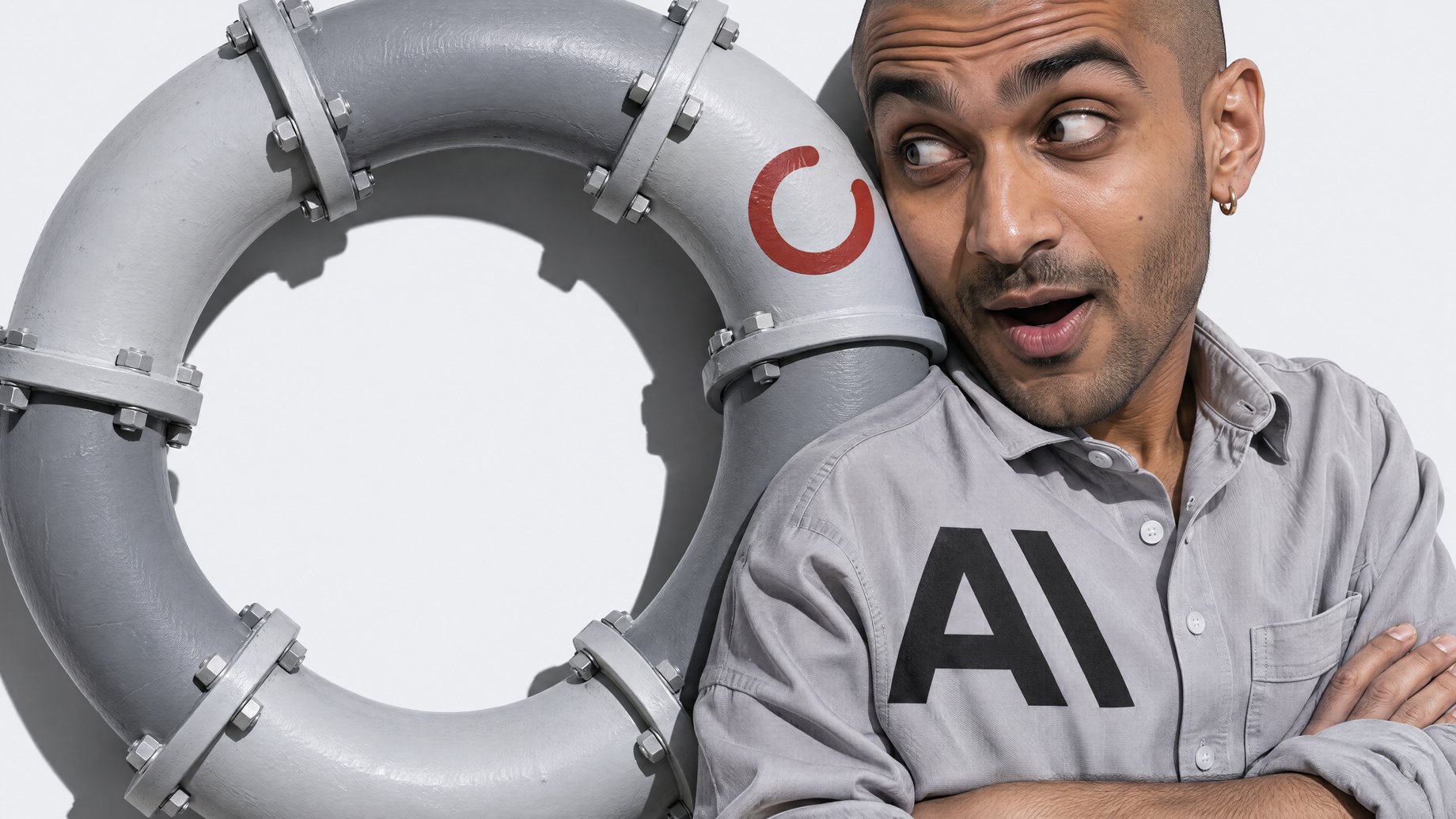
What is AI circular financing?
AI circular financing is when money flows in a loop between AI labs, chipmakers and cloud providers. A company invests in an AI lab, and the lab spends that money back on the investor's chips or cloud services. The investor books revenue, the lab gets computing power, and both sides look bigger. The loop works while demand for AI keeps growing. If demand slows, it can run in reverse, and everyone in the loop feels it at once.
Anthropic's IPO put numbers on this. The figures below come from coverage of its prospectus (the document a company must publish before selling shares to the public), as summarized in the source material for this post. This is not financial advice.
TL;DR
- Anthropic priced its IPO at $83 a share and raised roughly $100 billion, and ended day one as the seventh most valuable company in America.
- It has committed to roughly $900 billion in spending, mostly on computing power, with $70.7 billion due in the next 12 months. Its actual debt is only about $6 billion.
- Circular financing means the companies investing in Anthropic (Amazon, Google, Nvidia, Broadcom) are also its suppliers and, in some cases, its customers.
- The loop is profitable on the way up. If AI demand slows, the same loop amplifies losses, which is why Anthropic's stock fell when Nvidia's did.
- About 11,900 large customers produce 75% of revenue. Roughly 40 million smaller customers, many of them individuals paying for Claude plans, produce the rest.
- For most people, the practical move is building skill with the tools, not betting on one company's stock.
How does a $900 billion commitment sit next to $6 billion of debt?
Debt and commitments are different things. Debt is money a company has borrowed. A commitment is a promise to spend money in the future, usually under contracts like leases or multi-year purchase agreements.
According to the figures reported from the filing, Anthropic held over $130 billion in cash and investments before the IPO, and its debt was about $6 billion. That is not a company drowning in loans. The exposure is the promise: about $900 billion of spending, nearly all of it on computing power, with $70.7 billion due within a year.
A useful comparison is signing a 20-year lease on a huge building because you expect your business to grow into it. If the business grows, the lease is a bargain. If it doesn't, you still owe the rent. Anthropic is betting that demand for Claude keeps climbing fast enough to fill the space.
The IPO gave it fresh cash to work with. The source puts the new money at roughly $100 billion, and the filing says some could go toward acquisitions.
Who is in the loop?
Several companies sit on more than one side of Anthropic's business at the same time.
| Company | Relationship to Anthropic (as reported) |
|---|---|
| Amazon | Owns a big chunk of Anthropic, sells it computing power, and buys Claude |
| Same pattern: investor, compute supplier and customer | |
| Broadcom | Leases Anthropic chips and agreed to lend it up to $42 billion to help pay that rent |
| Nvidia and six other chip and cloud companies | Together bought another $26 billion of stock in the IPO |
OpenAI has a similar structure. Nvidia announced plans last year to invest up to $100 billion in OpenAI, which would then use that money to buy Nvidia chips.
None of this is hidden or illegal. These are disclosed deals, and each one makes business sense on its own. The question is what happens when a lot of them depend on the same assumption.
Why does circular financing matter for the wider economy?
Because AI spending has become a large part of US growth. The source cites a figure that in the first half of last year, spending on computer equipment and software (the stuff that fills data centers) was only about 4% of the US economy but made up about 92% of its growth.
When one kind of spending carries that much weight, the loops inside it matter. If chipmakers, cloud providers and labs are all funding each other, a slowdown at one point can travel through the rest. Investors got a small preview this week. Nvidia had fallen about 46% over seven weeks, and the source also reports that its CEO, Jensen Huang, resigned (he said he might return, though the board may not bring him back). When Nvidia dropped hard on Friday, Anthropic's stock fell with it.
Anthropic's shares opened Thursday at $111.50 and ended the day as the seventh most valuable company in America. On Friday they dipped to within about $5 of the $83 IPO price and closed near $88. Anyone who bought at Thursday's open was down about 20%.
What are the real risks?
Based on the filing details in the source, four stand out.
- Demand risk. The $900 billion only makes sense if AI usage keeps growing. The filing itself says Anthropic expects its revenue growth rate to decline over time.
- Concentration risk. About 11,900 large customers account for 75% of revenue. Losing a few big accounts would matter more than losing thousands of small ones.
- Correlation risk. Anthropic's stock now moves with Nvidia's. Suppliers, investors and customers are linked, so bad news can hit several at once.
- Supply-side pressure. The filing says demand keeps outrunning the compute Anthropic lined up in advance, so it buys short-term compute at higher prices and expects to buy more.
There is also a timing risk for shareholders. Early investors can start selling around May, which could add to the bumpiness.
Not every part of this is bad. Anthropic has a lot of cash, and its founders kept control through a special share carrying 50.1% of the votes, plus a mission-focused trust that elects most of the board. That structure makes it harder for Wall Street to force sudden changes on the product.
What might happen next, based on Anthropic's own filing?
The source ties four expectations to statements in the filing:
- Better models, tight usage limits. Compute is the constraint, so expect smarter models and a lower price per task, but not suddenly generous limits.
- More competition with its own customers. The filing says Anthropic competes with some customers and may do so increasingly. After Anthropic launched certain products, the source says CrowdStrike fell about 11% (Claude Code Security) and Figma about 7% (the day Claude Design launched).
- From chatbot to coworker. The filing describes "virtual collaborators," agents that work inside company tools, aimed at what it estimates will be over a billion knowledge workers by 2028.
- Slower growth, bumpier stock. Growth rates this fast cannot last.
On IPOs generally, the source cites University of Florida researcher Jay Ritter, who has tracked nearly every US IPO since 1980: buying at the end of day one and holding three years has, on average, trailed the market by about 20 percentage points. Large companies with real revenue have done better than that average.
What does this mean for you?
If you pay for Claude, you are part of the revenue base. The roughly 40 million customers spending under $100,000 a year make up about a quarter of revenue. Nothing about plans or models changed because of the IPO, but the filing signals that limits will stay tight while compute is scarce. Plan your work around that, not around a hope that caps loosen.
If you work in software, legal, security or design, watch which products the AI labs launch. The source shows markets reacting to single product announcements. Ask which parts of your work are most exposed to a lab building the same feature.
If you manage a budget, treat AI subscriptions as a cost that can move. Prices per task may fall, but vendors are under pressure on both sides. Know which tools your team depends on and what you would switch to.
If you are thinking about buying the stock, do not buy anything you would panic-sell after a week like this one. The source's own view is that for most people the best return is getting very good at using the tools, which is an investment in your skills rather than in one company.
Can you build a simple tracker for your own AI spending?
Yes, and it is a sensible response to a market where prices and limits are shifting. The tool is small: a list of every AI subscription and API your team uses, with owner, seats, monthly cost, renewal date and what you would use instead. Remy builds apps like this from a plain-English description, with a database and sign-in included, so you can describe the tracker, review the result and run it yourself instead of keeping it in a spreadsheet that goes stale. You pay a flat platform fee, and AI tokens are billed at cost. Remy builds web apps, not native phone apps, which is enough for an internal tracker like this.
Frequently Asked Questions
Is Anthropic in debt trouble?
Not according to the reported figures. Its debt is about $6 billion, and it held over $130 billion in cash and investments before the IPO. The exposure is its roughly $900 billion of spending commitments, with $70.7 billion due in the next 12 months.
Is circular financing illegal or a sign of a bubble?
It is not illegal, and the deals described are disclosed. Whether it signals a bubble depends on whether AI demand keeps growing. The loop raises everyone's results on the way up and amplifies losses on the way down, so it increases risk without proving a bubble.
Why did Anthropic's stock fall on day two?
The source says the whole AI trade got hit on Friday, and Nvidia fell hard. Anthropic's stock fell with it, dipping to about $5 above the $83 IPO price before closing near $88.
Will my Claude subscription change because of the IPO?
Nothing about plans or models changed this week. The filing does say demand is outrunning the compute Anthropic arranged, so expect usage limits to stay tight even as models improve.
Should I buy Anthropic stock?
That is your call, and this is not financial advice. The historical average for day-one IPO buyers has been to trail the market over three years, though large companies with real revenue have done better. Avoid putting in money you would sell in a panic.
How we source, write, and correct our articles. Editorial standards
Related articles

Genspark Media Studio: Models, Credits and Free Quota Explained

How to Review AI Coding Tool Usage Before Renewal

Is Business AI Spending Flat? What Ramp's Data Shows