Microsoft Blinked on Copilot: How to Build Your Own AI Workflow Instead
Microsoft just folded its personal Copilot bet back into the corporate product. That retreat exposes the real cost of enterprise AI assistants, and it points at a cheaper way to build the workflow yourself using two purpose-built primitives instead.

- 01Over 90% of Microsoft's commercial M365 users haven't bought Copilot, and user trust remains negative.
- 02Employees are bypassing IT to build internal AI tools, often saving six or more hours per week.
- 03Combining cheaper frontier coding models and fast decision engines creates a scalable workflow stack.
- 04Usage-based primitives offer predictable costs compared to flat-rate, $30-per-seat enterprise licenses.
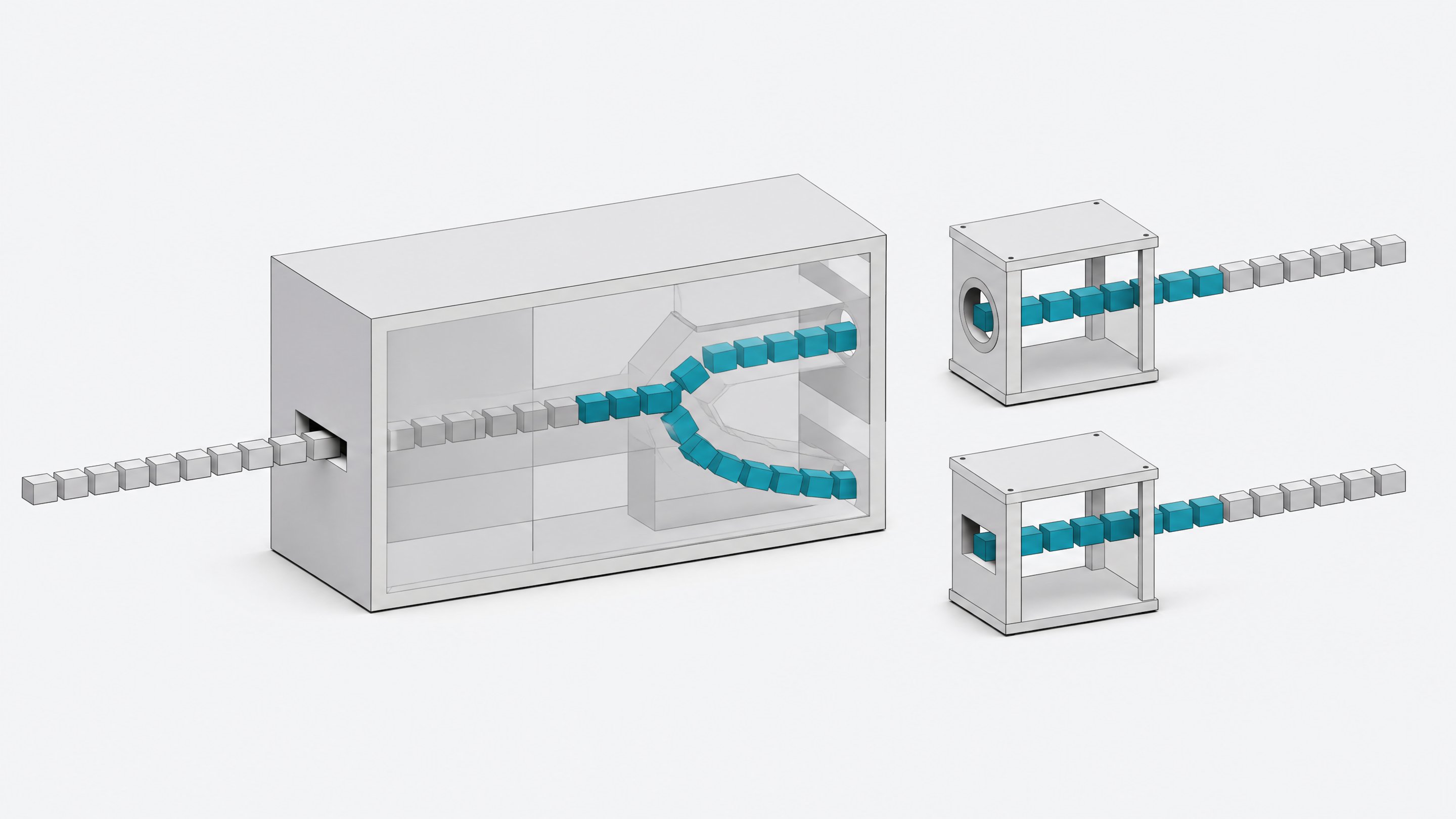
You don't need Copilot to build an AI-powered workflow inside your company. You need a model that writes the code and a decision engine that runs the routine parts cheaply. Both now exist as products you buy by the token, not by the seat.
Microsoft Just Told You What Copilot Actually Is
Microsoft is merging the consumer and workplace versions of Copilot into a single product aimed at corporate customers, ending its attempt to compete for the mass-market personal AI chatbot audience against OpenAI, Google, and now Meta.1 Bloomberg reports this was the result of a six-month internal engineering effort, not a quick pivot.1 Read plainly, that's an admission: the consumer bet didn't work, so the resources go back to the version companies already pay $30 a seat for.
The corporate version isn't exactly thriving either. Microsoft 365 Copilot grew from 15 million paid seats to more than 30 million over the past two fiscal quarters, which sounds like momentum until you compare it to the base it's selling into.2 Microsoft has roughly 464 million commercial M365 seats total, so 30 million paid Copilot seats works out to about 6.5% penetration.2 Over 90% of the people Microsoft could sell Copilot to haven't bought it.
And the ones who did buy it aren't uniformly happy. Copilot's accuracy Net Promoter Score sat at -19.8 as of January 2026, an improvement from -24.1 the previous September but still deeply negative.2 Among users who stopped using it, 44.2% said the primary reason was that they didn't trust its answers.2 That's not a rounding error. That's the core value proposition failing to land.
Why Is Copilot Adoption Stalling?
The obstacles are well documented and mostly boring, which is exactly why they matter.
- Price doubles the license. At $30 per user per month, Copilot isn't an add-on. For a lot of organizations it effectively doubles the cost of the M365 license they already pay for, and rolling it out to a 20,000-person company runs about $7.2 million a year.3
- Adoption clusters in a handful of features. An Australian government trial of paid Copilot found usage concentrated in Teams meeting summaries (72%), Word summarization and rewrite (71%), and Outlook drafting help (43%), while Excel, OneNote, Loop, and Whiteboard usage stayed in the single digits.3 Most of the license goes unused.
- Nobody's measuring the return. Retool's 2026 survey found a large share of organizations still haven't set AI productivity metrics at all, so the ROI conversation for tools like Copilot happens on vibes, not numbers.4
Put those together and you get a product that's expensive, narrow in practice, and unaccountable on paper. That's a hard sell to a CFO, and a worse one to the employee who just wants their inbox triaged.
The Employees Didn't Wait
While Microsoft spent six months re-architecting Copilot, employees were already routing around it. Retool's 2026 Build vs. Buy report surveyed 817 builders and found 35% had already replaced at least one SaaS tool with something they built themselves, and 78% expect to build more custom tools in 2026.4 Workflow automation and internal admin tools are the two SaaS categories most exposed to replacement.4 It's the same pattern we've covered in how niche SaaS is losing ground to internal builds, except now it's happening to the AI assistant category itself.
Sixty percent of those builders shipped something outside IT's oversight in the past year, mostly because it was faster than waiting, the tool didn't meet their need, or IT's process was too slow.4 About half of those who shipped production software say it saves them six or more hours a week.4 That's shadow IT, but it's shadow IT that works.
PagerDuty's 2026 Shadow AI Survey backs this up from a different angle: 66% of office professionals admit to using AI tools at work they believed weren't sanctioned by policy, and 88% have shared work information with public tools like ChatGPT, Claude, or Gemini.5 People aren't waiting for a governed rollout. They're building and pasting data into whatever gets the job done.
Copilot vs. Build Your Own: What's the Real Difference?
Copilot is a seat license: a fixed feature set, bundled into your M365 subscription, priced at $30 per user per month regardless of how much or how little you actually use it.3 You get chat, drafting, and summarization wired into Word, Outlook, and Teams. You don't get a workflow engine, and you pay the same rate whether an employee uses it ten times a day or never opens it.
A build-your-own stack flips that. Instead of one general-purpose assistant, you assemble two purpose-built pieces:
- A frontier coding model that writes and maintains the actual workflow logic: the glue code, the UI, the integrations.
- A cheap, fast decision layer that handles the repetitive classification and routing steps a chatbot is overkill for.
| Pricing model | Cost scales with usage | Latency on routine decisions | Customization and control | Governance you must own | |
|---|---|---|---|---|---|
| Microsoft 365 Copilotteams that want native Office integration with no build effort | Per seat ($30/user/mo) | No | High | Low | Low |
| Opus 5.5 + Jev stackworkflows with a high volume of repetitive, decision-shaped steps | Per token (usage-based) | Yes | Low | High | High |
You pay per token instead of per seat, and the cost scales with actual usage instead of headcount. For a company already running roughly $55.7 million in average annual SaaS spend, with 78% of IT leaders reporting surprise charges tied to AI features or consumption pricing in the past year, usage-based cost you can actually forecast is not a small selling point.6
Opus 5.5: The Build Half Got Cheaper
Anthropic's Claude Opus 5.5, released in September 2026, costs 40% less to run than Opus 5 on typical workloads.7 Input and output tokens dropped to $4 and $20 per million, a 20% cut, and cached reads fell to $0.20 per million tokens, 60% cheaper than before.7 Output also generates more than 30% faster.7
That combination matters more than it looks. It's not just that a chatbot got cheaper. The model doing your agentic coding, the one that scaffolds a workflow, wires an API, and fixes its own bugs, got cheap and fast enough that building a one-off internal tool stops being a decision that needs a business case. We've walked through this shift in our practitioner's guide to building internal tools with AI, and Opus 5.5 is another rung down the cost ladder that makes that guide's math easier every quarter.
Jev: The Decision Layer Copilot Never Had
Here's the part Copilot structurally can't do well: routine classification and routing. Copilot, like every chatbot-shaped assistant, runs on a general-purpose LLM. That's expensive and slow for the boring, repetitive decisions that make up most of a real workflow, like sorting a support ticket, scoring a lead, or flagging a command as unsafe.
TypeSafe AI, founded by former OpenAI researcher Diogo Almeida, launched Jev in September 2026 with about $40 million in seed funding to solve exactly that problem.89 Jev is what TypeSafe calls a System One Model: it returns a typed, structured decision instead of a paragraph of text, and it's priced and built for that job specifically.8 Input tokens cost $0.042 per million, metered by the billion instead of the million, and output tokens are free.8 Response time runs 70 to 500 milliseconds, against 3 to 329 seconds for frontier LLMs on comparable tasks.8
Because its outputs are constrained to predefined typed structures, TypeSafe says Jev can't produce a malformed response.8 That's a real guarantee, but a narrow one. As The Register's Thomas Claburn pointed out, structural validity isn't the same thing as being right; a typed answer can still be the wrong answer.10 Treat Jev as a fast, cheap classifier you still need to validate, not an oracle.
A Worked Example: The Workflow Copilot Would Have Billed You For
Take support ticket triage. In a Copilot-style setup, every incoming ticket runs through a chat-based model to draft a summary, guess a category, and suggest a priority, at LLM latency and LLM pricing, on every ticket, all month, for every seat with a license.
A build-your-own pipeline splits the work by shape. Opus 5.5 writes and maintains the pipeline itself: the intake form, the queueing logic, the dashboard. Jev handles the actual triage decision, the classification and routing, in under half a second per ticket, at a fraction of the cost. This is close to what happened at Vercel, which replaced a general LLM classifier with Jev for command-safety review and saw results five to 18 times faster and more accurate.9 A separate team reported Jev running 10 to 20 times cheaper than Gemini for email classification, with a small accuracy tradeoff.9 That's the split worth remembering: use the expensive, general model for the parts that need judgment and language, and the cheap, fast model for the parts that are really just a smart if-statement. If you're already orchestrating multiple models and agents for a workflow like this, the patterns in our guide to orchestrating your own office of clones apply directly, and a platform like Remy is built to let you stitch these primitives together without owning the plumbing yourself.
The Governance Catch
None of this is a free pass to let every team build whatever it wants. The same Retool data showing 60% of builders shipping outside IT oversight also shows the gap that creates: many organizations still haven't set AI productivity metrics, so there's no way to know if the shadow tool is actually working.4 PagerDuty's numbers are the sharper warning: 88% of office workers have already pasted work data into public AI tools, exactly the exposure a self-built pipeline should reduce, not repeat, if the workflow still calls out to an unvetted third-party endpoint.5 Building it yourself only pays off if someone owns the data flow, the token spend, and the failure cases the way IT would have owned a vendor contract.
Should You Build or Keep Buying?
Run the workflow through two questions before you decide:
- Is the task decision-shaped or generation-shaped? Routing, scoring, and classification are Jev-shaped: high volume, repetitive, and cheap to get wrong occasionally if you check the edge cases. Drafting, summarizing, and code are Opus-shaped: lower volume, higher tolerance for latency, and benefit from a model that reasons in language.
- Is the relationship the product? Some SaaS tools sell you a network, a compliance certification, or a support relationship you genuinely can't replicate in-house. Keep buying those. Everything else, especially the workflow automations and admin tools Retool flags as most exposed, is fair game to build.4
Microsoft's retreat from the personal Copilot bet isn't really about consumer chatbots. It's a signal that the economics of a flat-rate, general-purpose assistant don't hold up against a workforce that already knows how to build the specific thing it needs, for less, and keep it.
For repetitive, high-volume tasks like routing or classification, usually yes. Copilot charges a flat $30 per seat per month regardless of usage, while a build using Opus 5.5 for the workflow logic and Jev for the decision steps is priced per token, so cost scales with actual usage instead of headcount.378
Jev is a 'System One Model' from TypeSafe AI that returns typed, structured decisions instead of conversational text. It's built for fast, cheap classification and routing tasks, running in 70 to 500 milliseconds compared to 3 to 329 seconds for frontier LLMs, at a fraction of the token cost.8
Bloomberg reports Microsoft is folding its personal Copilot chatbot into the corporate version, effectively ceding the mass-market personal AI chatbot audience to OpenAI, Google, and Meta after a six-month internal engineering effort.1
Anything that requires generating language, code, or judgment calls with nuance, like drafting a document, writing workflow logic, or summarizing a conversation, is better suited to a general-purpose model like Opus 5.5 than to a typed decision engine.7
It can. PagerDuty found 88% of office workers have already shared work data with public AI tools, and Retool found many organizations building custom tools still haven't set AI productivity or governance metrics. Building in-house needs the same data and cost ownership a vendor contract would have had.45
- 1Microsoft Abandons Personal AI Chatbot Race With Copilot RebootBloomberg
- 2Microsoft Copilot Statistics 2026: Users, Seats & RevenueAI Business Weekly
- 34 obstacles impede paid Microsoft 365 Copilot adoptionNo Jitter (Informa TechTarget)
- 4The build vs. buy shift: how vibe coding and shadow IT have reshaped enterprise softwareRetool
- 5PagerDuty Report Finds Two-Thirds (66%) of Office Professionals Have Used Unauthorized AI Tools at WorkPagerDuty
- 62026 SaaS Management IndexZylo
- 7Claude Opus 5.5Anthropic
- 8Introducing System One Models & JevTypeSafe AI
- 9A new kind of AI model from a ChatGPT inventor is thrilling developersTechCrunch
- 10Diogo AlmeidaAI Wiki