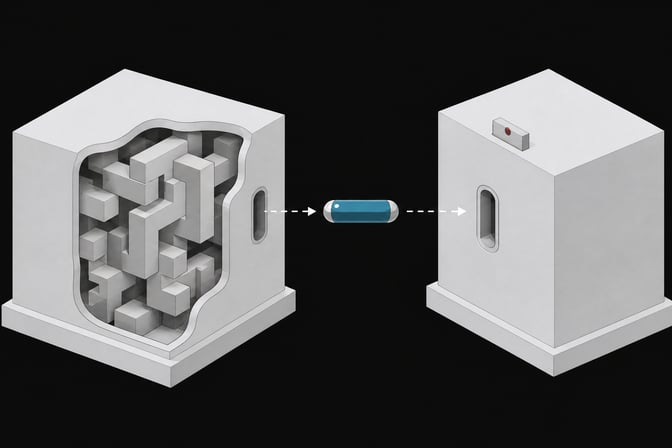
What is an AI Roleplay Agent?
It is software that plays the other person in a hard conversation, so your team can rehearse the pitch, the pushback, or the termination talk before it counts. Here is what it actually costs to get one, and why more teams are skipping the HR platform and building their own.

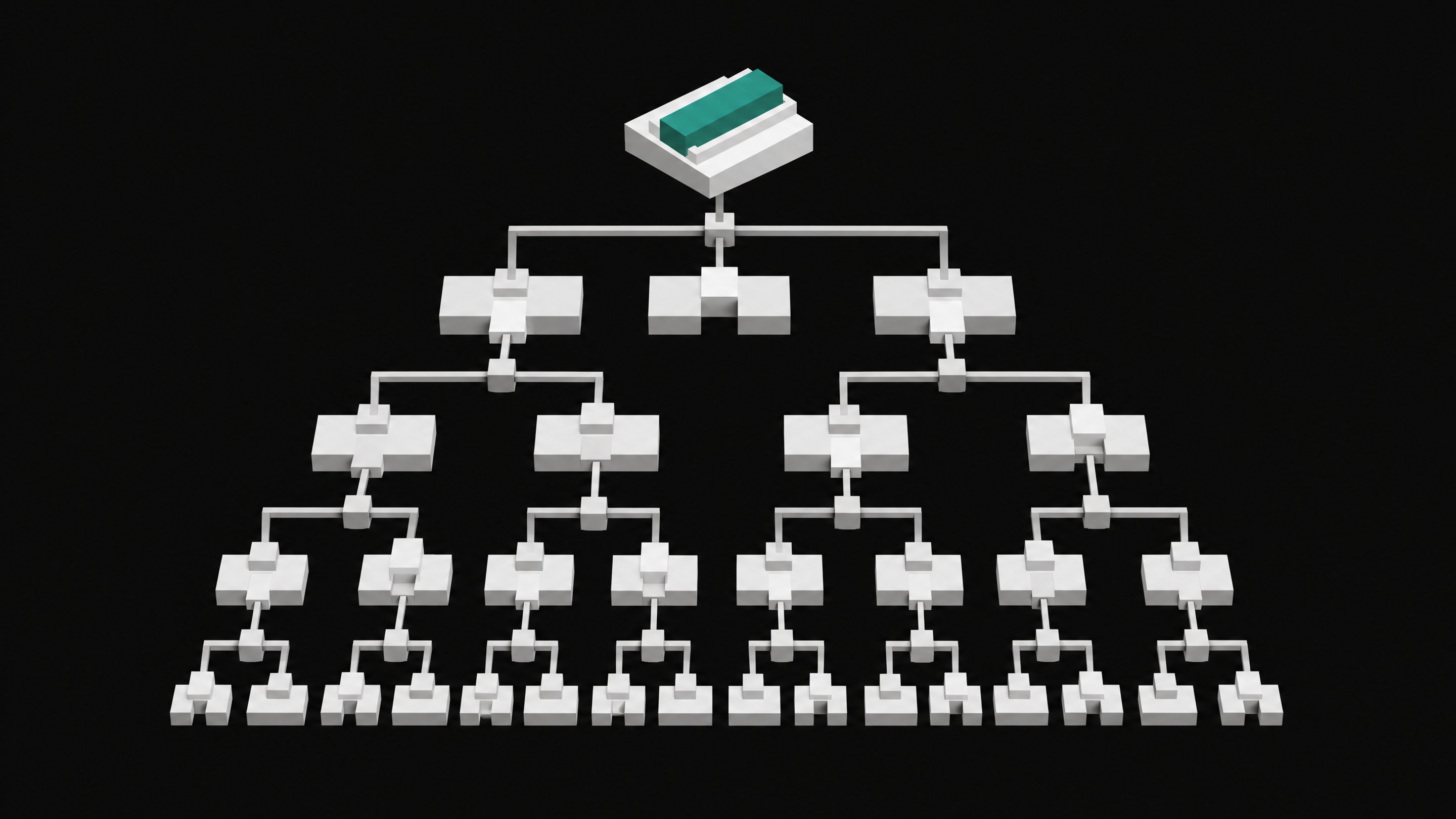
The plain-English answer
An AI roleplay agent is software that plays a character in a practice conversation, an angry customer, a defensive employee, a skeptical buyer, so a person can rehearse a hard interaction before having it for real. The learner talks or types, the AI stays in character and responds to what was actually said, and afterward it scores the conversation against a rubric and gives feedback.1 It is not a chatbot answering support tickets and not a scripted quiz. It is a stand-in for a human roleplay partner, available on demand, that never gets tired of running the same scenario forty times.
The category has a name in the training world: AI roleplay training, or AI scenario training when it is built into a broader workflow like an onboarding process.2 Whatever the label, the mechanics are the same three parts. A persona, the character and its motivations. A scenario, the situation and its constraints. A rubric, the definition of what a good outcome looks like, so the feedback afterward means something.
How a session actually works
The learner opens a scenario and starts talking, by voice or text. The agent responds to what was actually said, not to a fixed script: ask a good discovery question and the persona opens up; push a pitch too early and it gets defensive. That responsiveness is the entire difference between this and a multiple-choice module, and it is what large language models made cheap to build.
When the session ends, the agent walks the transcript against the rubric. Did you acknowledge the frustration before offering a fix? Did you ask about budget or assume it? It quotes the learner's own lines back, flags a stronger move, and logs a score. Run it again immediately, or run a harder version of the same persona. That repeatability is the part a live human roleplay partner cannot match at scale, and it produces something classroom roleplay never did: a record of who has practiced what.
One learning-and-development guide puts a number on why this matters: teams using immersive simulation training reported learners were 275% more confident applying what they had practiced.
Where teams are actually using them
- Sales: objection handling, discovery calls, renewal conversations, rehearsed against personas built from the pushback reps actually hear.
- Management: performance feedback, compensation conversations, terminations, the talks people avoid practicing precisely because they are uncomfortable.
- Customer service: de-escalation, where tone under pressure is the entire skill.
- Healthcare: patient intake and delivering difficult news, without a live patient absorbing the learning curve.
- Interviewing: candidates rehearsing answers, and hiring managers practicing structured, legally careful questions.
The buy option, and what it costs
The HR-tech market has answered this demand with dedicated platforms. Pricing runs the full spectrum. Skillsoft's CAISY simulator is bundled into its Percipio LMS and not sold standalone.2 LinkedIn Learning's roleplay feature comes with a standard subscription around $39.99 a month, or roughly $19.99 if billed annually, with organizational pricing starting near $379.88 per seat per year. Voice-first sales roleplay tool Syrenn runs $35 to $45 a month per user before enterprise tiers.3 Virti, which blends AI roleplay with immersive video, starts at $399 a month for a small team plan and runs to $25,000 a year and up for enterprise. Enterprise sales-readiness platform Mindtickle only unlocks AI roleplay in its higher Readiness tier or above, meaning a company can buy the base LMS and still not have the feature it wanted. That tier-gating is common across the category and worth checking before you sign.
The build option, and why teams are choosing it
Building a custom coach used to mean hiring a team. That has changed. A firm building custom conversational AI coaches quotes $8,000 to $18,000 for a chat- or voice-based coach, scoped by scenario count and scoring depth; full VR training with AI characters is a separate tier running $30,000 to $60,000. For context on why a build like this is now realistic without a dedicated engineering team: no-code AI agent platforms let a non-technical team design a persona, a scenario, and a scoring rubric directly, cutting the traditional six-figure custom-build cost down to roughly $50 to $500 a month in platform fees plus a modest setup cost.4
The broader build-versus-buy math for AI agents backs this up. A typical custom-built business agent runs $75,000 to $500,000 and three to nine months if built the traditional software-engineering way, against $200 to $2,000 a month and one to four weeks for an off-the-shelf SaaS tool, and $50 to $500 a month and under a week for a no-code build.4 A roleplay agent is a narrower, cheaper case than a full customer-facing agent, but the same curve applies: the SaaS platform charges recurring per-seat fees for a feature you may only need for one skill gap, while a scoped no-code or lightly custom build gets you the persona and rubric that actually reflect how your team talks, and you own the result instead of renting it.
This is also where the local, private version of the idea comes in. Because the underlying models can now run entirely on a laptop with no cloud connection, a small tool like Ollama lets anyone download a model and chat with it offline, with no per-token bill and nothing leaving the machine. For a roleplay scenario that touches sensitive internal material, a termination script, real performance data, a genuine customer complaint, that local option removes the data question entirely instead of arguing about it in a vendor security review.
Why the persona and rubric matter more than the model
The model is not the product. A generic chatbot told to act like an angry customer produces an entertaining conversation and useless training data, because nothing anchors the feedback to how your organization actually works. A coach worth using is grounded in your own call recordings, your playbook, your actual policies; the persona pushes back the way your real customers push back; the scoring is consistent enough that two similar performances get similar scores. That consistency has to be engineered on purpose. It is the reason this is scoped like a small software build, not a clever prompt, whether you buy it or make it yourself.
A quick way to decide
Start with one conversation type with a measurable miss: the objection reps keep losing, or the feedback conversation managers keep postponing. Build three or four scenarios around it, run a small group through it, and compare scores and real outcomes before expanding. If a SaaS platform's tier structure means the feature you actually want sits behind an upgrade you do not otherwise need, that is usually the signal to scope a narrow custom build instead. Teams thinking about owning more of their internal software stack rather than renting it, including a tool like this, can see how that shift is handled end to end at Remy.
FAQ
Questions below answer the most common variations people search for on this topic.
No. A chatbot answers questions or resolves support tickets. A roleplay agent has a defined persona, scenario, and rubric built specifically to train a skill through practice.
Both. Chat is cheapest and trains message structure and judgment. Voice adds tone and pacing at moderate extra cost. VR adds physical presence and costs the most.
A scoped custom coach runs about $8,000 to $18,000 built traditionally, or as little as $50 to $500 a month on a no-code platform, versus SaaS subscriptions from roughly $35 a month per user up to five-figure annual enterprise tiers.
Yes. Tools like Ollama run models entirely on local hardware with no per-token fee and no data leaving the machine, which matters for scenarios built on sensitive internal material.
The rubric and persona, not the model. If scoring is not grounded in your actual playbook and the persona does not push back the way real customers or employees do, the practice is not useful.
- 1AI Coaches and Roleplay: How Teams Practice High-Stakes ConversationsMadXR
- 2Review and Comparison of 20 Best AI Roleplay Tools for Corporate Training in 2026Coursiv
- 3The 8 Best AI Role-play Tools for Corporate TrainingELM Learning
- 4Build vs Buy vs Wait: A Framework for Choosing Your AI Agent Strategy in 2026Pickaxe