The Accidental Engineers: When ChatGPT Memory Becomes Internal Software
Employees built a shadow layer of business logic into ChatGPT's memory and custom instructions. Here's how to govern it before it walks out the door.

How should companies manage employee ChatGPT prompts as internal tools?
Managing employee ChatGPT prompts as internal tools means treating custom instructions, saved memories, and custom GPTs the way you'd treat any other business software: inventory it, assign an owner, version it, and give it a path from personal experiment to supported team asset. Most companies aren't doing this yet. That's the problem.
TL;DR
- Employees are turning ChatGPT prompts, memories, and custom instructions into undocumented internal software that has inputs, outputs, and business logic.
- Gartner predicts that by 2027, 75% of employees will acquire, modify, or create technology outside of IT's visibility.
- AI-era shadow IT is about building rather than bringing, so the employee becomes the vendor, the developer, and the sole maintainer of their own tools.
- When an employee leaves and their account is deactivated, their personal AI workflows and custom instructions vanish with them.
- Employee-built tools carry security, versioning, and invisible business logic risks that a standard security audit won't catch.
- Companies should inventory custom GPTs and move high-value prompts into team-owned, documented assets with a named owner and a review cycle.
How did a prompt become an app?
A content strategist spends three months teaching ChatGPT her brand voice. Style rules, banned phrases, approval workflows, client-specific quirks, all fed in and saved to memory. Her custom instructions tell the model exactly how to draft a brief, what questions to ask first, which format to output in.
Six months in, that configuration is doing real work. It's making decisions. It's encoding rules that used to live in a style guide or a manager's head. It has inputs, outputs, and business logic. It is, functionally, an application. Nobody called it that. Nobody logged it anywhere. It lives inside her personal account, and if she leaves, it leaves with her.
What Counts as Internal Software Now?
The old definition of internal software was narrow: something IT approved, deployed, and could point to in an asset register. Custom instructions and memory break that definition without breaking a single rule, because nobody wrote a rule for this yet.
These features do the same job a small internal tool does:
- Configuration. Persistent preferences and defaults applied automatically to every session.
- Business rules. If-this-then-that logic for how a task should be handled, written in plain English instead of code.
- Reusable workflows. A saved sequence of steps that turns a raw request into a finished output, repeatable on demand.
A custom GPT or a well-tuned memory profile does what a lightweight internal tool used to do, minus the deployment pipeline, the code review, and the ownership.
How Big Is the Accidental Estate?
This isn't a fringe habit. It's the default mode of AI adoption inside most companies.
Gartner predicts that by 2027, 75% of employees will acquire, modify, or create technology outside of IT's visibility, up from 41% in 2022. A 2023 Salesforce survey of more than 14,000 workers found 55% of generative AI adopters use unapproved tools at work, and nearly 70% never received training on safe or ethical AI use.
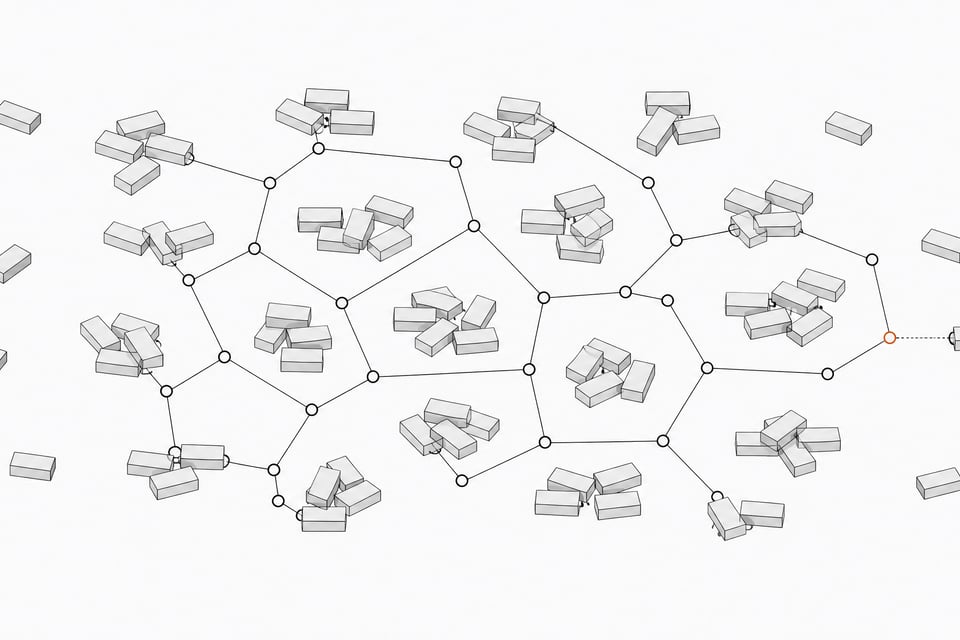
The scale shows up fast once employees get access. BBVA's staff built nearly 3,000 custom GPTs in five months on ChatGPT Enterprise. One company saw employees build 50 custom GPTs in the first month of adoption enthusiasm. By month three, only five were still in use. That's not a governance footnote. That's a graveyard of undocumented tools, most of them abandoned, none of them tracked.
Why is the new shadow IT about building, not bringing?
Cloud-era shadow IT looked like an employee signing up for a SaaS tool the finance team never approved. It was still someone else's software, just unsanctioned. AI-era shadow IT is a different animal. Employees aren't just bringing in outside software anymore. They're building it themselves, one prompt at a time.
As one governance analysis puts it, cloud shadow IT was "bring your own application." AI shadow IT is "build your own application, build your own agent, build your own skill." The employee is now the vendor, the developer, and the sole maintainer, usually without realizing any of those roles apply to them.
That shift matters because it changes who's accountable when something breaks. A rogue SaaS subscription gets caught in an expense report. A rogue prompt embedded in someone's memory gets caught nowhere.
What Happens When the Prompt Walks Out the Door?
Software engineers talk about "bus factor," the number of people who'd need to disappear before a system falls apart. For a lot of accidental internal tools right now, the bus factor is one.
ChatGPT and Claude conversation histories, saved memories, and Projects are tied to a personal login. When that employee's account is deactivated at offboarding, the accumulated prompt engineering and workflow knowledge is typically gone. Nobody exported it. Nobody documented it. It just vanishes.
The cost of that kind of knowledge loss is already measurable, even outside AI tools specifically. Panopto research found new employees spend an average of 209 hours a year recreating knowledge that already existed somewhere in the organization. APQC research puts the annual cost of duplicated knowledge work at $5 million for a 1,000-employee enterprise. Add a layer of AI-encoded business logic with zero backup, and that number only grows.
What are the hidden risks of security, compliance, and technical debt?
The risk isn't just knowledge loss. It's quality and exposure.
- Security debt in AI-assisted builds. A 2025 Veracode report found 45% of AI-generated code samples failed security tests and introduced OWASP Top 10 vulnerabilities, and newer models didn't improve on that rate. Employees who ask a model to also write scripts or automations around their custom GPT inherit that same risk profile.
- No versioning or rollback. Custom GPTs and similar employee-built tools have no built-in change-tracking or rollback in ChatGPT Enterprise's admin console. A broken tool can't be reverted. An orphaned one just sits there after its creator leaves.
- Invisible business logic. Rules that used to live in a documented process now live in a prompt only one person has ever read, let alone reviewed.
None of this shows up in a security audit that's still looking for unauthorized SaaS logins. The exposure sits inside an approved tool, encoded by an employee who thought they were just getting better answers.
For more on the parallel risk of AI-written code itself, see Securing the Code Your AI Wrote.
What framework helps manage employee ChatGPT prompts as internal tools?
Treat this the way you'd treat any shadow software problem: find it, classify it, and give the good ones a path to becoming owned assets.
| Ownership | Version Control | Risk on Employee Exit | Visibility to IT/Security | Maintenance Burden | |
|---|---|---|---|---|---|
| Personal ChatGPT memory/custom instructionsquick individual productivity | Individual account | No | High | Low | Low |
| Custom GPT in ChatGPT Enterpriseteam-shared reusable workflows | Creator, informally shared | No | High | Medium | Medium |
| RecommendedCompany-owned prompt platform (e.g. Remy)load-bearing, business-critical logic | Company | Yes | Low | High | Medium |
- Build a registry. Inventory every custom GPT, saved memory profile, and reusable prompt workflow currently in active use across teams. You can't govern what you haven't found.
- Apply risk tiers. Sort each one from personal experiment to critical regulated capability, based on what data it touches and what decisions it drives.
- Set a promotion path. Give high-value prompts a route from someone's personal account to a team-owned, documented, centrally maintained tool, with a named owner and a review cycle.
- Require an offboarding handoff. Before any account is deactivated, export and review the memory, instructions, and custom GPTs tied to it. Treat this like returning a company laptop.
- Kill the ghost towns on a schedule. Given how fast unused GPTs pile up, run a quarterly audit and retire anything with no active users. That's cheaper than letting orphaned logic linger indefinitely.
This is the same discipline companies already apply to the broader shadow AI tool stack. See The Shadow AI Tech Stack for how this plays out beyond ChatGPT specifically.
Why should companies own their prompt logic or lose it?
Strip away the AI framing and this is a familiar story. A piece of business logic gets built inside a rented tool, tied to one person's account, with no documentation and no company access. That's the same risk profile as renting SaaS you don't control, just faster to create and easier to overlook.
The fix is the same too. Decide which prompts and memory profiles are actually load-bearing for the business, then move them out of personal accounts and into something the company owns: version-controlled, centrally stored, transferable between employees without any loss of institutional knowledge. Some teams are doing this by building their own lightweight internal layer on top of the model itself rather than depending entirely on a vendor's memory feature. Platforms like Remy exist for exactly this gap, turning ad hoc prompt logic into something the company can actually see, edit, and keep.
Employees didn't set out to become engineers. They just wanted better answers, faster. But the logic they built along the way is real, and it's running parts of the business whether anyone signed off on it or not. The choice left is simple: own it, or watch it walk out the door with whoever built it.
Frequently Asked Questions
What does it mean to manage employee ChatGPT prompts as internal tools?
It means treating custom instructions, saved memory, and custom GPTs like any other piece of internal software: inventoried, assigned an owner, reviewed for risk, and given a documented path from personal experiment to a company-owned asset.
Why is this different from traditional shadow IT?
Traditional shadow IT meant employees brought in unapproved outside software. AI-era shadow IT means employees are building the logic themselves inside a chatbot's memory and instructions, so there's no vendor contract to catch, just an undocumented tool tied to one person's account.
What happens to a prompt or custom GPT when an employee leaves?
In most setups it's tied to that person's personal login and is typically lost or inaccessible once the account is deactivated, along with whatever workflow logic they built into it.
Are custom GPTs and prompt-based tools actually risky, or just messy?
Both. They carry real security debt similar to other AI-assisted builds, they lack versioning or rollback, and they often encode business rules nobody outside the creator has reviewed.
What's a practical first step for a company that wants to get ahead of this?
Start with a registry: find out which custom GPTs, memory profiles, and reusable prompts are actually in active use across teams, then sort them by risk before deciding what to formalize and what to retire.
How we source, write, and correct our articles. Editorial standards