Claude Opus 5.5 vs. GPT-6 Sol for Coding: Which Builds Internal Apps Better?
Two flagship models launched 90 minutes apart, each benchmarked against the other's predecessor instead of each other. Here's what the numbers actually say about which one you'd want running an unattended build-test-deploy job.

- 01Opus 5.5 excels at long, unsupervised full-stack builds like large migrations and codebase audits.
- 02GPT-6 Sol targets high-volume, cost-capped workflow automation at exactly half the price of Opus 5.5.
- 03Neither vendor tested against the other's newest model, relying instead on prior generations.
- 04Benchmark wins don't equal working apps; 44% of builders still thoroughly test AI-generated code.
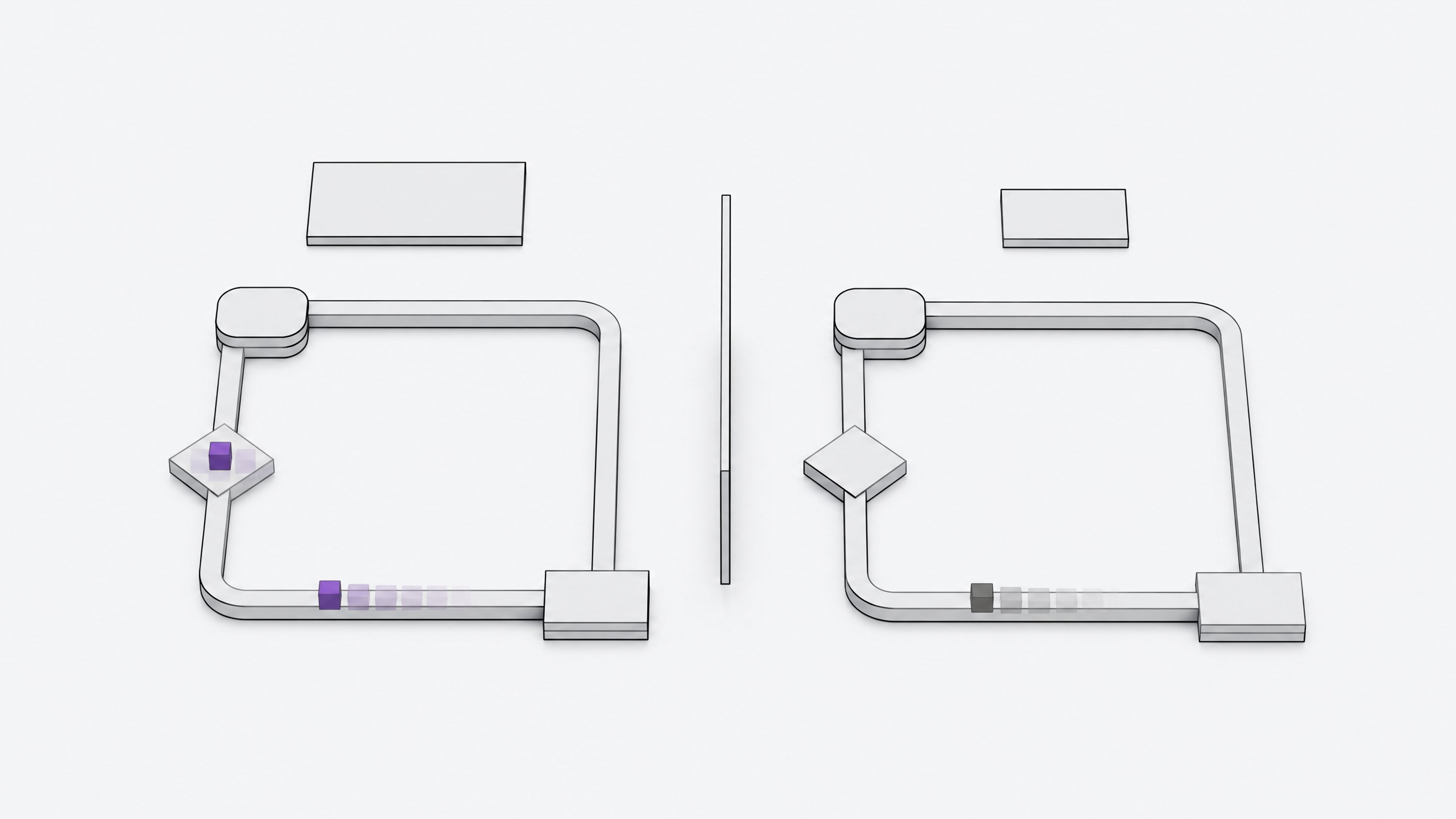
Claude Opus 5.5 and GPT-6 Sol aren't built for the same coding job. Opus 5.5 handles long, unattended, full-stack builds that need to self-verify. GPT-6 Sol handles high-volume, cost-capped agentic tasks like workflow automation. Neither vendor has published a same-harness comparison against the other's newest model, so the real answer depends on what you're building, not which benchmark chart you trust.
The same-day launch nobody was ready to compare
Anthropic released Claude Opus 5.5 on September 22, 2026. About 90 minutes later, OpenAI shipped GPT-6 Sol and its smaller sibling, GPT-6 Luna.12 Two labs racing the same quarter, not colluding on timing, but it left both companies' launch materials pointing at stale targets. Anthropic's benchmark table compares Opus 5.5 to the older GPT-5.6 Sol and to GPT-6 Astra, not to the brand-new Sol.3 OpenAI's launch post compares GPT-6 Sol to Claude Opus 5, the model Opus 5.5 replaced, not Opus 5.5 itself.4 Independent reviewers have flagged the gap directly: there's no clean public same-harness comparison between GPT-6 Sol and Claude Opus 5.5 across the major agentic benchmarks.5 Every number in this piece carries that asterisk.
What does building internal apps actually demand from a model?
Benchmark charts reward single-turn cleverness. Internal tooling rewards something else: a model that runs for hours without supervision, tests its own output, survives a migration across a real codebase, and doesn't burn the budget doing it. That's the skill set Retool's builder survey shows teams are actually exercising: 35% of respondents have already replaced a SaaS tool with something they built themselves, and 78% plan to build more in 2026.6 If you're one of those teams, the question isn't which model wins a leaderboard. It's which one finishes the job cheaper and needs less babysitting to get there.
Price and positioning aren't symmetrical
Claude Opus 5.5 costs $4 per million input tokens and $20 per million output tokens, a 20% cut from Opus 5's $5/$25, with cached reads down 60% to $0.20 per million.37 GPT-6 Sol costs $2 per million input and $10 per million output, half of GPT-5.6 Sol's promotional pricing, with cached reads getting a 90% discount on both models.47
That's not two vendors converging on a price point. It's OpenAI positioning Sol against its own prior-generation Astra tier, not against Opus 5.5.2 Sol sits at exactly half of Opus 5.5's rate, which tells you the two labs built these models to sell into different budgets, not to win the same procurement decision.2 Anthropic, for its part, claims a roughly 40% reduction in typical workload cost for Opus 5.5 versus Opus 5, driven by the price cut plus fewer tokens spent per task.3 Cheaper doesn't mean weaker for the same job. It means a different job.
Agentic coding benchmarks: what the vendors actually published
On Anthropic's own table, Opus 5.5 scores 66.4% on Terminal-Bench 4.0, well ahead of GPT-5.6 Sol's 37.3% and GPT-6 Astra's 57.9%.3 VentureBeat's reporting adds that Opus 5.5 also beats Fable 5.1's 55.8% and Opus 5's own 52.3% on the same test, while flagging that no comparable GPT-6 Sol figure exists in that harness.5 On FrontierCode v1.1 Main, Opus 5.5 posts 54.4% against GPT-6 Astra's 53.3%, at roughly a fifth of the cost per task.3
OpenAI's coding claims run through a different benchmark, DeepSWE v1.1. There, GPT-6 Sol at max reasoning effort scores 68.8%, within 1.1 points of Claude Fable 5's 69.9%, at an estimated 80% lower cost per task, and GPT-6 Luna reaches 66.6% at a 93% cost reduction against Claude Opus 5.8 Again, the comparison point is Fable 5 and Opus 5, not Opus 5.5. Anthropic's own footnotes admit harness disagreements of several points depending on how a task is scored, one more reason to treat any single benchmark line as a rough signal, not a verdict. For a deeper look at how these agentic coding tools stack up in practice, the current landscape of AI coding agents is worth reading alongside any benchmark table.
Business-workflow automation: the closer proxy for internal tools
Zapier's AutomationBench tests agents on end-to-end workflow execution across 47 real tools spanning sales, marketing, operations, support, finance, and HR. That's about as close as a public benchmark gets to "build an internal tool that touches real business apps."9 On OpenAI's table, GPT-6 Sol at extra-high effort scores 33.2% at $0.27 per task, beating Claude Opus 5 at max effort (26.9%) at 11.1 times Sol's cost per task.8 On Anthropic's table, using Zapier's early-access evaluation, Opus 5.5 scores 40.0% against GPT-5.6 Sol's 28.8% and GPT-6 Astra's 41.4%.3 Put those two numbers side by side and you get a 33.2% versus 40.0% gap that looks decisive, until you notice they were never run in the same harness, against the same task set, on the same day. It's a real signal about direction, not a scoreboard you can trust to the decimal.
What real-world builders are seeing
The numbers vendors publish are self-reported. What matters more is what happens when someone points either model at a real codebase and walks away.
Anthropic reports an early tester completing a 680,000-line code migration in under a day, and another auditing and fixing a 200,000-line codebase in under three hours, versus more than 20 hours and 2.5 times the tokens for Opus 5.3 In a controlled internal test translating HAProxy from C to Rust, Opus 5.5 and Fable 5.1 both passed nearly all regression tests, but Opus 5.5 finished in 9.5 hours against Fable 5.1's 12, at 51% lower cost.3 GitHub's early testing across Copilot CLI and VS Code found Opus 5.5 used among the fewest tokens and steps measured, solving more terminal tasks than Opus 5 in less than half the steps, and recovering quickly from errors mid-task.10
Every's seven-day hands-on test, the Vibe Check, is the best counterweight to all of that. One tester rated Opus 5.5 at roughly 90% of Fable 5.1's coding capability and found it good enough to pull two former Codex users back to Claude.11 But the same test documented Opus 5.5 running unsupervised for 30 minutes and burning 5.9 million tokens, roughly $7.63 at Opus 5 pricing, to produce landing and sign-in pages that looked clean, only for the core builder and interview screens to throw errors and never call the required AI service once a real user touched the app.11 That's the gap between passing an automated check and shipping working software, and it's exactly the gap the Taste-Tester Protocol exists to close: pair a domain expert with the model on every pull request, because build speed alone doesn't guarantee a working app.
Which model wins for internal-tool builders?
Read across the benchmarks and the hands-on reports, and a rough division of labor emerges:
- Opus 5.5 for long-horizon, unattended full-stack builds: large migrations, codebase audits, and multi-hour agentic sessions where self-verification and token discipline matter more than raw speed.
- GPT-6 Sol for high-volume, cost-capped agentic execution: routine workflow automation, ticket-style tasks, and any job where you're running thousands of instances and $0.27 per task adds up fast.
- GPT-6 Luna as the budget tier beneath Sol, useful for simple, high-frequency tasks where $0.10 per million input tokens matters more than depth.
- GPT-6 Astra as OpenAI's actual peer to Opus 5.5 on cost and capability, the comparison OpenAI itself uses far more than Sol.2
| Input Cost | Output Cost | Best For | Unattended Build Stamina | |
|---|---|---|---|---|
| Claude Opus 5.5Long, unattended full-stack builds and migrations | $4/M | $20/M | Long, unattended full-stack builds & migrations | High |
| GPT-6 SolHigh-volume, cost-capped agentic workflows | $2/M | $10/M | High-volume, cost-capped agentic tasks | Medium |
| GPT-6 LunaSimple, high-frequency tasks | $0.10/M | Not published | Simple, high-frequency tasks | Low |
| GPT-6 AstraOpenAI's closest peer to Opus 5.5 on cost and capability | Not published | Not published | OpenAI's actual peer to Opus 5.5 on cost & capability | Medium |
That last point is worth noting. If you're choosing between OpenAI and Anthropic for a genuinely comparable workload, Astra is the more honest opposite number to Opus 5.5, not Sol, a dynamic covered in more detail in the GPT-6 Astra vs. Fable 5.1 comparison. Sol is priced and built for a different tier of task entirely.
The bigger trend: build vs. buy, not just Claude vs. GPT
The model you pick matters less than what's already happening around it. Sixty percent of builders across seniority levels have built something outside IT oversight in the past year, and only 8% deploy AI-generated code unchanged, with 44% testing it thoroughly before it ships.6 That second number is the real story. Whichever model wins a given benchmark, the software it produces still has to survive a review process before anyone trusts it in production. Model choice decides how fast you get to a first working draft. Verification decides whether that draft becomes an asset you own or a liability you inherit. Whether you build on Opus 5.5, GPT-6 Sol, or switch between them task by task, a platform like Remy that compiles a spec into a full application lets you own the resulting software instead of getting locked into one vendor's API relationship.
So which one should you use today?
For Claude Opus 5.5 vs GPT-6 Sol for coding, the practical answer is this: use Opus 5.5 for the multi-hour, unattended build-and-migrate work internal tooling actually requires, and reach for GPT-6 Sol when you're running high volumes of routine, well-scoped agentic tasks where cost per task is the binding constraint. Anthropic's own migration and audit numbers back the first case.3 OpenAI's AutomationBench cost-per-task figures back the second.8 Just don't mistake either vendor's benchmark table for a head-to-head verdict. Both were built comparing their new model to the other side's old one. Until someone runs a clean third-party test in a single harness, the real comparison is the one you run yourself, on your own codebase, with your own review process attached.
Neither vendor has published a same-harness comparison between the two, so there's no clean head-to-head answer. Opus 5.5 shows stronger results on long, unattended migration and audit tasks. GPT-6 Sol is priced and benchmarked for high-volume, cost-capped agentic workflows, a different job entirely.
Claude Opus 5.5 and GPT-6 Sol launched about 90 minutes apart on September 22, 2026. Anthropic's launch benchmarks compare Opus 5.5 to the older GPT-5.6 Sol and to GPT-6 Astra. OpenAI's launch benchmarks compare Sol to Claude Opus 5, the prior Anthropic model. Each company's numbers point at the other's outdated release.
GPT-6 Sol runs $2 per million input tokens and $10 per million output tokens. Claude Opus 5.5 runs $4 per million input and $20 per million output. Sol is priced at exactly half Opus 5.5's rate, reflecting that OpenAI built it to compete with its own Astra tier, not with Opus 5.5 directly.
On Zapier's AutomationBench, the closest public proxy for internal workflow automation, Opus 5.5 scored 40.0% versus GPT-6 Sol's 33.2%, but the two scores came from different evaluation runs, not a shared harness. Sol's $0.27 per-task cost makes it attractive for high-volume routine automation, while Opus 5.5's edge shows up more clearly on longer, unattended build and migration work.
Not automatically. Hands-on testing found Opus 5.5 can run unsupervised for long stretches and pass automated checks while still shipping broken core functionality. Only 8% of builders surveyed deploy AI-generated code with no review, which is the real reason model choice matters less than the verification process wrapped around it.
- 1OpenAI launches GPT-6 Sol and Luna, boasting lower cost and fewer mistakesTechCrunch
- 2GPT-6 Sol vs Claude Opus 5.5: Same-Day Launches, Different Price Tiersexplainx.ai
- 3Claude Opus 5.5 (Anthropic official announcement)Anthropic
- 4Introducing GPT‑6 Sol and LunaOpenAI
- 5Anthropic releases Claude Opus 5.5, beating Fable 5.1 on key agentic benchmarks at 60% cheaper API priceVentureBeat
- 6The build vs. buy shift: how vibe coding and shadow IT have reshaped enterprise softwareRetool
- 7Claude Opus 5.5, GPT-6 Sol, GPT-6 Luna, and a new price warSimon Willison's Weblog
- 8GPT-6 Sol and Luna Benchmarks ExplainedVellum
- 9AutomationBench (Zapier's AI Agent Benchmark)Zapier
- 10Claude Opus 5.5 is now available in GitHub CopilotGitHub Blog
- 11Vibe Check: Opus 5.5 Is Pulling Our Codex Converts Back to ClaudeEvery