Why AI SaaS Infrastructure Costs Are Driving Up Your Bill
AI SaaS prices are climbing because data centers cost hundreds of billions a year to build. Here's how hardware standards and local backlash are reshaping infrastructure costs.

Why are AI SaaS infrastructure costs driving up your bill?
AI SaaS infrastructure costs are rising because every AI feature you rent runs on data centers that cost hundreds of billions of dollars a year to build and power. That bill is now landing on your renewal invoice. Hyperscalers spent roughly $413 to $420 billion on data centers and AI infrastructure in 2025, more than double what they spent the year before. That spending isn't staying on their balance sheets. It's showing up in your SaaS pricing.
TL;DR
- Hyperscalers spent roughly $413 to $420 billion on data centers and AI infrastructure in 2025, which is more than double what they spent the year before.
- Tropic found AI-driven renewals rising 20% to 37%, well above the 3% to 9% annual uplift most SaaS buyers have budgeted for over the past decade.
- Seven in 10 Americans oppose construction of a new local AI data center, a higher opposition rate than for nuclear plants.
- Data centers now consume about 5% of America's electricity, and the International Energy Agency projects that share will approach 10% by 2030.
- The vendor didn't necessarily get more expensive to run, so this AI tax on renewals reflects the cost of building the infrastructure underneath it.
- Owning more of your AI tooling is one of the few ways to decouple your costs from someone else's capex cycle.
Why does my AI subscription keep getting more expensive?
If your software stack gets pricier every time a vendor bolts on an AI assistant, you're not imagining it. Vendors are passing along the cost of the compute, power, and cooling that AI features actually require. Software procurement platform Tropic found AI-driven renewals rising 20% to 37%, well above the 3% to 9% annual uplift most SaaS buyers have budgeted for over the past decade. SaaStr's broader pricing tracker put overall SaaS pricing up 11.4% year over year as of early 2025, more than four times the 2.7% G7 inflation rate. Neither number is a coincidence. Both trace back to the same root cause: the physical infrastructure behind AI is genuinely expensive, and someone has to pay for it.
How big is the trillion-dollar buildout behind every AI feature?
The scale is hard to overstate. Data center capital expenditure jumped 53% year over year to $134 billion in the first quarter of 2025 alone, driven almost entirely by GPU demand. Some trackers put full-year 2025 hyperscaler capex growth at 57%, topping $420 billion. Guidance for 2026 points toward $600 billion or more, with three-quarters of that tied directly to AI workloads.
McKinsey's long-range forecast is the number that should worry anyone modeling SaaS costs five years out: data centers will require $6.7 trillion in cumulative global capital expenditure by 2030, and $5.2 trillion of that is earmarked specifically for AI workloads. That's not a rounding error in a vendor's cost structure. It's the dominant new line item in the economics of every AI-enabled product you buy.
What are the new hardware standards behind the 800V DC shift?
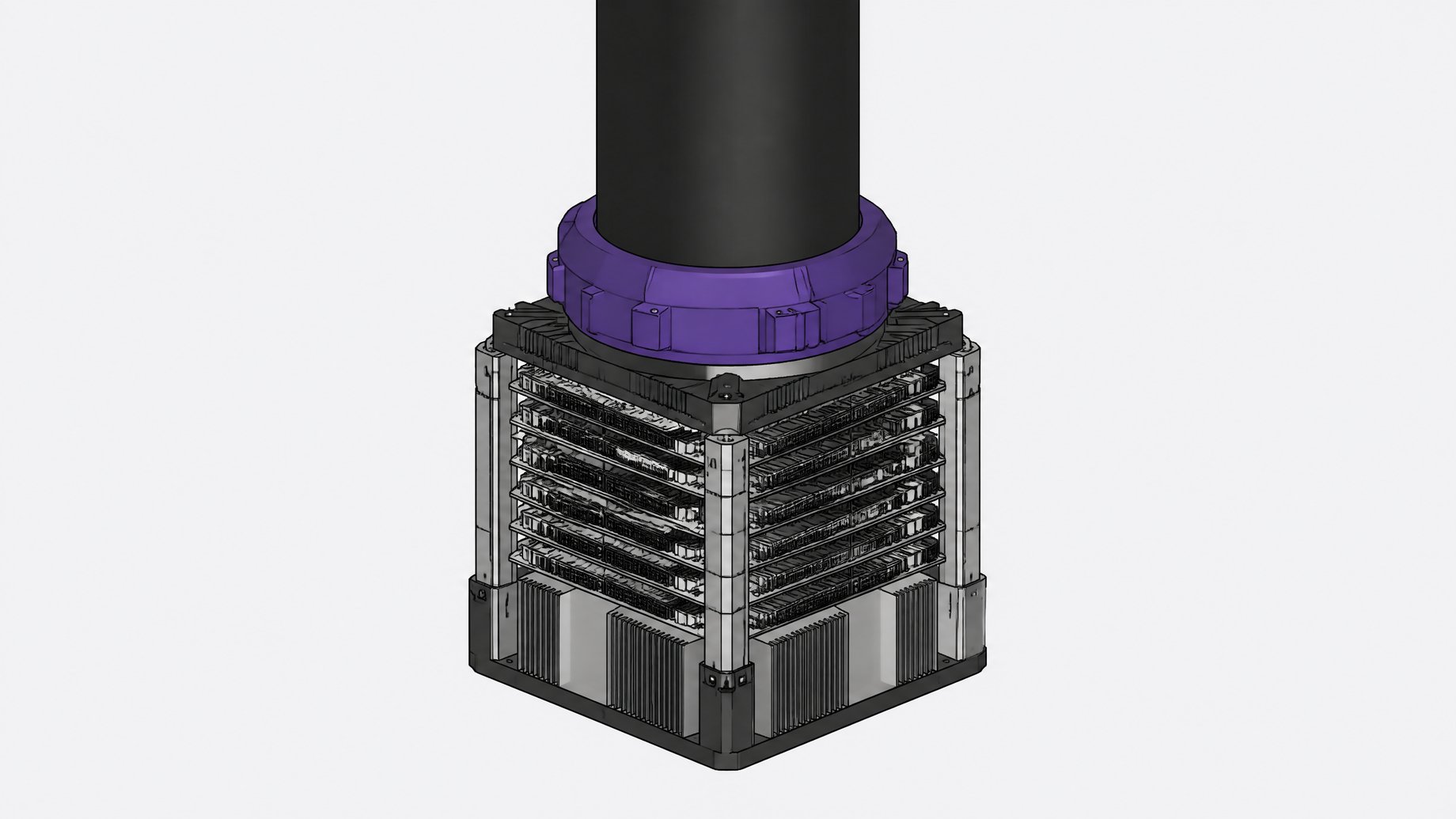
Part of why the buildout is so expensive is that the hardware itself is changing. AI racks now draw so much power that the industry's decades-old electrical wiring standards don't work anymore. Nvidia is leading a shift to 800 volt DC power architecture, converting 13.8kV AC grid power directly to 800V DC at the perimeter of the data center to support one-megawatt IT racks starting in 2027.
The engineering case is real. Row-level 800 VDC busways cut copper requirements by 45% compared to today's 415VAC systems and improve power efficiency, while Nvidia is targeting up to a 30% reduction in total cost of ownership once production scales in 2027. This isn't one vendor's marketing pitch, either. Vertiv, Delta Electronics, Schneider Electric, Eaton, STMicroelectronics, and Hitachi Energy have all shipped or committed to 800VDC reference architectures, and the Open Compute Project has ratified an 800VDC rack power standard.
That's good news for efficiency. It also means operators are re-wiring facilities around a new standard mid-buildout, which adds cost and creates a fresh layer of hardware lock-in tied to whichever ecosystem you commit to.
Who actually pays the AI tax on SaaS renewals?
The money for all of this has to come from somewhere, and increasingly it comes from your renewal cycle. Procurement teams are seeing AI-driven price increases of 20% to 37% show up regardless of vendor category, a jump Tropic's data shows is unrelated to a company's actual usage growth. SaaStr's tracking of the broader market confirms the pattern isn't isolated to a few aggressive vendors. Pricing across SaaS is up 11.4%, driven largely by AI features getting bundled into higher-priced tiers whether customers asked for them or not.
Call it what it is: an AI tax baked into your subscription stack. The vendor didn't necessarily get more expensive to run. The infrastructure underneath the vendor got more expensive to build, and that cost has nowhere else to go but into your invoice.
Why are communities fighting data centers?
The other side of this ledger is showing up in town halls, not spreadsheets. Seven in 10 Americans oppose construction of a new AI data center in their local area, including 48% who are strongly opposed, according to Gallup. That's a higher opposition rate than Americans express toward local nuclear power plants, which draw 53% opposition. People are more comfortable living near a reactor than next to a server farm.
The opposition isn't just polling noise. Local pushback led to 25 data center projects being canceled or scrubbed in 2025, four times as many as in 2024. The trend accelerated into 2026: the first quarter alone saw local opposition block or delay 75 projects worth $130 billion.
The complaints track a real resource strain. Data centers now consume about 5% of America's total electricity, up from roughly 2% a decade ago, and the International Energy Agency projects that share will approach 10% by 2030. Global data center electricity demand grew 17% in 2025, more than five times the 3% growth in overall electricity demand. Add water use for cooling and land use for the facilities themselves, and it's easy to see why communities are organizing against projects that used to sail through zoning approval.
This matters for AI SaaS buyers because the backlash is a cost variable, not just a headline. Every canceled or delayed project pushes remaining capacity into higher-demand, higher-cost regions, and every fight over power and water adds legal and political risk to the buildout your subscription price is ultimately funding.
What does this mean for buying vs. building AI tools?
Here's the practical takeaway. When you rent AI SaaS, you're not just renting software. You're renting a slice of a trillion-dollar infrastructure buildout, complete with its hardware transitions, its power constraints, and its local political fights. Every cost and every risk on that list gets passed through to you at renewal time, whether or not your own usage changed.
Owning more of your AI tooling, or at least controlling which workloads you run on infrastructure you actually manage, is one of the few ways to decouple your costs from someone else's capex cycle. We've made this case before when looking at self-hosting versus API-driven cloud costs and when comparing the real math of renting tokens against owning quantized models. The infrastructure numbers in this piece are the reason those arguments keep getting stronger. Tools like Remy exist precisely because teams are looking for a middle path: building and owning the software that runs their AI workflows instead of absorbing an unpredictable AI tax on every SaaS line item.
| Exposure to infrastructure cost swings | Upfront investment | Control over workloads | Time to deploy | Cost predictability at scale | |
|---|---|---|---|---|---|
| Rent AI SaaS (API-driven)teams needing speed with minimal ops overhead | High | Low | Low | Days | Low |
| RecommendedOwn / self-host AI toolingteams wanting to decouple costs from vendor capex cycles | Low | $15k-60k+ | High | Weeks | High |
The data centers aren't going away, and neither is the demand for AI features. But the buyers who treat infrastructure cost as a line item to manage, rather than a surprise on next year's renewal, will be the ones who come out ahead.
Frequently Asked Questions
Why is AI SaaS pricing rising faster than regular SaaS pricing?
Vendors are passing along the cost of the data center capacity, power, and cooling that AI features require. Tropic found AI-driven renewals rising 20% to 37%, versus the typical 3% to 9% annual increase for non-AI software.
What is Nvidia's 800V DC architecture and why does it matter for costs?
It is a new power delivery standard that converts grid AC power directly to 800V DC at the data center perimeter to support extremely dense AI racks. It cuts copper needs by 45% and targets up to 30% lower total cost of ownership by 2027, but it also requires operators to re-wire facilities around a new standard mid-buildout.
How much are hyperscalers actually spending on AI infrastructure?
Amazon, Microsoft, Google, and Meta collectively spent roughly $413 to $420 billion on data centers and AI infrastructure in 2025, and McKinsey projects $6.7 trillion in cumulative global data center capex by 2030, with $5.2 trillion tied to AI workloads specifically.
Why are communities pushing back against new data centers?
Data centers now use about 5% of U.S. electricity, up from 2% a decade ago, plus significant water and land, and 71% of Americans oppose a new data center in their local area, a higher opposition rate than they show toward nuclear plants.
Can owning AI tools instead of renting them avoid these cost pass-throughs?
Not entirely, since the underlying compute still has to run somewhere, but owning or self-hosting key AI workloads lets a business control which infrastructure costs it absorbs directly rather than inheriting an unpredictable AI tax on every vendor renewal.
How we source, write, and correct our articles. Editorial standards